Doxycycline polfarmex
Poland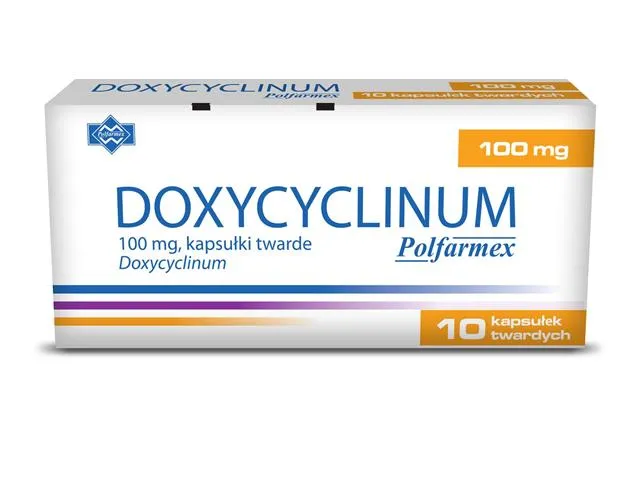
Table of Contents
- Package leaflet: information for the user
- 1. What Doxycyclinum Polfarmex is and what it is used for
- 2. Important information before using Doxycyclinum Polfarmex
- 3. How to use Doxycyclinum Polfarmex
- 4. Possible adverse reactions
- 5. How to store Doxycyclinum Polfarmex
- 6. Contents of the package and other information
Package leaflet: information for the user
DOXYCYCLINUM POLFARMEX, 100 mg, hard capsules
Doxycyclinum
Read the entire leaflet carefully before use, as it contains important information for the patient.
- Keep this leaflet for future reference.
- If you have any questions, consult your doctor or pharmacist.
- This medicine has been prescribed for a specific individual. Do not pass it on to others. This medicine may harm someone else, even if their symptoms are similar.
- If you experience any adverse reactions, including those not listed in this leaflet, inform your doctor or pharmacist. See section 4.
Table of contents
- What Doxycyclinum Polfarmex is and what it is used for
- Important information before taking Doxycyclinum Polfarmex
- How to take Doxycyclinum Polfarmex
- Possible side effects
- How to store Doxycyclinum Polfarmex
- Contents of the pack and other information
1. What Doxycyclinum Polfarmex is and what it is used for
The active substance in Doxycyclinum Polfarmex is doxycycline, an antibiotic belonging to the tetracycline group. It inhibits the growth of many microorganisms (bacteria and protozoa).
Indications
- Respiratory tract infections: pneumonia and other lower respiratory tract infections caused by susceptible strains of Streptococcus pneumoniae, Haemophilus influenzae, Klebsiella pneumoniae, and other microorganisms. Pneumonia caused by Mycoplasma pneumoniae. Chronic bronchitis, sinusitis.
- Urinary tract infections: caused by susceptible strains of Klebsiella spp., Enterobacter spp., Escherichia coli, Enterococcus faecalis, and other microorganisms.
- Sexually transmitted diseases: including uncomplicated urethral, cervical, or rectal infections caused by Chlamydia trachomatis, non-gonococcal urethritis caused by Ureaplasma urealyticum, chancroid (Haemophilus ducreyi), granuloma inguinale (Calymmatobacterium granulomatis). Doxycycline may be used as an alternative antibiotic in the treatment of syphilis and gonorrhea when penicillin cannot be used.
- Gastrointestinal tract infections: traveler's diarrhea (caused by enteropathogenic strains of Escherichia coli), including acute intestinal amoebiasis (as adjunctive therapy with amoebicidal drugs), cholera (Vibrio cholerae).
- Eye infections: caused by susceptible strains of gonococci, staphylococci, Haemophilus influenzae; trachoma, inclusion conjunctivitis caused by Chlamydia trachomatis.
- Rickettsioses: Q fever, Rocky Mountain spotted fever, typhus fever, endocarditis caused by Coxiella spp., tick-borne diseases.
- Soft tissue infections: caused by susceptible strains of Clostridium spp., Propionibacterium acnes.
- Lyme borreliosis.
- Other infections: psittacosis (Chlamydia psittaci), brucellosis (Brucella spp., treatment in combination with streptomycin), plague (Yersinia pestis), tularemia (Francisella tularensis), infections caused by Pseudomonas pseudomallei, malaria.
- Leptospirosis, gas gangrene, tetanus: doxycycline is used as an alternative treatment.
- Prophylaxis: malaria, traveler's diarrhea, leptospirosis.
2. Important information before using Doxycyclinum Polfarmex
When not to use Doxycyclinum Polfarmex:
- if the patient is allergic (hypersensitive) to doxycycline or to any other tetracycline antibiotics or to any of the other ingredients of this medicine (listed in section 6);
- in infants and children under 12 years of age;
- in pregnant and breastfeeding women.
Doxycyclines must not be used during tooth development (pregnancy, infancy, and children up to 12 years of age), as they may cause permanent discoloration (yellow-gray-brown) of teeth and interfere with normal development of teeth and the skeletal system.
Warnings and precautions
Before starting treatment with this medicine, inform your doctor if the patient has:
- impaired liver and/or kidney function;
- porphyria (a rare disorder related to porphyrin metabolism – one of the components of red blood cells);
- myasthenia gravis (a disease characterized by excessive fatigue and muscle weakness);
- systemic lupus erythematosus (an autoimmune disease characterized by joint pain, skin rash, and fever).
During treatment with Doxycyclinum Polfarmex, inform your doctor if:
- severe, persistent diarrhoea occurs; do not use drugs that inhibit intestinal peristalsis or have constipating effects;
- symptoms of a new infection caused by bacteria resistant to doxycycline or by fungi (e.g. persistent itching, skin redness) appear, especially during prolonged antibiotic use.
In diseases where concomitant syphilis infection is suspected, the doctor will recommend appropriate diagnostic tests before initiating treatment.
Tetracyclines, including doxycycline, may cause photosensitivity. During treatment, the patient should avoid exposure to sunlight or artificial UV radiation (e.g. sunbeds) due to the risk of photosensitivity reactions, which may manifest as skin redness, swelling, or blisters. If such symptoms occur, the medicine should be discontinued immediately and medical advice sought.
To avoid oesophagitis and oesophageal ulceration, the medicine should be taken sufficiently early (at least half an hour) before going to bed and should be taken with a full glass of water. See "Instructions for use" in section 3.
Doxycyclinum Polfarmex and other medicines
Tell your doctor about all medicines you are currently taking, including those obtained without a prescription.
In particular, inform your doctor if the patient is taking:
Antacids (containing multivalent ions of aluminium, calcium, magnesium, as well as products containing iron, zinc, or bismuth ions) may reduce the absorption of doxycycline. Therefore, the above-mentioned food or medicinal products should be taken at least 2 to 3 hours after doxycycline administration.
Sedatives (barbiturates); rifampicin (an anti-tuberculosis drug); carbamazepine, phenytoin, primidone, or cyclosporine (used after organ transplantation) may reduce the effectiveness of Doxycyclinum Polfarmex.
Penicillin antibiotics and other antibiotics: Doxycyclinum Polfarmex may reduce their effectiveness.
Cephalosporins: Doxycyclinum Polfarmex may enhance their toxic effects.
Methoxyflurane (a drug used in general anaesthesia): Doxycyclinum Polfarmex may increase its toxicity and cause severe kidney damage.
Anticoagulants (e.g. warfarin): Doxycyclinum Polfarmex may enhance their effect.
Oral antidiabetic drugs (sulfonylurea derivatives): Doxycyclinum Polfarmex enhances their effect.
Oral contraceptives: Doxycyclinum Polfarmex may reduce their effectiveness; therefore, additional non-hormonal contraceptive methods are recommended during doxycycline treatment.
Theophylline (used, for example, in asthma): concomitant administration with Doxycyclinum Polfarmex may increase the frequency of gastrointestinal adverse effects.
Doxycyclinum Polfarmex may alter urinary catecholamine test results. If the patient is scheduled for any laboratory tests, the doctor should be informed about the use of Doxycyclinum Polfarmex.
Doxycyclinum Polfarmex and alcohol
Alcohol consumption during treatment with Doxycyclinum Polfarmex may reduce the effectiveness of the medicine.
Pregnancy and breastfeeding
If the patient is pregnant or breastfeeding, suspects she may be pregnant, or is planning to become pregnant, she should consult a doctor or pharmacist before using this medicine.
This medicine must not be used in pregnant or breastfeeding women.
Driving and operating machinery
In isolated cases, transient visual disturbances have been observed, which may affect safety when driving vehicles.
Doxycyclinum Polfarmex contains lactose and sodium
The medicine contains monohydrate lactose. If the patient has been previously diagnosed with intolerance to certain sugars, the patient should consult a doctor before taking this medicine.
The medicine contains less than 1 mmol (23 mg) of sodium per hard capsule, i.e. the medicine is considered "sodium-free".
3. How to use Doxycyclinum Polfarmex
This medicine should always be used exactly as prescribed by your doctor. If in doubt, consult your doctor or pharmacist.
The medicine is taken orally.
The doctor will determine the appropriate dosage depending on the disease, the patient's condition, and current official guidelines for the use of antibacterial drugs. Before starting treatment with doxycycline, a test will be performed to isolate the microorganism causing the infection and determine its antibiotic susceptibility. Treatment may be initiated before the susceptibility test results are available.
After obtaining the results, a change in therapy may be necessary.
Recommended dosage for adults and children aged 12 years and older
On the first day, 200 mg of doxycycline is administered as a single dose or divided into two doses (100 mg every 12 hours), followed by a maintenance dose of 100 mg per day.
In severe infections, 200 mg per day should be administered throughout the treatment period.
Recommended dosage for certain infections
Chloroquine-resistant tropical malaria
200 mg per day for at least 7 days. Doxycycline should be administered in combination with quinine.
Lyme disease
100 mg twice daily (every 12 hours) for 14–28 days; in early stages of the disease, from 14 to 21 days.
Sexually transmitted diseases
Uncomplicated gonococcal infections (except for anal infections in men); uncomplicated urethral, endocervical, or anal infections caused by Chlamydia trachomatis; non-gonococcal urethritis caused by Ureaplasma urealyticum: 100 mg twice daily (every 12 hours) for 7 days.
Acute epididymo-orchitis caused by Chlamydia trachomatis or Neisseria gonorrhoeae: 100 mg twice daily (every 12 hours) for 10 days.
Primary and secondary syphilis: in penicillin-allergic patients (except pregnant women), 200 mg twice daily for 2 weeks is used as an alternative to penicillin therapy.
Dosage for prevention of infections
Malaria
For adults and children aged over 12 years, 100 mg per day is recommended. Prophylaxis should begin 1 to 2 days before travel to malaria-endemic areas. Doxycycline should be continued throughout the stay in the endemic area and for an additional 4 weeks after leaving such areas. You should consult current guidelines regarding malaria prevention in the specific geographic region.
Traveler's diarrhea
For adults, 200 mg on the first day of travel (as a single dose or 100 mg twice daily every 12 hours), followed by 100 mg per day during the stay, for no longer than 21 days.
Leptospirosis
200 mg as a single weekly dose during stay in areas where leptospirosis occurs (for no longer than 21 days), and a single 200 mg dose after completion of travel.
Dosage in children under 12 years of age
This medicine must not be used in children under 12 years of age (see also section 2).
Dosage in elderly patients
Dosage adjustment is not necessary. However, elderly patients are more susceptible to gastrointestinal adverse effects; therefore, they should strictly follow the recommendations described below under "Method of administration".
Dosage in patients with renal and/or hepatic impairment
In patients with renal impairment, dosage adjustment is not necessary.
In patients with hepatic impairment, caution is advised. In such patients, especially during long-term treatment, administration of high doses, or concomitant use of other hepatotoxic drugs, regular monitoring of liver function is recommended.
Duration of treatment
The duration of treatment is always determined by the doctor. Antibiotics should usually be continued for 24 to 48 hours after symptoms have resolved.
In infections caused by group A β-hemolytic streptococci, treatment usually lasts for at least 10 days.
Method of administration
Capsules should be swallowed whole with a glass of water.
To prevent possible irritation of the throat or intestines, capsules should be taken while sitting or standing, at least 30 minutes before bedtime (it is important that the patient does not lie down immediately after taking the capsule).
If gastrointestinal adverse effects persist, the doctor may recommend taking the medicine with food.
Taking doxycycline with food reduces gastrointestinal adverse effects and does not significantly affect its absorption.
If during treatment the patient feels that the medicine's effect is too strong or too weak, they should consult their doctor.
Use of a higher than recommended dose of Doxycyclinum Polfarmex
Symptoms of doxycycline overdose include fever, facial flushing, dizziness, and occasionally circulatory collapse. If any of these symptoms occur, the medicine should be discontinued immediately and medical advice sought. In conscious patients, vomiting may be induced or antacids, calcium, or magnesium salts may be administered.
In case of ingestion of a higher than recommended dose, seek immediate medical advice from a doctor or pharmacist.
Missed dose of Doxycyclinum Polfarmex
If a dose is missed, it should be taken as soon as remembered, unless the next dose is due soon.
Do not take a double dose to make up for a missed dose.
Stopping Doxycyclinum Polfarmex
If you have any further doubts about using this medicine, consult your doctor or pharmacist.
4. Possible adverse reactions
Like all medicines, this medicine can cause adverse reactions, although not everybody will experience them.
Immediately contact a doctor if any of the following serious
adverse reactions occur:
- anaphylactic shock – confusion, pale skin, low blood pressure, sweating, reduced urine output, rapid breathing, weakness and fainting, pericarditis – occurring rarely,
- angioedema – swelling usually located around the face or throat, causing breathing difficulties, rash, itching, drug reaction with eosinophilia and systemic symptoms (DRESS) – occurring rarely,
- hypersensitivity reactions, hypotension, shortness of breath, rapid heart rate (tachycardia), pericarditis – acute chest pain, dry cough and shortness of breath – frequency unknown,
- severe skin reactions – rash with blisters all over the body, erosions in the mouth, eyes, genital organs and on the skin, red spots on the trunk, often with blisters in the center, bursting giant blisters, peeling of large sheets of the epidermis, erythema multiforme (Stevens-Johnson syndrome), toxic epidermal necrolysis (Lyell's syndrome), weakness, fever and joint pain, sometimes involving internal organs (most commonly: liver, kidneys, lungs) – frequency unknown,
- numerous, profuse and watery stools, sometimes with mucus, pus or blood, occasionally few loose stools, fever, cramping abdominal pain usually below the navel (pseudomembranous colitis due to overgrowth of Clostridium difficile), esophageal ulceration, esophagitis; hepatitis, jaundice – occurring not very commonly,
- rare photosensitivity,
- Jarisch-Herxheimer reaction causing fever, chills, headache, muscle pain and skin rash, which is usually self-limiting. This occurs shortly after starting doxycycline treatment for spirochetal infections, e.g. Lyme disease – frequency unknown,
- liver damage, sometimes with pancreatitis during long-term use – occurring rarely.
Other adverse reactions that may occur during use of the medicine:
frequency of occurrence – below
Adverse reactions occurring commonly (in 1 to 10 out of 100 patients using the medicine):
- loss of appetite, nausea, vomiting, diarrhea, glossitis, difficulty swallowing, inflammation of the small intestine and colon, inflammatory changes around the anus;
- rash.
Adverse reactions occurring not very commonly (in 1 to 10 out of 1,000 patients using the medicine):
- hemolytic anemia, thrombocytopenia, neutropenia, eosinophilia;
- exfoliative dermatitis.
Adverse reactions occurring rarely (in 1 to 10 out of 10,000 patients using the medicine):
- bulging fontanelle in infants due to benign increase in intracranial pressure; benign intracranial hypertension also in older children and adults (symptoms of hypertension include visual disturbances – scotoma, double vision). Headaches and dizziness associated with this may occur;
- visual disturbances such as: scotoma, double vision;
- urticaria, disturbances in tooth development, irreversible discoloration of enamel;
- increased blood urea concentration;
- photo-onycholysis (separation of the nail plate from the nail bed caused by light).
Adverse reactions occurring very rarely (less than 1 in 10,000 patients using the medicine):
- brown-black discoloration of the thyroid gland after prolonged use (without thyroid function disturbances);
- tinnitus.
Adverse reactions with unknown frequency (frequency cannot be estimated from available data):
- infections and parasitic infestations – during prolonged or repeated antibiotic treatment, local infections of the skin or mucous membranes with organisms resistant to the drug (bacteria or fungi) may occur, manifesting as: anal itching, inflammation of the oral mucosa and tongue, external genital organs and vagina. Staphylococcal enterocolitis has also been observed;
- porphyria;
- serum sickness-like symptoms, anaphylactoid purpura;
- sudden facial flushing;
- abdominal pain;
- signs of hepatotoxicity with transient, mild increase in liver aminotransferase activity;
- itching;
- muscle pain, joint pain;
- malaise.
Reporting of adverse reactions
If any adverse reactions occur, including any adverse reactions not listed
in this leaflet, inform your doctor, pharmacist, or nurse. Adverse reactions can be reported directly to the Department of Monitoring of Adverse Drug Reactions of the Office for Registration of Medicinal Products, Medical Devices
and Biocidal Products:
Al. Jerozolimskie 181C
02-222 Warsaw
Tel.: 22 49-21-301
Fax: 22 49-21-309
Website: https://smz.ezdrowie.gov.pl
Adverse reactions can also be reported to the marketing authorization holder.
Reporting adverse reactions helps to collect more information on the safety of the medicine.
5. How to store Doxycyclinum Polfarmex
Keep the medicine out of sight and reach of children.
Store below 25°C.
Do not use this medicine after the expiry date stated on the carton and blister after:
"EXP". The expiry date refers to the last day of the stated month.
Medicines must not be disposed of via wastewater or household waste. Ask your pharmacist how to dispose of medicines no longer required. Such practices help protect the environment.
6. Contents of the package and other information
What Doxycyclinum Polfarmex contains
The active substance is doxycycline (Doxycyclinum).
Each hard capsule contains 100 mg of doxycycline in the form of doxycycline hyclate.
The other ingredients are: lactose monohydrate, maize starch, magnesium stearate, sodium lauryl sulfate.
Composition of the capsule shell and body: gelatin, titanium dioxide (E 171), yellow iron oxide (E 172), indigo carmine (E 132).
What Doxycyclinum Polfarmex looks like and contents of the pack
Hard capsule, size N 1, consisting of green body and cap, without dents or damage.
The pack contains 10 hard capsules in a blister, packed in a cardboard box.
Marketing Authorisation Holder and Manufacturer
Polfarmex S.A.
ul. Józefów 9
99-300 Kutno
Poland
tel.: 24 357 44 44
fax: 24 357 45 45
e-mail: [email protected]