Dovequa
Poland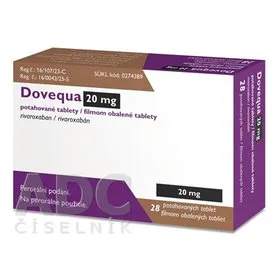
Table of Contents
Package leaflet: Information for the patient
Dovequa, 2.5 mg, film-coated tablets
Rivaroxabanum
Please read the entire leaflet carefully before taking this medicine, as it contains important information for you.
- Keep this leaflet, as you may need to read it again.
- If you have any further questions, please consult your doctor or pharmacist.
- This medicine has been prescribed for you personally. Do not pass it on to others. It may harm someone else, even if their symptoms are the same as yours.
- If you experience any adverse effects, including any not listed in this leaflet, inform your doctor or pharmacist. See section 4.
Table of contents
- What Dovequa is and what it is used for
- Important information before taking Dovequa
- How to take Dovequa
- Possible side effects
- How to store Dovequa
- Contents of the pack and other information
1. What Dovequa is and what it is used for
You have been prescribed Dovequa because:
- You have been diagnosed with acute coronary syndrome (a condition including heart attack and unstable angina, i.e. acute chest pain) and elevated levels of cardiac biomarkers have been confirmed. Dovequa reduces the risk of another heart attack or the risk of death due to heart or blood vessel disease in adults. Dovequa will not be given to you as a single treatment. Your doctor will also prescribe you to take:
- acetylsalicylic acid, or
- acetylsalicylic acid and clopidogrel or ticlopidine.
- You have been diagnosed with a high risk of blood clots due to coronary artery disease or peripheral artery disease causing symptoms. Dovequa reduces the risk of blood clots (atherothrombotic events) in adults. Dovequa will not be given to you as a single treatment. Your doctor will also prescribe you to take acetylsalicylic acid. In certain cases, if you are receiving Dovequa after a procedure to open a narrowed or blocked artery in the lower limb to restore blood flow, your doctor may also prescribe clopidogrel to be taken in addition to acetylsalicylic acid for a short period of time.
Dovequa contains the active substance rivaroxaban and belongs to a group of medicines called anticoagulants. It works by blocking a blood clotting factor (factor Xa), thereby reducing the tendency to form blood clots.
2. Important information before using Dovequa
When not to use Dovequa:
- if the patient is allergic to rivaroxaban or any of the other ingredients of this medicine (listed in section 6),
- if the patient has excessive bleeding,
- if the patient has a disease or condition of an organ that leads to an increased risk of major bleeding (e.g. stomach ulcer, trauma or bleeding into the brain, recent surgery of the brain or eyes),
- if the patient is taking other medicines that prevent blood clotting (e.g. warfarin, dabigatran, apixaban or heparin), except when switching anticoagulant therapy or if heparin is administered to maintain the patency of a catheter in a vein or artery,
- if the patient has been diagnosed with acute coronary syndrome and previously experienced bleeding or blood clot in the brain (stroke),
- if the patient has been diagnosed with coronary artery disease or peripheral arterial disease and previously had a brain hemorrhage (hemorrhagic stroke), or blockage of small arteries supplying blood to tissues in deep brain structures (sinus stroke), or if the patient had a blood clot in the brain (ischemic, non-sinus stroke) within the last month,
- if the patient has a liver disease that leads to an increased risk of bleeding,
- if the patient is pregnant or breastfeeding.
Do not use Dovequa and inform your doctor if you suspect that any of the above circumstances apply to you.
Warnings and precautions
Discuss with your doctor or pharmacist before starting treatment with Dovequa.
Dovequa should not be used in combination with anticoagulant medicines other than acetylsalicylic acid, clopidogrel or ticlopidine, such as prasugrel or ticagrelor.
Exercise special caution when using Dovequa:
- if the patient has an increased risk of bleeding, such as in the following conditions:
- severe kidney disease, as kidney function may affect the amount of medicine acting in the patient’s body,
- taking other medicines that prevent blood clotting (e.g. warfarin, dabigatran, apixaban or heparin) when switching anticoagulant therapy or when heparin is administered to maintain the patency of a catheter in a vein or artery (see section "Dovequa with other medicines"),
- blood clotting disorders,
- very high blood pressure that does not decrease despite medication,
- stomach or intestinal diseases that may cause bleeding, e.g. inflammation of the intestines and stomach or esophagitis (throat and esophagus), e.g. due to gastroesophageal reflux disease (backflow of stomach acid into the esophagus), or tumors located in the stomach, intestines, genital or urinary system,
- blood vessel disease in the back of the eyeball (retinopathy),
- lung disease where bronchi are dilated and filled with pus (bronchiectasis) or previous lung bleeding,
- if the patient is over 75 years old,
- if the patient weighs less than 60 kg,
- coronary artery disease with severe symptomatic heart failure,
- in patients with heart valve prostheses,
- if the patient has a disorder called antiphospholipid syndrome (an immune system disorder causing increased risk of blood clots), the patient should inform the doctor, who will decide whether treatment adjustment is necessary. If you suspect any of the above conditions apply to you, inform your
doctor before taking Dovequa. The doctor will decide whether to use this medicine and whether the patient requires particularly close monitoring.
If the patient needs to undergo surgery:
- strictly follow the doctor’s instructions regarding the timing of taking Dovequa before or after surgery,
- if catheterization or spinal puncture (e.g. for epidural or intrathecal anesthesia or pain relief) is planned during surgery:
- it is very important to take Dovequa before and after the puncture or catheter removal, as directed by the doctor;
- due to the need for special caution, immediately inform the doctor if numbness or weakness in the legs, or disturbances in bowel or bladder function occur after the anesthesia ends.
Children and adolescents Dovequa 2.5 mg tablets are not recommended for patients under 18 years of age. There is insufficient data on the use of this medicine in children and adolescents.
Dovequa with other medicines
Inform your doctor or pharmacist about all medicines currently used or recently used, as well as any medicines you plan to use, including those available without a prescription.
- If the patient is taking: certain antifungal medicines (e.g. fluconazole, itraconazole, voriconazole, posaconazole), unless they are used only topically on the skin, oral ketoconazole (used in the treatment of Cushing's syndrome, in which the body produces too much cortisol), certain antibiotics (e.g. clarithromycin, erythromycin), certain antiviral medicines used in HIV infection or AIDS treatment (e.g. ritonavir), other medicines used to reduce blood clotting (e.g. enoxaparin, clopidogrel or vitamin K antagonists such as warfarin or acenocoumarol, prasugrel and ticagrelor (see section "Warnings and precautions")), anti-inflammatory and pain medicines (e.g. naproxen or acetylsalicylic acid), dronedarone, a medicine used to treat heart rhythm disorders, certain antidepressants (selective serotonin reuptake inhibitors (SSRIs) or serotonin-norepinephrine reuptake inhibitors (SNRIs)).
If you suspect any of the above conditions apply to you, inform your
doctor before taking Dovequa, as the effect of Dovequa may be enhanced.
The doctor will decide whether to use this medicine and whether the patient requires particularly close monitoring.
If the doctor believes the patient has an increased risk of developing stomach or intestinal ulcers,
they may prescribe preventive treatment.
If the patient is taking:
certain medicines used to treat epilepsy (phenytoin, carbamazepine, phenobarbital),
St. John's wort ( Hypericum perforatum ), a herbal medicine used for depression,
rifampicin, an antibiotic.
If you suspect any of the above conditions apply to you, inform your
doctor before taking Dovequa, as the effect of Dovequa may be reduced.
The doctor will decide whether to use Dovequa and whether the patient requires particularly close monitoring.
Pregnancy and breastfeeding
Do not use Dovequa if you are pregnant or breastfeeding. If there is a risk that you may become pregnant, you must use an effective method of contraception during treatment with Dovequa. If you become pregnant while taking this medicine, inform your doctor immediately, who will decide on further treatment.
Driving and operating machinery
Dovequa may cause dizziness (common side effects) or fainting (uncommon side effects) (see section 4 "Possible side effects"). Patients experiencing these side effects should not drive, ride a bicycle, or operate tools or machinery.
Dovequa contains lactose and sodium
If the patient has previously been diagnosed with intolerance to certain sugars, they should consult their doctor before taking this medicine.
The medicine contains less than 1 mmol (23 mg) of sodium per tablet, meaning the medicine is considered "sodium-free".
3. How to take Dovequa
This medicine should always be taken exactly as prescribed by the doctor. In case of doubt, consult
your doctor or pharmacist.
How many tablets to take
The recommended dose is one 2.5 mg tablet twice daily. Dovequa should be taken at approximately
the same time each day (for example, one tablet in the morning and one in the evening). This medicine
can be taken with or without food.
If a patient has difficulty swallowing the whole tablet, they should discuss alternative methods of
taking Dovequa with their doctor. The tablet may be crushed and mixed with water or apple puree
immediately before administration.
If necessary, a doctor may administer crushed Dovequa tablets through a gastric tube.
Dovequa will not be given to the patient as the only medication.
Your doctor will prescribe acetylsalicylic acid to be taken alongside Dovequa. If the patient is receiving
Dovequa following an acute coronary syndrome, the doctor may also prescribe clopidogrel or
ticlopidine.
If the patient is receiving Dovequa after a procedure to open a narrowed or blocked artery in the lower
limb to restore blood flow, the doctor may also prescribe clopidogrel to be taken for a short period in
addition to acetylsalicylic acid.
The doctor will inform the patient of the appropriate dose of these medications (usually 75–100 mg
acetylsalicylic acid daily, or a daily dose of 75–100 mg acetylsalicylic acid plus a daily dose of 75 mg
clopidogrel, or the standard daily dose of ticlopidine).
When to start taking Dovequa
Treatment with Dovequa after an acute coronary syndrome should be initiated as soon as possible
after stabilization of the acute event, no earlier than 24 hours after hospital admission and at the
time when parenteral (injected) anticoagulant therapy would normally be discontinued.
The doctor will inform the patient when to start treatment with Dovequa if coronary artery disease or
peripheral arterial disease has been diagnosed.
The doctor will decide how long treatment should continue.
Taking more Dovequa than recommended
If a patient takes more Dovequa than prescribed, they should contact their doctor immediately.
Taking too high a dose of Dovequa increases the risk of bleeding.
Missing a dose of Dovequa
Do not take a double dose to make up for a missed dose. If a dose is missed, the patient should take
the next dose at the scheduled time.
Stopping Dovequa
Dovequa should be taken regularly and for the duration prescribed by the doctor.
Do not stop taking Dovequa without first consulting your doctor. Stopping this medicine may increase
the risk of another heart attack, stroke, or death due to heart or blood vessel disease.
If there are any further questions about the use of this medicine, consult your doctor or pharmacist.
4. Possible adverse reactions
Like any medicine, Dovequa may cause adverse reactions, although not everyone experiences them.
As with other medicines with a similar mechanism of action reducing blood clot formation, Dovequa may cause bleeding, which potentially can be life-threatening. Excessive bleeding may lead to a sudden drop in blood pressure (shock). Signs of bleeding are not always obvious or visible.
Immediately inform your doctor if any of the following adverse reactions occur:
- Signs of bleeding:
- bleeding into the brain or inside the skull (symptoms may include headache, one-sided weakness, vomiting, seizures, decreased level of consciousness and neck stiffness. A serious, sudden medical emergency. Seek immediate medical help!),
- prolonged or excessive bleeding,
- unusual weakness, fatigue, paleness, dizziness, headache, unexplained swelling, shortness of breath, chest pain or angina. Your doctor may decide that close monitoring of the patient or a change in treatment is necessary.
- Signs of severe skin reactions:
- widespread, acute skin rash, blistering or mucosal lesions, e.g. on the tongue or eyes (Stevens-Johnson syndrome, toxic epidermal necrolysis),
- drug reaction with eosinophilia and systemic symptoms (DRESS syndrome), characterized by rash, fever, internal organ inflammation, hematological and systemic disturbances. The frequency of these adverse reactions is very rare (occurring in up to 1 in 10,000 people).
- Signs of serious allergic reactions:
- swelling of the face, lips, mouth, tongue or throat; difficulty swallowing; urticaria and breathing difficulties; sudden drop in blood pressure. The frequency of severe hypersensitivity reactions is very rare (anaphylactic reactions, including anaphylactic shock, may occur in up to 1 in 10,000 people) and uncommon (angioedema and allergic edema may occur in 1 in 100 people).
General list of possible adverse reactions:
Common (may occur in up to 1 in 10 patients):
- decreased number of red blood cells, which may cause skin pallor and lead to weakness or shortness of breath,
- gastrointestinal or intestinal bleeding, bleeding from the urinary or genital tract (including blood in urine and severe menstrual bleeding), nosebleeds, bleeding from gums,
- bleeding into the eye (including bleeding from the sclera),
- bleeding into tissues or body cavities (hematoma, bruising),
- presence of blood in sputum (hemoptysis) during coughing,
- skin bleeding or subcutaneous bleeding,
- postoperative bleeding,
- oozing of blood or fluid from a surgical wound,
- limb swelling,
- limb pain,
- kidney function disorders (may be observed in tests performed by a doctor),
- fever,
- stomach pain, indigestion, nausea or vomiting, constipation, diarrhea,
- low arterial blood pressure (symptoms may include dizziness or fainting upon standing),
- general decrease in strength and energy (weakness, fatigue), headache, dizziness,
- rash, itching of the skin,
- increased activity of certain liver enzymes, which may be observed in blood test results.
Uncommon (may occur in up to 1 in 100 patients):
- bleeding into the brain or intracranial hemorrhage (see signs of bleeding above),
- bleeding into joints causing pain and swelling,
- thrombocytopenia (low platelet count, blood cells involved in blood clotting),
- allergic reactions, including allergic skin reactions,
- liver function disorders (may be observed in tests performed by a doctor),
- blood tests may show increased levels of bilirubin, increased activity of certain pancreatic or liver enzymes, or increased platelet count,
- fainting,
- malaise,
- rapid heartbeat,
- dry mouth,
- urticaria.
Rare (may occur in up to 1 in 1,000 patients):
- bleeding into muscles,
- cholestasis (bile stasis), hepatitis including liver cell damage,
- yellowing of the skin and eyes (jaundice),
- local swelling,
- blood collection (hematoma) in the groin as a complication of cardiac catheterization procedure when the catheter is inserted into an artery in the leg (pseudoaneurysm).
Very rare (may occur in up to 1 in 10,000 patients):
- accumulation of eosinophils, a type of granular white blood cells, causing lung inflammation (eosinophilic pneumonia).
Frequency not known (frequency cannot be estimated from available data):
- kidney failure following severe bleeding,
- bleeding in the kidneys, sometimes with presence of blood in urine, leading to impaired kidney function (drug-induced nephropathy associated with anticoagulant medicines),
- increased pressure within the muscles of arms and legs following bleeding, which may lead to pain, swelling, altered sensation, numbness or paralysis (compartment syndrome following bleeding).
Reporting of adverse reactions
If any adverse reactions occur, including any not listed in this leaflet, inform your doctor or pharmacist. Adverse reactions can be reported directly to the Department of Monitoring Adverse Drug Reactions, Office for Registration of Medicinal Products, Medical Devices and Biocidal Products, Al. Jerozolimskie 181C, 02-222 Warsaw.
Tel.: +48 22 49 21 301
Fax: +48 22 49 21 309
Website: https://smz.ezdrowie.gov.pl
Adverse reactions can also be reported to the marketing authorization holder.
Reporting adverse reactions helps to provide more information on the safety of the medicine.
5. How to store Dovequa
Keep this medicine out of sight and reach of children.
Do not use this medicine after the expiry date stated on the carton and blister. The expiry date refers to the last day of the stated month.
The label on the packaging marked with "EXP" indicates the expiry date.
No special storage instructions apply for this medicine.
Crushed tablets
Crushed tablets are stable in water or apple purée for up to 4 hours.
Medicines must not be disposed of via wastewater or household waste. Ask your pharmacist how to dispose of medicines no longer required. This will help protect the environment.
6. Contents of the pack and other information
What Dovequa contains
- The active substance is rivaroxaban. Each coated tablet contains 2.5 mg of rivaroxaban.
- Other ingredients are:
Tablet core: sodium lauryl sulfate, monohydrate lactose, microcrystalline cellulose (E460), sodium croscarmellose (E468), hypromellose type 2910 (5 mPa·s) (E464), magnesium stearate (E572). See section 2, "Dovequa contains lactose and sodium".
Tablet coating (Opadry Yellow 03F12967): hypromellose type 2910 (6 mPa·s) (E464), titanium dioxide (E171), talc (E553b), macrogol 8000 (E1521), iron oxide yellow (E172).
What Dovequa looks like and contents of the pack
Dovequa 2.5 mg are light yellow, round, biconvex coated tablets with a diameter of 8 mm, embossed with the number "2.5" on one side.
The tablets are contained in transparent blisters made of PVC/PVDC/Aluminium, packed in cardboard boxes containing 28 or 56 coated tablets.
Not all pack sizes may be marketed.
Marketing Authorisation Holder and Manufacturer
Marketing Authorisation Holder
Bausch Health Ireland Limited
3013 Lake Drive
Citywest Business Campus
Dublin 24, D24PPT3
Ireland
Tel: +48 17 865 51 00
Manufacturer
Zakłady Farmaceutyczne POLPHARMA S.A.
ul. Pelplińska 19
83-200 Starogard Gdański
Poland
Tel: +48 22 364 61 01