Dormicum
Poland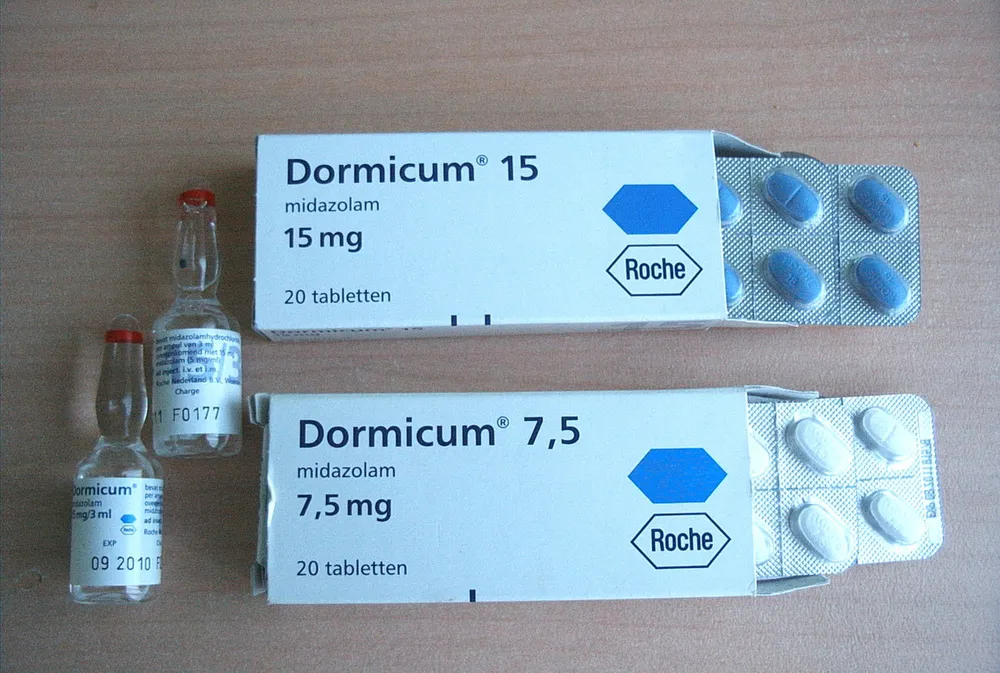
Table of Contents
Package leaflet: Information for the user
Dormicum, 7.5 mg, coated tablets
Dormicum, 15 mg, coated tablets
Midazolamum
Please read the entire leaflet carefully before taking this medicine, as it contains
important information for the patient.
- Keep this leaflet, as you may need to read it again.
- If you have any further questions, please consult your doctor or pharmacist.
- This medicine has been prescribed for a specific individual. Do not pass it on to others. It may harm other people, even if their symptoms are the same.
- If you experience any adverse reactions, including any not listed in this leaflet, inform your doctor or pharmacist. See section 4.
Table of contents of the leaflet:
- What Dormicum is and what it is used for
- Important information before taking Dormicum
- How to take Dormicum
- Possible side effects
- How to store Dormicum
- Contents of the pack and other information
1. What Dormicum is and what it is used for
Dormicum is a short-acting hypnotic medicine. The drug also has sedative, anticonvulsant, and muscle-relaxant properties. The active substance is midazolam, which belongs to the group of benzodiazepines.
Indications:
Short-term treatment of insomnia.
The use of benzodiazepines is indicated only when symptoms are severe, significantly impair daily functioning, or cause considerable distress to the patient.
Midazolam is also used in premedication prior to surgical or diagnostic procedures.
2. Important information before using Dormicum
When not to use Dormicum:
- if the patient is allergic to midazolam, other benzodiazepines, or any of the other ingredients of this medicine (listed in section 6);
- if the patient has severe respiratory insufficiency;
- if the patient has severe hepatic insufficiency;
- if the patient has sleep apnoea syndrome;
- if the patient has muscle weakness ( Myasthenia gravis );
- in children aged 12 years and younger, as an appropriate dose for them cannot be achieved using Dormicum tablets;
- if the patient is concurrently taking ketoconazole, itraconazole, voriconazole, HIV protease inhibitors, including ritonavir-boosted HIV protease inhibitors, HCV protease inhibitors: boceprevir and telaprevir.
Warnings and precautions
Before starting treatment with Dormicum, discuss this with your doctor or pharmacist.
- if the patient takes the medicine repeatedly for several weeks, the effect of the medicine may weaken;
- if the patient takes the medicine repeatedly for several weeks, the medicine may cause dependence;
- if the patient has abused alcohol or drugs;
- if the patient is over 60 years of age;
- if the patient has chronic respiratory insufficiency;
- if the patient is taking other medicines that may enhance or reduce the effect of Dormicum;
- if the patient has impaired liver function or severe kidney dysfunction, the medicine may cause anterograde amnesia. This usually occurs within the first few hours after taking the medicine; therefore, patients should ensure they can have 7–8 hours of uninterrupted sleep after taking the medicine.
The patient should inform the doctor if they suffer from psychotic disorders, depression, or depressive-related anxiety states. Consult a doctor, even if the above warnings relate to conditions that occurred in the past.
Dormicum and other medicines
Tell your doctor or pharmacist about all medicines the patient is currently taking, has recently taken, or plans to take. Exercise particular caution when using the following medicines concurrently with Dormicum:
- fluconazole,
- antibacterial agents (e.g. clarithromycin, erythromycin, telithromycin, isoniazid),
- calcium channel blockers (e.g. diltiazem, verapamil),
- tyrosine kinase inhibitors (e.g. imatinib, lapatinib, idelalisib),
- nefazodone,
- aprepitant,
- netupitant,
- casopitant,
- tebimorelin,
- posaconazole,
- raloxifene.
If the patient is taking any of the above medicines, the dose of Dormicum should be individually adjusted by the doctor.
When carbamazepine, phenytoin, rifampicin, enzalutamide, mitotane, or St. John's wort ( Hypericum perforatum ) are used concomitantly, the patient may require higher doses of Dormicum to achieve the desired sedative effect.
Concomitant use of midazolam with sedative and (or) hypnotic medicines is highly likely to increase the sedative and hypnotic effects of Dormicum, as well as increase the risk of slowed or shallow breathing and (or) slowed heart rate. Such substances include: alcohol, opioids/opiates (used as analgesics, antitussives, or in substitution therapy), antipsychotics, other benzodiazepines (used as sedatives or hypnotics), barbiturates, propofol, ketamine, etomidate, sedative antidepressants, antihistamines, and centrally-acting antihypertensive medicines.
Administration of 250 mg of caffeine partially reverses the sedative effect of midazolam.
Dormicum with food and drink
Alcohol should be avoided during treatment with Dormicum, as concomitant use of midazolam and alcohol may enhance the sedative and hypnotic effects.
Pregnancy and breastfeeding
During pregnancy or breastfeeding, or if the woman suspects she is pregnant or is planning a pregnancy, consult a doctor or pharmacist before using this medicine.
There are insufficient data to assess the safety of midazolam during pregnancy. Benzodiazepines should not be used in pregnant women unless absolutely necessary. There is evidence of an increased risk of congenital malformations associated with benzodiazepine use during the first trimester of pregnancy.
If, in exceptional cases, the doctor considers administering the medicine during the last trimester of pregnancy or during labour, possible effects on the newborn such as hypothermia (lowered body temperature), hypotonia (reduced muscle tone), sucking difficulties, or moderate respiratory depression related to midazolam should be taken into account. In infants of mothers who have taken benzodiazepines long-term during the late stages of pregnancy, physical dependence and risk of withdrawal symptoms in the neonatal period may develop.
Breastfeeding women should not take Dormicum, as midazolam passes into breast milk.
Driving and operating machinery
Do not drive or operate machinery.
Dormicum contains lactose
If the patient has previously been diagnosed with an intolerance to certain sugars, the patient should consult their doctor before taking this medicine.
3. How to use Dormicum
This medicine should always be used exactly as prescribed by your doctor. If in doubt, consult your doctor or pharmacist.
Treatment should be as short as possible, usually from a few days to a maximum of two weeks. The method of dose reduction during discontinuation will be determined individually by the doctor for each patient.
Do not stop treatment abruptly. Occasionally, treatment may need to be extended beyond the recommended maximum duration. Such a decision will be made by the doctor after re-evaluating the patient's condition.
Due to the rapid onset of action, Dormicum tablets should be taken before going to rest. Dormicum tablets may be taken at any time of day, provided that after taking the medicine the patient goes to rest and ensures at least 7–8 hours of uninterrupted sleep. The tablets should be swallowed whole, without chewing, with a drink. The score line on the tablet is intended only to facilitate breaking the tablet for easier swallowing, not for dividing it into equal doses.
Recommended dosage
Adults: 7.5 mg to 15 mg.
Treatment should start with the lowest recommended dose. The maximum dose should not be exceeded due to the increased risk of adverse effects on the central nervous system, including clinically significant respiratory depression (slowed or shallow breathing) and circulatory depression (slowed heart rate).
Do not take this medicine for longer than prescribed by your doctor.
Dosage recommendations for specific patient groups
Elderly and/or debilitated patients:
Dormicum has a stronger effect in elderly and/or debilitated patients. Therefore, the risk of significant respiratory and/or circulatory depression is higher in these patients. The recommended dose for elderly and/or debilitated patients is 7.5 mg.
Patients with impaired liver function:
Dormicum must not be used in patients with severe liver impairment. In patients with mild to moderate liver dysfunction, the lowest dose should be used, not exceeding 7.5 mg.
Patients with impaired kidney function:
In patients with severe kidney impairment, more pronounced and prolonged sedation as well as respiratory and/or circulatory disturbances may occur. The lowest dose should be used, not exceeding 7.5 mg.
Premedication
For premedication (pharmacological preparation before a procedure), Dormicum should be administered 30 to 60 minutes before the procedure.
If you feel that the effect of Dormicum is too strong or too weak, consult your doctor.
This medicine should always be used exactly as described in the patient leaflet or as directed by your doctor. If in doubt, consult your doctor or pharmacist.
Overdose of Dormicum
Symptoms
Midazolam, like other benzodiazepines, commonly causes drowsiness, confusion, speech disturbances, and nystagmus. Overdose of Dormicum is rarely life-threatening if not combined with other drugs, but may lead to loss of reflexes (i.e., suppression of automatic responses to stimuli), apnea, reduced muscle tone, hypotension, respiratory and/or circulatory disturbances, and in rare cases, coma. Coma, if it occurs, usually lasts several hours but may be prolonged and recurrent, particularly in elderly patients. Respiratory disturbances are more pronounced when benzodiazepines are used in patients with pre-existing respiratory diseases. Benzodiazepines enhance the effect of other substances acting on the nervous system, including alcohol.
Treatment
The doctor will monitor the patient's vital signs and initiate appropriate monitoring, diagnostic, and therapeutic procedures according to the clinical condition. Symptomatic treatment of cardiovascular and/or nervous system disturbances may be necessary.
Within 1–2 hours after oral administration, activated charcoal should be administered to reduce drug absorption. If the patient is drowsy but activated charcoal is to be given, airway protection must be ensured. In cases of mixed poisoning, gastric lavage may be considered, although this is not a routine procedure.
In case of nervous system disturbances, the doctor may consider administering drugs that counteract benzodiazepines, such as flumazenil. However, continuous clinical monitoring of the patient is absolutely required. Flumazenil should be used with particular caution when there has been concomitant poisoning with drugs that lower the seizure threshold (e.g., tricyclic antidepressants).
In case of overdose, seek immediate medical advice from a doctor or pharmacist.
Missed dose of Dormicum
Do not take a double dose to make up for a missed dose.
Discontinuation of Dormicum
Do not stop treatment abruptly.
After stopping treatment with Dormicum, the following may occur:
- Rebound insomnia. This is a transient condition characterized by a recurrence of symptoms that led to the use of Dormicum. After discontinuation, insomnia may return, even more severe than before treatment initiation. Additionally, mood changes, anxiety, and restlessness (especially motor restlessness) may occur.
- Withdrawal symptoms. If physical and psychological dependence has developed, abrupt discontinuation may lead to withdrawal symptoms. These may include: headache, muscle pain, severe anxiety, tension, restlessness (especially motor), tremors, and irritability. In severe cases, derealization (feeling of unreality of the environment), depersonalization (sense of loss of self-identity), hypersensitivity to sound, numbness and tingling in the limbs, hypersensitivity to light, noise, and touch, hallucinations, and seizures may occur.
Because the risk of withdrawal symptoms or rebound insomnia is greater after abrupt discontinuation, gradual dose reduction is recommended.
If you have any further doubts regarding the use of this medicine, consult your doctor or pharmacist.
4. Possible adverse effects
Like any medicine, this medicine can cause adverse effects, although not everyone will experience them.
The following adverse effects may occur during treatment with Dormicum tablets:
All the adverse effects listed below occurred with unknown frequency (frequency cannot be determined
from available data) after oral administration of midazolam:
- hypersensitivity reactions and angioedema (swelling of lips, tongue, face, difficulty swallowing) in sensitive individuals. Chest pain has been observed, which may be a symptom of a serious allergic reaction known as Kounis syndrome,
- confusion, disorientation, emotional disturbances and mood disorders (mainly at the beginning of treatment, transient),
- disturbances in sexual desire,
- treatment with Dormicum may unmask pre-existing depression,
- restlessness, especially motor agitation, excitement, hyperactivity, nervousness, anxiety, irritability, aggression, anger, nightmares, unusual dreams, hallucinations, inappropriate behaviour and other adverse behavioural disturbances, occurring more frequently in elderly patients. If such symptoms occur, treatment should be discontinued,
- daytime drowsiness, headache, dizziness, reduced alertness, motor incoordination (mainly at the beginning of treatment, transient). When used as premedication (pharmacological preparation before a procedure), the medicine may cause postoperative sedation. After therapeutic doses, memory impairment in the form of anterograde amnesia may occur, more frequently after higher doses of the medicine. Inappropriate behaviour may be associated with amnesia,
- double vision, mainly at the beginning of treatment, usually resolves with subsequent doses,
- heart failure, including cardiac arrest,
- respiratory depression (suppression of breathing),
- gastrointestinal disturbances,
- skin reactions,
- muscle weakness, mainly at the beginning of treatment; usually resolves with subsequent doses,
- fatigue, mainly at the beginning of treatment; usually resolves with subsequent doses,
- falls and bone fractures – the risk of these events is higher in elderly patients and in those concurrently using sedatives and alcohol.
Dependence: use of Dormicum (even at therapeutic doses) may lead to the development of
physical dependence (especially in individuals dependent on other drugs). Abrupt discontinuation of
treatment may cause withdrawal symptoms or rebound symptoms (i.e. symptoms opposite to the medicine's effect),
including rebound insomnia, mood changes, anxiety, and restlessness. Psychological dependence may also develop.
Reporting of adverse effects
If any adverse effects occur, including any adverse effects not listed in this leaflet, inform your doctor, pharmacist, or nurse. Adverse effects can be reported directly to the Department of Monitoring Adverse Drug Reactions at the Office for Registration of Medicinal Products, Medical Devices and Biocidal Products
Al. Jerozolimskie 181C
02-222 Warsaw
Tel.: +48 22 49 21 301
Fax: +48 22 49 21 309
Website: https://smz.ezdrowie.gov.pl
Adverse effects can also be reported to the marketing authorization holder.
Reporting adverse effects helps to provide more information on the safety of the medicine.
5. How to store Dormicum
Keep this medicine out of sight and reach of children.
Dormicum 7.5 mg film-coated tablets: Store below 30°C.
Dormicum 15 mg film-coated tablets: Store below 30°C. Keep in the original packaging to protect from light.
Do not use this medicine after the expiry date stated on the packaging. The expiry date refers to the last day of the stated month.
Medicines must not be disposed of via wastewater or household waste. Ask your pharmacist how to dispose of medicines no longer required. These measures will help protect the environment.
6. Contents of the pack and other information
What Dormicum contains
- The active substance is midazolam in the form of midazolam maleate. Dormicum 7.5 mg film-coated tablets: each tablet contains 7.5 mg of midazolam. Dormicum 15 mg film-coated tablets: each tablet contains 15 mg of midazolam.
- The other ingredients are:
Dormicum 7.5 mg film-coated tablets:
Tablet core: lactose, microcrystalline cellulose, modified starch, magnesium stearate;
Tablet coating: hypromellose, talc, titanium dioxide (E171).
Dormicum 15 mg film-coated tablets:
Tablet core: lactose, microcrystalline cellulose, maize starch, magnesium stearate;
Tablet coating: hypromellose, Eudragit E 30 D, polyethylene glycol 6000, polyethylene glycol 400, talc, titanium dioxide (E171), sodium carboxymethylcellulose, indigo carmine.
What Dormicum looks like and contents of the pack
Dormicum is supplied in blister packs contained in a cardboard box.
Dormicum 7.5 mg film-coated tablets are oval, cylindrical, biconvex tablets, white to almost white, with the imprint “7.5” on one side and a break line on the other side of the tablet. The break line on the tablet is intended only to facilitate breaking for easier swallowing and does not ensure equal dose division.
Dormicum 15 mg film-coated tablets are oval, cylindrical, biconvex tablets, grey-blue in colour, with the imprint “15” on one side and a break line on the other side of the tablet. The break line on the tablet is intended only to facilitate breaking for easier swallowing and does not ensure equal dose division.
Dormicum 7.5 mg is available in packs containing 10 film-coated tablets.
Dormicum 15 mg is available in packs containing 100 film-coated tablets.
Marketing Authorisation Holder and Manufacturer
Marketing Authorisation Holder:
CHEPLAPHARM Arzneimittel GmbH
Ziegelhof 24
17489 Greifswald
Germany
Manufacturer:
Recipharm Leganés S.L.U.
Calle Severo Ochoa, 13
Leganés
28914 Madrid
Spain
For further information, please contact:
Komtur Polska Sp. z o.o.
[email protected]