Ditropan
Poland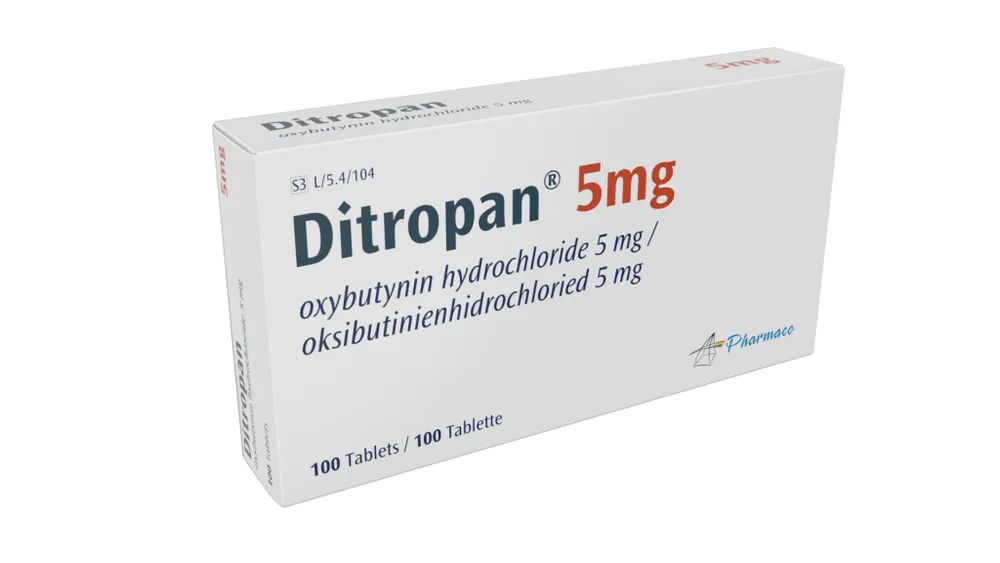
Table of Contents
Package leaflet: Information for the user
Warning! Please keep the leaflet. Information on the immediate packaging in a foreign language.
Ditropan, 5 mg, tablets
Oxybutynini hydrochloridum
Please read the entire leaflet carefully before using this medicine, as it contains
important information for the patient.
- Keep this leaflet for future reference.
- If in doubt, consult your doctor or pharmacist.
- This medicine has been prescribed for a specific individual. Do not pass it on to others. It may harm someone else, even if their symptoms are similar.
- If the patient experiences any adverse reactions, including those not listed in this leaflet, inform a doctor, pharmacist, or nurse. See section 4.
Contents of the leaflet:
- What Ditropan is and what it is used for
- What you need to know before taking Ditropan
- How to take Ditropan
- Possible side effects
- How to store Ditropan
- Contents of the pack and other information
1. What Ditropan is and what it is used for
Ditropan is available as tablets and contains the active substance oxybutynini hydrochloridum. The medicine exerts a spasmolytic effect on the smooth muscles of the urinary bladder in patients with symptoms of bladder instability.
Ditropan is indicated for the relief of symptoms of unstable bladder with voiding disorders in patients with neurogenic bladder – detrusor hyperreflexia (symptoms such as urgency, urinary incontinence, difficulty in urination).
Ditropan may be used in children aged 5 years and older for the treatment of:
- loss of bladder control (urinary incontinence)
- frequent urination or sudden urge to urinate
- nocturnal enuresis, in combination with non-pharmacological therapy when other treatment methods have failed.
2. Important information before using Ditropan
When not to use Ditropan:
- if the patient is allergic to the active substance or to any of the other components of this medicine (listed in section 6),
- in case of narrow-angle glaucoma or shallow anterior chamber of the eye,
- in case of bladder outflow obstruction, when urinary retention may occur,
- in case of partial or complete intestinal obstruction, paralytic ileus, or intestinal atony,
- in case of toxic megacolon,
- in case of severe forms of ulcerative colitis,
- in case of myasthenia gravis.
Warnings and precautions
Before starting treatment with Ditropan, discuss this with your doctor or pharmacist.
- Ditropan should be used with caution in patients with Parkinson's disease, autonomic neuropathy, and/or impaired kidney or liver function. This is due to an increased risk of adverse effects after administration of the medicinal product.
- Ditropan may reduce gastrointestinal motility. Therefore, caution should be exercised in patients with partial or complete intestinal obstruction, intestinal atony, or ulcerative colitis.
- Ditropan may exacerbate symptoms of tachycardia (and thus hyperthyroidism, congestive heart failure, cardiac arrhythmias, coronary artery disease, and hypertension), cognitive disturbances, and symptoms of benign prostatic hyperplasia.
- The anticholinergic effect of Ditropan may cause symptoms such as hallucinations, agitation, disorientation, and drowsiness. The doctor may consider monitoring the patient's condition, especially during the first month of treatment or after dose adjustment.
- Ditropan may cause narrow-angle glaucoma. Patients should contact their doctor immediately if they experience loss of visual acuity or eye pain.
- Ditropan may reduce saliva secretion, which may lead to dental caries, periodontitis, or oral candidiasis.
- This medicine should be used with caution in patients with hiatal hernia associated with gastroesophageal reflux and/or when taking concomitant medications such as bisphosphonates, because Ditropan may cause or worsen esophagitis.
- Taking Ditropan in hot climates or in very warm environments may lead to heat stroke due to reduced sweating.
- In patients with a history of drug or substance abuse, Ditropan may lead to dependence on the active substance oxybutynin contained in the medicine.
If any of the above conditions apply to the patient, the doctor should be informed before starting treatment.
Elderly patients (including frail elderly patients)
Elderly patients should exercise caution when using Ditropan, as they may be more susceptible to adverse effects of this medicine and have an increased risk of cognitive disturbances.
Children and adolescents
Children under 5 years of age
Ditropan is not recommended for use in children under 5 years of age.
Children aged 5 years and older
This medicine should not be given to a child without prior consultation with a doctor. Children may be more susceptible to adverse effects of Ditropan.
Ditropan with other medicines
Inform your doctor about all medicines currently used, recently taken, or planned for use.
Caution is required when using the following medicines concomitantly with Ditropan:
- other anticholinergic medicines, such as amantadine (used in the treatment of influenza and Parkinson's disease),
- other anticholinergic medicinal products used in the treatment of Parkinson's disease (e.g. biperiden, levodopa),
- antihistamines (medicines used to treat allergy symptoms),
- antipsychotic medicines – used to treat psychiatric disorders, e.g. schizophrenia (phenothiazine derivatives, butyrophenone derivatives, clozapine),
- quinidine, cardiac glycosides (used to treat cardiac arrhythmias),
- tricyclic antidepressants,
- atropine and related compounds, such as antispasmodic drugs with atropine-like effects,
- dipyridamole (a medicine preventing blood clot formation),
- medicines used to treat dementia, such as donepezil, rivastigmine, galantamine (cholinesterase inhibitors),
- CYP3A inhibitors, including ketoconazole, itraconazole, or fluconazole (used to treat fungal infections), or erythromycin or other macrolide antibiotics (used to treat bacterial infections),
- gastrointestinal medicines such as domperidone, metoclopramide, or betanechol.
Due to reduced gastric motility, Ditropan may affect the absorption of other medicines from the gastrointestinal tract; for example, it may increase the absorption of digoxin (used to treat cardiac arrhythmias) and decrease the absorption of lidocaine (used for local anesthesia), paracetamol (an analgesic), lithium salts (used to treat bipolar affective disorder), tetracyclines (antibiotics), phenylbutazone (an anti-inflammatory medicine), sulfamethoxazole, cotrimoxazole (antibiotics), and medicines with prolonged release.
Ditropan, food, drink, and alcohol
Food does not affect the absorption of the medicine from the gastrointestinal tract.
Alcohol may intensify drowsiness caused by anticholinergic medicines such as oxybutynin.
Pregnancy, breastfeeding, and fertility
If the patient is pregnant or breastfeeding, suspects she may be pregnant, or is planning to have a child, she should consult her doctor before using this medicine.
Pregnancy
Ditropan may be used during pregnancy only if its use is absolutely necessary. This decision will be made by the attending physician.
Breastfeeding
Small amounts of oxybutynin pass into breast milk. The use of Ditropan during breastfeeding is not recommended.
Driving and operating machinery
Ditropan may cause drowsiness and blurred vision. If these symptoms occur, driving, operating machinery, or performing potentially hazardous activities is not recommended.
Ditropan contains lactose
If the doctor has diagnosed an intolerance to certain sugars in the patient, contact the doctor before taking this medicine.
Ditropan contains sodium
The medicine contains less than 1 mmol (23 mg) of sodium per tablet, meaning that the medicine is considered "sodium-free."
3. How to use Ditropan
This medicine should always be taken exactly as prescribed by your doctor. If in doubt, consult your doctor.
The tablet may be divided into equal doses.
Dosage
The exact dose will be individually determined by your doctor, although the following doses are generally recommended.
Adults
The usual recommended dose is 1 Ditropan tablet 2 to 3 times daily. The maximum dose of 4 tablets per day must not be exceeded.
Elderly patients (including frail elderly patients)
The usual recommended dose is half a tablet twice daily. The dose may be increased to 1 tablet twice daily to achieve an adequate clinical response, provided the medicine is well tolerated.
Use in children
Children under 5 years of age
Use of this medicine is not recommended.
Children aged 5 years and older
The usual recommended dose is 1 Ditropan tablet twice daily. The dose may then be increased to 1 tablet 2 to 3 times daily.
The maximum dose of 3 tablets per day must not be exceeded.
If you feel that the effect of Ditropan is too strong or too weak, consult your doctor.
Method of administration
The tablets are for oral use. They have an unpleasant taste, so they should be taken with a glass of water.
Taking more Ditropan than recommended
Symptoms of overdose:
restlessness, agitation, psychiatric disturbances, circulatory disturbances (flushing, decreased arterial blood pressure, circulatory failure), respiratory failure, and in severe cases paralysis and coma.
In case of severe overdose, the patient should be hospitalized and cardiovascular function monitored.
If you have taken more than the recommended dose, contact your doctor or pharmacist immediately.
Missing a dose of Ditropan
If you miss a dose, take it as soon as possible, unless it is almost time for the next dose. Do not take a double dose to make up for a missed dose. If in doubt, consult your doctor.
Stopping Ditropan
If you have any further doubts regarding the use of this medicine, consult your doctor or pharmacist.
4. Possible adverse effects
Like all medicines, this medicinal product may cause adverse effects, although not everyone experiences them.
The following adverse effects may occur during treatment with this medicine:
Very common (occurs in more than 1 in 10 people):
constipation, nausea, dry mouth, headache, dizziness, drowsiness, blurred vision, dry skin.
Common (occurs in less than 1 in 10 people):
diarrhea, vomiting, disturbances in consciousness (disorientation), dry eyes, urinary retention,
flushing of the face, palpitations which may be fast or irregular.
Uncommon (occurs in less than 1 in 1,000 people):
abdominal discomfort, loss of appetite, decreased appetite, difficulty swallowing.
Frequency not known (cannot be estimated from available data):
urinary tract infections, gastroesophageal reflux, paralytic ileus in patients at increased risk (elderly patients or patients with constipation and those treated with other medicines reducing intestinal peristalsis), cognitive disorders, especially in elderly patients, seizures, somnolence, excitation, anxiety, hallucinations, nightmares, paranoia, depressive symptoms, dependence on oxybutynin (in patients with a history of drug abuse), tachycardia (increased heart rate), cardiac arrhythmias, heat stroke, increased intraocular pressure, acute angle-closure glaucoma, mydriasis (pupil dilation), photophobia (sensitivity to light), decreased sweating, allergic reactions such as: rash, urticaria (localized skin lesions presenting as blisters and erythema), angioedema (an allergic reaction characterized by swelling and/or puffiness mainly affecting the face and limbs), hypersensitivity, nosebleeds, muscular disorders (muscle weakness, pain, cramps).
Reporting of adverse effects
If any adverse effects occur, including any adverse effects not listed in this leaflet, inform your doctor, pharmacist, or nurse. Adverse effects can also be reported directly to the Department for Monitoring Adverse Drug Reactions of the Office for Registration of Medicinal Products,
Medical Devices and Biocidal Products
Al. Jerozolimskie 181C
02-222 Warsaw
Phone: +48 (22) 49 21 301
Fax: +48 (22) 49 21 309
Website: https://smz.ezdrowie.gov.pl
Reporting adverse effects helps to provide more information on the safety of this medicine.
5. How to store Ditropan
Keep this medicine out of sight and reach of children.
Do not use this medicine after the expiry date stated on the packaging. The expiry date refers to the last day of the stated month.
Store below 30°C.
Medicines must not be disposed of via wastewater or household waste. Ask your pharmacist how to dispose of medicines no longer in use. This will help protect the environment.
6. Contents of the packaging and other information
What Ditropan contains
- The active substance is oxybutynin chloride 5 mg.
- The other ingredients are: lactose, microcrystalline cellulose, calcium stearate.
What Ditropan looks like and contents of the pack
Pack size: 30 tablets.
PVC/Al blisters in a cardboard box.
For further information, please contact the Marketing Authorisation Holder or the Parallel Importer.
Marketing Authorisation Holder in Greece, country of export:
Cheplapharm Arzneimittel GmbH
Ziegelhof 24
17489 Greifswald
Germany
Manufacturer:
Fidelio Healthcare Limburg GmbH
Mundipharmastraße 2, 65549 Limburg an der Lahn, Germany
Parallel Importer:
Delfarma Sp. z o.o.
ul. Św. Teresy od Dzieciątka Jezus 111
91-222 Łódź
Repackaged in:
Delfarma Sp. z o.o.
ul. Św. Teresy od Dzieciątka Jezus 111
91-222 Łódź
Marketing Authorisation number in Greece, country of export: 45745/14-07-2020
Parallel Import Licence number: 148/23