Dissenten
Poland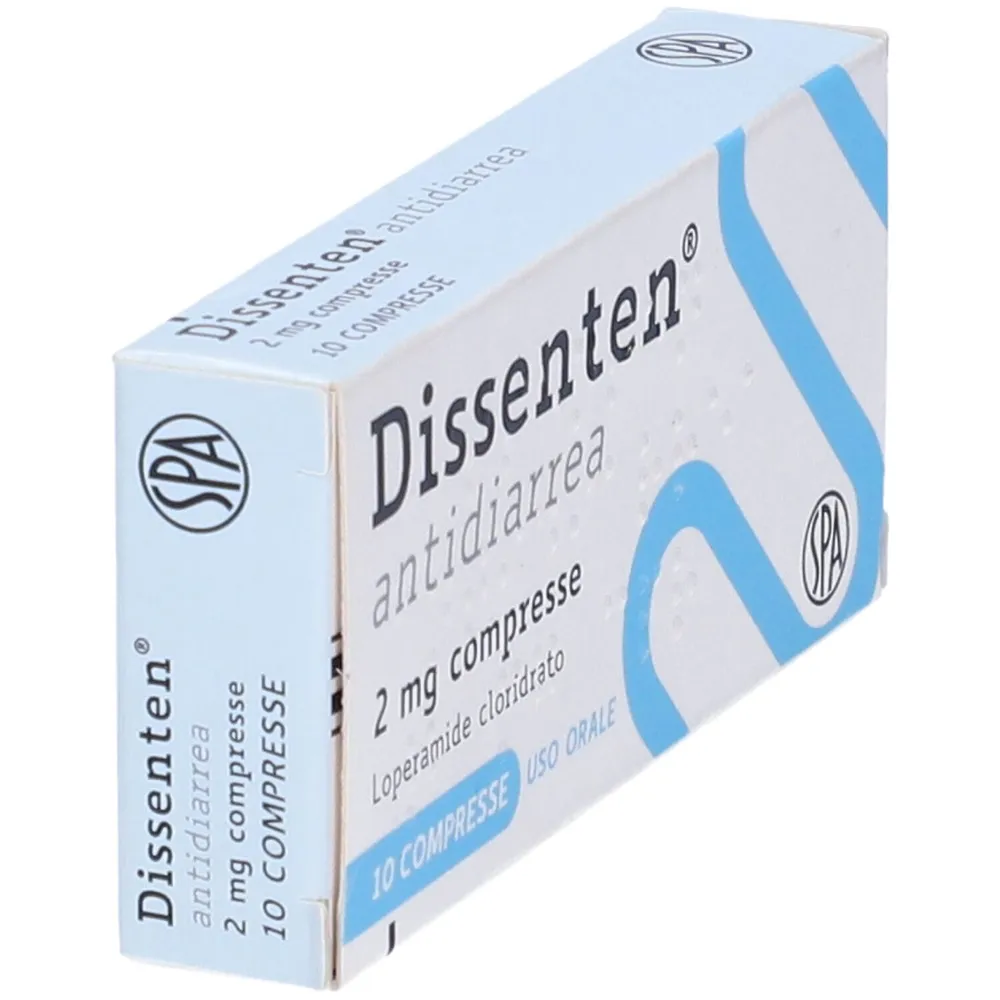
Table of Contents
Package leaflet: information for the patient
Dissenten, 2 mg, tablets
Loperamidi hydrochloridum
Please read this leaflet carefully before taking this medicine, as it contains
important information for the patient.
- Keep this leaflet, as you may need to read it again.
- If you have any questions, please consult your doctor or pharmacist.
- This medicine has been prescribed for a specific individual. Do not share it with others. The medicine may harm another person, even if their symptoms are the same.
- If you experience any adverse reactions, including any not listed in this leaflet, inform your doctor or pharmacist. See section 4.
Table of contents of the leaflet:
- What Dissenten is and what it is used for
- Important information before taking Dissenten
- How to take Dissenten
- Possible side effects
- How to store Dissenten
- Contents of the pack and other information
1. What Dissenten is and what it is used for
The active substance in Dissenten is loperamide, which helps control diarrhoea by slowing down intestinal peristalsis.
Dissenten is used:
- for symptomatic treatment of occasional or recurrent diarrhoea (acute diarrhoea or exacerbation of chronic diarrhoea).
If there is no improvement after 2 days, or if your condition worsens, consult your doctor.
2. Important information before taking Dissenten
When not to take Dissenten
- If you are allergic to the active substance or to any of the other ingredients of this medicine (listed in section 6).
- If taking this medicine could expose you to complications that may cause intestinal paralysis (intestinal obstruction, megacolon, or acute colonic dilation). If constipation, intestinal obstruction, or abdominal distension occurs during treatment, discontinue this medicine immediately and contact your doctor.
- If you have intestinal disease – acute dysentery with high fever and rectal bleeding.
- If you have infectious intestinal diseases such as acute ulcerative colitis (with intestinal wall damage), pseudomembranous colitis (a severe form of diarrhoea associated with the use of broad-spectrum antibiotics or antibacterial drugs), or bacterial colitis caused by invasive strains of Salmonella, Shigella, and Campylobacter bacteria.
- In children under 6 years of age.
Warnings and precautions
Before starting treatment with Dissenten, discuss it with your doctor or pharmacist.
This medicine may relieve diarrhoea symptoms (symptomatic treatment), but does not cure the underlying cause. Therefore, when possible, your doctor should identify the cause of diarrhoea and initiate appropriate causal treatment.
Do not use this medicine for longer than 2 days.
Diarrhoea causes significant loss of fluids and electrolytes, especially in children. Therefore, it is important to drink plenty of fluids and/or electrolyte replacement solutions.
Discontinue use and contact your doctor if:
- your condition does not improve within 48 hours of starting Dissenten;
- you are a patient with AIDS and develop abdominal distension during treatment with this medicinal product; if Dissenten is used to treat bacterial or viral diarrhoea (infectious colitis), there is an increased risk of intestinal complications (acute colonic dilation).
Use this medicine with caution and under medical supervision in patients with liver disease (impaired liver function), as symptoms of toxicity affecting the central nervous system may occur (see section "Taking more Dissenten than recommended").
Dissenten and other medicines
Inform your doctor or pharmacist about all medicines you are currently taking, have recently taken, or plan to take.
Exercise caution and inform your doctor if you are taking any of the following medicines:
- quinidine (a medicine used to treat certain heart conditions),
- ritonavir (a medicine used to treat HIV infection and AIDS),
- itraconazole or ketoconazole (medicines used to treat fungal infections),
- gemfibrozil (a medicine used to reduce blood lipid levels),
- desmopressin (a medicine used to treat diabetes insipidus and nocturnal enuresis),
- medicines with similar effects to Dissenten,
- medicines that increase intestinal peristalsis,
- cytochrome CYP450 inhibitors.
Pregnancy and breastfeeding
If you are pregnant or breastfeeding, think you may be pregnant, or are planning to have a baby, consult your doctor or pharmacist before using this medicine.
Pregnancy:
If you are pregnant or breastfeeding, think you may be pregnant, or are planning to have a baby, consult your doctor or pharmacist before using this medicine.
Breastfeeding:
Do not use Dissenten during breastfeeding.
Driving and operating machinery
Dissenten may cause fatigue, dizziness, or drowsiness.
Exercise particular caution when driving or operating machinery.
3. How to use Dissenten
This medicine should always be taken exactly as described in this patient leaflet or as directed by your doctor or pharmacist. If in doubt, consult your doctor or pharmacist.
Oral administration. Tablets should be swallowed with water.
After improvement of health condition (normalization of bowel movements) during treatment with this medicine, the dose should be reduced. Treatment should be discontinued if constipation occurs (see section "Warnings and precautions").
Do not use this medicine for longer than 2 days.
Use in adults:
The recommended initial dose is 2 tablets (4 mg), followed by 1 tablet (2 mg) after each loose bowel movement.
Do not exceed the maximum daily dose of 8 tablets (16 mg).
Use in children and adolescents (from 6 to 17 years of age):
The recommended initial dose is 1 tablet (2 mg). Then take 1 tablet (2 mg) after each subsequent loose bowel movement. The maximum daily dose should be calculated based on body weight (3 tablets/20 kg), but must not exceed 8 tablets per day.
Use in children under 6 years of age:
Dissenten must not be used in children under 6 years of age.
Use in patients with hepatic impairment:
This medicine should be used with caution in patients with liver disease (see section "Warnings and precautions").
Accidental overdose of Dissenten
If too many tablets have been taken, contact your doctor immediately or go to the nearest hospital emergency department.
Symptoms of overdose may include:
- depression of the central nervous system,
- detachment from reality (stupor),
- coordination disturbances,
- drowsiness,
- pinpoint pupils (black area of the eye) – miosis,
- muscle function disturbances (increased muscle tone),
- respiratory disturbances (respiratory depression),
- reduced urge to urinate (urinary retention),
- symptoms indicating intestinal paralysis (ileus).
Children are more sensitive to overdose of this medicine than adults. Accidental or excessive ingestion, especially in children under 4 years of age, may cause constipation and depression of the central nervous system, with drowsiness and slowed breathing. In such cases, the patient must be placed under close medical observation for at least 48 hours.
Management of overdose includes gastric lavage, induction of vomiting, or administration of agents promoting intestinal emptying (laxatives). Additionally, naloxone may be administered as an antidote if symptoms of overdose occur. In these cases, the patient must be monitored for at least 48 hours.
Missed dose of Dissenten
Do not take a double dose to make up for a missed dose. When it is time to take the next dose, take it as usual.
If you have any further questions about the use of this medicine, consult your doctor or pharmacist.
4. Possible adverse reactions
Like any medicine, this medicinal product can cause adverse reactions, although they do not occur in everyone.
Treatment with the medicinal product DISSENTEN should be stopped immediately and a doctor should be contacted
if any of the following symptoms occur:
- severe hypersensitivity reactions, which may involve swelling and difficulty breathing,
- abdominal distension associated with pain, nausea, vomiting, constipation, symptoms of intestinal obstruction or megacolon,
- severe skin reactions, which may involve blistering or skin peeling.
The following adverse reactions may occur during treatment with this medicine. They are listed
according to frequency of occurrence:
Frequent (may affect up to 1 in 100 patients)
- headache, dizziness;
- constipation, nausea, excessive intestinal gas production.
Uncommon (may affect up to 1 in 1,000 patients)
- abdominal pain (especially in the upper abdomen), abdominal discomfort;
- dry mouth;
- vomiting;
- digestive disturbances (dyspepsia);
- skin irritation (rash).
Rare (may affect up to 1 in 10,000 patients)
- abdominal bloating.
Additionally, the following adverse reactions have been reported (after marketing authorization) for which the frequency cannot be estimated from available data:
- allergic (hypersensitivity) reactions, which may be severe (anaphylactic reaction, including shock and anaphylactoid reaction);
- drowsiness, loss of consciousness, psychiatric disturbances including detachment from reality (stupor), decreased level of consciousness, muscle function disorders (increased muscle tone), and loss of muscular coordination causing difficulty in performing certain activities;
- pupil constriction (black area of the eye) - miosis;
- gastrointestinal disturbances indicating intestinal paralysis (obstruction, paralytic ileus, megacolon, acute colonic dilation);
- pain and burning sensation of the tongue (glossodynia);
- severe skin disorders, which may involve blistering (Stevens-Johnson syndrome, toxic epidermal necrolysis, erythema multiforme), skin irritation (urticaria), itching;
- angioedema (severe allergic reaction causing swelling of the face or throat, which may impair breathing and swallowing);
- reduced urge to urinate (urinary retention);
- fatigue.
Additional adverse reactions in children and adolescents
Children and adolescents (over 12 years of age) may experience the same adverse reactions as adults.
Reporting of adverse reactions
If any adverse reactions occur, including those not listed in this leaflet, inform your doctor or pharmacist. Adverse reactions can be reported directly to:
Department of Monitoring Adverse Drug Reactions,
Office for Registration of Medicinal Products, Medical Devices and Biocidal Products,
Al. Jerozolimskie 181C, 02-222 Warsaw,
Phone: +48 22 49 21 301, Fax: +48 22 49 21 309,
e-mail: [email protected]
Adverse reactions can also be reported to the marketing authorization holder.
Reporting adverse reactions helps to enhance the safety information available for this medicine.
5. How to store Dissenten
Keep the medicine out of the sight and reach of children.
There are no special storage instructions for this medicine.
Do not use this medicine after the expiry date stated on the packaging. The expiry date refers to the last day of the stated month.
Medicines must not be disposed of via wastewater or household waste. Ask your pharmacist what to do with medicines no longer required. This will help protect the environment.
6. Contents of the pack and other information
What Dissenten contains
The active substance is loperamide hydrochloride. Each tablet contains 2 mg of loperamide hydrochloride.
The other ingredients are: magnesium stearate, microcrystalline cellulose.
What Dissenten looks like and contents of the pack
Dissenten is a round, white, flat tablet with a score line.
The medicine is packed in blisters made of polyvinyl chloride and aluminium, contained in a cardboard box.
The pack contains 15 or 30 tablets.
Marketing Authorisation Holder and Manufacturer
Marketing Authorisation Holder:
SPA - Società Prodotti Antibiotici S.p.A.
Via Biella 8, 20143 Milan,
Italy
Manufacturer:
Doppel Farmaceutici S.r.l.,
Via Volturno 48, Quito de Stampi, Rozzano (MI),
Italy
Representative of the Marketing Authorisation Holder:
Angelini Pharma Polska Sp. z o.o.
ul. Podleśna 83, 05-552 Łazy
tel.: (22) 702 82 00
e-mail: [email protected]
representative of the Marketing Authorisation Holder.