Dimtruzic
Poland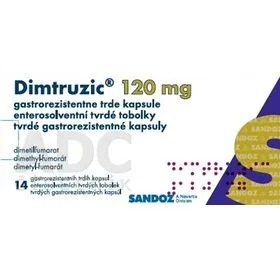
Table of Contents
Package leaflet: Information for the
patient
Dimtruzic, 120 mg, hard enteric capsules
Dimtruzic, 240 mg, hard enteric capsules
Dimethyl fumarate
Please read all of this leaflet carefully before taking this medicine, because it contains
important information for the patient.
- Keep this leaflet, as you may need to read it again.
- If you have any further questions, please ask your doctor or pharmacist.
- This medicine has been prescribed for a specific individual. Do not pass it on to others. It may harm them, even if their symptoms are the same.
- If you experience any side effects, including any not listed in this leaflet, please inform your doctor or pharmacist. See section 4.
Contents of the leaflet
- What Dimtruzic is and what it is used for
- Important information before taking Dimtruzic
- How to take Dimtruzic
- Possible side effects
- How to store Dimtruzic
- Contents of the pack and other information
1. What Dimtruzic is and what it is used for
What Dimtruzic is
Dimtruzic is a medicine that contains dimethyl fumarate as the active substance.
What Dimtruzic is used for
Dimtruzic is used in the treatment of relapsing-remitting multiple sclerosis (MS) in patients aged 13 years and older.
Multiple sclerosis is a chronic disease that affects the central nervous system (CNS), including the brain and spinal cord. Relapsing-remitting multiple sclerosis is characterized by
recurring, periodic flare-ups of neurological symptoms (called relapses). Symptoms vary between individuals but usually include walking and balance difficulties, and vision impairment (e.g. blurred or double vision). These symptoms may completely resolve after a relapse, but some problems may persist.
How Dimtruzic works
Dimtruzic appears to suppress the immune system from causing damage to the brain and spinal cord, which may help slow the progression of the disease in the future.
2. Information before using Dimtruzic
When not to use Dimtruzic
- if the patient is allergic to dimethyl fumarate or to any of the other ingredients of this medicine (listed in section 6)
- if progressive multifocal leukoencephalopathy (PML), a rare brain infection, is suspected or has been confirmed in the patient.
Warnings and precautions
Dimtruzic may have an adverse effect on white blood cell count, as well as on kidney and liver function. Before starting treatment with Dimtruzic, the doctor will check the patient's white blood cell count and assess whether the kidneys and liver are functioning properly. These tests will be performed periodically during treatment. If the white blood cell count decreases during treatment, the doctor may consider performing additional tests or discontinuing treatment.
Before starting Dimtruzic, consult a doctor if the patient has:
- severe kidney disease
- severe liver disease
- stomach or intestinal disease
- severe infection (e.g. pneumonia).
Shingles (herpes zoster) may occur during treatment with Dimtruzic. In some cases, severe complications have been reported. If there is any suspicion of shingles in the patient, the doctor should be informed immediately.
If symptoms of multiple sclerosis worsen (e.g. weakness or vision disturbances) or new symptoms appear, the patient should contact the doctor immediately, as these may be signs of a rare brain infection called PML. PML is a serious condition that may lead to severe disability or death.
Rare but serious kidney problems called Fanconi syndrome have been reported when dimethyl fumarate-containing medicines were used in combination with other fumaric acid esters used to treat psoriasis (a skin condition). If the patient notices increased urination, increased thirst and fluid intake, muscle weakness, bone fractures, or unexplained pain, they should contact their doctor as soon as possible for further evaluation.
Children and adolescents
This medicine should not be given to children under 10 years of age, as there is insufficient data available for this age group.
Dimtruzic and other medicines
Tell the doctor or pharmacist about all medicines the patient is currently taking or has recently taken, as well as any medicines they plan to take, particularly:
- medicines containing fumaric acid esters (fumarates) used in the treatment of psoriasis;
- medicines affecting the immune system, including chemotherapeutic agents, immunosuppressive medicines, and other medicines used in the treatment of multiple sclerosis;
- medicines affecting the kidneys, including certain antibiotics (used to treat infections), diuretics, certain types of painkillers (such as ibuprofen and similar non-steroidal anti-inflammatory drugs, including over-the-counter products), and medicines containing lithium.
Using certain vaccines (containing live microorganisms) during treatment with Dimtruzic may lead to infection; therefore, such vaccines should be avoided. The doctor will advise whether alternative vaccines (containing inactivated microorganisms) should be administered.
Use of Dimtruzic with alcohol
High-strength alcoholic beverages (over 30% alcohol by volume, e.g. spirits) should be avoided in amounts exceeding 50 ml within one hour of taking Dimtruzic, due to the risk of interaction between alcohol and this medicine, which may cause gastric irritation (inflammation of the stomach lining), especially in individuals susceptible to this condition.
Pregnancy and breastfeeding
If the patient is pregnant, breastfeeding, suspects she may be pregnant, or is planning to have a baby, she should consult her doctor or pharmacist before using this medicine.
Pregnancy
There is limited information on the effects of this medicine on the unborn child when used during pregnancy. Dimtruzic should not be used during pregnancy unless discussed with the doctor and deemed necessary.
Breastfeeding
It is unknown whether the active substance of Dimtruzic passes into breast milk. The doctor will advise the patient whether she should discontinue breastfeeding or the use of Dimtruzic. The decision will be based on an assessment of the benefits of breastfeeding for the child versus the benefits of treatment for the patient.
Driving and operating machinery
Dimtruzic is not expected to affect the ability to drive or operate machinery.
Dimtruzic contains sodium
The medicine contains less than 1 mmol (23 mg) of sodium per capsule; therefore, the medicine is considered "sodium-free".
3. How to use Dimtruzic
This medicine should always be taken exactly as prescribed by the doctor. If in doubt, consult
your doctor.
Initial dose: 120 mg twice daily.
This initial dose should be taken for the first 7 days, after which the medicine should be used at the
usual maintenance dose.
Usual dose: 240 mg twice daily.
Dimtruzic should be taken orally.
Each capsule must be swallowed whole with water. Capsules must not be divided, crushed,
dissolved, sucked, or chewed, as this may increase the risk of certain adverse effects.
Dimtruzic should be taken with food – this will help reduce the very common adverse
effects (listed in section 4).
Taking more than the recommended dose of Dimtruzic
If more capsules than recommended have been taken, you must immediately inform your doctor.
Adverse effects similar to those described below in section 4 may occur.
Missing a dose of Dimtruzic
Do not take a double dose to make up for a missed dose.
A missed dose may be taken later, provided that a 4-hour interval is maintained before the next
scheduled dose. If it is too late, the missed dose should not be taken; instead, take the next dose
at the usual time.
If you have any further doubts about the use of this medicine, consult your doctor or pharmacist.
4. Possible adverse reactions
Like all medicines, this medicine can cause adverse reactions, although not everyone will experience them.
Serious adverse reactions
Dimtruzic may reduce the number of lymphocytes, which are a type of white blood cell. A low
number of white blood cells may increase the risk of infections, including a rare brain infection
called progressive multifocal leukoencephalopathy (PML). PML can lead to severe disability or
death. PML has been reported after 1 to 5 years of treatment; therefore, the doctor should
monitor the patient's white blood cell count throughout the entire treatment period, and the
patient should be vigilant for the symptoms described below, which may indicate PML. The
risk of developing PML may be higher if the patient has previously taken medicines that affect
the immune system.
Symptoms of PML may resemble a relapse of multiple sclerosis. These include new or
worsening weakness on one side of the body, coordination problems, vision disturbances,
cognitive or memory problems, confusion (disorientation), personality changes, speech
difficulties, and communication problems lasting longer than a few days. Therefore, if the
patient notices worsening of symptoms related to multiple sclerosis or the onset of any new
symptoms while taking Dimtruzic, they should contact their doctor as soon as possible. It is
also advisable to talk to a partner or caregivers and inform them about the treatment.
Symptoms may occur that the patient may not be aware of.
If any of the listed symptoms occur, contact a doctor immediately
Serious allergic reactions
The frequency of serious allergic reactions cannot be determined from available data
(unknown).
A very common adverse reaction is sudden ( episodic ) redness of the face or body skin. If episodic
skin redness is accompanied by a red rash or hives and any of the following symptoms:
- swelling of the face, lips, mouth, or tongue ( angioedema );
- wheezing, difficulty breathing, or shortness of breath ( dyspnea, hypoxia );
- dizziness or loss of consciousness ( hypotension ),
this may indicate a serious allergic reaction ( anaphylaxis ).
The use of Dimtruzic must be discontinued and medical advice sought immediately
Other adverse reactions
Very common (may affect more than 1 in 10 people)
- redness of the face or sensation of increased body temperature, warmth, burning, or itching of the skin ( episodic flushing )
- loose stools ( diarrhea )
- nausea
- stomach pain or cramps
→ Taking the medicine with food may help reduce the above-mentioned adverse reactions
During treatment with Dimtruzic, increased production of ketone bodies (substances normally
produced in the body) is very commonly observed in urine tests.
Consult your doctor on how to manage these adverse reactions. The doctor may reduce the
dose of the medicine. Do not reduce the dose yourself unless instructed by the doctor.
Common (may affect 1 in 10 people, but not more frequently)
- inflammation of the intestinal mucosa ( gastroenteritis )
- vomiting
- indigestion
- inflammation of the gastric mucosa ( gastritis )
- gastrointestinal disturbances
- skin burning
- hot flashes, sensation of heat
- itching of the skin ( pruritus )
- rash
- pink or red spots on the skin ( flushing )
- hair loss ( alopecia )
Adverse reactions that may cause abnormal blood or urine test results
- low number of white blood cells ( lymphopenia, leukopenia ). A reduced number of white blood cells may mean the body is less able to fight infections. In case of severe infection (e.g. pneumonia), contact a doctor immediately;
- protein ( albumin ) in urine;
- increased activity of liver enzymes ( AlAT, AspAT ) in blood.
Uncommon (may affect 1 in 100 people, but not more frequently)
- allergic reactions (hypersensitivity)
- decreased platelet count
Unknown (frequency cannot be determined from available data)
- hepatitis and increased liver enzyme activity ( AlAT or AspAT together with bilirubin )
- shingles, with symptoms such as: skin blisters, burning, itching, or pain, usually on one side of the upper body or face, and other symptoms such as fever and fatigue in the early stages of infection, followed by numbness, itching, red spots, and severe pain
- nasal congestion ( rhinitis )
Children (aged 13 years and older) and adolescents
The adverse reactions listed above also apply to children and adolescents. Some adverse
reactions have been reported more frequently in children and adolescents than in adults, e.g.
headache, abdominal pain or stomach cramps, vomiting, sore throat, cough, and painful
menstruation.
Reporting of adverse reactions
If any adverse reactions occur, including any unlisted symptoms not mentioned in this leaflet,
inform your doctor or pharmacist. Adverse reactions can be reported directly to the Department
of Monitoring Adverse Drug Reactions of the Office for Registration of Medicinal Products,
Medical Devices and Biocidal Products: Al. Jerozolimskie 181C, 02-222 Warsaw, tel.:
+48 22 49 21 301, fax: +48 22 49 21 309, website: https://smz.ezdrowie.gov.pl.
Adverse reactions can also be reported to the responsible entity.
Reporting adverse reactions helps provide more information on the safety of using the medicine.
5. How to store Dimtruzic
Keep this medicine out of sight and reach of children.
Do not store above 30°C.
Do not use this medicine after the expiry date stated on the carton and blister pack.
The expiry date refers to the last day of the stated month.
The marking on the packaging following EXP indicates the expiry date, and following Lot/LOT indicates the batch number.
Medicines must not be disposed of via wastewater or household waste. Ask your pharmacist how to dispose of medicines no longer required. These measures help protect the environment.
6. Contents of the pack and other information
What Dimtruzic contains
The active substance is dimethyl fumarate.
Dimtruzic 120 mg
Each enteric hard capsule contains 120 mg of dimethyl fumarate.
Dimtruzic 240 mg
Each enteric hard capsule contains 240 mg of dimethyl fumarate.
The other ingredients are:
Capsule filling: sodium croscarmellose, colloidal anhydrous silica, sodium stearyl fumarate, copolymer of methacrylic acid and methyl methacrylate (1:1), copolymer of methacrylic acid and ethyl acrylate (1:1), 30% dispersion, talc, triethyl citrate, polysorbate 80, glycerol monostearate 40-55;
Capsule shell: gelatin, titanium dioxide (E 171), yellow iron oxide (E 172), brilliant blue FCF (E 133);
Printing ink on capsule: shellac, propylene glycol (E 1520), black iron oxide (E 172), concentrated ammonium hydroxide 28%.
What Dimtruzic looks like and contents of the pack
Dimtruzic 120 mg enteric hard capsules.
Hard, gelatin capsules with white body and light green cap, printed on the body with "120 mg", approximately 19.4 mm in length and 8.53 mm in width.
Dimtruzic 240 mg enteric hard capsules.
Hard, gelatin capsules, light green in colour, printed on the body with "240 mg", approximately 23.3 mm in length and 8.53 mm in width.
Dimtruzic is packed in blisters or calendar blister packs or in single-dose perforated blisters made of Al/PVC/PVDC foil.
Dimtruzic, 120 mg, enteric hard capsules
Blisters: 14 enteric hard capsules
Calendar blister packs: 14 enteric hard capsules
Single-dose perforated blisters: 14 x 1 enteric hard capsule
Dimtruzic, 240 mg, enteric hard capsules
Blisters: 56 enteric hard capsules
Calendar blister packs: 56 enteric hard capsules
Single-dose perforated blisters: 56 x 1 enteric hard capsule
Single-dose perforated blisters: 168 x 1 enteric hard capsule
Not all pack sizes may be marketed.
Marketing Authorisation Holder and Manufacturer
Marketing Authorisation Holder
Sandoz GmbH
Biochemiestrasse 10
6250 Kundl
Austria
Manufacturer
LEK farmacevtska družba d.d.
Verovškova ulica 57
1526 Ljubljana
Slovenia
Zakłady Farmaceutyczne Polpharma S.A.
ul. Metalowca 2
39-460 Nowa Dęba
Poland
This product is authorised for marketing in the Member States of the European Economic Area under the following names:
Austria Dimtruzic 120 mg magensaftresistente Hartkapseln
Dimtruzic 240 mg magensaftresistente Hartkapseln
Belgium Dimtruzic 120 mg harde maagsapresistente capsules
Dimtruzic 240 mg harde maagsapresistente capsules
Bulgaria DIMTRUZIC 120 mg gastro-resistant hard capsule
DIMTRUZIC 240 mg gastro-resistant hard capsule
Croatia Dimtruzic 120 mg tvrde želučanootporne kapsule
Dimtruzic 240 mg tvrde želučanootporne kapsule
Cyprus DIMTRUZIC
Czech Republic DIMTRUZIC
Estonia DIMTRUZIC
Germany DIMTRUZIC 120 mg magensaftresistente Hartkapseln
DIMTRUZIC 240 mg magensaftresistente Hartkapseln
Greece DIMTRUZIC 120 mg γαστροανθεκτικά σκληρά καψάκια
DIMTRUZIC 240 mg γαστροανθεκτικά σκληρά καψάκια
France DIMTRUZIC 120 mg, gélule gastrorésistante
DIMTRUZIC 240 mg, gélule gastrorésistante
Italy DIMTRUZIC
Latvia Dimtruzic 120 mg zarnās šķīstošās cietās kapsulas
Dimtruzic 240 mg zarnās šķīstošās cietās kapsulas
Lithuania Dimtruzic 120 mg skrandyje neirios kietosios kapsulės
Dimtruzic 240 mg skrandyje neirios kietosios kapsulės
Malta DIMTRUZIC 120 mg gastro-resistant hard capsule
DIMTRUZIC 240 mg gastro-resistant hard capsule
Poland Dimtruzic
Romania Dimtruzic 120 mg Capsule gastrorezistente
Dimtruzic 240 mg Capsule gastrorezistente
Slovakia DIMTRUZIC 120 mg
DIMTRUZIC 240 mg
DIMTRUZIC 120 mg gastrorezistentne trde kapsule
Slovenia DIMTRUZIC 240 mg gastrorezistentne trde kapsule
For further information about this medicine, please contact:
Sandoz Polska Sp. z o.o.
ul. Domaniewska 50 C
02-672 Warszawa
tel. 22 209 70 00
(logo of the marketing authorisation holder)