Dicloziaja
Poland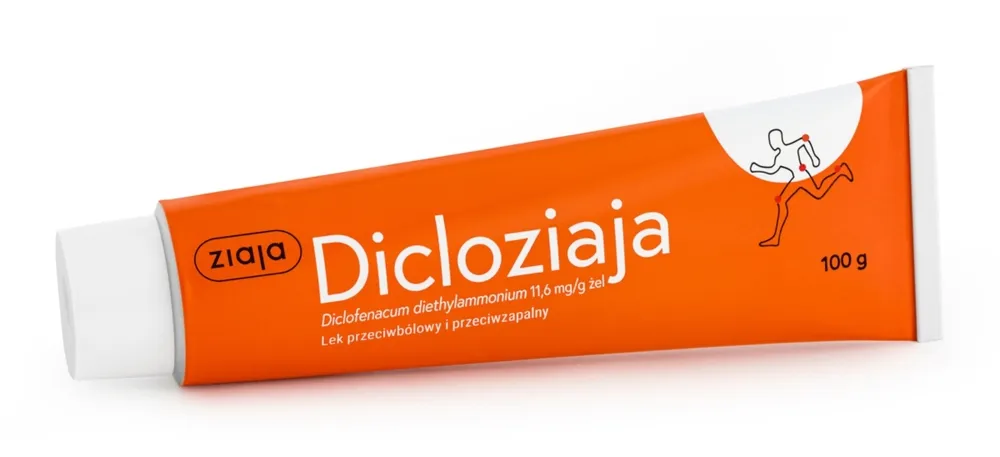
Table of Contents
Package leaflet: Information for the patient
Dicloziaja 11.6 mg/g gel
Diclofenacum diethylammonium
Please read this leaflet carefully before using the medicine, as it contains
important information for the patient.
This medicine should always be used exactly as described in this patient leaflet or as directed by
a doctor or pharmacist.
- Keep this leaflet for future reference.
- If advice or further information is needed, consult a pharmacist.
- If the patient experiences any adverse reactions, including any not listed in this leaflet, inform a doctor or pharmacist. See section 4.
- If there is no improvement or if the patient feels worse after 7 days, consult a doctor.
Table of contents:
- What Dicloziaja is and what it is used for
- Important information before using Dicloziaja
- How to use Dicloziaja
- Possible side effects
- How to store Dicloziaja
- Contents of the package and other information
1. What Dicloziaja is and what it is used for
Dicloziaja is a gel containing diethylammonium diclofenac, which belongs to a group of non-steroidal anti-inflammatory drugs (NSAIDs) that have analgesic and anti-inflammatory effects. Due to its water-alcohol base, the gel also has a soothing and cooling effect.
Indications
Adolescents over 14 years of age – short-term treatment
- Local symptomatic treatment of pain due to strains, sprains or contusions caused by blunt injuries.
Adults
- Inflammatory conditions of tendons, ligaments, muscles and joints following injuries such as sprains, strains or contusions,
- Back pain,
- Localized inflammatory conditions of soft tissues, e.g. tendinitis or tennis elbow,
- Localized and mild forms of degenerative joint disease.
If there is no improvement or if the patient feels worse after 7 days, medical advice should be sought.
2. Important information before using Dicloziaja
When not to use Dicloziaja
- if the patient is allergic to diclofenac or any of the other ingredients of this medicine (listed in section 6),
- in patients who have experienced asthma attacks, urticaria, or acute inflammation of the nasal mucosa after taking acetylsalicylic acid or other non-steroidal anti-inflammatory drugs,
- in children and adolescents under 14 years of age,
- during the last three months of pregnancy.
Warnings and precautions
Before starting treatment with Dicloziaja, consult a doctor or pharmacist:
- if the patient has impaired kidney, heart, or liver function,
- if the patient has active peptic ulcer disease,
- if the patient is taking other NSAIDs,
- if the patient is elderly, as the risk of adverse reactions is higher,
- if the patient is exposed to direct sunlight or artificial UV radiation (solarium). During treatment and for two weeks after stopping treatment, exposure to sunlight and artificial UV light (solarium) should be avoided.
This medicine should only be applied to intact skin (should not be used on diseased, damaged, or wounded skin).
Dicloziaja may be used with air-permeable non-occlusive dressings, but should not be used with air-impermeable occlusive dressings.
Avoid contact of the gel with eyes and mucous membranes; do not swallow.
Treatment with Dicloziaja should be discontinued if a rash appears.
Dicloziaja and other medicines
Inform your doctor or pharmacist about all medicines currently taken or recently used, as well as any medicines the patient intends to take.
Systemic availability of diclofenac (amount of diclofenac in the blood) after topical application is low; therefore, the likelihood of interactions with other medicines is small. Simultaneous use of other topical products on the treated skin area should be avoided.
Pregnancy and breastfeeding
If the patient is pregnant or breastfeeding, suspects she may be pregnant, or is planning to become pregnant, she should consult a doctor or pharmacist before using this medicine.
Pregnancy
Use of this medicine is not recommended in pregnant women.
This medicine must not be used during the last three months of pregnancy due to the risk of fetal harm or complications during delivery.
Breastfeeding
Use of this medicine is not recommended during breastfeeding.
Driving and operating machinery
Dicloziaja has no effect on the ability to drive or operate machinery.
Dicloziaja contains propylene glycol (E 1520)
This medicine contains 50 mg of propylene glycol (E 1520) in each gram of gel. Propylene glycol may cause skin irritation.
Dicloziaja contains a fragrance
This medicine contains a fragrance composed of the following substances: benzyl alcohol (0.048 mg per gram of gel), 3-methyl-4-(2,6,6-trimethyl-2-cyclohexen-1-yl)-3-buten-2-one, amyl cinnamic aldehyde, pentyl cinnamic alcohol, anisyl alcohol, benzyl benzoate, benzyl cinnamate, benzyl salicylate, cinnamic aldehyde, cinnamic alcohol, citral, citronellol, coumarin, d-limonene, eugenol, farnesol, geraniol, hexyl cinnamic aldehyde, hydroxycitronellal, hydroxymethylpentyl cyclohexenecarboxaldehyde, isoeugenol, lilial, linalool, methyl heptinyl carbonate, oak moss, tree moss. These substances may cause allergic reactions. Additionally, the medicine may cause mild, local irritation.
3. How to use Dicloziaja
This medicine should always be used exactly as described in this patient information leaflet, or as directed by a doctor or pharmacist. If in doubt, consult your doctor or pharmacist.
Adults and adolescents over 14 years of age
Apply the medicine topically to the skin three or four times daily, gently rubbing it in. The amount used should be adjusted according to the size of the affected area. 2 g to 4 g (an amount of gel corresponding to the size of a cherry up to the size of a walnut) is sufficient to cover an area of approximately 400 cm^2 to 800 cm^2. Hands should be washed after application, unless the hands themselves are the treated area. Avoid contact with the eyes and mouth.
Do not use this medicine for longer than 14 days without consulting a doctor. Consult a doctor after 7 days of treatment if there is no improvement, or immediately if symptoms worsen.
In adolescents over 14 years of age, do not use the medicine for longer than 7 days.
If longer use than 7 days is necessary for pain treatment, or if symptoms worsen, the patient or caregiver should contact a doctor.
Use in children and adolescents under 14 years of age
This medicine is contraindicated in children and adolescents under 14 years of age – see section "Important information before using Dicloziaja".
Elderly persons (over 65 years of age)
Use the same dosage as for adults.
Use of more than the recommended dose of Dicloziaja
If the medicine is accidentally swallowed or an excessive amount is applied, consult a doctor.
Overdose following topical application of this medicine is unlikely. Symptoms of overdose are similar to those of overdose with oral non-steroidal anti-inflammatory drugs (headache, dizziness, drowsiness, abdominal pain, nausea, vomiting).
Missed dose of Dicloziaja
Apply the next dose according to the usual schedule. Do not apply a double dose to make up for a missed dose.
If you have any further questions about the use of this medicine, consult your doctor or pharmacist.
4. Possible adverse reactions
Like all medicines, this medicine can cause adverse reactions, although not everyone will experience them.
Some adverse reactions occurring rarely or very rarely may be serious.
If any of the adverse reactions listed below occur,
discontinue use of the medicine and contact your doctor:
- Rare (occur in less than 1 in 1,000 people using the medicine): bullous dermatitis (skin rash with blisters)
- Very rare (occur in less than 1 in 10,000 people using the medicine): urticaria and other hypersensitivity reactions, asthma (breathing difficulties, shallow breathing), angioedema (swelling of the face, lips, tongue, throat and larynx)
Other adverse reactions in order of frequency of occurrence
- Common (occur in less than 1 in 10 people using the medicine): rash, exanthema, erythema, dermatitis (including contact dermatitis), pruritus
- Very rare (occur in less than 1 in 10,000 people using the medicine): photosensitivity reactions, papular rash
Systemic adverse reactions cannot be ruled out (e.g. adverse reactions affecting the gastrointestinal system, such as gastric ulcers, or adverse reactions involving the nervous system, such as dizziness or headache) when the medicinal product is used on large areas of skin or during prolonged use.
Reporting of adverse reactions
If any adverse effects occur, including any adverse effects not listed in this leaflet, inform your doctor or pharmacist. Adverse reactions can be reported directly to the Department of Monitoring Adverse Reactions of Medicinal Products at the Office for Registration of Medicinal Products, Medical Devices and Biocidal Products
Al. Jerozolimskie 181C
02-222 Warsaw
Phone: +48 22 49 21 301
Fax: +48 22 49 21 309
Website: https://smz.ezdrowie.gov.pl
Adverse reactions can also be reported to the marketing authorization holder.
Reporting adverse reactions helps to provide more information on the safety of the medicine.
5. How to store Dicloziaja
Keep this medicine out of sight and reach of children.
Do not use this medicine after the expiry date stated on the carton and tube after "EXP".
The expiry date refers to the last day of the specified month.
Store below 25°C.
Shelf life after first opening of the tube: 2 years.
Medicines must not be disposed of via wastewater or household waste. Ask your pharmacist how to dispose of medicines no longer in use. This will help protect the environment.
6. Contents of the pack and other information
What Dicloziaja contains
- The active substance is diclofenac in the form of diethylammonium diclofenac. 1 g of Dicloziaja contains 11.6 mg of diethylammonium diclofenac, equivalent to 10 mg of sodium diclofenac.
- Other ingredients are: carbomer 5984, diethylamine, cetostearyl polyglycol ether 20, coco-caprylocapronic triglyceride, isopropyl alcohol, propylene glycol (E 1520), light liquid paraffin, fragrance (3-methyl-4-(2,6,6-trimethyl-2-cyclohexen-1-yl)-3-buten-2-one, amyl cinnamic aldehyde, pentyl cinnamic alcohol, anise alcohol, benzyl alcohol, benzyl benzoate, benzyl cinnamate, benzyl salicylate, cinnamic aldehyde,
cinnamic alcohol, citral, citronellol, coumarin, d-limonene, eugenol, farnesol, geraniol,
hexyl cinnamic aldehyde, hydroxycitronellal, hydroxymethylpentyl
cyclohexenecarboxaldehyde, isoeugenol, lilial, linalool, methyl heptyne carbonate, oakmoss,
tree moss), purified water.
What Dicloziaja looks like and contents of the pack
Dicloziaja is a white or almost white, homogeneous gel with a characteristic odour, available in 40 g, 50 g and 100 g aluminium tubes with a PE cap, packed in a cardboard box.
Not all pack sizes may be marketed.
Marketing Authorisation Holder and Manufacturer
ZIAJA Ltd Zakład Produkcji Leków sp. z o.o.
Jesienna 9
80-298 Gdańsk
Poland
Tel.: +48 58 521 34 00
This medicinal product is authorised in the Member States of the European Economic Area under the following names:
Poland, Czech Republic: Dicloziaja