Dialginum
Poland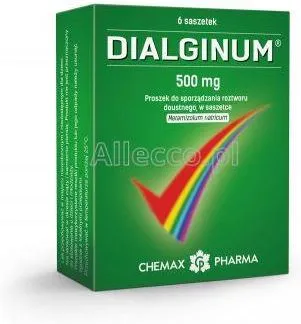
Table of Contents
Patient Information Leaflet
Dialginum, 500 mg, effervescent powder for oral solution in sachet
Metamizolum natricum
Dialginum may cause abnormally low numbers of white blood cells (agranulocytosis), which can
lead to severe and life-threatening infections (see section 4).
Treatment should be discontinued and immediate medical advice sought if any of the following
symptoms occur: fever, chills, sore throat, painful ulcers in the nose, mouth, throat or in the genital or
anal area.
If the patient has ever experienced agranulocytosis during treatment with metamizole or similar
drugs, this medicine must never be used again in the future (see section 2).
Please read all of this leaflet carefully before taking this medicine, as it contains important
information for you.
- Keep this leaflet, as you may need to read it again.
- If you have any further questions, please ask your doctor or pharmacist.
- This medicine has been prescribed for a specific individual. Do not pass it on to others. It may harm other people, even if their symptoms are the same.
- If you experience any side effects, including any not listed in this leaflet, inform your doctor or pharmacist. See section 4.
Contents of the leaflet:
- What Dialginum is and what it is used for
- Before you take Dialginum
- How to take Dialginum
- Possible side effects
- How to store Dialginum
- Contents of the pack and other information
1. What Dialginum is and what it is used for
Dialginum is a pyrazolone derivative with analgesic and antipyretic effects, as well as mild spasmolytic action.
Even at high doses, it does not affect intestinal peristalsis and does not cause constipation.
Dialginum is indicated for short-term treatment of severe pain of various origins and for fever when the use of other medicines is contraindicated or ineffective, such as in:
- headaches,
- migraine,
- toothache,
- muscle and joint pain,
- traumatic and postoperative pain,
- pain caused by renal colic,
- biliary colic,
- pain associated with malignant diseases,
- fever.
2. Before you take Dialginum
When not to take Dialginum
- if the patient has previously experienced a significant decrease in the number of white blood cells called granulocytes, caused by metamizole or other similar drugs known as pyrazolones or pyrazolidines,
- if the patient has bone marrow dysfunction or a disease affecting blood cell production or function,
- if the patient is allergic to metamizole and other pyrazolone or pyrazolidine derivatives, e.g. propyphenazone, phenazone or phenylbutazone (drugs with antipyretic, analgesic and anti-inflammatory effects), or to any of the excipients listed in section 6,
- if the patient has analgesic-induced asthma syndrome or intolerance to analgesics, manifested by urticaria, angioedema, i.e. when the patient reacts with bronchospasm or another anaphylactoid reaction (similar to an allergic reaction) to salicylates, paracetamol or other non-opioid analgesics, including non-steroidal anti-inflammatory drugs (NSAIDs), such as: diclofenac, ibuprofen, indomethacin or naproxen, allergy to non-steroidal anti-inflammatory drugs,
- severe kidney and liver disease,
- acute hepatic porphyria,
- after cytostatic therapy (drugs used in cancer chemotherapy),
- if the patient has congenital glucose-6-phosphate dehydrogenase deficiency, with other drugs from the group of pyrazolone derivatives (aminophenazone, phenylbutazone, oxyphenbutazone),
- if the patient is in the last three months of pregnancy,
- children and adolescents under 15 years of age.
Warnings and precautions
Abnormally low number of white blood cells (agranulocytosis)
Dialginum may cause agranulocytosis, i.e. a very low number of a certain type of white blood cells called granulocytes, which play an important role in fighting infections (see section 4).
Treatment with metamizole should be discontinued and immediate medical advice sought if the following symptoms occur, as they may indicate possible agranulocytosis: chills, fever, sore throat and painful mucosal ulcers, especially in the oral cavity, nose and throat or in the genital or anal area. The doctor will order laboratory tests to check the patient's blood cell count.
If metamizole is used for fever, some symptoms of developing agranulocytosis may remain unnoticed. Similarly, symptoms may also be masked if the patient is receiving antibiotics.
Agranulocytosis may develop at any time during treatment with Dialginum, and even shortly after discontinuation of metamizole.
Agranulocytosis may occur even if metamizole was previously administered without complications.
Patients who have experienced agranulocyt游戏副本
4. Possible adverse effects
Like all medicines, this medicine can cause adverse effects, although not everyone will experience them.
You should stop taking Dialginum and seek immediate medical help if any of the following symptoms occur:
Malaise (nausea or vomiting), fever, feeling of fatigue, loss of appetite, dark urine, pale stools, yellowing of the skin or whites of the eyes, itching, rash, or pain in the upper part of the abdomen. These may be symptoms of liver damage. See also section 2 "Warnings and precautions".
Due to the risk of life-threatening reactions, the medicine must be discontinued immediately and medical help must be sought if severe allergic (anaphylactic) reactions occur:
Rare (may occur in less than 1 in 1,000 patients):
- swelling of the face, lips, tongue, and/or throat, difficulty breathing, which may cause difficulty in swallowing and breathing.
Very rare (may occur in less than 1 in 10,000 patients):
- severe bronchospasm,
- skin and mucous membrane reactions such as itching, burning sensation, redness, urticaria.
Frequency unknown (frequency cannot be estimated from available data):
- anaphylactic shock (life-threatening drop in blood pressure, weakness, fainting).
The medicine should be discontinued immediately and a doctor should be consulted if any of the following very rare but serious adverse effects occur:
- Stevens-Johnson syndrome (erosive blisters on the mucous membranes of the mouth, conjunctiva, genital organs),
- toxic epidermal necrolysis, erythematous-bullous skin and mucous membrane lesions leading to large areas of skin detachment and exposure of extensive skin surfaces,
- agranulocytosis manifested by: fever, chills, sore throat, difficulty swallowing, and inflammatory conditions of the mucous membranes of the mouth, nose, throat, genital organs, and rectum, including cases resulting in death.
Other adverse effects:
Consult a doctor if any of the following adverse effects occur:
Uncommon (occurring in less than 1 in 100 patients):
- drug rash,
- excessive drop in blood pressure.
Rare (occurring in less than 1 in 1,000 patients):
- rash (e.g. maculopapular),
- seizure-like convulsions after high doses of the medicine,
- asthma attack, bronchospasm, dyspnea,
- leukopenia (reduced number of white blood cells in blood),
- purpura.
Very rare (occurring in less than 1 in 10,000 patients):
- analgesic-induced asthma (see section 2 "When not to take Dialginum"),
- thrombocytopenia (bruising, bleeding),
- sudden deterioration of kidney function with proteinuria, oliguria or anuria,
- acute renal failure,
- interstitial nephritis,
- pancytopenia,
- increased blood bilirubin concentration.
Frequency unknown (frequency cannot be estimated from available data):
-
nausea, vomiting, abdominal pain, gastric irritation, diarrhea, dry mouth,
-
liver damage, cholestasis (mechanical obstruction of bile flow), jaundice,
-
hepatitis, yellowing of the skin and whites of the eyes, increased liver enzyme activity in blood,
-
headache, dizziness,
-
loss of appetite,
-
hemolytic anemia (anemia caused by accelerated breakdown of red blood cells),
-
aplastic anemia, bone marrow damage, sometimes resulting in death,
-
in patients with glucose-6-phosphate dehydrogenase deficiency, the medicine may cause
-
red discoloration of urine (after administration of very high doses of metamizole),
-
tachycardia, cyanosis.
-
Severe skin reactions: treatment with metamizole should be discontinued and immediate medical help should be sought if the patient develops any of the following serious adverse effects:
-
red, flat spots on the trunk in the shape of a target or circular lesions, often with blisters in the center, skin peeling, oral, throat, nasal, genital, and eye ulcers. Such severe skin rashes may be preceded by fever and flu-like symptoms (Stevens-Johnson syndrome, toxic epidermal necrolysis);
-
extensive rash, high fever, and enlarged lymph nodes (DRESS syndrome or drug hypersensitivity syndrome).
Reporting of adverse effects
If any adverse effects occur, including any not listed in this leaflet, inform your doctor, pharmacist, or nurse. Adverse effects can be reported directly to the Department of Monitoring Adverse Drug Reactions at the Office for Registration of Medicinal Products, Medical Devices and Biocidal Products:
Al. Jerozolimskie 181C
02-222 Warsaw
Phone: +48 22 49 21 301
Fax: +48 22 49 21 309
Website: https://smz.ezdrowie.gov.pl
Adverse effects can also be reported to the marketing authorization holder.
Reporting adverse effects helps to collect more information on the safety of the medicine.
5. How to store Dialginum
Keep the medicine out of the sight and reach of children.
Store in the original packaging to protect from moisture.
Store below 25°C.
Do not use this medicine after the expiry date stated on the sachet and carton after "EXP". The expiry date refers to the last day of the specified month.
Do not use this medicine if you notice any changes in the appearance of the powder.
The abbreviation "Lot" on the packaging indicates the batch number.
Do not dispose of this medicine via wastewater or household waste. Ask your pharmacist how to dispose of medicines no longer required. These measures will help protect the environment.
6. Contents of the packaging and other information
What Dialginum contains
Active substance: Metamizole sodium in the form of monohydrate metamizole sodium.
One sachet contains 500 mg of metamizole sodium.
Excipients: mannitol, sodium cyclamate, strawberry flavour Strawberry 877874,
anhydrous colloidal silica,
Composition of strawberry flavour Strawberry 877874: glucose syrup, dehydrated corn syrup,
ethyl 2-methylbutyrate, 4-hydroxy-2,5-dimethyl-3-furanone, methyl cinnamate, cis-3-hexen-1-ol,
maltol, hexanoic acid, silicon dioxide, g um arabic.
What Dialginum looks like and contents of the pack
Dialginum is a white or almost white powder with a strawberry aroma, packed in 4.5 g sachets made of Polyethylene/Aluminium/Paper foil.
The package contains 6 sachets and a leaflet, in a cardboard box.
Marketing Authorisation Holder and Manufacturer
CHEMAX PHARMA Ltd.
8A Goritsa Str.
1618 Sofia
Bulgaria
Tel: +359 2 955 6298
e-mail: [email protected]
Other sources of information
Detailed information on this medicinal product is available on the website of the Office for Registration of Medicinal Products, Medical Devices and Biocidal Products, www.urpl.gov.pl