Dexaprotect
Poland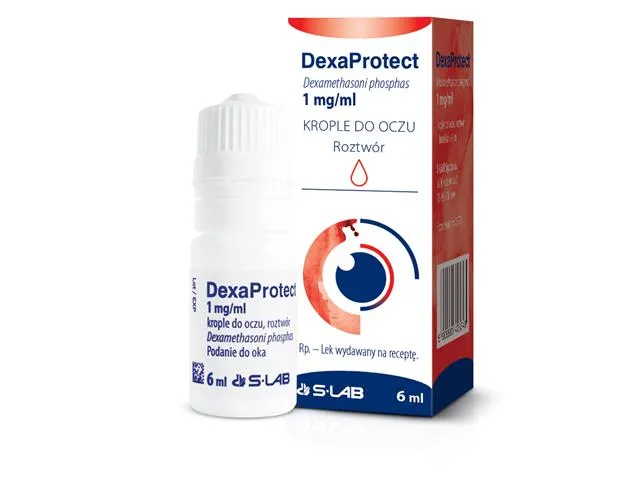
Table of Contents
Package leaflet: Information for the user
Dexaprotect, 1 mg/ml, eye drops, solution
Dexamethasoni phosphas
Please read all of this leaflet carefully before using this medicine, because it contains
important information for the patient.
- Keep this leaflet, so that you can read it again if necessary.
- If you have any further questions, please ask your doctor, pharmacist or nurse.
- This medicine has been prescribed for a specific individual. Do not pass it on to others. It may harm other people, even if their symptoms are the same.
- If you experience any adverse reactions, including any not listed in this leaflet, inform your doctor, pharmacist or nurse. See section 4.
Contents of the leaflet
- What Dexaprotect is and what it is used for
- Important information before using Dexaprotect
- How to use Dexaprotect
- Possible side effects
- How to store Dexaprotect
- Contents of the pack and other information
1. What Dexaprotect is and what it is used for
Dexaprotect contains dexamethasone, which is a corticosteroid used to suppress symptoms of inflammatory conditions (such as pain, swelling, local warmth and redness).
Dexaprotect is used in the treatment of inflammatory eye conditions.
If you have an eye infection (redness, tearing and discharge), you will be given another medicine to use at the same time as Dexaprotect. See section 2.
Dexaprotect eye drops, solution, is a sterile solution that does not contain preservatives.
2. Information before using Dexaprotect
When not to use Dexaprotect
- if the patient is allergic to dexamethasone phosphate or any of the other ingredients of this medicine (listed in section 6),
- if the patient has an eye infection and is not receiving any treatment for it,
- if the patient has damage to the surface of the eye (small holes (perforation), ulcers or injuries that have not been properly healed),
- if the patient has high pressure in the eye known to be caused by glucocorticoids (a family of corticosteroid medicines).
Warnings and precautions
Before starting to use Dexaprotect, discuss this with your doctor, pharmacist or nurse.
- Do not inject, do not swallow.
- Avoid contact between the dropper tip and the eye or eyelids.
- Close ophthalmic monitoring is required during treatment with Dexaprotect, particularly:
- more frequent monitoring (eye examination) is recommended in children and elderly patients.
- if the patient has an eye infection. Dexaprotect should only be used if the patient is also receiving an anti-infective agent.
- if the patient has corneal ulceration, open wound on the eye surface, sometimes with severe pain, tearing, squinting and vision loss. Do not use Dexaprotect unless inflammation is the main reason for delayed healing.
- if the patient has high eye pressure. If high eye pressure occurred previously during treatment with ocular steroid medicines, there is a risk of recurrence when using Dexaprotect.
- if the patient has glaucoma, a condition that may cause damage to the optic nerve and vision loss.
- At the first sign of corneal calcification, treatment should be discontinued and a non-phosphate-containing medicine should be used.
- Children: prolonged, continuous treatment should not be used.
- If the patient has severe allergic conjunctivitis (redness, swelling, itching and tearing of the eye) that has not responded to other treatments, Dexaprotect should be used only for a short duration.
- Diabetic patients: if the patient has diabetes, they should inform their ophthalmologist or optician.
- If the patient has a red eye of unknown cause, do not use Dexaprotect.
- Contact lenses: do not wear contact lenses during treatment with Dexaprotect.
Patients with a history of contact hypersensitivity to silver should not use this product.
Seek medical advice if the patient develops swelling and weight gain around the trunk and face, as these are usually the first signs of Cushing's syndrome. After prolonged or intensive treatment with Dexaprotect, adrenal suppression may develop.
Consult a doctor before discontinuing treatment independently. This risk is particularly important in children and patients treated with ritonavir or cobicistat.
If the patient experiences blurred vision or other visual disturbances, contact a doctor.
Dexaprotect and other medicines
Tell your doctor or pharmacist about all medicines the patient is currently taking or has recently taken, including medicines they plan to use.
If another ophthalmic medicine is being used, wait 15 minutes before administering the next medicine.
Concomitant use of eye drops containing corticosteroids and eye drops containing beta-blockers (used to treat high eye pressure) may lead to precipitation of calcium phosphate on the eye surface.
Inform the doctor if the patient is taking ritonavir or cobicistat, as these medicines may increase blood levels of dexamethasone.
Pregnancy, breastfeeding and fertility
If the patient is pregnant or breastfeeding, suspects she may be pregnant, or is planning to have a baby, she should consult her doctor or pharmacist before using this medicine.
There is insufficient information on the use of dexamethasone during pregnancy to fully understand possible adverse effects. For this reason, use of Dexaprotect is not recommended during pregnancy.
It is unknown whether this medicine passes into human milk. However, the dose administered with Dexaprotect is small. Dexaprotect may be used during breastfeeding.
Driving and using machines
For a short time after instillation, blurred vision may occur. Wait until vision clears before driving or operating machinery.
Dexaprotect contains a phosphate buffer
This medicine contains 1.976 mg of phosphate per millilitre of solution, equivalent to 7.450 mg of disodium phosphate dodecahydrate.
If the patient has severe damage to the transparent front layer of the eye (cornea), in very rare cases phosphates may cause cloudy spots on the cornea due to calcium accumulation during treatment.
3. How to use Dexaprotect
This medicine should always be used exactly as your doctor has told you. If you are unsure, consult your doctor or pharmacist.
The recommended dose is 1 drop administered 4 to 6 times daily into the affected eye. If the patient's condition is more severe, the doctor may recommend starting treatment with 1 drop every hour, then, once improvement begins, changing the dose to 1 drop every 4 hours. It is important to gradually reduce the dose to prevent a recurrence of symptoms.
Elderly patients
There is no need to change the dose of the medicine.
Use in children
Do not use this medicine continuously for long periods without breaks in treatment.
Method of administration
Ocular administration: this medicine is an eye drop solution for instillation into the eye(s).
Do not touch the eye or the area around the eye with the tip of the multidose container. This could cause eye injury. It may also contaminate the eye drop solution with bacteria, leading to serious eye damage and even loss of vision.
To avoid possible contamination of the multidose container, keep the tip of the container away from contact with any surface.
Before instilling eye drops:
- Wash your hands before opening the bottle.
- Do not use this medicine if the tamper-evident seal on the neck of the bottle has been broken before first use.
- When using the medicine for the first time, practice using the dropper bottle by gently squeezing the bottle to release one drop into the air, away from the eye.
- Once the patient feels confident about administering a single drop, they should assume the most comfortable position for instillation (sitting, lying on the back, or standing in front of a mirror).
Instillation:
- Hold the bottle just below the cap and unscrew it to open. Do not touch anything with the dropper tip to avoid contaminating the solution.
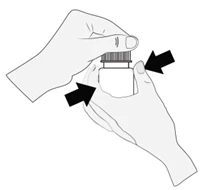
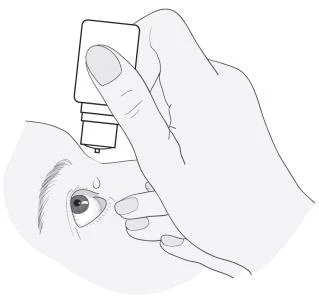
- Tilt the head backward and hold the bottle over the eye.
- Gently pull down the lower eyelid and look upward. Gently squeeze the middle part of the bottle to instill one drop into the eye. Note that it may take several seconds between squeezing the bottle and the drop emerging. Do not apply strong pressure. If you have any doubts about administering the medicine, consult your doctor, pharmacist, or nurse.
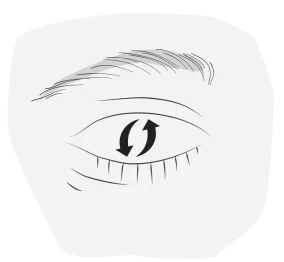
- Blink several times to spread the drop evenly over the eye.
- After administering Dexaprotect, press gently with a finger on the inner corner of the eye (near the nose) for a few minutes. This helps prevent the eye drops from draining into other parts of the body.
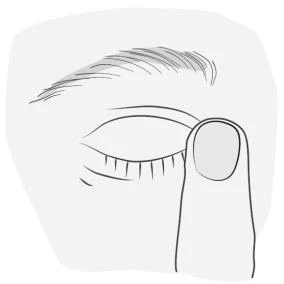
- Repeat steps 2–5 to administer a drop into the other eye, if instructed by your doctor. Sometimes only one eye requires treatment; your doctor will advise you which eye needs treatment.
- After use and before recapping, shake the bottle once downward, without touching the dropper tip, to remove any residual liquid from the tip. This is necessary to ensure proper administration of subsequent drops.
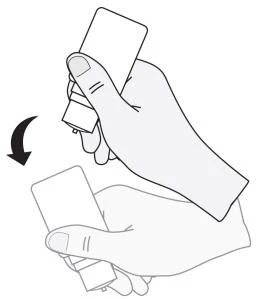
After using all the doses, some Dexaprotect medicine will remain in the bottle. Do not be concerned, as the package contains an extra amount of Dexaprotect to ensure the patient receives the full prescribed dose. Do not attempt to use any excess medicine remaining in the bottle after treatment is completed.
Frequency of use
4 to 6 times daily.
Duration of treatment
Treatment usually involves using the drops for several days and should not exceed 14 days.
Accidental overdose of Dexaprotect
Rinse the eye with sterile water if too much medicine has been instilled and eye pain occurs. Inform your doctor or pharmacist immediately.
Missed dose of Dexaprotect
Do not use a double dose to make up for a missed dose.
Stopping Dexaprotect treatment
Do not stop using this medicine suddenly. Always consult your doctor if you plan to discontinue treatment.
If you have any further questions about the use of this medicine, consult your doctor, pharmacist, or nurse.
4. Possible adverse reactions
Like all medicines, this medicine can cause adverse reactions, although not everyone experiences them.
Endocrine disorders:
Unknown frequency: cannot be estimated from the available data
- Excessive growth of body hair (especially in women), muscle weakness and loss of muscle mass, purple stretch marks on the skin, increased blood pressure, irregular menstruation or absence of menstruation, changes in protein and calcium levels in the body, growth suppression in children and adolescents, and swelling with weight gain particularly noticeable in the trunk and face (a condition known as Cushing's syndrome) (see section 2 "Warnings and precautions").
Eye disorders:
Very common (may affect more than 1 in 10 people):
- Elevated intraocular pressure within 2 weeks of using the drops.
Common (may affect up to 1 in 10 people):
- Discomfort, irritation, burning, stinging, itching, and blurred vision after administration of the medicine. These adverse reactions are usually mild and transient.
Uncommon (may affect up to 1 in 100 people):
- Symptoms of allergic reaction,
- Delayed healing,
- Clouding of the lens (cataract),
- Infections,
- Elevated intraocular pressure (glaucoma).
Very rare (may affect up to 1 in 10,000 people):
- Inflammation of the surface of the eye causing redness, tearing, and irritation (conjunctivitis),
- Pupil dilation,
- Facial swelling,
- Drooping of the eyelids,
- Inflammation of the eye causing pain and redness (uveitis),
- Calcium deposits on the surface of the eye (corneal calcification),
- Inflammation of the surface of the eye causing blurred vision, dry eyes, light sensitivity, burning, tearing, and a gritty sensation in the eye (crystalline keratopathy),
- Changes in corneal thickness,
- Swelling of the surface of the eye (corneal edema),
- Ulceration of the surface of the eye causing pain, tearing, squinting, and vision loss,
- Small holes in the surface of the eye (corneal perforation).
In patients with severe damage to the transparent front part of the eye (cornea), phosphates may very rarely lead to corneal clouding due to calcium accumulation during treatment.
Reporting of adverse reactions
If any adverse reactions occur, including any not listed in this leaflet, inform your doctor or pharmacist. Adverse reactions can be reported directly to the Department for Monitoring of Adverse Drug Reactions, Office for Registration of Medicinal Products, Medical Devices and Biocidal Products, Al. Jerozolimskie 181C, 02-222 Warsaw, Tel.: +48 22 492 13 01, Fax: +48 22 492 13 09, Website: https://smz.ezdrowie.gov.pl
Reporting adverse reactions helps to provide more information on the safety of the medicine.
Adverse reactions may also be reported to the responsible entity.
5. How to store Dexaprotect
Keep this medicine out of the sight and reach of children.
Do not use the eye drops for more than 28 days after first opening the bottle. Record the date of opening the bottle in the designated space on the label of the bottle and on the carton.
Do not use this medicine after the expiry date stated on the carton and bottle after "EXP".
The expiry date refers to the last day of the stated month.
No special storage instructions apply.
Medicines should not be disposed of via wastewater or household waste. Ask your pharmacist how to dispose of medicines no longer required. These measures help protect the environment.
6. Contents of the pack and other information
What Dexaprotect contains
- The active substance is dexamethasone sodium phosphate. One millilitre of solution contains 1 mg of dexamethasone phosphate in the form of dexamethasone sodium phosphate.
- The other components are: disodium phosphate dodecahydrate, sodium chloride, disodium edetate, hydrochloric acid (for pH adjustment), sodium hydroxide (for pH adjustment), water for injections.
What Dexaprotect looks like and contents of the pack
Dexaprotect is a clear solution supplied in a white, opaque LDPE bottle with a capacity of 11 ml, equipped with the Novelia system consisting of a dropper (made of HDPE and silicone) and a closure made of HDPE.
The following pack sizes are available: 1 or 3 bottles containing 6 ml of solution each, packed in a cardboard box.
Not all pack sizes may be marketed.
Marketing Authorisation Holder and Manufacturer
Marketing Authorisation Holder
S-LAB Sp. z o.o.
ul. Kiełczowska 2
55-095 Mirków
Manufacturer:
EXCELVISION
27 rue de la Lombardière
Zl La Lombardière
07100 Annonay
France
Pharmathen SA
Dervenakion 6
15351 Pallini Attiki
Greece
This medicinal product is authorised in the European Economic Area member states under the following names:
Denmark Oratoria
Italy Dexavision
Cyprus Oratoria
Greece Oratoria
Poland Dexaprotect
Sweden Oratoria
Germany Oratoria 1 mg/ml Augentropfen, Lösung
France Dexocol
United Kingdom Eythalm