Dexamethasone krka
Poland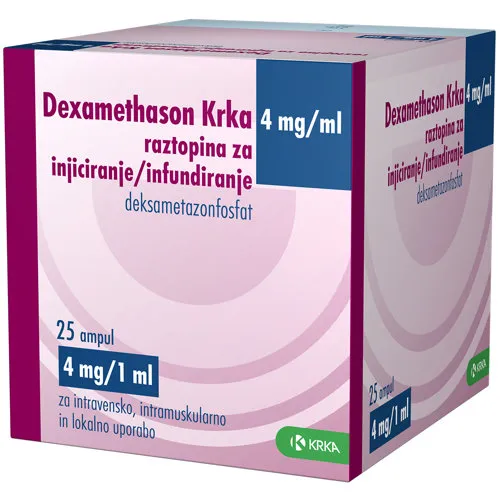
Table of Contents
- Package leaflet: Information for the user
- 1. What Dexamethasone Krka is and what it is used for
- 2. Important information before using Dexamethasone Krka
- 3. How to use Dexamethasone Krka
- 4. Possible adverse effects
- 5. How to store Dexamethasone Krka
- 6. Contents of the pack and other information
- Information intended exclusively for healthcare professionals:
Package leaflet: Information for the user
Dexamethasone Krka, 4 mg/ml, solution for injection/infusion
Dexamethasone Krka, 8 mg/2 ml, solution for injection/infusion
dexamethasoni phosphas
Please read all of this leaflet carefully before using this medicine, because it contains
important information for you.
- Keep this leaflet, as you may need to read it again.
- If you have any further questions, please ask your doctor, pharmacist, or nurse.
- If you experience any side effects, including any not listed in this leaflet, please tell your doctor, pharmacist, or nurse. See section 4.
Leaflet contents
- What Dexamethasone Krka is and what it is used for
- What you need to know before using Dexamethasone Krka
- How to use Dexamethasone Krka
- Possible side effects
- How to store Dexamethasone Krka
- Contents of the pack and other information
1. What Dexamethasone Krka is and what it is used for
Dexamethasone is a synthetic glucocorticoid (a corticosteroid hormone)
affecting metabolism, electrolyte balance, and tissue function.
Dexamethasone Krka is used to treat conditions requiring glucocorticoid therapy.
Depending on symptoms and severity, these include, among others:
Systemic administration:
- Cerebral oedema caused by brain tumour, neurosurgical intervention, brain abscess, or bacterial meningitis (e.g. tuberculosis, typhoid fever, brucellosis);
- Shock following severe trauma, for prophylactic treatment of shock lung;
- Severe acute asthma attack;
- Initial stage of treatment of extensive, severe skin diseases such as erythroderma, pemphigus vulgaris, acute eczema;
- Treatment of systemic rheumatic diseases (rheumatic diseases that may affect internal organs), such as systemic lupus erythematosus;
- Severe progressive course of active rheumatoid arthritis, e.g. rapidly progressive forms leading to joint and/or extra-articular tissue damage;
- Palliative treatment of malignant tumours;
- Prevention and treatment of postoperative or cytostatic-induced nausea and vomiting;
- Dexamethasone Krka is used in the treatment of COVID-19 in adult and adolescent patients (aged 12 years and older, weighing at least 40 kg) who have difficulty breathing and require oxygen therapy.
Local administration:
- Intra-articular injection: persistent inflammation of one or more joints following systemic treatment of chronic inflammatory joint diseases, activated osteoarthritis (progressive phase), acute forms of shoulder pain syndrome;
- Soft tissue infiltration (only when strictly indicated): non-bacterial tenosynovitis or bursitis (fluid-filled sacs forming under the skin, usually over joints), periarticular inflammation, tendon disorders;
- Intraocular administration: subconjunctival injection in non-infectious inflammation of various parts of the eye (cornea and conjunctiva, scleritis, uveitis);
- Inflammation of the middle part of the eye (choroiditis).
2. Important information before using Dexamethasone Krka
When not to use Dexamethasone Krka
- if the patient is allergic to dexamethasone or any of the other ingredients of this medicine (listed in section 6);
- if the patient has an infection, including one caused by fungi, unless anti-infective treatment is being administered.
In isolated cases, severe hypersensitivity reactions (anaphylactic reactions) have been observed during the use of Dexamethasone Krka,
including circulatory collapse, cardiac arrest, cardiac arrhythmia, dyspnoea (bronchospasm), and/or decreased or increased
blood pressure.
Intra-articular injection is contraindicated in the following cases:
- infections at or near the joint requiring treatment,
- bacterial arthritis,
- joint instability requiring treatment,
- bleeding tendency (spontaneous or caused by anticoagulant drugs),
- calcifications around the joint,
- avascular necrosis of bone,
- tendon rupture,
- Charcot joint.
Infiltration should not be performed without additional causal treatment if there is an infection at the site of administration; similarly, subconjunctival administration should not be performed in the presence of bacterial, viral or fungal eye diseases or corneal injuries and ulcers.
Special caution is required when using Dexamethasone Krka in the following cases:
If unusual physical stress occurs during treatment with Dexamethasone Krka (e.g. accident, surgery, childbirth, etc.), temporary dose increase may be necessary.
Dexamethasone Krka may mask symptoms of existing or developing infections, making diagnosis more difficult. Dormant infections may be reactivated.
In the circumstances listed below, treatment with Dexamethasone Krka should only be initiated if the treating physician considers it necessary. If required, antimicrobial agents should also be administered:
- acute viral infections (chickenpox, shingles, herpes virus infections, herpes virus-induced keratitis),
- chronic active hepatitis with positive HBsAg test (infectious hepatitis),
- approximately 8 weeks before and up to 2 weeks after vaccination with live attenuated microorganisms (live vaccine),
- acute and chronic bacterial infections,
- fungal infections involving internal organs,
- certain parasitic diseases (infection with amoebae or worms). In case of infection or suspected infection with helminths, Dexamethasone Krka may lead to activation and massive proliferation of these parasites,
- Heine-Medin disease (poliomyelitis),
- lymph node disorders after BCG vaccination,
- if the patient has previously had tuberculosis, the medicine should only be used concomitantly with anti-tuberculosis agents.
During treatment with Dexamethasone Krka, the following conditions should be carefully monitored and appropriate treatment initiated:
- gastric or intestinal ulcers,
- bone mass loss (osteoporosis),
- hypertension difficult to control,
- diabetes mellitus difficult to control,
- psychiatric disorders (including past history), including suicidal tendencies. In such cases, supervision by a neurologist or psychiatrist is recommended,
- increased intraocular pressure (closed-angle or open-angle glaucoma); ophthalmological supervision and appropriate treatment are recommended,
- corneal injuries and ulcers; ophthalmological supervision and appropriate treatment are recommended.
Before taking Dexamethasone Krka, consult a physician if the patient has or is suspected of having a pheochromocytoma (adrenal gland tumour).
If the patient is being treated for COVID-19 infection, do not discontinue any other steroid medications unless otherwise advised by a physician.
Before starting treatment with Dexamethasone Krka, discuss it with a physician, pharmacist, or nurse.
If the patient experiences blurred vision or other visual disturbances, contact a physician.
Due to the risk of intestinal perforation, Dexamethasone Krka should only be used in emergencies and under appropriate monitoring:
- in severe colitis (ulcerative colitis) with risk of perforation, with ulcerative or suppurative inflammation, which may occur without peritoneal irritation,
- in diverticulitis (inflammation of intestinal diverticula),
- after certain intestinal surgeries (intestinal anastomosis), immediately after surgery.
Signs of peritoneal irritation following gastrointestinal perforation may not occur in patients receiving high doses of glucocorticosteroids.
In patients with diabetes, metabolism should be monitored regularly, and increased requirements for antidiabetic medications (insulin, oral antidiabetic drugs) should be considered.
Due to the risk of exacerbating symptoms, patients with very high blood pressure and/or severe heart failure should be closely observed.
During treatment with high doses of the medicine, pulse rate may be lower than usual.
Severe anaphylactic reactions (immune system hypersensitivity) may occur.
The risk of tendon disease, tendonitis, and tendon rupture increases in patients treated concomitantly with fluoroquinolones (a type of antibiotic) and Dexamethasone Krka.
During treatment of a specific type of muscle paralysis (myasthenia gravis), symptoms may initially worsen.
Vaccination with vaccines containing inactivated pathogenic microorganisms (inactivated vaccines) is generally possible. However, it should be noted that after administration of high doses of corticosteroids, the immune response and thus vaccine efficacy may be reduced.
Especially during long-term, high-dose treatment with Dexamethasone Krka, attention should be paid to consuming sufficient potassium (e.g. vegetables, bananas) and limiting salt intake. The physician will monitor blood potassium levels.
Viral diseases (e.g. measles, chickenpox) may have a particularly severe course in patients treated with Dexamethasone Krka, especially in immunocompromised children and individuals who have not previously had measles or chickenpox. If such individuals come into contact with patients suffering from measles or chickenpox during treatment with Dexamethasone Krka, they should immediately consult a physician, who may initiate preventive measures if necessary.
Contact a physician if the patient develops symptoms of tumour lysis syndrome, such as: muscle cramps, muscle weakness, confusion, visual disturbances or loss of vision, and shallow breathing, particularly if the patient has a haematological malignancy.
Due to the possibility of adverse effects during too rapid administration of the drug, such as unpleasant tingling or paresthesia, intravenous injection should be performed slowly (over 2-3 minutes).
Dexamethasone Krka is intended for short-term use. In case of inappropriate long-term use, additional warnings and precautions regarding long-term therapy with glucocorticosteroid-containing medicines should be reviewed.
After local administration, adverse effects and interactions similar to those following systemic administration should be considered.
Intra-articular administration of Dexamethasone Krka increases the risk of joint infections. Prolonged and repeated use of glucocorticosteroids in weight-bearing joints may lead to worsening of degenerative joint changes. One possible cause is overloading of the affected joint after pain or other symptoms have subsided.
When administering intra-articularly, the physician should take special care to reduce the risk of bacterial infection. The patient should not load affected joints, even if pain is not felt.
Administration of this medicine may cause a pheochromocytoma crisis, which may be fatal. Pheochromocytoma is a rare adrenal gland tumour. The crisis may manifest with the following symptoms: headache, sweating, palpitations, and hypertension. If any of these symptoms occur, contact a physician immediately.
Local administration in eye diseases:
Contact a physician if the patient develops facial or truncal fat redistribution, as these are usually the first signs of Cushing's syndrome. After discontinuation of prolonged and intensive treatment with Dexamethasone Krka, adrenal suppression may occur. Consult a physician before stopping the medicine on your own. The risk of developing Cushing's syndrome and/or adrenal suppression is particularly high in children and patients treated with ritonavir or cobicistat (medicines used in HIV treatment).
Elderly patients
Due to the increased risk of osteoporosis, the physician will evaluate the benefit-risk ratio of using the medicine in elderly patients.
Children and adolescents
Routine use of dexamethasone is not recommended in premature infants with lung disorders.
If dexamethasone is administered to a premature infant, cardiac function and structure must be monitored.
This medicine should only be used in children when necessary, due to the risk of growth retardation. During long-term treatment, the child's growth should be monitored regularly.
Effects when used for doping purposes
Administration of Dexamethasone Krka may lead to positive results in doping tests.
Pregnancy and breastfeeding
If the patient is pregnant or breastfeeding, suspects she may be pregnant, or plans to become pregnant, she should consult a physician or pharmacist before using this medicine.
Pregnancy
Dexamethasone crosses the placenta. During pregnancy, especially during the first three months, the medicine should only be used after careful assessment of benefit versus risk. If the patient is pregnant or becomes pregnant, she should inform her physician. In case of prolonged use of glucocorticosteroids during pregnancy, impaired fetal growth cannot be excluded. When glucocorticosteroids are used in late pregnancy, the newborn may develop adrenal insufficiency. This may require replacement therapy, which should be gradually discontinued.
Newborns of mothers who received dexamethasone at the end of pregnancy may have low blood glucose levels after birth.
Breastfeeding
Glucocorticosteroids, including dexamethasone, pass into the breast milk of nursing women. To date, no harmful effects on the infant have been reported. However, the necessity of treatment during breastfeeding should be carefully considered. If high doses are required due to the disease, breastfeeding should be discontinued and the physician should be contacted immediately.
Before taking/using any medicine, consult a physician or pharmacist.
Driving and operating machinery
There is currently no evidence that Dexamethasone Krka affects the ability to drive vehicles or operate machinery or perform tasks requiring balance.
Dexamethasone Krka and other medicines
Inform the physician or pharmacist about all medicines currently used or recently used, as well as medicines planned for use.
Inform the physician if the patient is taking any of the following medicines,
as they may affect the action of Dexamethasone Krka:
- Medicines that accelerate its metabolism in the liver, such as certain sleeping pills (barbiturates), anticonvulsants (phenytoin, carbamazepine, primidone), and certain anti-tuberculosis drugs (rifampicin), may reduce the effect of corticosteroids.
- Medicines that slow down corticosteroid metabolism in the liver, such as certain antifungal drugs (ketoconazole, itraconazole), may enhance the effect of corticosteroids.
- Certain female sex hormones, e.g. oral contraceptives: the effect of Dexamethasone Krka may be increased.
- Ephedrine (an ingredient, e.g. in medicines used to treat low blood pressure, chronic bronchitis, asthma attacks, nasal decongestants in colds, and appetite suppressants): the effectiveness of Dexamethasone Krka may be reduced due to accelerated metabolism of glucocorticosteroids.
Inform the physician if the patient is taking ritonavir or cobicistat (medicines used in HIV treatment), as this may increase the amount of dexamethasone in the blood.
Effect of Dexamethasone Krka on the action of other medicines
- Concurrent use with certain blood pressure-lowering medicines (ACE inhibitors) may increase the risk of blood morphology changes.
- Dexamethasone Krka may enhance the effects of cardiac stimulants (cardiac glycosides) by causing potassium deficiency.
- Dexamethasone Krka may enhance potassium loss caused by diuretics (saluretics) or laxatives.
- Dexamethasone Krka may reduce the effect of oral antidiabetic drugs and insulin in lowering blood glucose.
- Dexamethasone Krka may reduce or enhance the effect of anticoagulant medicines (oral anticoagulants, coumarins). The physician will decide whether a change in anticoagulant dose is necessary.
- If Dexamethasone Krka is used simultaneously with anti-inflammatory and anti-rheumatic medicines (salicylates, indomethacin and other non-steroidal anti-inflammatory drugs), there may be an increased risk of gastric ulcers and gastrointestinal bleeding.
- Dexamethasone Krka may prolong the muscle-relaxing effect of certain medicines (non-depolarizing muscle relaxants).
- Dexamethasone Krka may enhance the effect of medicines increasing intraocular pressure (atropine and other anticholinergic drugs).
- Dexamethasone Krka may reduce the effectiveness of medicines used to treat worm infestations (praziquantel).
- When used concomitantly with medicines used to treat malaria and rheumatic diseases (chloroquine, hydroxychloroquine and mefloquine), Dexamethasone Krka may increase the risk of muscle or heart diseases (myopathies and cardiomyopathies).
- Dexamethasone Krka may reduce the increase in thyrotropin (TSH) activity after protirelin administration (TRH, a hormone produced by the hypothalamus).
- Concurrent use of Dexamethasone Krka with immunosuppressive medicines may increase susceptibility to infections and exacerbate the course of existing but not yet manifested infections.
- Cyclosporine (a medicine that suppresses the body's immune response): Dexamethasone Krka may increase cyclosporine blood levels and thus the risk of seizures.
- Fluoroquinolones, a group of antibiotics: may increase the risk of tendon rupture.
Effect on diagnostic tests
Glucocorticosteroids may suppress skin reactions in allergy tests.
Dexamethasone Krka contains sodium
Dexamethasone Krka, 4 mg/ml, solution for injection/infusion
The medicine contains 3 mg of sodium (main component of table salt) in one ampoule. This corresponds to 0.15% of the maximum recommended daily sodium intake in the diet of adults.
Dexamethasone Krka, 8 mg/2 ml, solution for injection/infusion
The medicine contains 6 mg of sodium (main component of table salt) in one ampoule. This corresponds to 0.3% of the maximum recommended daily sodium intake in the diet of adults.
3. How to use Dexamethasone Krka
Dexamethasone Krka must always be used according to the doctor's instructions. The doctor will decide
how long the patient should use dexamethasone. The doctor will determine the appropriate dose for the
individual patient. It is important to follow these instructions, as otherwise the effect of Dexamethasone Krka
may not be optimal. If in doubt, consult a doctor or pharmacist.
Method of administration
This medicine will be administered by trained medical personnel.
The medicine will be given as an intravenous injection, but may also be administered as an
intramuscular injection, intra-articular injection (directly into the joint), or as an injection into soft tissue.
Dexamethasone Krka should be administered slowly (over 2–3 minutes) by intravenous injection
(into a vein). The medicine may be given intramuscularly (into the muscle) if intravenous access
is difficult, provided that blood circulation is normal.
Suitability for use
Only a clear, transparent solution should be used. The contents of the ampoule are intended for
single use only. Any unused solution remaining after injection must be discarded.
Unless otherwise directed by the doctor, the following doses should be used:
Systemic administration:
- Cerebral oedema: initially in acute conditions, depending on the cause and severity of the disease, an initial dose of 8 to 10 mg (up to 80 mg) intravenously, followed by 16 to 24 mg (up to 48 mg) per day, divided into 3–4 (up to 6) individual doses, for 4–8 days.
- Cerebral oedema caused by bacterial meningitis: 0.15 mg/kg body weight every 6 hours for 4 days. Children: 0.4 mg/kg body weight every 12 hours for 2 days, starting before the first dose of antibiotic is given. Severe infectious diseases with symptoms resembling septic shock: 4 to 20 mg/day intravenously for several days, exclusively in combination with appropriate anti-infective therapy; in individual cases (e.g. typhoid fever), initially up to 200 mg intravenously, followed by gradually decreasing doses.
- Shock following severe trauma: initial dose of 40 to 100 mg (in children 40 mg) intravenously, repeated after 12 hours, or 16 to 40 mg every 6 hours for 2–3 days.
- Severe acute asthma attack: Adults: 8 to 20 mg intravenously, administered as rapidly as possible; the dose may be repeated as needed, depending on the individual patient's response and clinical requirements. Children: 0.15 to 0.3 mg/kg body weight. The dose may be repeated as needed, depending on the individual patient's response and clinical requirements.
- Acute skin diseases: depending on the type and extent of the disease, daily doses ranging from 8 to 40 mg intravenously, and in individual cases up to 100 mg. Subsequently, treatment should continue with tablets, gradually reducing the dose.
- Systemic lupus erythematosus: 6 to 16 mg/day.
- Severe, progressive rheumatoid arthritis, e.g. rapidly progressive forms leading to joint damage: 12 to 16 mg/day; in cases with extra-articular tissue damage: 6 to 12 mg/day.
- Adjunctive treatment of malignant tumours: initially 8 to 16 mg/day; 4 to 12 mg/day for long-term therapy.
- Prevention and treatment of nausea and vomiting induced by cytostatic agents as part of antiemetic therapy: 8 to 20 mg intravenously before the start of chemotherapy, followed, if necessary, by 4 to 8 mg 1–2 times daily for 2–3 days (moderately emetogenic chemotherapy) or for 3–4 days (highly emetogenic chemotherapy).
- Prevention and treatment of postoperative nausea and vomiting: single dose of 4 to 8 mg intravenously before surgery; children over 2 years of age: 0.15 mg/kg body weight (maximum 8 mg).
- Treatment of COVID-19: in adult patients, the recommended dose is 6 mg intravenously once daily for up to 10 days. Use in adolescents: in adolescents (aged 12 years or older), 6 mg intravenously once daily for up to 10 days is recommended.
Local administration:
Treatment involving infiltration and local injection usually requires a dose of 4 to 8 mg; for injection into small joints or subconjunctival injection, a dose of 2 mg of dexamethasone sodium phosphate is sufficient.
Method of administration
Whenever possible, the entire daily dose should be given in the morning as a single dose.
However, in diseases requiring treatment with high doses, dividing the daily dose into several doses may provide better therapeutic effect.
If high doses need to be administered at once, consideration should be given to using a preparation containing dexamethasone with higher strength/volume.
The duration of treatment depends on the type and course of the disease. The doctor will determine the treatment plan, which must be strictly followed. Once a satisfactory treatment response is achieved, the dose will be gradually reduced to a maintenance dose or treatment will be discontinued.
Abrupt discontinuation of treatment after approximately 10 days may lead to acute adrenal insufficiency; therefore, if treatment is to be stopped, the dose should be tapered gradually.
In patients with hypothyroidism or liver cirrhosis, relatively low doses may be sufficient, or dose reduction may be necessary.
Use of a higher than recommended dose of Dexamethasone Krka
This medicine will be administered by a doctor or nurse, so it is unlikely that the patient will receive too high or too low a dose. If in doubt, consult a doctor or nurse.
Missed dose of Dexamethasone Krka
A missed dose may be taken on the same day. The next day, resume the usual dosing schedule. If several doses are missed, symptoms of the disease may recur or worsen. In such a case, consult a doctor, who will assess and, if necessary, adjust the treatment.
Do not take a double dose to make up for a missed dose.
Stopping Dexamethasone Krka
Follow the doctor's dosing instructions exactly. Do not stop taking the medicine abruptly, as this may be dangerous. The doctor will inform the patient how the dose should be gradually reduced. Never discontinue Dexamethasone Krka on your own, especially since long-term use of the medicine may suppress the body's own production of glucocorticosteroids. Under conditions of significant physiological stress, this could pose a life-threatening risk. If you have any further questions about the use of this medicine, consult your doctor or pharmacist.
4. Possible adverse effects
Like all medicines, this medicine can cause adverse effects, although not everyone will experience them.
If any of the following adverse effects occur in the patient while taking Dexamethasone Krka, inform a doctor or pharmacist. Never discontinue treatment on your own.
Possible adverse effects
The risk of adverse effects during short-term treatment with dexamethasone is low. The only exception is parenteral administration of high doses, which may lead to electrolyte disturbances, development of edema, possible increase in blood pressure, cardiac arrest, cardiac arrhythmias, or seizures; clinical signs of infections may also be observed, even during short-term use.
Particular attention should be paid to the possibility of gastric and duodenal ulcers (often stress-related), as corticosteroid treatment may mask their symptoms, as well as to reduced glucose tolerance.
If any of the following occur in the patient, seek immediate medical attention:
- Severe allergic reaction (rare adverse effect) – may include sudden itchy rash (urticaria), swelling of the hands, feet, ankles, face, lips, mouth, or throat (which may cause difficulty swallowing or breathing), and a feeling of impending fainting.
- Stomach or intestinal discomfort, back pain, shoulder or hip pain, psychiatric problems, marked changes in blood glucose levels (in patients with diabetes).
During long-term treatment with this medicine, adverse effects of varying severity may be expected to occur regularly (frequency cannot be determined from available data).
Infections and parasitic infections:
Masking of infection symptoms, occurrence or worsening of viral, fungal, bacterial, parasitic, or opportunistic infections, activation of nematode infection.
Blood and lymphatic system disorders:
Changes in blood cell count (increased number of white blood cells or all types of blood cells, decreased number of certain white blood cells).
Immune system disorders:
Hypersensitivity reactions (e.g. drug rash), severe anaphylactic reactions such as cardiac arrhythmias, bronchospasm (constriction of smooth muscles in the bronchi), excessively high or low blood pressure, circulatory collapse, cardiac arrest, immunosuppression.
Endocrine disorders:
Cushing's syndrome (typical symptoms: moon face, central obesity, facial flushing), adrenal insufficiency or adrenal cortex atrophy.
Metabolism and nutrition disorders:
Weight gain, increased blood glucose levels, diabetes, increased blood lipid levels (cholesterol and triglycerides), increased sodium levels with tissue swelling (edema), potassium deficiency due to increased potassium excretion (which may lead to cardiac arrhythmias), increased appetite.
Psychiatric disorders:
Depression, irritability, euphoria, increased drive, psychosis, mania, hallucinations, mood changes, anxiety, sleep disturbances, suicidal tendencies.
Nervous system disorders:
Increased intracranial pressure, emergence of symptoms of previously unrecognized epilepsy, increased frequency of seizures in diagnosed epilepsy.
Eye disorders:
Increased intraocular pressure (glaucoma), lens opacification (cataract), worsening of corneal ulcers, increased frequency or severity of infections caused by viruses, bacteria, or fungi; worsening of bacterial keratitis, ptosis (drooping eyelid), pupil dilation, conjunctival edema, scleral perforation (of the white part of the eyeball), visual disturbances, vision loss. Rarely, transient exophthalmos (protruding eyes), and after subconjunctival administration, also herpes keratitis, corneal perforation in the presence of existing corneal inflammation, blurred vision.
Cardiac disorders:
Myocardial hypertrophy (hypertrophic cardiomyopathy) in premature infants, which usually resolves after discontinuation of treatment.
Vascular disorders:
High blood pressure, increased risk of atherosclerosis and thrombosis, vasculitis (including withdrawal syndrome after long-term treatment), increased fragility of capillaries.
Gastrointestinal disorders:
Gastrointestinal ulcers, gastrointestinal bleeding, pancreatitis, stomach discomfort, hiccups.
Skin and subcutaneous tissue disorders:
Skin striae, reduced skin thickness ("parchment skin"), skin capillary dilation, tendency to bruising, pinpoint or extensive skin hemorrhages, hirsutism, acne, inflammatory skin changes on the face, especially around the mouth, nose, and eyes, skin pigmentation changes.
Musculoskeletal and connective tissue and bone disorders:
Muscle disorders, muscle weakness and atrophy, loss of bone mass (osteoporosis) dependent on dose and possible even after short-term therapy, other forms of bone tissue necrosis (avascular necrosis), tendon disorders, tendonitis, tendon rupture, fat deposition in the spine (epidural lipomatosis), growth suppression in children.
Note:
If the dose of the medicine is reduced too quickly after long-term treatment, complications such as withdrawal syndrome may occur. This may manifest as muscle and joint pain.
Reproductive system and breast disorders:
Disorders of sex hormone secretion (manifesting as irregular menstruation or absence of menstruation (amenorrhoea), male-pattern hair growth in women (hirsutism), impotence).
General disorders and administration site conditions:
Slower wound healing.
Local administration:
Possible occurrence of irritation and hypersensitivity reactions (burning sensation, persistent pain), especially after ocular administration. With improper intra-articular injection (outside the joint cavity), atrophy (wasting) of the skin and subcutaneous tissue at the injection site cannot be excluded.
Reporting of adverse effects
If any adverse effects occur, including any adverse effects not listed in this leaflet, inform a doctor or pharmacist. Adverse effects can be reported directly to:
Department of Monitoring Adverse Drug Reactions
Office for Registration of Medicinal Products, Medical Devices and Biocidal Products
Al. Jerozolimskie 181C, 02-222 Warsaw
Tel.: +48 22 49 21 301
Fax: +48 22 49 21 309
Website: https://smz.ezdrowie.gov.pl
Adverse effects can also be reported to the marketing authorization holder.
By reporting adverse effects, additional information on the safety of the medicine can be collected.
5. How to store Dexamethasone Krka
Keep this medicine out of sight and reach of children.
Do not use this medicine after the expiry date stated on the packaging following the EXP abbreviation. The expiry date refers to the last day of the specified month.
Do not store above 30°C.
Store in the original packaging to protect from light.
After dilution:
Physical and chemical stability of the medicine has been demonstrated for 48 hours when stored at 15–25°C.
From a microbiological point of view, unless the dilution method excludes the risk of microbiological contamination, the medicine should be used immediately.
Otherwise, the user is responsible for the conditions and duration of storage.
Medicines must not be disposed of via wastewater or household waste. Ask your pharmacist how to dispose of medicines no longer required. Such measures help protect the environment.
6. Contents of the pack and other information
What Dexamethasone Krka contains
- The active substance is dexamethasone sodium phosphate.
- Each 1 ml ampoule contains 4 mg of dexamethasone sodium phosphate. Each 2 ml ampoule contains 8 mg of dexamethasone sodium phosphate.
- The other ingredients are: disodium edetate, creatinine, sodium citrate anhydrous, sodium hydroxide (for pH adjustment), water for injections. See section 2 "Dexamethasone Krka contains sodium".
What Dexamethasone Krka looks like and contents of the pack
The concentrate for solution for injection/infusion is a clear, colourless to pale yellow solution,
practically free from visible particles.
Dexamethasone Krka is available in cardboard boxes containing 10 ampoules.
Marketing Authorisation Holder and Manufacturer
KRKA, d.d., Novo mesto, Šmarješka cesta 6, 8501 Novo mesto, Slovenia
For further information about this medicinal product, please contact the local representative of the Marketing Authorisation Holder:
Krka Polska Sp. z o.o.
Równoległa 5
02-235 Warsaw
telephone: +48 22 573 75 00
Information intended exclusively for healthcare professionals:
Dexamethasone Krka, 4 mg/ml, solution for injection/infusion
Dexamethasone Krka, 8 mg/2 ml, solution for injection/infusion
dexamethasoni phosphas
Each 1 ml ampoule contains 4 mg of dexamethasone phosphate (as sodium dexamethasone phosphate).
Each 2 ml ampoule contains 8 mg of dexamethasone phosphate (as sodium dexamethasone phosphate).
The solution for injection/infusion is a clear, colourless to slightly yellow solution, practically free from solid particles.
Dexamethasone Krka medicinal product, solution for injection/infusion, is intended for intravenous, intramuscular, intra-articular, intralesional and subconjunctival administration.
Route of administration
Dexamethasone Krka should be administered as a slow (lasting 2–3 minutes) intravenous injection or infusion, but may also be given intramuscularly if venous access is difficult but circulation is adequate. Dexamethasone Krka may also be administered by infiltration, as an intra-articular or subconjunctival injection. The duration of treatment depends on the indication.
If high single doses are required, consideration should be given to using a medicinal product containing dexamethasone with a higher concentration per unit volume.
In patients with hypothyroidism or hepatic cirrhosis, low doses may be sufficient or dose reduction may be necessary.
Intra-articular injection should be regarded as a surgical procedure and must be performed under strict aseptic conditions. A single intra-articular injection is usually sufficient to provide effective symptom relief. If a repeat injection is required, it should not be administered earlier than 3–4 weeks after the previous one. The number of injections into a single joint should be limited to 3–4. Medical evaluation of joints is recommended, particularly after repeated injections.
Infiltration administration: Dexamethasone Krka is administered by infiltration into the most painful areas or tendon insertion sites. Caution: do not inject into tendons! Repeated injections at short intervals should be avoided. Strict aseptic technique must be maintained.
Suitability for use
Only a clear solution should be used. The contents of each ampoule are intended for single use only. Any unused solution remaining after injection must be discarded.
Instructions for use and preparation of the medicinal product
Dexamethasone Krka, 4 mg/ml, solution for injection/infusion, and Dexamethasone Krka, 8 mg/2 ml, solution for injection/infusion, are best administered as a direct intravenous injection or via an infusion line. The solution for injection/infusion is compatible with the following infusion solutions (each 250 ml and 500 ml) and is intended for use within 48 hours:
- Sodium chloride 0.9% solution
- Ringer's solution
- 5% glucose solution
- 10% glucose solution
Pharmaceutical incompatibilities
When using with other infusion solutions, information provided by the manufacturer of the respective infusion solution should be taken into account, including information on compatibility, contraindications, adverse effects and interactions.
Precautions during storage
The medicinal product has been shown to be physically and chemically stable for 48 hours when stored at 15–25°C.
From a microbiological standpoint, the product should be used immediately unless the method of dilution excludes the risk of microbiological contamination.
Otherwise, the responsibility for storage conditions and duration lies with the user.