Dexacaps
Poland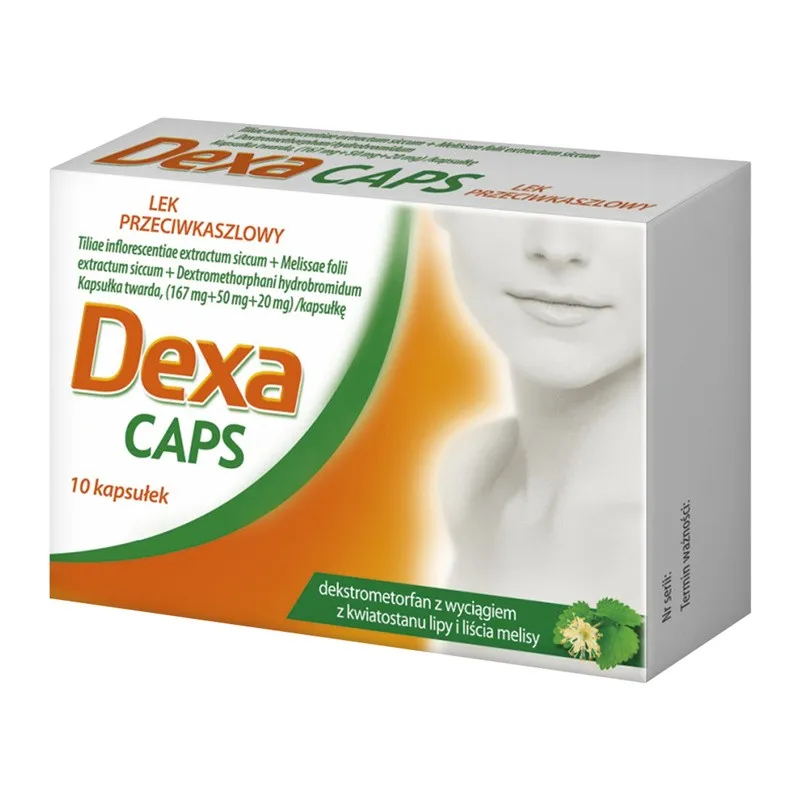
Table of Contents
Patient Information Leaflet
DexaCaps, (167 mg + 50 mg + 20 mg)/capsule, hard capsule
Tiliae inflorescentiae extractum siccum + Melissae folii extractum siccum + Dextromethorphani hydrobromidum
Please read this leaflet carefully before taking the medicine, as it contains important information for the patient.
This medicine should always be taken exactly as described in this patient leaflet or as directed by a doctor or pharmacist.
- Keep this leaflet, as you may need to read it again.
- If you need advice or further information, consult your pharmacist.
- If you experience any adverse reactions, including any not listed in this leaflet, inform your doctor or pharmacist. See section 4.
- If there is no improvement after 7 days, or if symptoms worsen, consult your doctor.
Table of contents
- What DexaCaps is and what it is used for
- Important information before taking DexaCaps
- How to take DexaCaps
- Possible side effects
- How to store DexaCaps
- Contents of the pack and other information
1. What DexaCaps is and what it is used for
DexaCaps contains dextromethorphan hydrobromide and supporting active substances: dry extracts from linden flower (Tiliae inflorescentiae extractum siccum) and lemon balm leaf (Melissae folii extractum siccum). Dextromethorphan hydrobromide is an antitussive agent. It acts by suppressing the cough center in the central nervous system, thereby reducing the frequency of dry cough attacks.
Indications:
For the relief of exhausting, dry cough of various origins, not associated with mucus accumulation in the respiratory tract.
2. Important information before using DexaCaps
When not to use DexaCaps
- if the patient is allergic to the active substances or any of the other ingredients of this medicine (listed in section 6);
- in case of cough with large amounts of mucus;
- in patients with bronchial asthma;
- in patients with severe liver disease;
- in patients with respiratory insufficiency or at risk of its occurrence;
- if the patient is currently taking monoamine oxidase inhibitors (MAO inhibitors) or within 14 days after their discontinuation;
- in patients taking selective serotonin reuptake inhibitors (SSRIs);
- in patients taking mucolytic drugs (medicines that thin mucus in the respiratory tract).
1313 var IB seq 0012 Pg. 1
Warnings and precautions
Before starting treatment with DexaCaps, consult your doctor or pharmacist.
Exercise particular caution when using DexaCaps if the patient is taking buprenorphine (used for treatment of acute or chronic pain). Concurrent use of buprenorphine with DexaCaps may lead to serotonin syndrome, a potentially life-threatening condition (see section "DexaCaps and other medicines").
If the patient is taking medicines such as certain antidepressants or antipsychotics, DexaCaps may interact with them, causing changes in mental status (e.g. agitation, hallucinations, coma) and other symptoms such as body temperature above 38°C, increased heart rate, unstable blood pressure, exaggerated reflex responses, muscle rigidity, lack of coordination, and/or gastrointestinal symptoms (e.g. nausea, vomiting, diarrhea).
In case of chronic or persistent cough, consult a doctor before using this medicine. If symptoms persist for more than 7 days, or if the patient experiences recurrent cough accompanied by fever, rash, or persistent headache, consult a doctor or pharmacist. These may be signs of a serious illness.
This medicine may lead to dependence. Therefore, treatment should be short-term.
Do not exceed the recommended doses.
Cases of abuse of medicines containing dextromethorphan have been reported. Exercise particular caution when using this medicine in adolescents and young adults, as well as in patients with a history of drug or psychoactive substance abuse.
No separate studies have been conducted on the use of dextromethorphan hydrobromide in patients with impaired kidney or liver function.
Due to the extensive hepatic metabolism of dextromethorphan hydrobromide, caution is advised in patients with impaired liver function.
Exercise caution in patients who are poor metabolizers via CYP2D6 or who are concurrently taking CYP2D6 inhibitors, due to the possibility of increased and/or prolonged effects of dextromethorphan.
DexaCaps and other medicines
Inform your doctor or pharmacist about all medicines currently used or recently taken, as well as any medicines you plan to take.
Monoamine oxidase inhibitors (MAO inhibitors)
Concurrent use of this medicine with MAO inhibitors is not recommended, as dextromethorphan hydrobromide potentiates their effects, leading to drowsiness, nausea, high fever, and elevated arterial blood pressure.
A 14-day interval should be maintained after discontinuation of MAO inhibitors before starting DexaCaps.
Antibacterial drugs
Linezolid: serotonin syndrome has been observed during concomitant use with dextromethorphan hydrobromide.
CYP2D6 inhibitors
Concomitant use of strong inhibitors of the CYP2D6 enzyme may increase dextromethorphan concentrations in the body to levels many times higher than normal. This increases the risk of toxic effects of dextromethorphan (agitation, disorientation, tremor, insomnia, diarrhea, respiratory depression) and the development of serotonin syndrome. Strong CYP2D6 inhibitors include fluoxetine, paroxetine, quinidine, and terbinafine. When used concomitantly with quinidine, plasma concentrations of dextromethorphan may increase up to 20-fold, increasing the risk of adverse effects on the central nervous system associated with this medicine. A similar effect on dextromethorphan metabolism is also caused by amiodarone, flecainide, propafenone, sertraline, bupropion, methadone, cinacalcet, haloperidol, perphenazine, and thioridazine. If concomitant use of CYP2D6 inhibitors and dextromethorphan is necessary, the patient must be monitored. It may also be necessary to reduce the dose of dextromethorphan.
Buprenorphine
Dextromethorphan should not be used together with buprenorphine without prior consultation with a doctor.
This medicine may interact with DexaCaps and may cause symptoms such as involuntary, rhythmic muscle contractions, including those of the eye muscles, agitation, hallucinations, coma, excessive sweating, tremor, hyperreflexia, increased muscle tone, and body temperature above 38°C. If such symptoms occur, contact a doctor immediately.
Due to the presence of dextromethorphan hydrobromide, concomitant use of this medicine with alcohol or other medicines with central nervous system depressant effects may enhance their depressive effects on the central nervous system and may be toxic even at relatively low doses.
DexaCaps with food, drink, and alcohol
Take the medicine after meals, swallowing the capsule whole with sufficient fluid.
Alcohol consumption is not recommended during treatment.
Pregnancy and breastfeeding
If the patient is pregnant or breastfeeding, suspects she may be pregnant, or is planning to become pregnant, she should consult a doctor or pharmacist before using this medicine.
Do not use in pregnant women or in women who are breastfeeding.
There are no data on effects on fertility.
Driving and operating machinery
Due to the possibility of drowsiness, exercise caution when driving or operating machinery.
3. How to use DexaCaps
This medicine should always be taken exactly as described in this patient leaflet or as directed by a doctor or pharmacist. If in doubt, consult a doctor or pharmacist.
Oral administration.
Adolescents over 12 years of age and adults: 1 capsule three times daily after meals.
The daily dose of 120 mg of dextromethorphan hydrobromide must not be exceeded.
The medicine should be taken by swallowing the capsule whole with an adequate amount of liquid.
Use of a higher than recommended dose of DexaCaps
Dextromethorphan hydrobromide is considered a compound with low toxicity; however, symptoms of overdose are intensified by concomitant alcohol consumption and use of psychotropic drugs.
If a patient takes more than the recommended dose of DexaCaps, the following symptoms may occur:
nausea and vomiting, involuntary muscle contractions, agitation, confusion, drowsiness, disturbances of consciousness, involuntary rapid eye movements, cardiac disorders (rapid heartbeat), coordination disturbances, psychosis with visual hallucinations, and increased excitability.
Other symptoms of a significant overdose may include coma, severe respiratory depression, and seizures.
If any of the above symptoms occur, seek immediate medical advice or go to hospital.
Missed dose of DexaCaps
Missing a dose of medicine does not significantly affect the course of treatment. Continue treatment as previously prescribed. Do not take a double dose to make up for a missed dose.
Stopping treatment with DexaCaps
This medicine is intended for use when symptoms occur.
If you have any doubts regarding the use of this medicine, consult your doctor or pharmacist.
4. Possible adverse reactions
Like all medicines, this medicine can cause adverse reactions, although not everybody gets them.
Rare (less frequent than in 1 out of 1,000 people):
- drowsiness.
Frequency unknown (frequency cannot be determined from the available data):
- allergic reactions affecting the skin and respiratory system;
- agitation, confusion;
- dizziness, seizures;
- respiratory depression;
- vomiting, nausea, diarrhoea;
- rash.
Reporting of adverse reactions
If any adverse reactions occur, including any adverse reactions not listed in this leaflet, inform a doctor or pharmacist. Adverse reactions can be reported directly to the Department of Monitoring Adverse Drug Reactions of the Office for Registration of Medicinal Products, Medical Devices and Biocidal Products
Al. Jerozolimskie 181C
02-222 Warsaw
Tel.: + 48 22 49 21 301
Fax: + 48 22 49 21 309
Website: https://smz.ezdrowie.gov.pl
Adverse reactions can also be reported to the marketing authorization holder.
Reporting adverse reactions helps provide more information on the safe use of the medicine.
5. How to store DexaCaps
Store in tightly closed packaging, at a temperature not exceeding 25°C. Protect from moisture.
Keep the medicine out of sight and reach of children.
1313 var IB seq 0012 Pg. 4
Do not use this medicine after the expiry date stated on the packaging. The expiry date refers to the last day of the stated month.
Medicines must not be disposed of via wastewater or household waste. Ask your pharmacist how to dispose of medicines no longer required. This will help protect the environment.
6. Contents of the pack and other information
What DexaCaps contains
- The active substances in the medicine are dextromethorphan hydrobromide, dry extract of linden flower and dry extract of lemon balm leaf. Each capsule contains: dextromethorphan hydrobromide – 20.0 mg, dry extract of linden flower (DER 2.5-3:1) – 167.0 mg (carrier: maltodextrin up to 30%), [extraction solvent: ethanol 70% (V/V)] and dry extract of lemon balm leaf (DER 6-8:1) – 50.0 mg, [extraction solvent: purified water].
- Other ingredients: pregelatinized maize starch, microcrystalline cellulose, colloidal anhydrous silica, magnesium stearate. Capsule shell: iron oxide yellow (E172), iron oxide red (E172), titanium dioxide (E171), gelatin.
What DexaCaps looks like and contents of the pack
Blister packs made of PVC/PVDC/Aluminium in a cardboard box.
10, 30, 60 or 90 capsules.
Not all pack sizes may be marketed.
Marketing Authorisation Holder
Zakłady Farmaceutyczne POLPHARMA S.A.
Pelplińska Street 19, 83-200 Starogard Gdański, Poland
Tel. +48 22 364 61 01
Manufacturer
Zakłady Farmaceutyczne POLPHARMA S.A.
Production Plant in Nowa Dęba
Metalowca Street 2, 39-460 Nowa Dęba, Poland
1313 var IB seq 0012 Pg. 5