Dermisil
Poland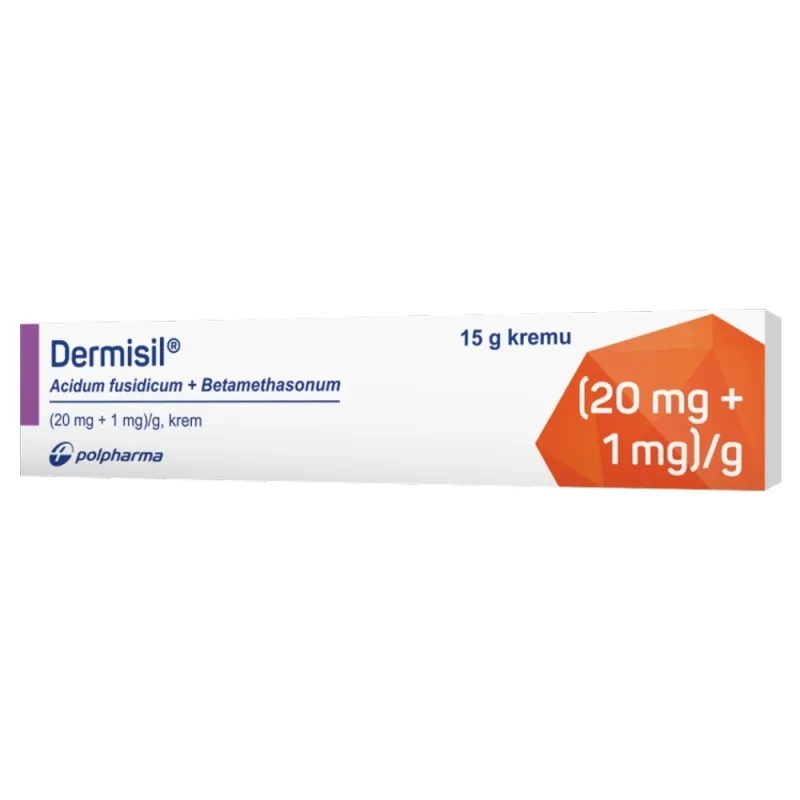
Table of Contents
Package leaflet: Information for the patient
Dermisil, (20 mg + 1 mg)/g, cream
Acidum fusidicum + Betamethasonum
Please read this leaflet carefully before using the medicine, as it contains
important information for the patient.
- Keep this leaflet, so that you can read it again if necessary.
- If you have any doubts, please consult your doctor or pharmacist.
- This medicine has been prescribed for a specific individual. Do not give it to others. The medicine may harm another person, even if their symptoms are the same.
- If any adverse reactions occur, including any adverse reactions not listed in this leaflet, inform your doctor or pharmacist. See section 4.
Table of contents of the leaflet
- What Dermisil is and what it is used for
- Important information before using Dermisil
- How to use Dermisil
- Possible adverse reactions
- How to store Dermisil
- Contents of the pack and other information
1. What Dermisil is and what it is used for
Dermisil contains two different medicines: fusidic acid, which is an antibiotic, and betamethasone, which is a corticosteroid. Both medicines act simultaneously, but in different ways.
Dermisil works as follows:
- the antibiotic inhibits the growth of microorganisms (bacteria) causing infection
- the corticosteroid reduces inflammation, redness, or itching of the skin.
Dermisil is used to treat:
- inflammatory skin conditions (eczema or dermatitis), especially when associated with bacterial infection of the skin.
If there is no improvement after 7 days, discontinue use of the cream and consult your doctor.
2. Important information before using Dermisil
When not to use Dermisil:
- if the patient is allergic to fusidic acid, betamethasone, or any of the other ingredients of this medicine (listed in section 6)
- for the treatment of skin infections in infants under 1 year of age
- for the treatment of skin lesions caused by syphilis or tuberculosis
- for the treatment of acne vulgaris
- for the treatment of rosacea – characterized by redness and inflammation of the skin on the nose and cheeks. Consult a doctor if you are unsure about the symptoms of the disease.
- for perioral dermatitis – red rashes and eruptions around the mouth or beard area
- for the treatment of skin diseases caused by bacteria, such as boils or spots
- for the treatment of skin diseases caused by viruses, such as herpes or chickenpox
- for the treatment of skin diseases caused by fungi, such as interdigital fungal infection (athlete's foot).
Warnings and precautions
Before starting to use Dermisil, discuss this with your doctor or pharmacist.
- Exercise particular caution when using this medicine near your own or your child's eyes. If the cream gets into the eye, it may increase intraocular pressure, which could subsequently lead to loss of vision (glaucoma).
- If the patient experiences blurred vision or other visual disturbances, contact a doctor.
- If the cream is used for a prolonged period or in large amounts, the risk of adverse effects may increase. The skin may also become more sensitive to the medicine.
- Do not use this medicine for prolonged periods on the facial skin.
- Do not use this medicine on open wounds or on sensitive areas such as nostrils, ears, lips, or genital organs, unless directed by a doctor.
- Do not use this medicine on thin skin, skin ulcers, broken blood vessels, or in acne, unless directed by a doctor.
Dermisil and other medicines
Tell your doctor or pharmacist about all medicines you are currently using, have recently used, or plan to use. This includes medicines obtained without a prescription.
Pregnancy and breastfeeding
If you are pregnant or breastfeeding, suspect you may be pregnant, or are planning to have a child, consult your doctor or pharmacist before using this medicine.
- If you are pregnant or suspect you may be pregnant, do not use this medicine for prolonged periods or in large amounts.
- Dermisil should not be applied to the breasts if you are breastfeeding.
Inform your doctor if you become pregnant while using this medicine.
Driving and operating machinery
Dermisil generally has a minor influence on the ability to drive and operate machinery. Contact your doctor if you experience any adverse effects that may affect your ability to drive or operate machinery.
Dermisil contains cetostearyl alcohol
This medicine may cause local skin reactions (e.g. contact dermatitis).
Dermisil contains chlorocresol
This medicine may cause allergic reactions.
If you have any doubts regarding any of the ingredients of this medicine, consult your doctor.
3. How to use Dermisil
This medicine should always be used according to the instructions given by your doctor or pharmacist. If in doubt,
consult your doctor or pharmacist.
Method of administration
This medicine is for external use only on adult or child skin.
Do not swallow.
Do not use this medicine internally.
Instructions for use
Remove the cap.
Before first use of the cream, check whether the tube seal is intact.
Then pierce the tube with the sharp edge located inside the cap.
Always wash your hands before applying Dermisil.
Apply a thin layer of cream to the affected areas of skin.
Exercise caution when applying the medicine to the facial skin, avoiding the eye area.
Always wash your hands after applying Dermisil, unless the cream is being used to treat the hands.
If Dermisil gets into the eye, immediately rinse it thoroughly with cold water. If possible, use eye irrigation solution.
The eye may feel stinging. If vision problems occur or if the eye becomes painful, contact your doctor immediately.
Dosage
Your doctor will determine how much Dermisil you should use.
The usual duration of treatment is up to 2 weeks. Contact your doctor before using the medicine for longer than 2 weeks.
Improvement may be noticeable within a few days of using the medicine.
If no improvement is seen after 7 days, discontinue use of Dermisil and consult your doctor.
This medicine is usually applied twice daily, in the morning and evening. A helpful reminder to use the medicine may be
linking its application to another regular activity, such as brushing your teeth.
If your doctor has advised covering the affected skin with a dressing or bandage, then you should not use Dermisil too frequently.
A child's diaper may also act as an occlusive dressing. In such cases, follow your doctor's instructions.
Adults and children:
Your doctor should inform you about the appropriate amount of cream to use for yourself or for a child. If your doctor has not
specified the amount, follow the instructions below.
To measure the appropriate amount of Dermisil, you can use your index finger. Squeeze the cream from the tube, measuring
from the fingertip to the first crease of the finger. This is known as a "fingertip unit". Since different areas of the body may
require treatment, the table below indicates the appropriate number of fingertip units for each body area. If a larger or smaller
amount is needed, it may be used without concern. When applying the cream to a child's skin, use the fingertip unit measured
with an adult's finger.
| Adults | |
| Area of cream application | Number of fingertip units |
| Face and neck | 2½ |
| Back of the trunk | 7 |
| Front of the trunk | 7 |
| Arm (excluding hand) | 3 |
| Hand (both sides) | 1 |
| Leg (excluding foot) | 6 |
| Foot | 2 |
Children aged 1 to 10 years
| Number of fingertip units | |||
| Application site | Children aged 1 to 2 years | Children aged 3 to 5 years | Children aged 6 to 10 years |
| Face and neck | 1½ | 1½ | 2 |
| Arm and hand | 1½ | 2 | 2½ |
| Leg and foot | 2 | 3 | 4½ |
| Front of the trunk | 2 | 3 | 3½ |
| Back of the trunk including buttocks | 3 | 3½ | 5 |
Missed dose of Dermisil
If a dose of Dermisil is missed at the usual time, apply it as soon as possible. Then continue using the medicine at the regular time. Do not apply a double dose to make up for the missed dose.
If you have any further doubts concerning the use of this medicine, consult your doctor or pharmacist.
4. Possible adverse reactions
Like all medicines, this medicine can cause adverse reactions, although not everyone experiences them.
If any of the following adverse reactions occur, seek immediate medical help.
This could be an allergic reaction to the medicine:
- difficulty breathing
- swelling of the face, eyelids, lips, tongue or throat
- development of a severe rash on the skin.
Other adverse reactions:
- Each of the following adverse reactions is more likely if the medicine is used for a prolonged period, in large amounts, or on skin folds (under the arms or under the breasts).
- The following adverse reactions are more commonly observed in infants and children. They also occur more frequently when bandages, dressings or diapers are applied over affected skin areas.
Not common (occur in less than 1 in 100 people):
- skin irritation
- burning sensation of the skin
- itching
- worsening of rash
- stinging sensation of the skin
- redness of the skin.
Rare (occur in less than 1 in 1000 people):
- urticaria (hives)
- dry skin.
Frequency not known (cannot be estimated from available data):
- itchy skin or skin inflammation at the application site
- rash
- visible small blood vessels near the application site
- blurred vision.
Adverse reactions associated with betamethasone, one of the components of Dermisil, have also been reported. Inform your doctor if any of the following adverse reactions occur:
- thinning of the skin
- stretch marks
- inflammation or swelling of the hair root (folliculitis)
- changes in hair growth
- red rashes around the mouth and chin
- skin discolouration (depigmentation)
- loss of vision due to optic nerve damage in the eye caused by increased intraocular pressure (glaucoma)
- adrenal glands may stop functioning properly. Symptoms may include nausea, abdominal pain, headache, poor weight gain, lack of energy, fatigue, depression and anxiety.
Reporting of adverse reactions
If any adverse effects occur, including any adverse effects not listed in this leaflet, inform your doctor, pharmacist or nurse. Adverse reactions can be reported directly to the Department of Monitoring Adverse Reactions of Medicinal Products at the Office for Registration of Medicinal Products, Medical Devices and Biocidal Products
Al. Jerozolimskie 181C
02-222 Warsaw
Phone: +48 22 49 21 301
Fax: +48 22 49 21 309
Website: https://smz.ezdrowie.gov.pl
Adverse reactions can also be reported to the marketing authorisation holder.
Reporting adverse reactions helps to provide more information on the safety of the medicine.
5. How to store Dermisil
Keep the medicine out of the sight and reach of children.
Do not use this medicine after the expiry date stated on the packaging following: EXP.
The expiry date refers to the last day of the stated month.
The marking on the packaging following the abbreviation EXP indicates the expiry date, and following the abbreviation Lot indicates the batch number.
Shelf life after first opening the tube: 6 months.
The date of first opening of the tube should be recorded in the space provided on the carton.
Do not store above 30°C.
Medicines must not be disposed of via wastewater or household waste. Ask your pharmacist how to dispose of medicines no longer in use. This will help protect the environment.
6. Contents of the package and other information
What Dermisil contains
- The active substances are fusidic acid and betamethasone. Dermisil contains 20 mg/g of fusidic acid and 1 mg/g of betamethasone. 1 g of cream contains 20 mg of fusidic acid and 1 mg of betamethasone, in the form of 1.214 mg of betamethasone valerate.
- Other ingredients: cetostearyl alcohol, macrogol cetostearyl ether 22, chlorocresol, disodium dihydrogen diphosphate dihydrate, liquid paraffin, white soft paraffin, all-rac-α-tocopherol, sodium hydroxide, purified water.
What Dermisil looks like and contents of the pack
A white or almost white, smooth, homogeneous cream in an aluminium tube, placed in a cardboard box.
Each pack contains 5 g, 15 g, 30 g or 60 g of cream.
Not all pack sizes may be marketed.
Marketing Authorisation Holder
POLPHARMA Pharmaceutical Works S.A.
Pelplińska Street 19, 83-200 Starogard Gdanski
tel. + 48 22 364 61 01
Manufacturer
KYMOS, S.L.
Ronda de Can Fatjo, 7B (Parque Tecnologico del Valles), Cerdanyola del Valles
08290 Barcelona
Spain