Cusimolol 0.5%
Poland
Table of Contents
Package leaflet: Information for the patient
Cusimolol 0.5%, 5 mg/ml, eye drops, solution
Timololum
Please read carefully all the information in this leaflet before using this medicine, as it contains
important information for the patient.
- Keep this leaflet, as you may need to read it again.
- If you have any questions, please consult your doctor or pharmacist.
- This medicine has been prescribed for a specific individual. Do not pass it on to others. It may harm other people, even if their symptoms are the same. If you experience any adverse reactions, including any possible side effects not listed in this leaflet, inform your doctor or pharmacist. See section 4.
Table of contents
- What Cusimolol 0.5% is and what it is used for
- Important information before using Cusimolol 0.5%
- How to use Cusimolol 0.5%
- Possible side effects
- How to store Cusimolol 0.5%
- Contents of the pack and other information
1. What Cusimolol 0.5% is and what it is used for
Cusimolol 0.5% eye drops are in the form of a solution. Cusimolol 0.5% contains timolol maleate as the active substance, which belongs to a group of medicines known as beta-adrenolytics (beta-adrenergic receptor blockers). The action of the medicine consists in reducing intraocular pressure.
Cusimolol 0.5% is indicated in the treatment of elevated intraocular pressure occurring in diseases such as ocular hypertension, chronic open-angle glaucoma, including glaucoma in aphakic patients.
Your doctor will explain the nature of your condition and the rationale for using Cusimolol 0.5%.
2. Important information before using Cusimolol 0.5%
When not to use Cusimolol 0.5%
- if the patient is allergic to the active substance, beta-blockers, or any of the other ingredients of this medicine (listed in section 6);
- if the patient has respiratory disorders such as bronchial asthma, currently or in the past, severe chronic obstructive pulmonary disease (a serious lung disease which may cause breathlessness, difficulty breathing and/or persistent cough), or other respiratory diseases (chronic obstructive pulmonary disease);
- in case of certain heart diseases (excessively slow heart rate - sinus bradycardia, sick sinus syndrome, sinoatrial block, second- or third-degree atrioventricular block, overt heart failure, cardiogenic shock, or cardiac rhythm disorders).
If the patient finds that any of the above contraindications apply to them,
they should inform their doctor before using the medicine and then follow
the doctor's advice.
Warnings and precautions
Before starting treatment with Cusimolol 0.5%, discuss with a doctor, pharmacist, or
nurse if the patient currently has or has previously had:
- ischaemic heart disease (symptoms may include chest pain or tightness, shortness of breath or angina), heart failure, low blood pressure;
- heart rhythm disorders, such as slow heart rate;
- breathing problems, asthma or chronic obstructive pulmonary disease;
- a disease related to poor blood circulation (such as Raynaud's disease or Raynaud's syndrome);
- diabetes, because timolol may mask the subjective and objective symptoms of low blood sugar;
- hyperthyroidism, because timolol may mask the subjective and objective symptoms of hyperthyroidism.
Cusimolol 0.5% may be systemically absorbed and may cause adverse effects
similar to those observed with oral beta-blockers.
If the patient suffers from myasthenia (chronic neuromuscular weakness), they should
consult a doctor before starting treatment with Cusimolol 0.5% and follow the doctor's
instructions. Cusimolol 0.5% may worsen symptoms.
In case of any acute allergic reaction (skin rash, redness, itching of the eyes) during
treatment with Cusimolol 0.5%, regardless of the cause of the allergic reaction,
standard treatment with epinephrine (adrenaline) may be ineffective. Therefore,
if the patient is taking other medicines, they should inform the doctor about the use of
Cusimolol 0.5%.
If during treatment with Cusimolol 0.5% an eye infection or injury occurs, the patient should
inform their doctor:
- if new symptoms appear or existing symptoms worsen, the doctor, due to the possibility of contamination (infection) of the medicine, may recommend using a new container of Cusimolol 0.5%;
- simultaneous administration of two locally applied beta-blockers is not recommended. If the patient has a corneal disorder, they should inform the doctor, as timolol may cause dry eyes.
If the patient is scheduled for surgery, they should inform the doctor about using
Cusimolol 0.5%, as timol0l may affect the effectiveness of certain drugs used
during anaesthesia.
Children and adolescents
Timolol in the form of eye drops should be used in young patients with caution. In newborns, infants, and younger children, timolol should be used with particular caution. If coughing, wheezing, abnormal breathing, or unusual pauses in breathing (apnoea) occur, treatment should be stopped immediately and the doctor contacted without delay. A portable apnoea monitoring device may be helpful.
Timolol eye drops have been studied in infants and children aged from 12 days to 5 years with elevated intraocular pressure diagnosed as glaucoma. For further information, please consult a doctor.
Cusimolol 0.5% and other medicines
Tell your doctor or pharmacist about all medicines the patient is currently taking or has recently taken, as well as any medicines the patient plans to take.
Cusimolol 0.5% may affect the action of other medicines taken concomitantly, including eye drops used in the treatment of glaucoma.
It is essential to consult a doctor, especially when using any of the following medicines:
- calcium channel blockers (e.g. nifedipine, verapamil or diltiazem), usually used in the treatment of hypertension, angina pectoris, cardiac arrhythmias, Raynaud's syndrome;
- digoxin, a medicine used in the treatment of heart failure or cardiac arrhythmias;
- drugs that counteract catecholamines (e.g. rauwolfia alkaloids/reserpine);
- pressor amines (e.g. adrenaline), used in the treatment of severe allergic reactions;
- quinidine, a medicine usually used in the treatment of cardiac arrhythmias or certain types of malaria;
- clonidine, a medicine used in the treatment of hypertension;
- other beta-blockers (e.g. other medicines containing timolol administered orally or as eye drops), belonging to the same group as Cusimolol 0.5% and which may have additive effects;
- medicines used in diabetes;
- antidepressants such as fluoxetine and paroxetine;
- antiarrhythmic drugs (including amiodarone);
- guanethidine (used in the treatment of hypertension);
- parasympathomimetic drugs.
If the patient is using other eye drops or ointments simultaneously, at least a 5-minute interval should be maintained between the administration of each medicine. Ophthalmic ointments should be applied last.
Pregnancy, breastfeeding and fertility
If the patient is pregnant or breastfeeding, suspects she may be pregnant, or is planning to have a child, she should consult a doctor or pharmacist before using this medicine.
Cusimolol 0.5% should not be used during pregnancy unless the doctor considers it necessary.
Cusimolol 0.5% should not be used during breastfeeding. Timolol may pass into human milk.
Driving and operating machinery
Cusimolol 0.5% eye drops, solution, has minor influence on the ability to drive and use machines.
However, during treatment with Cusimolol 0.5%, adverse effects such as hallucinations, dizziness, visual disturbances, fatigue may occur, which may impair the patient's ability to drive and operate machinery (see section 4).
Until such symptoms subside, driving motor vehicles or operating machinery is not permitted.
Cusimolol 0.5% contains benzalkonium chloride
The medicine contains 0.5 mg of benzalkonium chloride in each 5 ml of solution, equivalent to 0.1 mg/ml.
Benzalkonium chloride may be absorbed by soft contact lenses and may change their colour. Contact lenses should be removed before instillation and at least 15 minutes should be waited before reinserting them.
Benzalkonium chloride may also cause eye irritation, especially in persons with dry eye syndrome or corneal disorders (the transparent layer at the front of the eye). If abnormal sensations in the eye, stinging or pain occur after using the medicine, contact a doctor.
Cusimolol 0.5% contains phosphates
The medicine contains 47 mg of phosphates in each 5 ml of solution, equivalent to 9.4 mg/ml.
In patients with severe damage to the transparent front part of the eye (cornea), phosphates may, very rarely, during treatment, cause corneal calcification and clouding due to calcium accumulation.
3. How to use Cusimolol 0.5%
This medicine should always be used exactly as directed by your doctor. If in doubt, consult your doctor or pharmacist.
Cusimolol 0.5% is for ocular instillation only.
If the safety collar is loose after removing the cap, it should be removed before using the medicine.
Do not initiate treatment with Cusimolol 0.5%. Treatment should begin with eye drops containing 0.25% timolol solution.
The recommended initial dose is one drop of 0.25% timolol solution twice daily (morning and evening). If the response to treatment is not satisfactory, your doctor may increase the dose to one drop of 0.5% timolol solution in the affected eye twice daily – at this point, treatment with Cusimolol 0.5% should be started. If satisfactory control of intraocular pressure is maintained, your doctor may decide to administer the medicine once daily.
To achieve a stronger therapeutic effect, your doctor may decide to use Cusimolol 0.5% together with other medicines that lower intraocular pressure. However, concomitant use of Cusimolol 0.5% with locally administered beta-adrenergic blocking agents is not recommended.
Switching from previously used treatment
If your doctor decides to switch from another anti-glaucoma eye medicine to timolol solution, the dosing regimen given below is usually applied.
If the patient is using another locally administered beta-adrenergic blocking agent, they should discontinue its use after administering the full dose on the previous day and start treatment the next day with 0.25% timolol solution, administering one drop of 0.25% solution twice daily into the affected eye. If the response to treatment is insufficient, the doctor may increase the dosage to one drop of 0.5% timolol solution twice daily – at this point, Cusimolol 0.5% may be used.
When switching from a non-beta-adrenergic blocking monotherapy anti-glaucoma medicine administered to the eye, the patient should continue using the previous medicine on that day and start using 0.25% timolol solution, administering one drop of 0.25% solution twice daily into the affected eye. The next day, the previously used medicine should be discontinued and one drop of 0.25% timolol solution should be administered twice daily into the affected eye. If the doctor considers higher doses necessary, Cusimolol 0.5% may be used at a dose of one drop twice daily.
If you feel the effect of the medicine is too strong or too weak, consult your doctor.
Use in children and adolescents
Dosing
The use of timolol in children must be preceded by a thorough medical examination. The doctor will carefully assess the possible risks and benefits before deciding on timolol treatment. If expected benefits outweigh possible risks, it is recommended to use the medicine once daily at the lowest available concentration. In children, a 0.1% active substance concentration should be sufficient for controlling intraocular pressure. If adequate pressure control is not achieved with this dosage, administration twice daily at 12-hour intervals may be necessary. Patients, especially newborns, should be closely observed for one to two hours after the first dose, and careful monitoring for adverse effects should continue until surgical intervention is performed.
Method of administration
Only one drop should be administered at each dosing time.
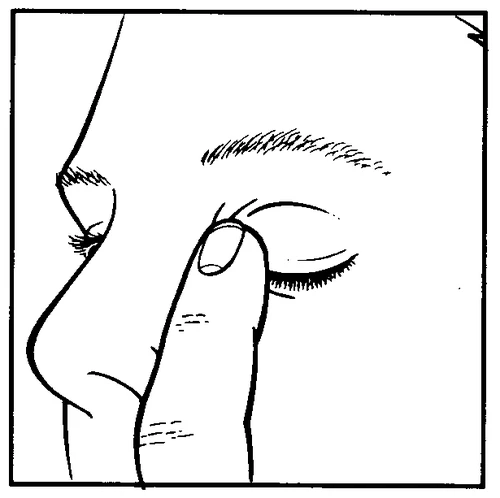
After instillation, keep the eyes closed for 2 minutes and press the inner corner of the eye near the nose to prevent the medicine from entering the systemic circulation.
Treatment duration
In children, this medicine is intended for temporary treatment.
Method of administration
1 2 3
- Prepare the Cusimolol 0.5% bottle and a mirror.
- Wash your hands.
- Hold the bottle in your hand and unscrew the cap.
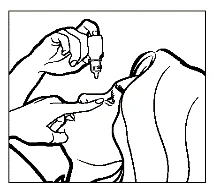
- Hold the bottle with thumb and index finger, nozzle pointing downward.
- Tilt your head backward. With a clean finger, gently pull down the lower eyelid to create a "pouch"; the drop should go into this pouch (Figure 1).
- Bring the dropper tip close to the eye. A mirror may be used to assist.
- Do not let the dropper tip touch the eye, eyelid, surrounding areas, or any other surface, as this may contaminate (infect) the medicine in the bottle.
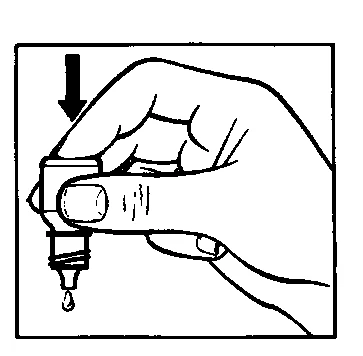
- Gently press the bottom of the bottle to release one drop of Cusimolol 0.5%.
- Do not squeeze the bottle; it is designed so that light pressure on the bottom is sufficient to release a drop (Figure 2).
- If administering drops to both eyes, repeat the above steps for the second eye.
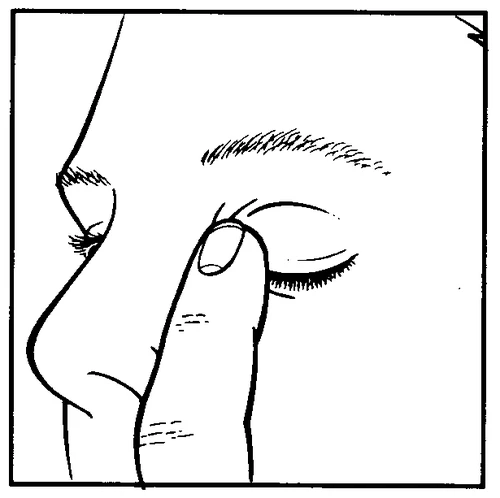
- After instilling Cusimolol 0.5%, keep the eye closed and gently press with a finger on the inner corner of the eye next to the nose (Figure 3) for 2 minutes. This prevents timolol from entering the systemic circulation.
- Immediately after use, tightly replace the cap.
- Before opening a new bottle, finish using the previously opened bottle.
If the drop misses the eye, repeat the instillation attempt.
Use of a higher than recommended dose of Cusimolol 0.5%
If the patient uses more Cusimolol 0.5% than prescribed, rinse the eyes with lukewarm water and contact a doctor immediately. Do not administer additional eye drops until the next scheduled dose.
Possible symptoms of overdose include slowed heart rate, low blood pressure, heart failure, and breathing difficulties.
Missed dose of Cusimolol 0.5%
If the patient forgets to use Cusimolol 0.5%, they should continue treatment by administering the next dose according to the prescribed schedule. If the next dose is due soon, the missed dose should be skipped and treatment continued as prescribed. Do not use a double dose to make up for a missed dose.
Stopping use of Cusimolol 0.5%
If the patient stops using Cusimolol 0.5%, it may lead to a dangerous increase in intraocular pressure. Do not discontinue use of Cusimolol 0.5% without medical advice.
If you have any further questions about the use of this medicine, consult your doctor or pharmacist.
4. Possible adverse effects
Like any medicine, Cusimolol 0.5% can cause adverse effects, although not everyone will experience them.
If any adverse effects occur, including those not listed in this leaflet, inform your doctor or pharmacist as soon as possible.
In the event of severe adverse effects (e.g. allergic reactions), do not administer the next dose of the medicine. Seek immediate medical attention from your doctor or the nearest hospital Emergency Department.
The following adverse effects have been observed during the use of Cusimolol 0.5%:
Common adverse effects (may occur in 1 to 10 people out of 100):
Eye-related effects: blurred vision, eye pain, eye irritation, eye redness
Uncommon adverse effects (may occur in 1 to 10 people out of 1,000):
Eye-related effects: corneal abrasion (damage to the front surface of the eyeball), ocular surface inflammation with or without damage to the eye surface, iritis, conjunctivitis, blepharitis, decreased visual acuity, light sensitivity, dry eye, increased tear production, eye discharge, eye itching, eyelid lumps, eye inflammation, eyelid swelling, eye discomfort
General effects: asthma, bronchitis, shallow breathing, headache, taste disturbances, slowed heart rate, fatigue, hypotension
Rare adverse effects (may occur in 1 to 10 people out of 10,000):
Eye-related effects: double vision, eye fatigue, eyelid rash, uveitis, visual impairment, eyelid redness, eyelid itching, eye swelling, change in corneal colour, conjunctivitis
General effects: depression, reduced blood flow to the brain, dizziness, migraine, heart attack, high blood pressure, swelling of hands and feet, cold sensation in extremities, chronic obstructive pulmonary disease (COPD), bronchospasm, breathing difficulties, cough, wheezing, nasal congestion, indigestion, abdominal discomfort, dry mouth, facial swelling, skin redness, generalised weakness, chest discomfort
After the medicine was placed on the market, the following adverse effects have been reported (frequency unknown):
- Eye-related effects: detachment of the layer beneath the retina containing blood vessels, following filtration surgery, which may cause visual disturbances; drooping of the upper eyelid (causing the eye to remain half-closed);
- General effects: swelling of limbs or face, which may cause airway obstruction and lead to difficulty swallowing or breathing, allergy, low blood glucose levels, seeing, feeling or hearing things that are not there (hallucinations), sleep difficulties (insomnia), memory loss, nightmares, stroke, fainting, sensory disturbances such as numbness and tingling, heart attack, cardiac arrhythmia, worsening of congestive heart failure (a heart condition characterised by shortness of breath and swelling of feet and legs due to fluid retention), changes in heart rhythm or rate, palpitations, Raynaud's syndrome (arterial constriction in the hands leading to ischaemia), vomiting, diarrhoea, nausea, urticaria or itchy rash, psoriasis, rash, hair loss, joint disease (or joint damage), sexual dysfunction.
Like other medicines applied locally to the eye, timolol may be absorbed into the systemic circulation. This may cause adverse effects similar to those observed with oral and/or intravenous beta-blockers. The frequency of systemic adverse effects after local ocular administration is lower than, for example, after oral or intravenous administration. The adverse effects listed below are those reported across the entire class of ophthalmic beta-blockers:
- Systemic lupus erythematosus, generalised allergic reactions including swelling of limbs or face, which may cause airway obstruction and lead to difficulty swallowing or breathing, urticaria or itchy rash, localised and generalised rash, pruritus, severe, acute, life-threatening allergic reactions;
- Low blood glucose levels;
- Sleep difficulties (insomnia), depression, nightmares, memory loss;
- Fainting, stroke, reduced blood flow to the brain, worsening of objective and subjective symptoms of myasthenia (muscle disease), dizziness, sensory disturbances such as numbness and tingling, and headache;
- Objective and subjective symptoms of eye irritation (e.g. burning, stinging, itching, tearing, redness), blepharitis, keratitis, blurred vision, and detachment of the layer beneath the retina containing blood vessels, following filtration surgery, which may cause visual disturbances, decreased corneal sensitivity, dry eyes, corneal abrasion (damage to the front surface of the eyeball), drooping of the upper eyelid (causing the eye to remain half-closed), double vision;
- Slowed heart rate, chest pain, palpitations, oedema (fluid retention), changes in heart rate or rhythm, congestive heart failure (a heart condition characterised by shortness of breath and swelling of feet and legs due to fluid retention), cardiac arrhythmia, heart attack, heart failure;
- Low blood pressure, Raynaud's syndrome (arterial constriction in the hands leading to ischaemia), cold hands and feet syndrome;
- Bronchospasm (mainly in patients with pre-existing respiratory disease), breathing difficulties, cough;
- Taste disturbances, nausea, indigestion, diarrhoea, dry mouth, lower abdominal pain, vomiting;
- Hair loss, skin rash with silvery-white appearance (psoriasiform changes) or worsening of psoriasis, skin rash;
- Muscle pain not caused by physical activity;
- Sexual dysfunction, decreased libido;
- Muscle weakness/fatigue.
Reporting of adverse effects
If any adverse effects occur, including those not listed in this leaflet, inform your doctor or pharmacist. Adverse effects can be reported directly to the Department of Monitoring Adverse Drug Reactions, Office for Registration of Medicinal Products, Medical Devices and Biocidal Products,
Al. Jerozolimskie 181C
02-222 Warsaw
Phone: +48 22 49 21 301
Fax: +48 22 49 21 309
Website: https://smz.ezdrowie.gov.pl
5. How to store Cusimolol 0.5%
Keep this medicine out of sight and reach of children.
Store below 25°C.
Keep in the outer packaging to protect from light.
This medicine can be used for up to 28 days after first opening the bottle.
Do not use this medicine after the expiry date stated on the carton and bottle.
Medicines should not be disposed of via wastewater or household waste. Ask your pharmacist how to dispose of medicines no longer required. These measures will help protect the environment.
6. Contents of the pack and other information
What Cusimolol 0.5% contains
- The active substance is timolol (as timolol maleate) at a dose of 5 mg in 1 ml
- Other ingredients: monosodium dihydrogen phosphate monohydrate, disodium phosphate dodecahydrate, benzalkonium chloride, sodium chloride, purified water
What Cusimolol 0.5% looks like and contents of the pack
A bottle containing 5 ml of solution, placed in a cardboard box.
Marketing Authorisation Holder
Immedica Pharma AB
Solnavägen 3H
SE-113 63 Stockholm
Sweden
Manufacturer:
Siegfried El Masnou, S.A.
c/Camil Fabra, 58
08320 El Masnou (Barcelona)
Spain