Curosurf
Poland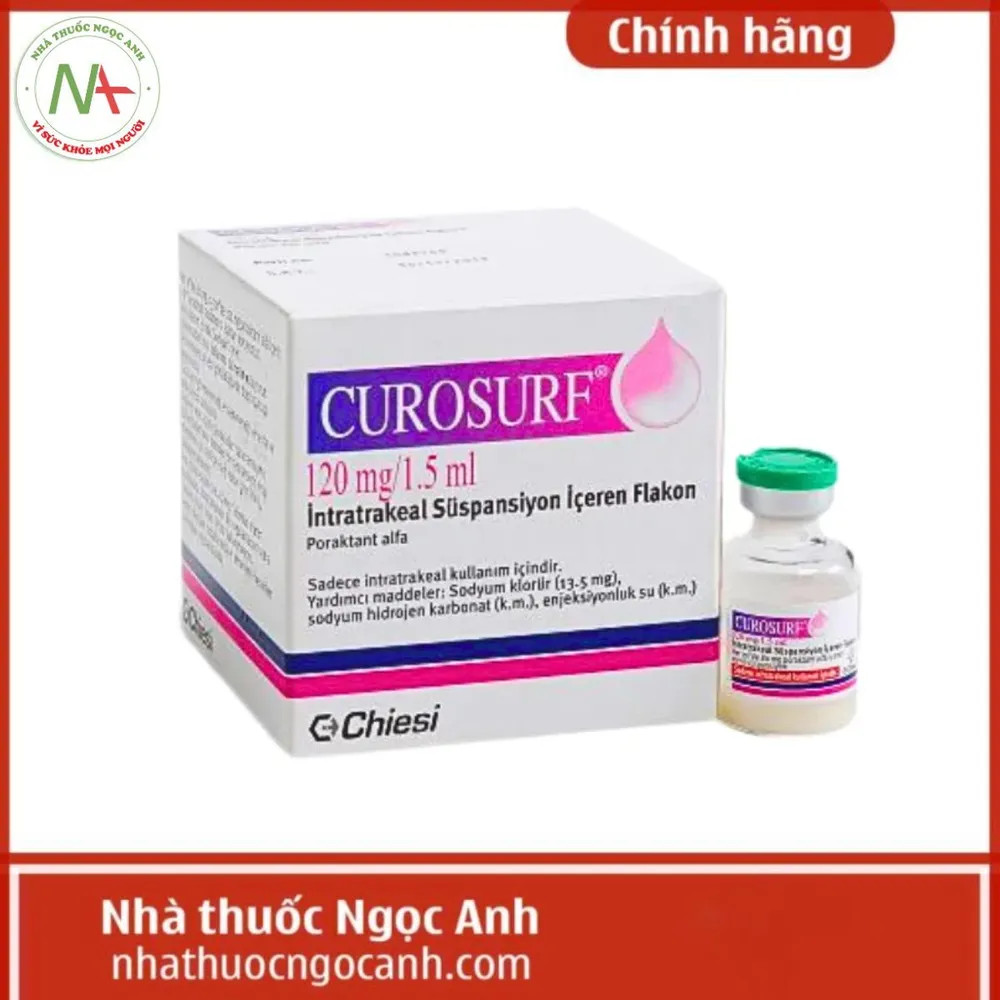
Table of Contents
Patient information leaflet: information for parents and caregivers
Warning! Please keep this leaflet. The information on the immediate packaging is in a foreign language.
Curosurf, 80 mg/ml (120 mg/1.5 ml), suspension for endotracheal and intrabronchial administration
(Poractant alfa)
Phospholipid fraction from pig lungs
Please read this leaflet carefully before using the medicine, as it contains important information for the patient.
- Keep this leaflet, so that you can read it again if necessary.
- If you have any questions, please consult your doctor.
- If the patient experiences any adverse reactions, including any not listed in this leaflet, inform the doctor or nurse immediately. See section 3.
Table of contents:
- What Curosurf is and what it is used for
- How to use Curosurf
- Possible side effects
- How to store Curosurf
- Contents of the pack and other information
1. WHAT CUROSURF IS AND WHAT IT IS USED FOR
Curosurf is used for the treatment and prevention of respiratory distress syndrome (RDS) in newborns. In most newborns, the lungs produce a substance called surfactant. This substance coats the air sacs in the lungs, prevents them from collapsing, and enables normal breathing. However, some newborns, especially premature infants, are born with insufficient surfactant, which leads to the development of RDS. Curosurf is a natural surfactant that works in the same way as the surfactant produced by newborns, thus helping infants to breathe normally until their bodies begin producing their own natural surfactant.
Other medical conditions may occur in newborns that may require different treatments.
2. HOW CUROSURF IS USED
Dosage:
The doctor will determine the appropriate dose of the medicine based on the infant's body weight. If Curosurf is administered to prevent RDS, it should be given within 15 minutes after birth. If Curosurf is used to treat RDS, it should be administered as soon as possible after diagnosis. If the infant requires an additional dose of Curosurf, it is given 12 hours after the first dose. If necessary, a third dose may be administered 12 hours later.
The use of Curosurf in preterm infants with liver or kidney impairment has not been studied.
Method of administration:
Curosurf is administered to the infant in an incubator by a doctor or nurse. The medicine will be warmed to room temperature and then delivered via a syringe through an endotracheal tube into the infant's trachea. For this purpose, the infant may need to be disconnected from the ventilator for a few minutes.
A less invasive method of surfactant administration may also be used, involving a thin catheter (LISA – Less Invasive Surfactant Administration).
Curosurf contains sodium
Curosurf contains less than 1 mmol (23 mg) of sodium per vial; therefore, the medicine is considered "sodium-free".
3. POSSIBLE ADVERSE REACTIONS
Like all medicines, this medicine can cause adverse reactions, although not everyone will experience them.
The possible adverse reactions listed below are categorized according to their frequency of occurrence:
If you have any doubts regarding adverse reactions, please contact your doctor.
Not common (occur in less than 1 in 100 patients):
- infection
- intracranial hemorrhage
- air in the chest cavity due to lung injury
Rare (occur in less than 1 in 1000 patients):
- slowed heart rate
- low blood pressure
- chronic lung disease
- decreased oxygen levels in the body
In addition, the following adverse reactions have been reported:
- increased oxygen levels in the body
- bluish discoloration of the skin or gums due to lack of oxygen
- respiratory arrest
- complications following placement of tubes in the lungs
- reduced brain activity
During administration of Curosurf via a thin catheter, certain mild and transient adverse reactions have been reported: bradycardia, apnea, decreased blood oxygen saturation, foaming at the mouth, coughing, choking, and sneezing.
Reporting of adverse reactions
If any adverse reactions occur, including those not listed in this leaflet, inform your doctor or nurse.
Adverse reactions can be reported directly to the Department of Monitoring Adverse Drug Reactions at the Office for Registration of Medicinal Products, Medical Devices and Biocidal Products, Al. Jerozolimskie 181C, 02-222 Warsaw, phone: +48 22 49 21 301, fax: +48 22 49 21 309, website: https://smz.ezdrowie.gov.pl
Reporting adverse reactions helps to provide more information on the safety of this medicine.
4. HOW TO STORE CUROSURF
- Keep this medicine out of the sight and reach of children.
- Store in a refrigerator (2°C - 8°C). Keep in the original packaging to protect from light. Before administration to the infant, warm to room temperature.
- Unopened and unused vials of Curosurf that have been warmed to room temperature may be returned to the refrigerator within 24 hours for later use. The medicine should not be warmed to room temperature and returned to the refrigerator more than once.
- Do not use this medicine after the expiry date stated on the carton and vial. The expiry date refers to the last day of the stated month.
- Each container should be used once only, and any remaining contents should be discarded. The hospital should ensure safe disposal of unused Curosurf.
- Medicines must not be disposed of via wastewater. Ask your pharmacist how to dispose of medicines no longer required. These measures help protect the environment.
5. CONTENTS OF THE PACK AND OTHER INFORMATION
What Curosurf contains
- The active substance is a mixture of lipids and proteins derived from porcine pulmonary alveoli.
- Other ingredients: sodium chloride, water for injections.
What Curosurf looks like and contents of the pack
Curosurf is a sterile suspension. It is available in single-use glass vials containing 1.5 ml (120 mg) of phospholipid fraction derived from porcine pulmonary alveoli. Each ml of sterile suspension contains 80 mg of phospholipid fraction from porcine pulmonary alveoli. Each pack contains 2 vials of 1.5 ml of Curosurf suspension.
For further information, please contact the responsible party or the parallel importer.
Responsible party in Romania, country of export:
CHIESI FARMACEUTICI SpA
Via Palermo 26/A, 43122 Parma, Italy
Manufacturer:
CHIESI FARMACEUTICI SpA
Via Palermo 26/A, 43122 Parma, Italy
CHIESI FARMACEUTICI S.p.A
Via San Leonardo 96, 43122 Parma, Italy
CHIESI PHARMACEUTICALS GmbH
Gonzagagasse 16/16, 1010 Vienna, Austria
Parallel importer:
Delfarma Sp. z o.o.
ul. Św. Teresy od Dzieciątka Jezus 111
91-222 Łódź
Repackaged in:
Delfarma Sp. z o.o.
ul. Św. Teresy od Dzieciątka Jezus 111
91-222 Łódź
Authorization number in Romania, country of export: 272/2007/01
Parallel import authorization number: 85/19
Please read the information on the reverse of the leaflet
------------------------------------------------------------------------------------------------------------------------
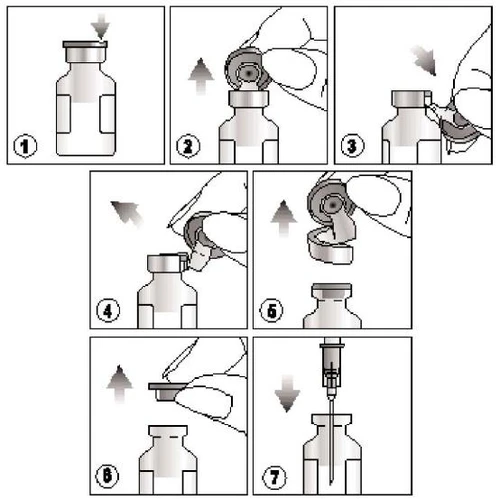
How to open the product?
- Locate the cut mark on the colored plastic cap,
- Lift the cap at the cut mark and pull upwards,
- Pull downwards on the plastic part of the cap together with its aluminium component,
- and 5) Remove the entire cap by pulling off the aluminium ring,
- and 7) Remove the rubber stopper before drawing out the vial contents.
For single use only. Any unused suspension remaining in the vial must be discarded.
Do not store unused suspension for subsequent use.
Any unused product or waste material should be disposed of in accordance with local regulations.