Cordarone
Poland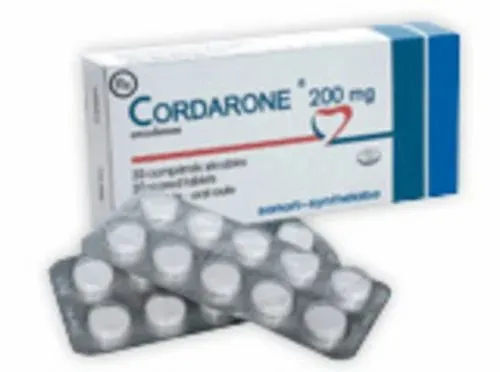
Table of Contents
Patient Information Leaflet
Warning! Keep this leaflet! The packaging label is in a foreign language.
Cordarone (Angoron)
200 mg, tablets
Amiodaroni hydrochloridum
Cordarone and Angoron are different brand names for the same medicine.
Please read this leaflet carefully before using the medicine, as it contains
important information for the patient.
- Keep this leaflet so that you can read it again if necessary.
- If you have any doubts, consult your doctor or nurse.
- This medicine has been prescribed for a specific individual. Do not pass it on to others. This medicine may harm another person, even if their symptoms are the same as yours.
- If you experience any adverse effects, including any not listed in this leaflet, inform your doctor, pharmacist, or nurse. See section 4.
Leaflet Contents
- What Cordarone is and what it is used for
- Important information before taking Cordarone
- How to take Cordarone
- Possible side effects
- How to store Cordarone
- Contents of the pack and other information
1. What Cordarone is and what it is used for
Cordarone is available as tablets and contains amiodarone hydrochloride as the active substance. Amiodarone is a potent antiarrhythmic medicine used to treat irregular heartbeats.
It is used to treat life-threatening heart rhythm disorders:
- rhythm disturbances in Wolff-Parkinson-White syndrome;
- atrial fibrillation and atrial flutter, paroxysmal supraventricular tachyarrhythmias: supraventricular and nodal tachycardias, when other medicines cannot be used;
- ventricular rhythm disorders (ventricular tachycardia, ventricular fibrillation), when other antiarrhythmic medicines are ineffective.
2. Important information before using Cordarone
When not to use Cordarone:
- if the patient is allergic to iodine, amiodarone, or any of the other ingredients of this medicine (listed in section 6); if symptoms of allergy occur, such as itchy rash, difficulty swallowing or breathing, or swelling of the lips, face, throat, or tongue, contact a doctor immediately;
- in patients with heart diseases: sinus bradycardia, sinoatrial block, sick sinus syndrome, except in patients with an implanted pacemaker (risk of sinus node suppression);
- in patients with second- or third-degree atrioventricular block, except in patients with an implanted pacemaker;
- concomitantly with medicines that may cause life-threatening arrhythmias – torsade de pointes (see "Cordarone and other medicines");
- if the patient has thyroid disease;
- if the patient is pregnant or breastfeeding.
Warnings and precautions
Before starting amiodarone treatment, EKG, TSH hormone level, and serum potassium concentration should be assessed (low blood potassium levels increase the risk of arrhythmias).
The pharmacological action of amiodarone causes changes in ECG: QT interval prolongation (due to prolonged repolarization phase) with possible appearance of U waves.
However, these changes are not toxic.
Heart rate may decrease significantly in elderly patients.
If second- or third-degree atrioventricular block, sinoatrial block, or dual bundle block occurs, treatment with Cordarone should be discontinued.
Cordarone has a proarrhythmic effect. Cases of new-onset arrhythmias or worsening of treated arrhythmias have been reported, sometimes leading to death.
Proarrhythmic effects of Cordarone are reported less frequently than with other antiarrhythmic drugs. Proarrhythmia associated with amiodarone occurs particularly as a result of interaction with QT-prolonging drugs and/or in the presence of electrolyte disturbances (see section "Cordarone and other medicines" and section 4). Despite QT interval prolongation, Cordarone has low activity in inducing torsade de pointes arrhythmias.
Amiodarone may affect the function of a pacemaker or implanted cardioverter-defibrillator, especially during long-term antiarrhythmic therapy.
Therefore, device function should be monitored before and during amiodarone treatment.
Oral Cordarone is not contraindicated in patients with heart failure, but caution is advised during treatment, as it may exacerbate heart failure. In such cases, Cordarone may be used in combination with other medicines.
Before starting Cordarone, discuss with your doctor or pharmacist if the patient is currently taking a medicine containing sofosbuvir, used in the treatment of hepatitis C virus infection, as this may cause life-threatening slowing of heart rate. The doctor may consider alternative treatment options. If treatment with both amiodarone and sofosbuvir is necessary, additional cardiac monitoring may be required.
Contact your doctor immediately if the patient is taking a medicine containing sofosbuvir for hepatitis C and experiences any of the following during treatment:
- slow or irregular heartbeat or arrhythmias,
- shortness of breath or worsening of existing breathlessness,
- chest pain,
- dizziness,
- palpitations,
- near-fainting or fainting.
Cordarone may cause hypothyroidism or hyperthyroidism, especially in patients with a history of thyroid disorders. Clinical and biological monitoring (including TSH levels) is recommended before starting treatment in all patients. Monitoring should continue during treatment every 6 months and for several months after treatment ends. This is particularly important in elderly patients. In patients with a history indicating increased risk of thyroid disorders, regular monitoring of thyroid function is recommended. Hyperthyroidism may occur during treatment or up to several months after discontinuation of amiodarone. Clinical symptoms, usually mild, such as weight loss, new-onset arrhythmias, dyspnea, or congestive heart failure, should alert the physician. Diagnosis is based on markedly decreased serum TSH levels. In such cases, Cordarone should be discontinued. Symptoms usually resolve within several months after stopping Cordarone; clinical improvement is preceded by normalization of thyroid function tests. Severe cases of hyperthyroidism, sometimes fatal, require immediate appropriate therapeutic intervention. Treatment should be individually tailored: antithyroid drugs (which are not always effective), corticosteroids, beta-blockers.
The onset of dyspnea and non-productive cough may be related to pulmonary toxicity, such as interstitial pneumonitis. In patients experiencing exertional dyspnea, either as the sole symptom or associated with worsening general condition (fatigue, weight loss, fever), a chest X-ray should be performed. Continuing Cordarone therapy should be considered, as interstitial pneumonitis is usually reversible if treatment is promptly discontinued (clinical symptoms usually resolve within 3 to 4 weeks; radiological changes and lung function improvement occur over several months). Consideration should be given to corticosteroid therapy.
Periodic monitoring of liver function (measurement of aminotransferase activity) is recommended during Cordarone treatment. The dose of Cordarone should be reduced or treatment discontinued if aminotransferase activity increases threefold above normal values, which may indicate acute or chronic liver dysfunction.
Clinical signs of chronic liver dysfunction may be mild (possible liver enlargement, aminotransferase activity increased 1.5 to 5 times above normal values). These abnormalities usually resolve after discontinuation of Cordarone; however, fatal cases have been reported.
Cordarone treatment should be stopped immediately if severe skin reactions occur during treatment (e.g. progressive rash with blisters or mucosal lesions, fever and joint pain, severe rapidly progressing illness with large subepidermal blisters, extensive skin erosions, sloughing of large skin areas, and fever – see also section 4). These symptoms may be life-threatening.
Cordarone may cause sensory-motor peripheral neuropathy and/or myopathy. Symptoms usually resolve within several months after discontinuation of Cordarone, but in some cases, certain symptoms may persist.
If blurred vision or worsening of vision occurs, a complete ophthalmological examination, including fundoscopy, should be performed immediately. If optic nerve damage and/or inflammation is detected, Cordarone must be discontinued due to the risk of vision loss.
Concomitant use of amiodarone with the following medicines is not recommended: beta-blockers, calcium channel blockers that reduce heart rate (verapamil, diltiazem), and laxatives that may cause hypokalemia.
Avoid exposure to sunlight and use sun-protective measures during treatment. Cordarone causes photosensitivity, which may persist for several months after discontinuation of treatment.
The most common symptoms are tingling, burning, and redness on skin areas exposed to sunlight.
Phototoxic reactions and rash are rarely observed.
Before undergoing surgery, inform the anesthesiologist that the patient is taking amiodarone; severe circulatory and respiratory complications (sometimes fatal) have been reported in patients undergoing general anesthesia and oxygen therapy.
If the patient is on a heart transplant waiting list, the treating physician may change the treatment regimen before transplantation. This is because amiodarone use prior to heart transplantation increases the risk of a life-threatening complication (primary graft dysfunction), in which the transplanted heart fails to function properly within the first 24 hours after surgery.
Cordarone and other medicines
Inform your doctor about all medicines currently or recently taken, as well as any medicines planned for use.
Do not take Cordarone concomitantly with medicines that may cause life-threatening arrhythmias (type torsade de pointes). These include:
- antiarrhythmic medicines (for irregular heartbeat): quinidine, disopyramide, procainamide, sotalol, bretylium, bepridil,
- intravenous erythromycin (antibiotic), cotrimoxazole (antimicrobial), or the antiprotozoal agent pentamidine,
- antipsychotic medicines such as: chlorpromazine, thioridazine, fluphenazine, pimozide, haloperidol, amisulpride, sertindole,
- some medicines used for other psychiatric disorders: lithium and tricyclic antidepressants, e.g. doxepin, amitriptyline,
- some antihistamines used for allergies: terfenadine, astemizole, mizolastine,
- antimalarial medicines: quinine, chloroquine, mefloquine, halofantrine,
- a medicine used for cerebral circulation disorders, dizziness, tinnitus, memory and learning disorders, especially in the elderly – vinpocetine,
- neuroleptics,
- a medicine used for delayed gastric emptying – cisapride.
Concomitant use of Cordarone is not recommended with: - fluoroquinolones – antimicrobial agents: ciprofloxacin, ofloxacin, levofloxacin,
- beta-blockers – used for heart conditions, e.g. propranolol,
- calcium channel blockers that slow heart rate – used for angina (heart disease) or hypertension (high blood pressure): verapamil, diltiazem,
- antiviral medicines used for hepatitis C virus infection, e.g. sofosbuvir, daklatasvir, symeprevir, or ledipasvir, due to risk of bradycardia,
- certain laxatives (used for constipation) causing low potassium levels: bisacodyl, senna,
- cholesterol-lowering medicines – statins, e.g. simvastatin, atorvastatin, lovastatin.
Caution is advised when using the following medicines concomitantly with Cordarone: - diuretics, e.g. furosemide,
- anti-inflammatory medicines – systemic corticosteroids, e.g. hydrocortisone, prednisolone,
- tetracosactide – a medicine used to diagnose certain hormonal disorders,
- antifungal medicine – intravenous amphotericin B,
- agents used in general anesthesia or high oxygen concentrations during surgical procedures (see "Warnings and precautions" in section 2 and section 4). Before surgery, inform the anesthesiologist about Cordarone use,
- phenytoin – used for epileptic seizures: close monitoring is required and the phenytoin dose should be reduced immediately if signs of overdose occur, with plasma phenytoin concentration measured,
- digitalis glycosides, e.g. digoxin – used for heart conditions: the doctor will order plasma digoxin concentration tests and ECG, and adjust the digoxin dose; the patient should be monitored for signs of digitalis toxicity,
- anticoagulants – warfarin, dabigatran: regular blood coagulation tests are necessary to adjust oral anticoagulant doses during and after Cordarone treatment; dabigatran dose adjustment may be required,
- immunosuppressants to prevent transplant rejection – cyclosporine, tacrolimus, sirolimus,
- flecainide – used for arrhythmias: treatment will be under strict medical supervision; the doctor will adjust the flecainide dose,
- fentanyl – a strong analgesic,
- lidocaine – an anesthetic,
- sildenafil – used for erectile dysfunction,
- midazolam – used for anxiety and sedation before surgical procedures,
- triazolam – used for insomnia,
- dihydroergotamine and ergotamine – antimigraine agents,
- colchicine – used for acute gout attacks.
Pregnancy, breastfeeding, and effects on fertility
During pregnancy, breastfeeding, or if pregnancy is suspected or planned, consult a doctor before using this medicine.
Due to the effect of Cordarone on the fetal thyroid, use during pregnancy is contraindicated unless otherwise directed by a physician. Consult a doctor before use.
Use of Cordarone during breastfeeding is contraindicated.
There are no data on the effect of amiodarone on human fertility.
Driving and operating machinery
Based on safety data for amiodarone, the medicine does not impair the ability to drive or operate machinery.
Cordarone contains lactose monohydrate
Patients with hereditary galactose intolerance, Lapp-type lactase deficiency, or glucose-galactose malabsorption syndrome should not take this medicine.
3. How to use Cordarone
This medicine should always be taken exactly as your doctor has told you. If you are unsure, consult your doctor.
Treatment with Cordarone should be initiated in a hospital setting and then continued under the supervision of a specialist.
Loading dose:
Usually, 600 mg per day (three times 200 mg) for one week.
Maintenance dose:
The minimum effective dose (sufficient to control arrhythmias) should be used; depending on individual sensitivity, the dose ranges from 100 to 200 mg per day.
Cordarone may be administered every other day at a dose of 200 mg per day or daily at a dose of 100 mg per day; treatment-free intervals (two days per week) may also be applied.
Use in children
The safety and efficacy of Cordarone in children have not been established. Therefore, its use is not recommended in this patient group.
Use in elderly patients
As with all patients, the minimum effective dose should be used. There is no evidence that elderly patients require dose adjustment. However, elderly patients may be more susceptible to bradycardia and conduction disturbances when higher doses are used. Particular attention should be paid to thyroid gland function.
If you feel that the effect of Cordarone is too strong or too weak, consult your doctor.
Overdose of Cordarone
There are only a few reports of amiodarone overdose. Symptoms may include slowing of heart contractions, ventricular tachycardia, torsade de pointes-type arrhythmias, as well as hypotension and liver damage.
Overdose requires immediate medical attention; treatment is symptomatic.
Neither amiodarone nor its metabolites are removed during dialysis.
In case of accidental ingestion of more than the recommended dose, seek immediate medical advice from your doctor or pharmacist.
Missed dose of Cordarone
If you miss a dose, take it as soon as possible, unless it is almost time for your next dose. Do not take a double dose or two doses close together.
If you are unsure, consult your doctor.
Stopping Cordarone
If you have any further questions about using this medicine, consult your doctor or nurse.
4. Possible side effects
Like all medicines, this medicine can cause side effects, although not everybody will experience them.
You should stop taking Cordarone and seek immediate medical advice if any of the following occur:
Frequency unknown (frequency cannot be estimated from the available data)
- anaphylactic shock (a clinical syndrome of symptoms occurring when the body's autoregulatory mechanisms fail to maintain adequate blood flow to vital organs and tissues, caused by a rapidly progressing allergic reaction), manifesting as confusion, weakness, fainting;
- anaphylactic reactions – severe allergic reactions affecting multiple organ systems simultaneously, usually the cardiovascular, respiratory, and skin systems, occurring immediately after exposure to an allergen;
- Quincke's edema (angioedema) – a severe allergic reaction causing swelling of the face, breathing difficulties, or dizziness;
- life-threatening skin reactions characterized by rash, blisters, skin peeling, and pain [toxic epidermal necrolysis (TEN), Stevens-Johnson syndrome (SJS), bullous dermatitis, drug reaction with eosinophilia and systemic symptoms (DRESS)], and lesions of mucous membranes (see also "Warnings and precautions" in section 2). These symptoms may be life-threatening and may even lead to death;
- irregular heartbeat, which may be a sign of the life-threatening arrhythmia torsade de pointes (see "Warnings and precautions" and "Cordarone and other medicines" in section 2);
- coughing up blood as a sign of pulmonary hemorrhage;
- abdominal pain and constipation, which may indicate acute pancreatitis or sudden onset of pancreatitis;
- seeing, hearing, or feeling things that are not there (hallucinations);
- increased frequency of infections, possibly due to reduced white blood cell count (neutropenia);
- significant reduction in white blood cells, increasing the risk of infections (agranulocytosis).
Frequent (may affect up to 1 in 10 patients)
- yellowing of the eyes and skin (jaundice), abdominal pain, loss of appetite, fatigue, fever, and elevated liver aminotransferase activity in blood tests; these are symptoms of life-threatening acute liver dysfunction or liver failure;
- shortness of breath and dry cough; these may be symptoms of life-threatening interstitial lung disease or pulmonary fibrosis, pleuritis, bronchiolitis obliterans with pneumonia (see "Warnings and precautions" in section 2), or bronchospasm and/or respiratory arrest in cases of severe respiratory insufficiency, especially in patients with bronchial asthma;
- decreased sexual drive.
Uncommon (may affect up to 1 in 100 patients)
- heart rhythm disorders or worsening of existing arrhythmias, sometimes leading to cardiac arrest (see "Warnings and precautions" and "Cordarone and other medicines" in section 2), conduction disturbances in the heart muscle (sinus node block, atrioventricular block of varying degrees);
- numbness, muscle weakness, tingling, and burning sensations; these may be symptoms of sensorimotor peripheral neuropathy (nerve disease) and/or myopathy (muscle disease), usually reversible after discontinuation of Cordarone.
Rare (may affect up to 1 in 10,000 patients)
- blurred vision or worsening of vision; these may be symptoms of optic nerve damage, which may lead to vision loss (see "Warnings and precautions" in section 2);
- dizziness, fatigue, and shortness of breath; these may be symptoms of significant slowing of heart rate, sinus node arrest, especially in patients with sinus node dysfunction and/or elderly patients;
- skin rash due to inflammation of blood vessels (vasculitis);
- headaches worsening in the morning or after exertion, nausea, seizures, fainting, visual disturbances, or disorientation; these may be symptoms of brain dysfunction due to increased intracranial pressure (pseudotumor cerebri);
- impaired coordination.
Other side effects of Cordarone may occur with the following frequencies:
Very common (affects at least 1 in 10 patients):
- corneal microdeposits forming just beneath the pupil. These may be associated with seeing colored halos around objects when looking at bright lights or blurred vision. These deposits consist of complex lipid accumulations and usually resolve after discontinuation of amiodarone therapy;
- mild gastrointestinal disturbances (nausea, vomiting, taste disturbances), usually occurring during the loading dose phase and resolving after dose reduction of amiodarone;
- increased aminotransferase activity detected in blood tests, usually mild to moderate (1.5 to 3 times above the upper normal limit), occurring early in treatment. These abnormalities may normalize spontaneously or after dose reduction;
- photosensitivity.
Common (may affect up to 1 in 10 patients):
- abnormally slow heartbeat (bradycardia), usually moderate and dose-dependent;
- hypothyroidism (manifesting as severe fatigue, weight gain, constipation, and muscle pain), hyperthyroidism (manifesting as restlessness, agitation, weight loss, increased sweating), sometimes leading to death;
- extrapyramidal tremors, nightmares, sleep disturbances;
- grayish or bluish skin discoloration during long-term use of high-dose amiodarone, which slowly resolves after discontinuation;
- constipation;
- itchy red rash (exanthema).
Uncommon (may affect up to 1 in 100 patients):
- dry mouth.
Rare (may affect up to 1 in 10,000 patients):
- hemolytic anemia, aplastic anemia (anemias manifesting as pallor of the skin and mucous membranes, fatigue, weakness, and dizziness), thrombocytopenia (reduced platelet count, manifesting as increased bruising and bleeding);
- syndrome of inappropriate antidiuretic hormone secretion (SIADH), manifesting as malaise, weakness, disorientation, nausea, loss of appetite, and nervousness;
- chronic liver disease (pseudo-alcoholic hepatitis, liver cirrhosis), sometimes leading to death;
- increased blood creatinine levels;
- headaches;
- epididymitis, impotence;
- bronchospasm in patients with severe respiratory insufficiency, especially in patients with bronchial asthma, adult respiratory distress syndrome (ARDS), sometimes leading to death, particularly immediately after surgery (possible interaction with high concentrations of oxygen) (see "Warnings and precautions" and "Cordarone and other medicines" in section 2);
- erythema during radiotherapy, skin rashes (usually nonspecific), exfoliative dermatitis, alopecia.
Frequency unknown (frequency cannot be estimated from the available data):
- urticaria;
- neutropenia, agranulocytosis;
- pancreatitis, acute pancreatitis, dry mouth, constipation;
- granuloma, including bone marrow granuloma;
- stiffness; tremor and motor restlessness (parkinsonism); unusual muscle movements;
- abnormal sense of smell (parosmia);
- decreased appetite;
- decreased libido;
- delirium (including confusion), hallucinations;
- lupus-like syndrome (a condition in which the immune system attacks various parts of the body, leading to pain, stiffness, and swelling of joints, as well as skin redness, sometimes in a butterfly-shaped pattern on the face);
- life-threatening complication after heart transplantation (primary graft dysfunction), in which the transplanted heart fails to function properly (see "Warnings and precautions" in section 2).
Reporting of side effects
If any side effects occur, including any not listed in this leaflet, you should inform your doctor, pharmacist, or nurse.
Side effects can also be reported directly to the Department of Monitoring Adverse Drug Reactions at the Office for Registration of Medicinal Products, Medical Devices and Biocidal Products: Al. Jerozolimskie 181C, 02-222 Warsaw, tel.: +48 22 49 21 301, fax: +48 22 49 21 309, website: https://smz.ezdrowie.gov.pl.
Side effects may also be reported to the marketing authorization holder or parallel importer.
Reporting side effects helps provide more information on the safety of this medicine.
5. How to store Cordarone
Store below 30°C. Protect from light.
Keep the medicine in a place out of sight and reach of children.
Do not use this medicine after the expiry date stated on the packaging. The expiry date refers to the last day of the stated month.
Medicines must not be disposed of via the sewage system or household waste. Ask your pharmacist how to dispose of medicines no longer required. Such practices help protect the environment.
6. Contents of the pack and other information
What Cordarone contains
- The active substance is amiodarone hydrochloride. Each tablet contains 200 mg of amiodarone hydrochloride.
- Other ingredients are: corn starch, monohydrate lactose, magnesium stearate, povidone K 90, colloidal anhydrous silica.
What Cordarone looks like and contents of the pack
White tablets with a dividing groove on one side.
One pack contains 30 tablets in Al/PVC blisters, packed in a cardboard box.
For more detailed information, please contact the marketing authorisation holder or the parallel importer.
Marketing authorisation holder in Greece, country of export:
Sanofi-Aventis Monoprósopi AEBE
Syngrou Avenue 348, Building A
176 74 Kallithea - Athens
Greece
Manufacturer:
Sanofi-Aventis S.A.
Ctra. La Battloria-Hostalric, km 63.09, (C-35)
17404 Riells I Viabrea (Girona)
Spain
Parallel importer:
Allpharm Sp. z o.o. sp.k.
M. Zdziechowskiego Street 11/4
02-659 Warsaw
Repackaged in:
CEFEA Sp. z o.o. Sp. Synoptis Industrial Sp. z o.o. Shiraz Productions Sp. z o.o.
sp. k. Forteczna Street 35-37 Tymiankowa Street 24/28
Działkowa Street 56 87-100 Toruń 95-054 Ksawerów
02-234 Warsaw
Marketing authorisation number in Greece, country of export: 77642/07/04-04-08
Parallel import authorisation number: 58/25