Controloc
Poland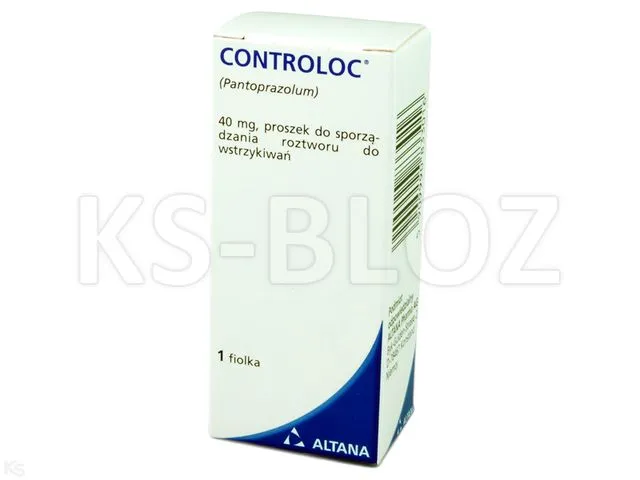
Table of Contents
- 1. NAME OF THE MEDICINAL PRODUCT
- 2. QUALITATIVE AND QUANTITATIVE COMPOSITION
- 3. PHARMACEUTICAL FORM
- 4.2 Dosage and method of administration
- 4.3 Contraindications
- 4.4 Special warnings and precautions for use
- 4.5 Interactions with other medicinal products and other forms of interaction
- 4.6 Fertility, pregnancy and lactation
- 4.7 Effects on ability to drive and use machines
- 4.8 Undesirable effects
- 4.9 Overdose
- 5.2 Pharmacokinetic properties
- 5.3 Preclinical safety data
- 6.2 Pharmaceutical incompatibilities
- 6.3 Shelf life
- 6.4 Special storage precautions
- 6.5 Nature and contents of the container
- 6.6 Special precautions for removal and preparation of the medicinal product
- 7. MARKETING AUTHORISATION HOLDER
- 8. MARKETING AUTHORISATION NUMBER
- 8. NUMER POZWOLENIA NA DOPUSZCZENIE DO OBROTU
- 9. DATE OF FIRST AUTHORISATION
- 10. DATE OF ADMISSION OR PARTIAL CHANGE OF THE TEXT
- 1. NAME OF THE MEDICINAL PRODUCT
- 2. COMPOSITION OF ACTIVE SUBSTANCE
- 3. LIST OF EXCIPIENTS
- 4. PHARMACEUTICAL FORM AND PACKAGE CONTENTS
- 5. METHOD AND ROUTE OF ADMINISTRATION
- 6. WARNING ON STORAGE OF THE MEDICINAL PRODUCT
- 9. STORAGE INSTRUCTIONS
- 10. SPECIAL PRECAUTIONS FOR DISPOSAL OF UNUSED
- 11. NAME AND ADDRESS OF THE MARKETING AUTHORISATION HOLDER
- 12. MARKETING AUTHORISATION NUMBER
- 13. LOT NUMBER
- 14. GENERAL AVAILABILITY CATEGORY
- 18. UNIQUE IDENTIFIER – HUMAN-READABLE DATA
- 1. NAME OF THE MEDICINAL PRODUCT
- 2. ACTIVE SUBSTANCE CONTENT
- 3. LIST OF EXCIPIENTS
- 4. PHARMACEUTICAL FORM AND PACKAGE CONTENTS
- 5. METHOD AND ROUTE OF ADMINISTRATION
- 6. WARNING ON STORAGE OF THE MEDICINAL PRODUCT
- 9. STORAGE INSTRUCTIONS
- 10. SPECIAL PRECAUTIONS FOR DISPOSAL OF UNUSED
- 11. NAME AND ADDRESS OF THE MARKETING AUTHORISATION HOLDER
- 12. MARKETING AUTHORISATION NUMBER
- 13. BATCH NUMBER
- 14. GENERAL AVAILABILITY CATEGORY
- 18. UNIQUE IDENTIFIER – HUMAN-READABLE INFORMATION
- 1. NAME OF THE MEDICINAL PRODUCT
- 2. ACTIVE SUBSTANCE CONTENT
- 3. LIST OF EXCIPIENTS
- 4. PHARMACEUTICAL FORM AND CONTENTS OF THE PACKAGE
- 5. METHOD AND ROUTE OF ADMINISTRATION
- 6. WARNING ON STORAGE OF THE MEDICINAL PRODUCT
- 9. STORAGE CONDITIONS
- 10. SPECIAL PRECAUTIONS FOR DISPOSAL OF UNUSED
- 11. NAME AND ADDRESS OF THE MARKETING AUTHORISATION HOLDER
- 12. MARKETING AUTHORISATION NUMBER
- 13. BATCH NUMBER
- 14. GENERAL AVAILABILITY CATEGORY
- 18. UNIQUE IDENTIFIER – HUMAN-READABLE DATA
- 1. NAME OF THE MEDICINAL PRODUCT AND ROUTE OF ADMINISTRATION
- 2. METHOD OF ADMINISTRATION
- 3. EXPIRY DATE
- 4. BATCH NUMBER
- 5. CONTENTS OF THE PACKAGE IN TERMS OF MASS, VOLUME OR NUMBER OF UNITS
- 6. OTHER
- Package leaflet: information for the patient
- 1. What Controloc is and what it is used for
- 2. What you need to know before using Controloc
- 3. How to take Controloc
- 4. Possible side effects
- 5. How to store Controloc
- 6. Contents of the pack and other information
- Information intended exclusively for medical professionals
SUMMARY OF PRODUCT CHARACTERISTICS
1. NAME OF THE MEDICINAL PRODUCT
Controloc, 40 mg, powder for solution for injection
2. QUALITATIVE AND QUANTITATIVE COMPOSITION
Each vial contains 40 mg of pantoprazole (as sodium pantoprazole).
For a complete list of excipients, see section 6.1.
3. PHARMACEUTICAL FORM
Powder for solution for injection.
White or almost white substance.
4. CLINICAL PARTICULARS
4.1 Therapeutic indications
Controloc is indicated for use in adults for:
- Gastroesophageal reflux disease.
- Gastric and/or duoden游戏副本
4.2 Dosage and method of administration
The medicinal product should be administered by medical personnel and under appropriate
medical supervision.
Intravenous administration of Controloc is recommended exclusively when oral pantoprazole cannot be used.
Available data refer to intravenous use of the product for up to 7 days.
If oral therapy becomes possible, treatment with Controloc should be discontinued and replaced with 40 mg pantoprazole tablets.
Dosage
Gastric and/or duodenal ulcer, and reflux oesophagitis
The recommended intravenous dose is one vial (40 mg pantoprazole) of Controloc per day.
Zollinger-Ellison syndrome and other conditions associated with excessive hydrochloric acid secretion
Long-term treatment of Zollinger-Ellison syndrome and other conditions associated with excessive
hydrochloric acid secretion should be initiated with a daily dose of 80 mg Controloc.
The dose may then be increased or decreased as needed, based on gastric acid secretion test results.
Daily doses exceeding 80 mg should be divided and administered twice daily.
It is possible to temporarily increase the pantoprazole dose above 160 mg per day, but such doses should not be used longer than necessary to achieve adequate acid secretion inhibition.
When rapid acid secretion inhibition is required, an initial dose of 2 x 80 mg Controloc is sufficient in most patients to reduce acid output within 1 hour to the desired range (<10 mEq/h).
Special patient groups
Patients with hepatic impairment
The daily dose of pantoprazole should not exceed 20 mg (half a vial containing 40 mg pantoprazole) in patients with severe hepatic impairment (see section 4.4).
Patients with renal impairment
Dosage adjustment is not required in patients with renal impairment (see section 5.2).
Elderly patients
Dosage adjustment is not required in elderly patients (see section 5.2).
Children and adolescents
The safety and efficacy of Controloc, powder for solution for injection, in children and adolescents under 18 years of age have not been established. Therefore, Controloc, powder for solution for injection, is not recommended for use in individuals under 18 years of age.
Currently available data are presented in section 5.2, but dosage recommendations are lacking.
Method of administration
The ready-to-administer solution is obtained by dissolving the powder in 10 ml of 0.9% sodium chloride injection solution (9 mg/ml). For preparation instructions, see section 6.6.
The prepared solution may be administered directly or after mixing with 100 ml of 0.9% sodium chloride injection solution (9 mg/ml) or 100 ml of 5% glucose injection solution (55 mg/ml).
The prepared solution must be used within 12 hours.
The medicinal product should be administered intravenously over 2 to 15 minutes.
4.3 Contraindications
Hypersensitivity to the active substance, substituted benzimidazoles, or to any of the excipients listed in section 6.1.
4.4 Special warnings and precautions for use
Gastric malignancy
Symptomatic response to pantoprazole may mask the symptoms of gastric malignancy and may delay its diagnosis. In the presence of alarm symptoms (such as significant unintentional weight loss, recurrent vomiting, dysphagia, haematemesis, anaemia, or melaena) and when gastric ulcer is suspected or confirmed, malignancy must be excluded.
Further investigations should be considered in patients whose symptoms persist despite appropriate treatment.
Hepatic impairment
In patients with severe liver impairment, liver enzyme activity should be monitored regularly. If increased liver enzyme activity occurs, treatment should be discontinued (see section 4.2).
Concomitant administration with HIV protease inhibitors
Concomitant administration of pantoprazole with HIV protease inhibitors whose absorption depends on acidic gastric pH, such as atazanavir, is not recommended, as this may significantly reduce their bioavailability (see section 4.5).
Gastrointestinal infections caused by bacteria
Treatment with Controloc may slightly increase the risk of gastrointestinal infections caused by Salmonella and Campylobacter bacteria or Clostridium difficile.
Hypomagnesaemia
Severe hypomagnesaemia has been reported rarely in patients treated with proton pump inhibitors (PPIs), including pantoprazole, for at least three months, and in most cases, after more than one year of therapy. Symptoms of severe hypomagnesaemia, such as fatigue, tetany, confusion, seizures, dizziness, and ventricular arrhythmias, may develop insidiously and therefore may not be recognized. Hypomagnesaemia may lead to hypocalcaemia and/or hypokalaemia (see section 4.8). In patients with the most severe hypomagnesaemia (and hypomagnesaemia associated with hypocalcaemia and/or hypokalaemia), discontinuation of proton pump inhibitors and initiation of magnesium supplementation led to improvement.
Healthcare professionals should consider checking magnesium levels prior to initiating PPI therapy and periodically during treatment in patients expected to be on long-term PPI therapy, as well as in patients taking PPIs concomitantly with digoxin or other medicinal products that may cause hypomagnesaemia (e.g. diuretics).
Bone fractures
The use of proton pump inhibitors, particularly at high doses and long-term therapy (more than one year), may slightly increase the risk of fractures of the hip, wrist, or spine, especially in elderly patients or those with other risk factors. Observational studies suggest that proton pump inhibitors may increase the overall risk of fractures by 10–40%. The increased risk may also be due to other factors. Patients at risk of osteoporosis should be managed according to current clinical guidelines to ensure adequate intake of vitamin D and calcium.
Severe cutaneous adverse reactions (SCAR)
Severe cutaneous adverse reactions have been reported with pantoprazole, with an incidence frequency of "not known", including erythema multiforme, Stevens-Johnson syndrome (SJS), toxic epidermal necrolysis (TEN), and drug reaction with eosinophilia and systemic symptoms (DRESS), which may be life-threatening or result in death (see section 4.8).
When prescribing the medicinal product, patients should be informed about subjective and objective symptoms and closely monitored for cutaneous reactions. If symptoms suggesting these reactions occur, pantoprazole should be discontinued immediately and alternative treatment considered.
Subacute cutaneous lupus erythematosus (SCLE)
The use of proton pump inhibitors has been associated with rare cases of subacute cutaneous lupus erythematosus (SCLE). If skin lesions develop, especially in sun-exposed areas, along with joint pain, the patient should seek immediate medical attention, and the physician should consider discontinuing treatment with Controloc.
Occurrence of SCLE following previous treatment with a proton pump inhibitor may increase the risk of SCLE when treated with other proton pump inhibitors.
Effect on laboratory test results
Elevated chromogranin A (CgA) levels may interfere with tests detecting neuroendocrine tumours. To avoid this, treatment with Controloc should be discontinued for at least 5 days before measuring CgA levels (see section 5.1). If, after initial measurement, CgA and gastrin levels remain above the reference range, measurements should be repeated 14 days after stopping proton pump inhibitor therapy.
Controloc contains sodium
This medicinal product contains less than 1 mmol of sodium (23 mg) per vial, i.e. the product is considered "sodium-free".
4.5 Interactions with other medicinal products and other forms of interaction
Medicinal products whose absorption pharmacokinetics depend on pH
Due to its strong and long-lasting inhibition of gastric hydrochloric acid secretion, pantoprazole
may impair the absorption of other medicinal products for which gastric pH is an important
factor affecting oral bioavailability, e.g. certain antifungal azoles such as ketoconazole, itraconazole, posaconazole, and other drugs such as erlotinib.
HIV protease inhibitors
Concomitant administration of pantoprazole with HIV protease inhibitors whose absorption depends on acidic gastric pH, such as atazanavir, is not recommended, as this may significantly
reduce their bioavailability (see section 4.4).
If concomitant administration of an HIV protease inhibitor with a proton pump inhibitor is necessary, close monitoring of the patient's clinical status (e.g. viral load) is recommended. The dose of pantoprazole should not exceed 20 mg per day. Dose adjustment of the HIV protease inhibitor may be required.
Vitamin K antagonists (phenprocoumon or warfarin)
Concomitant administration of pantoprazole with warfarin or phenprocoumon had no effect on the
pharmacokinetics of warfarin, phenprocoumon, or changes in INR (international normalized
ratio) values in clinical studies. However, increased INR and prothrombin time have been reported in patients receiving proton pump inhibitors concomitantly with warfarin or phenprocoumon. Elevated INR and prothrombin time may lead to abnormal bleeding, and even death. In patients treated concomitantly with pantoprazole and warfarin or phenprocoumon, monitoring of INR and prothrombin time may be necessary.
Methotrexate
In some patients, concomitant use of high-dose methotrexate (e.g. 300 mg) with proton pump inhibitors has been observed to increase methotrexate concentrations. Therefore, in patients receiving high doses of methotrexate, e.g. for oncological diseases or psoriasis, temporary discontinuation of pantoprazole should be considered.
Other interaction studies
Pantoprazole is extensively metabolized in the liver by the cytochrome P-450 enzyme system. The main metabolic pathway is demethylation via CYP2C19, while other metabolic pathways include oxidation via CYP3A4.
Interaction studies with other medicinal products metabolized by the same enzyme system, such as carbamazepine, diazepam, glibenclamide, nifedipine, and oral contraceptives containing levonorgestrel and ethinylestradiol, did not reveal clinically significant interactions.
Interactions between pantoprazole and other medicinal products or compounds metabolized by the same enzyme system cannot be excluded.
Results from interaction studies indicate that pantoprazole does not affect the metabolism of active substances metabolized by CYP1A2 (e.g. caffeine, theophylline), CYP2C9 (e.g. piroxicam, diclofenac, naproxen), CYP2D6 (e.g. metoprolol), CYP2E1 (e.g. ethanol), and does not interfere with p-glycoprotein-dependent digoxin absorption.
No interactions were observed with concomitantly administered antacids.
Interaction studies were also conducted where pantoprazole was administered concomitantly with appropriate antibiotics (clarithromycin, metronidazole, amoxicillin). No clinically significant interactions were observed.
Products that inhibit or induce CYP2C19
Cytochrome P450 CYP2C19 inhibitors such as fluvoxamine may increase systemic exposure to pantoprazole. Dose reduction should be considered in patients receiving long-term high-dose pantoprazole therapy or in patients with impaired liver function.
Inducers of CYP2C19 and CYP3A4 enzymes, such as rifampicin or St. John's wort (Hypericum perforatum), may decrease plasma concentrations of proton pump inhibitors metabolized by these enzyme systems.
Effect on laboratory tests
In some urine screening tests for tetrahydrocannabinol (THC), false-positive results have been observed in patients receiving pantoprazole. Alternative testing methods should be considered to confirm positive results.
4.6 Fertility, pregnancy and lactation
Pregnancy
A moderate amount of data in pregnant women (between 300-1000 pregnant women) does not indicate that pantoprazole causes developmental abnormalities or has toxic effects on the foetus or newborn. In animal studies, harmful effects on reproduction have been observed (see section 5.3). As a precaution, it is recommended to avoid use of Controloc during pregnancy.
Breast-feeding
In animal studies, pantoprazole has been shown to pass into milk. There are insufficient data available on the passage of pantoprazole into human milk; however, there are reports indicating such passage. The risk of adverse reactions in a breastfed newborn/infant cannot be excluded. Therefore, a decision must be made whether to discontinue breast-feeding or to discontinue/abstain from use of Controloc, taking into account the benefits of breast-feeding for the child and the benefits of treatment for the mother.
Fertility
In animal studies, no impairment of fertility was observed following administration of pantoprazole (see section 5.3).
4.7 Effects on ability to drive and use machines
Pantoprazole has no effect or has negligible effect on the ability to drive mechanical vehicles and operate mechanical equipment.
Adverse effects such as dizziness and visual disturbances may occur (see section 4.8). In such cases, patients should not drive mechanical vehicles or operate mechanical equipment.
4.8 Undesirable effects
Adverse drug reactions (ADRs) may occur in approximately 5% of patients.
In the table below, undesirable effects are classified according to the following frequency categories:
Very common (≥1/10); common (≥1/100 to <1/10); uncommon (≥1/1,000 to <1/100); rare (≥1/10,000 to <1/1,000); very rare (≤1/10,000), frequency not known (cannot be estimated from available data).
For all adverse reactions reported after product marketing authorization, it is not possible to apply a frequency classification; therefore, their frequency is stated as "not known".
Within each frequency category, adverse reactions are listed in order from most severe to least severe.
Table 1. Adverse reactions associated with pantoprazole use reported in clinical trials and following marketing authorization
| Frequency of occurrence System organ classes | Common | Uncommon | Rare | Very rare | Not known |
| Blood and lymphatic system disorders | agranulocytosis | thrombocytopenia, leukopenia, pancytopenia | |||
| Immune system disorders | hypersensitivity (including anaphylactic reactions and anaphylactic shock) | ||||
| Frequency of occurrence System organ classes | Common | Uncommon | Rare | Very rare | Not known |
| Metabolism and nutrition disorders | hyperlipidemia and increased lipid levels (triglycerides, cholesterol), body weight changes | hyponatremia, hypomagnesemia (see section 4.4), hypocalcemia(1), hypokalemia (1) | |||
| Psychiatric disorders | sleep disorders | depression (and all exacerbations) | disorientation (and all exacerbations) | hallucinations, confusion (particularly in predisposed patients, as well as worsening of these symptoms if previously present) | |
| Nervous system disorders | headache, dizziness | taste disturbances | paraesthesia | ||
| Eye disorders | vision disorders / blurred vision | ||||
| Gastrointestinal disorders | gastric fundus polyps (benign) | diarrhea, nausea / vomiting, abdominal fullness and bloating, constipation, dry mouth, epigastric pain and discomfort | microscopic colitis | ||
| Hepatobiliary and biliary tract disorders | increased liver enzyme activity (aminotransferases, γ-GT) | increased bilirubin concentration | liver cell damage, jaundice, liver cell failure | ||
| Skin and subcutaneous tissue disorders | skin rash / eruption / | urticaria, angioedema | Stevens–Johnson syndrome, syndrome | ||
| Frequency of occurrence System organ classes | Common | Uncommon | Rare | Very rare | Not known |
| skin lesions, pruritus | vasomotor | Lyell (TEN), drug reaction with eosinophilia and systemic symptoms (DRESS syndrome), erythema multiforme, photosensitivity, subacute cutaneous lupus erythematosus (see section 4.4), | |||
| Musculoskeletal and connective tissue disorders | fractures of hip, wrist or spine (see section 4.4) | joint pain; muscle pain | muscle cramps(2) | ||
| Renal and urinary disorders | tubulointerstitial nephritis (TIN) (with possible deterioration of renal function up to renal failure) | ||||
| Reproductive system and breast disorders | gynecomastia | ||||
| General disorders and administration site conditions | thrombophlebitis at injection site | weakness, fatigue and malaise | increased body temperature, peripheral edema |
Hypokalaemia and/or hypocalcaemia may be associated with hypomagnesaemia
(see section 4.4).
Muscle spasms due to electrolyte disturbances.
Reporting of suspected adverse reactions
It is important to report suspected adverse reactions after a medicinal product has been authorised. This enables continuous monitoring of the benefit-risk balance of the medicinal product. Healthcare professionals should report any suspected adverse reactions via the Department of Monitoring Adverse Drug Reactions at the Office for Registration of Medicinal Products, Medical Devices and Biocidal Products, Al. Jerozolimskie 181 C, 02-222 Warsaw, tel.: + 48 22 49 21 301, fax: + 48 22 49 21 309, website: https://smz.ezdrowie.gov.pl .
Adverse reactions can also be reported to the marketing authorisation holder.
4.9 Overdose
Symptoms of overdose in humans are unknown.
Doses up to 240 mg administered intravenously over 2 minutes have been well tolerated. Since pantoprazole is highly bound to plasma proteins, it is difficult to remove by dialysis.
In cases of overdose with clinical signs of poisoning, apart from symptomatic and supportive treatment, there are no specific therapeutic recommendations.
5. PHARMACOLOGICAL PROPERTIES
5.1 Pharmacodynamic properties
Pharmacotherapeutic group: proton pump inhibitors, ATC code: A02BC02
Mechanism of action
Pantoprazole is a substituted benzimidazole that inhibits gastric acid secretion by specifically blocking the proton pump in parietal cells.
In the acidic environment of parietal cells, pantoprazole is converted into its active form and inhibits the activity of H+/K+-ATPase, the final step in gastric acid production.
The degree of inhibition is dose-dependent and affects both basal and stimulated gastric acid secretion. In most patients, symptom relief is achieved within 2 weeks. As with other proton pump inhibitors and H\ 2-receptor antagonists, pantoprazole treatment leads to reduced acidity of gastric contents and a secondary increase in gastrin secretion proportional to the reduction in acidity.
The increase in gastrin secretion is reversible. Since pantoprazole binds to the enzyme at the cellular receptor level, it can inhibit gastric acid secretion independently of stimulation by other substances (acetylcholine, histamine, gastrin). The effect is the same regardless of whether the drug is administered orally or intravenously.
Pharmacodynamic effects
Fasting serum gastrin concentrations increase under the influence of pantoprazole. During short-term treatment, these values generally remain within the upper limit of normal. During long-term treatment, gastrin concentrations are generally doubled. However, excessive increases in gastrin concentration occur only rarely. As a result, mild to moderate increases in the number of specific enterochromaffin-like (ECL) cells in the stomach (ranging from simple to adenomatous hyperplasia) have been observed in rare cases of long-term treatment. However, according to available studies, the development of pre-malignant changes (atypical hyperplasia) or gastric carcinoids observed in animal studies (see section 5.3) has not been observed in humans.
In long-term therapy lasting more than one year, based on results from animal studies, an influence of pantoprazole on endocrine parameters of the thyroid gland cannot be completely excluded.
During treatment with acid-suppressing medicinal products, serum gastrin concentration increases in response to reduced gastric acid secretion. Chromogranin A (CgA) concentration also increases due to reduced intragastric acidity. Elevated CgA levels may interfere with tests detecting neuroendocrine tumors.
Available published evidence indicates that treatment with proton pump inhibitors should be discontinued 5 to 14 days before measuring CgA concentration. This is intended to allow CgA levels, which may be falsely elevated due to proton pump inhibitor therapy, to return to the reference range.
5.2 Pharmacokinetic properties
General pharmacokinetics
There are no differences in the pharmacokinetics of the product after single or multiple doses.
In the dose range of 10 to 80 mg, the plasma kinetics of pantoprazole are linear following both
oral and intravenous administration.
Distribution
Pantoprazole is approximately 98% bound to plasma proteins. The volume of distribution is about 0.15 L/kg.
Metabolism
The substance is metabolized almost exclusively in the liver. The main metabolic pathway is
demethylation by CYP2C19, followed by sulfation; other metabolic pathways include oxidation by CYP3A4.
Elimination
The terminal elimination half-life is approximately 1 hour, and clearance is about 0.1 L/h/kg.
Several cases have been reported in which elimination was delayed. Since pantoprazole specifically binds
to the proton pump in parietal cells, the elimination half-life does not correlate with the prolonged duration
of action (inhibition of acid secretion). Pantoprazole metabolites are excreted predominantly via the kidneys
(approximately 80%), with the remainder excreted in faeces. The main metabolite in both serum and urine
is demethylpantoprazole, which is conjugated with sulfate. The half-life of the main metabolite
(approximately 1.5 hours) is not substantially longer than that of pantoprazole.
Special patient groups
Poor metabolizers
In approximately 3% of the European population, defined as poor metabolizers, functional CYP2C19 enzyme
is absent. In these individuals, pantoprazole metabolism is likely catalyzed mainly by CYP3A4. After a single
40 mg dose of pantoprazole, the mean area under the plasma concentration-time curve was 6 times greater
in poor metabolizers compared to individuals with functional CYP2C19 enzyme (extensive metabolizers).
Mean maximum plasma concentrations increased by approximately 60%. These data do not influence
pantoprazole dosing.
Patients with renal impairment
There is no need to reduce the dose of pantoprazole in patients with impaired renal function (including patients
on dialysis). As in healthy individuals, the half-life of pantoprazole is short. Only small amounts of pantoprazole
are removed during dialysis. Although the half-life of the main metabolite is moderately prolonged (2–3 hours),
excretion remains rapid and there is no accumulation of the drug.
Patients with hepatic impairment
In patients with liver cirrhosis (Child class A and B), the half-life is prolonged to 7–9 hours, and AUC values
increase 5- to 7-fold. Nevertheless, maximum serum concentration increases only slightly, by 1.5 times compared
to healthy individuals.
Elderly patients
The slight increase in AUC and maximum concentration (Cmax) observed in elderly volunteers compared to
younger volunteers is not clinically significant.
Children and adolescents
After single intravenous administration of pantoprazole at doses of 0.8 or 1.6 mg/kg body weight to children
aged 2–16 years, no significant relationship between pantoprazole clearance and age or body weight was observed.
AUC values and volume of distribution were consistent with data obtained in adults.
5.3 Preclinical safety data
Non-clinical data obtained from conventional pharmacological safety studies, repeated-dose toxicity, and genotoxicity studies revealed no special hazard for humans.
In two-year carcinogenicity studies in rats, an occurrence of neuroendocrine tumours was observed. Additionally, squamous cell papillomas in the forestomach were observed in rats. The mechanism leading to gastric tumours induced by substituted benzoimidazoles has been thoroughly investigated and indicates that this is a secondary reaction to markedly increased serum gastrin concentrations occurring in rats during long-term treatment with high doses. In the two-year studies, an increased incidence of liver tumours was observed in rats and female mice, which was attributed to a phenomenon related to the high metabolic rate of pantoprazole in the liver.
In rats receiving the highest doses of pantoprazole (200 mg/kg body weight), a slight increase in the frequency of thyroid gland neoplastic changes was observed. The occurrence of these tumours is associated with altered disposition of thyroxine in the liver of rats induced by pantoprazole. Since therapeutic doses in humans are low, no adverse effects on the thyroid gland are expected.
In a peri- and postnatal reproductive study in rats aimed at assessing bone development, signs of toxicity in offspring (mortality, lower mean body weight, lower mean body weight gain, and reduced bone growth) were observed at exposures (Cmax) corresponding to approximately twice the clinical exposure in humans. At the end of the recovery phase, bone parameters were similar across all groups, and body weights also showed a tendency towards reversibility after the recovery period without drug administration. Increased mortality was observed only in young rats before weaning (up to 21 days of age), which approximately correspond to infants up to 2 years of age. The significance of this observation for paediatric and adolescent populations is unknown. An earlier peri- and postnatal study in rats, using slightly lower doses, showed no adverse effects at a dose of 3 mg/kg body weight compared to the low dose of 5 mg/kg body weight used in this study.
Studies did not reveal any effect on fertility impairment or teratogenic potential of the product.
Studies in rats on placental transfer demonstrated increased passage into foetal circulation in late pregnancy. As a result, pantoprazole concentrations in the foetus are increased shortly before delivery.
6. PHARMACEUTICAL DATA
6.1 List of excipients
Disodium edetate
Sodium hydroxide (for pH adjustment)
6.2 Pharmaceutical incompatibilities
This medicinal product must not be mixed with other medicinal products except those listed in
section 6.6.
6.3 Shelf life
Product before opening: 2 years
Chemical and physical in-use stability has been demonstrated for the solution after reconstitution and after reconstitution and dilution for 12 hours at 25°C.
Due to the need to maintain microbiological purity, the solution should be used immediately after preparation.
If the solution is not used immediately after preparation, the responsibility for storage conditions and duration lies with the user.
6.4 Special storage precautions
Do not store above 25°C.
Keep the vial in the outer packaging to protect from light.
Storage conditions for the medicinal product after reconstitution and dilution, see section 6.3.
6.5 Nature and contents of the container
A 10 ml vial made of colourless glass (type I), closed with a grey stopper and sealed with an aluminium cap, containing 40 mg of powder for solution for injection.
Packaging: 1 vial or a multipack containing 5 vials (5 packs of 1 vial) of powder for solution for injection.
Hospital pack: 1 vial of powder for solution for injection.
Hospital multipack: 5 vials (5 packs of 1 vial), 10 vials (10 packs of 1 vial) or 20 vials (20 packs of 1 vial) of powder for solution for injection.
Not all pack sizes may be marketed.
6.6 Special precautions for removal and preparation of the medicinal product
for use
The ready-to-administer solution is obtained by injecting 10 mL of 0.9% sodium chloride solution for injection (with a concentration of 9 mg/mL) into the vial containing the powder. After reconstitution, the product appears as a clear, yellowish solution. This reconstituted solution may be administered directly or after dilution with 100 mL of 0.9% sodium chloride solution for injection (with a concentration of 9 mg/mL) or with 100 mL of 5% glucose solution for injection (with a concentration of 55 mg/mL). Glass or plastic containers should be used for dilution.
Chemical and physical stability of the solution has been demonstrated for 12 hours after reconstitution and after reconstitution and dilution, at a temperature of 25°C.
Due to the need to maintain microbiological purity, the solution should be used immediately after preparation.
Controloc should not be reconstituted or mixed with solvents other than those specified above.
The medicinal product should be administered intravenously over 2 to 15 minutes.
The contents of the vial are intended for single use only. Any unused portion of the product remaining in the vial or any product that has changed in appearance (e.g. if cloudiness or precipitation occurs) should be discarded according to local regulations.
7. MARKETING AUTHORISATION HOLDER
Takeda Pharma Sp. z o.o.
ul. Prosta 68
00-838 Warszawa
Tel.: +48 22 608 13 00
Fax: +48 22 608 13 03
8. MARKETING AUTHORISATION NUMBER
8. NUMER POZWOLENIA NA DOPUSZCZENIE DO OBROTU
Controloc 20 mg tabletki o przedłużonym działaniu
EU/1/01/178/001
Controloc 40 mg tabletki o przedłużonym działaniu
EU/1/01/178/002
Controloc 20 mg tabletki o przedłużonym działaniu, tabletki otoczkowane
EU/1/01/178/003
Controloc 40 mg tabletki o przedłużonym działaniu, tabletki otoczkowane
EU/1/01/178/004
Controloc 20 mg tabletki o przedłużonym działaniu, tabletki otoczkowane
EU/1/01/178/005
Controloc 40 mg tabletki o przedłużonym działaniu, tabletki otoczkowane
EU/1/01/178/006
Controloc 20 mg tabletki o przedłużonym działaniu, tabletki otoczkowane
EU/1/01/178/007
Controloc 40 mg tabletki o przedłużonym działaniu, tabletki otoczkowane
EU/1/01/178/008
Controloc 20 mg tabletki o przedłużonym działaniu, tabletki otoczkowane
EU/1/01/178/009
Controloc 40 mg tabletki o przedłużonym działaniu, tabletki otoczkowane
EU/1/01/178/010
Controloc 20 mg tabletki o przedłużonym działaniu, tabletki otoczkowane
EU/1/01/178/011
Controloc 40 mg tabletki o przedłużonym działaniu, tabletki otoczkowane
EU/1/01/178/012
Controloc 20 mg tabletki o przedłużonym działaniu, tabletki otoczkowane
EU/1/01/178/013
Controloc 40 mg tabletki o przedłużonym działaniu, tabletki otoczkowane
EU/1/01/178/014
Controloc 20 mg tabletki o przedłużonym działaniu, tabletki otoczkowane
EU/1/01/178/015
Controloc 40 mg tabletki o przedłużonym działaniu, tabletki otoczkowane
EU/1/01/178/016
Controloc 20 mg tabletki o przedłużonym działaniu, tabletki otoczkowane
EU/1/01/178/017
Controloc 40 mg tabletki o przedłużonym działaniu, tabletki otoczkowane
EU/1/01/178/018
Controloc 20 mg tabletki o przedłużonym działaniu, tabletki otoczkowane
EU/1/01/178/019
Controloc 40 mg tabletki o przedłużonym działaniu, tabletki otoczkowane
EU/1/01/178/020
Controloc 20 mg tabletki o przedłużonym działaniu, tabletki otoczkowane
EU/1/01/178/021
Controloc 40 mg tabletki o przedłużonym działaniu, tabletki otoczkowane
EU/1/01/178/022
Controloc 20 mg tabletki o przedłużonym działaniu, tabletki otoczkowane
EU/1/01/178/023
Controloc 40 mg tabletki o przedłużonym działaniu, tabletki otoczkowane
EU/1/01/178/024
Controloc 20 mg tabletki o przedłużonym działaniu, tabletki otoczkowane
EU/1/01/178/025
Controloc 40 mg tabletki o przedłużonym działaniu, tabletki otoczkowane
EU/1/01/178/026
Controloc 20 mg tabletki o przedłużonym działaniu, tabletki otoczkowane
EU/1/01/178/027
Controloc 40 mg tabletki o przedłużonym działaniu, tabletki otoczkowane
EU/1/01/178/028
Controloc 20 mg tabletki o przedłużonym działaniu, tabletki otoczkowane
EU/1/01/178/029
Controloc 40 mg tabletki o przedłużonym działaniu, tabletki otoczkowane
EU/1/01/178/030
Controloc 20 mg tabletki o przedłużonym działaniu, tabletki otoczkowane
EU/1/01/178/031
Controloc 40 mg tabletki o przedłużonym działaniu, tabletki otoczkowane
EU/1/01/178/032
Controloc 20 mg tabletki o przedłużonym działaniu, tabletki otoczkowane
EU/1/01/178/033
Controloc 40 mg tabletki o przedłużonym działaniu, tabletki otoczkowane
EU/1/01/178/034
Controloc 20 mg tabletki o przedłużonym działaniu, tabletki otoczkowane
EU/1/01/178/035
Controloc 40 mg tabletki o przedłużonym działaniu, tabletki otoczkowane
EU/1/01/178/036
Controloc 20 mg tabletki o przedłużonym działaniu, tabletki otoczkowane
EU/1/01/178/037
Controloc 40 mg tabletki o przedłużonym działaniu, tabletki otoczkowane
EU/1/01/178/038
Controloc 20 mg tabletki o przedłużonym działaniu, tabletki otoczkowane
EU/1/01/178/039
Controloc 40 mg tabletki o przedłużonym działaniu, tabletki otoczkowane
EU/1/01/178/040
Controloc 20 mg tabletki o przedłużonym działaniu, tabletki otoczkowane
EU/1/01/178/041
Controloc 40 mg tabletki o przedłużonym działaniu, tabletki otoczkowane
EU/1/01/178/042
Controloc 20 mg tabletki o przedłużonym działaniu, tabletki otoczkowane
EU/1/01/178/043
Controloc 40 mg tabletki o przedłużonym działaniu, tabletki otoczkowane
EU/1/01/178/044
Controloc 20 mg tabletki o przedłużonym działaniu, tabletki otoczkowane
EU/1/01/178/045
Controloc 40 mg tabletki o przedłużonym działaniu, tabletki otoczkowane
EU/1/01/178/046
Controloc 20 mg tabletki o przedłużonym działaniu, tabletki otoczkowane
EU/1/01/178/047
Controloc 40 mg tabletki o przedłużonym działaniu, tabletki otoczkowane
EU/1/01/178/048
Controloc 20 mg tabletki o przedłużonym działaniu, tabletki otoczkowane
EU/1/01/178/049
Controloc 40 mg tabletki o przedłużonym działaniu, tabletki otoczkowane
EU/1/01/178/050
Controloc 20 mg tabletki o przedłużonym działaniu, tabletki otoczkowane
EU/1/01/178/051
Controloc 40 mg tabletki o przedłużonym działaniu, tabletki otoczkowane
EU/1/01/178/052
Controloc 20 mg tabletki o przedłużonym działaniu, tabletki otoczkowane
EU/1/01/178/053
Controloc 40 mg tabletki o przedłużonym działaniu, tabletki otoczkowane
EU/1/01/178/054
Controloc 20 mg tabletki o przedłużonym działaniu, tabletki otoczkowane
EU/1/01/178/055
Controloc 40 mg tabletki o przedłużonym działaniu, tabletki otoczkowane
EU/1/01/178/056
Controloc 20 mg tabletki o przedłużonym działaniu, tabletki otoczkowane
EU/1/01/178/057
Controloc 40 mg tabletki o przedłużonym działaniu, tabletki otoczkowane
EU/1/01/178/058
Controloc 20 mg tabletki o przedłużonym działaniu, tabletki otoczkowane
EU/1/01/178/059
Controloc 40 mg tabletki o przedłużonym działaniu, tabletki otoczkowane
EU/1/01/178/060
Controloc 20 mg tabletki o przedłużonym działaniu, tabletki otoczkowane
EU/1/01/178/061
Controloc 40 mg tabletki o przedłużonym działaniu, tabletki otoczkowane
EU/1/01/178/062
Controloc 20 mg tabletki o przedłużonym działaniu, tabletki otoczkowane
EU/1/01/178/063
Controloc 40 mg tabletki o przedłużonym działaniu, tabletki otoczkowane
EU/1/01/178/064
Controloc 20 mg tabletki o przedłużonym działaniu, tabletki otoczkowane
EU/1/01/178/065
Controloc 40 mg tabletki o przedłużonym działaniu, tabletki otoczkowane
EU/1/01/178/066
Controloc 20 mg tabletki o przedłużonym działaniu, tabletki otoczkowane
EU/1/01/178/067
Controloc 40 mg tabletki o przedłużonym działaniu, tabletki otoczkowane
EU/1/01/178/068
Controloc 20 mg tabletki o przedłużonym działaniu, tabletki otoczkowane
EU/1/01/178/069
Controloc 40 mg tabletki o przedłużonym działaniu, tabletki otoczkowane
EU/1/01/178/070
Controloc 20 mg tabletki o przedłużonym działaniu, tabletki otoczkowane
EU/1/01/178/071
Controloc 40 mg tabletki o przedłużonym działaniu, tabletki otoczkowane
EU/1/01/178/072
Controloc 20 mg tabletki o przedłużonym działaniu, tabletki otoczkowane
EU/1/01/178/073
Controloc 40 mg tabletki o przedłużonym działaniu, tabletki otoczkowane
EU/1/01/178/074
Controloc 20 mg tabletki o przedłużonym działaniu, tabletki otoczkowane
EU/1/01/178/075
Controloc 40 mg tabletki o przedłużonym działaniu, tabletki otoczkowane
EU/1/01/178/076
Controloc 20 mg tabletki o przedłużonym działaniu, tabletki otoczkowane
EU/1/01/178/077
Controloc 40 mg tabletki o przedłużonym działaniu, tabletki otoczkowane
EU/1/01/178/078
Controloc 20 mg tabletki o przedłużonym działaniu, tabletki otoczkowane
EU/1/01/178/079
Controloc 40 mg tabletki o przedłużonym działaniu, tabletki otoczkowane
EU/1/01/178/080
Controloc 20 mg tabletki o przedłużonym działaniu, tabletki otoczkowane
EU/1/01/178/081
Controloc 40 mg tabletki o przedłużonym działaniu, tabletki otoczkowane
EU/1/01/178/082
Controloc 20 mg tabletki o przedłużonym działaniu, tabletki otoczkowane
EU/1/01/178/083
Controloc 40 mg tabletki o przedłużonym działaniu, tabletki otoczkowane
EU/1/01/178/084
Controloc 20 mg tabletki o przedłużonym działaniu, tabletki otoczkowane
EU/1/01/178/085
Controloc 40 mg tabletki o przedłużonym działaniu, tabletki otoczkowane
EU/1/01/178/086
Controloc 20 mg tabletki o przedłużonym działaniu, tabletki otoczkowane
EU/1/01/178/087
Controloc 40 mg tabletki o przedłużonym działaniu, tabletki otoczkowane
EU/1/01/178/088
Controloc 20 mg tabletki o przedłużonym działaniu, tabletki otoczkowane
EU/1/01/178/089
Controloc 40 mg tabletki o przedłużonym działaniu, tabletki otoczkowane
EU/1/01/178/090
Controloc 20 mg tabletki o przedłużonym działaniu, tabletki otoczkowane
EU/1/01/178/091
Controloc 40 mg tabletki o przedłużonym działaniu, tabletki otoczkowane
EU/1/01/178/092
Controloc 20 mg tabletki o przedłużonym działaniu, tabletki otoczkowane
EU/1/01/178/093
Controloc 40 mg tabletki o przedłużonym działaniu, tabletki otoczkowane
EU/1/01/178/094
Controloc 20 mg tabletki o przedłużonym działaniu, tabletki otoczkowane
EU/1/01/178/095
Controloc 40 mg tabletki o przedłużonym działaniu, tabletki otoczkowane
EU/1/01/178/096
Controloc 20 mg tabletki o przedłużonym działaniu, tabletki otoczkowane
EU/1/01/178/097
Controloc 40 mg tabletki o przedłużonym działaniu, tabletki otoczkowane
EU/1/01/178/098
Controloc 20 mg tabletki o przedłużonym działaniu, tabletki otoczkowane
EU/1/01/178/099
Controloc 40 mg tabletki o przedłużonym działaniu, tabletki otoczkowane
EU/1/01/178/100
Controloc 20 mg tabletki o przedłużonym działaniu, tabletki otoczkowane
EU/1/01/178/101
Controloc 40 mg tabletki o przedłużonym działaniu, tabletki otoczkowane
EU/1/01/178/102
Controloc 20 mg tabletki o przedłużonym działaniu, tabletki otoczkowane
EU/1/01/178/103
Controloc 40 mg tabletki o przedłużonym działaniu, tabletki otoczkowane
EU/1/01/178/104
Controloc 20 mg tabletki o przedłużonym działaniu, tabletki otoczkowane
EU/1/01/178/105
Controloc 40 mg tabletki o przedłużonym działaniu, tabletki otoczkowane
EU/1/01/178/106
Controloc 20 mg tabletki o przedłużonym działaniu, tabletki otoczkowane
EU/1/01/178/107
Controloc 40 mg tabletki o przedłużonym działaniu, tabletki otoczkowane
EU/1/01/178/108
Controloc 20 mg tabletki o przedłużonym działaniu, tabletki otoczkowane
EU/1/01/178/109
Controloc 40 mg tabletki o przedłużonym działaniu, tabletki otoczkowane
EU/1/01/178/110
Controloc 20 mg tabletki o przedłużonym działaniu, tabletki otoczkowane
EU/1/01/178/111
Controloc 40 mg tabletki o przedłużonym działaniu, tabletki otoczkowane
EU/1/01/178/112
Controloc 20 mg tabletki o przedłużonym działaniu, tabletki otoczkowane
EU/1/01/178/113
Controloc 40 mg tabletki o przedłużonym działaniu, tabletki otoczkowane
EU/1/01/178/114
Controloc 20 mg tabletki o przedłużonym działaniu, tabletki otoczkowane
EU/1/01/178/115
Controloc 40 mg tabletki o przedłużonym działaniu, tabletki otoczkowane
EU/1/01/178/116
Controloc 20 mg tabletki o przedłużonym działaniu, tabletki otoczkowane
EU/1/01/178/117
Controloc 40 mg tabletki o przedłużonym działaniu, tabletki otoczkowane
EU/1/01/178/118
Controloc 20 mg tabletki o przedłużonym działaniu, tabletki otoczkowane
EU/1/01/178/119
Controloc 40 mg tabletki o przedłużonym działaniu, tabletki otoczkowane
EU/1/01/178/120
Controloc 20 mg tabletki o przedłużonym działaniu, tabletki otoczkowane
EU/1/01/178/121
Controloc 40 mg tabletki o przedłużonym działaniu, tabletki otoczkowane
EU/1/01/178/122
Controloc 20 mg tabletki o przedłużonym działaniu, tabletki otoczkowane
EU/1/01/178/123
Controloc 40 mg tabletki o przedłużonym działaniu, tabletki otoczkowane
EU/1/01/178/124
Controloc 20 mg tabletki o przedłużonym działaniu, tabletki otoczkowane
EU/1/01/178/125
Controloc 40 mg tabletki o przedłużonym działaniu, tabletki otoczkowane
EU/1/01/178/126
Controloc 20 mg tabletki o przedłużonym działaniu, tabletki otoczkowane
EU/1/01/178/127
Controloc 40 mg tabletki o przedłużonym działaniu, tabletki otoczkowane
EU/1/01/178/128
Controloc 20 mg tabletki o przedłużonym działaniu, tabletki otoczkowane
EU/1/01/178/129
Controloc 40 mg tabletki o przedłużonym działaniu, tabletki otoczkowane
EU/1/01/178/130
Controloc 20 mg tabletki o przedłużonym działaniu, tabletki otoczkowane
EU/1/01/178/131
Controloc 40 mg tabletki o przedłużonym działaniu, tabletki otoczkowane
EU/1/01/178/132
Controloc 20 mg tabletki o przedłużonym działaniu, tabletki otoczkowane
EU/1/01/178/133
Controloc 40 mg tabletki o przedłużonym działaniu, tabletki otoczkowane
EU/1/01/178/134
Controloc 20 mg tabletki o przedłużonym działaniu, tabletki otoczkowane
EU/1/01/178/135
Controloc 40 mg tabletki o przedłużonym działaniu, tabletki otoczkowane
EU/1/01/178/136
Controloc 20 mg tabletki o przedłużonym działaniu, tabletki otoczkowane
EU/1/01/178/137
Controloc 40 mg tabletki o przedłużonym działaniu, tabletki otoczkowane
EU/1/01/178/138
Controloc 20 mg tabletki o przedłużonym działaniu, tabletki otoczkowane
EU/1/01/178/139
Controloc 40 mg tabletki o przedłużonym działaniu, tabletki otoczkowane
EU/1/01/178/140
Controloc 20 mg tabletki o przedłużonym działaniu, tabletki otoczkowane
EU/1/01/178/141
Controloc 40 mg tabletki o przedłużonym działaniu, tabletki otoczkowane
EU/1/01/178/142
Controloc 20 mg tabletki o przedłużonym działaniu, tabletki otoczkowane
EU/1/01/178/143
Controloc 40 mg tabletki o przedłużonym działaniu, tabletki otoczkowane
EU/1/01/178/144
Controloc 20 mg tabletki o przedłużonym działaniu, tabletki otoczkowane
EU/1/01/178/145
Controloc 40 mg tabletki o przedłużonym działaniu, tabletki otoczkowane
EU/1/01/178/146
Controloc 20 mg tabletki o przedłużonym działaniu, tabletki otoczkowane
EU/1/01/178/147
Controloc 40 mg tabletki o przedłużonym działaniu, tabletki otoczkowane
EU/1/01/178/148
Controloc 20 mg tabletki o przedłużonym działaniu, tabletki otoczkowane
EU/1/01/178/149
Controloc 40 mg tabletki o przedłużonym działaniu, tabletki otoczkowane
EU/1/01/178/150
Controloc 20 mg tabletki o przedłużonym działaniu, tabletki otoczkowane
EU/1/01/178/151
Controloc 40 mg tabletki o przedłużonym działaniu, tabletki otoczkowane
EU/1/01/178/152
Controloc 20 mg tabletki o przedłużonym działaniu, tabletki otoczkowane
EU/1/01/178/153
Controloc 40 mg tabletki o przedłużonym działaniu, tabletki otoczkowane
EU/1/01/178/154
Controloc 20 mg tabletki o przedłużonym działaniu, tabletki otoczkowane
EU/1/01/178/155
Controloc 40 mg tabletki o przedłużonym działaniu, tabletki otoczkowane
EU/1/01/178/156
Controloc 20 mg tabletki o przedłużonym działaniu, tabletki otoczkowane
EU/1/01/178/157
Controloc 40 mg tabletki o przedłużonym działaniu, tabletki otoczkowane
EU/1/01/178/158
Controloc 20 mg tabletki o przedłużonym działaniu, tabletki otoczkowane
EU/1/01/178/159
Controloc 40 mg tabletki o przedłużonym działaniu, tabletki otoczkowane
EU/1/01/178/160
Controloc 20 mg tabletki o przedłużonym działaniu, tabletki otoczkowane
EU/1/01/178/161
Controloc 40 mg tabletki o przedłużonym działaniu, tabletki otoczkowane
EU/1/01/178/162
Controloc 20 mg tabletki o przedłużonym działaniu, tabletki otoczkowane
EU/1/01/178/163
Controloc 40 mg tabletki o przedłużonym działaniu, tabletki otoczkowane
EU/1/01/178/164
Controloc 20 mg tabletki o przedłużonym działaniu, tabletki otoczkowane
EU/1/01/178/165
Controloc 40 mg tabletki o przedłużonym działaniu, tabletki otoczkowane
EU/1/01/178/166
Controloc 20 mg tabletki o przedłużonym działaniu, tabletki otoczkowane
EU/1/01/178/167
Controloc 40 mg tabletki o przedłużonym działaniu, tabletki otoczkowane
EU/1/01/178/168
Controloc 20 mg tabletki o przedłużonym działaniu, tabletki otoczkowane
EU/1/01/178/169
Controloc 40 mg tabletki o przedłużonym działaniu, tabletki otoczkowane
EU/1/01/178/170
Controloc 20 mg tabletki o przedłużonym działaniu, tabletki otoczkowane
EU/1/01/178/171
Controloc 40 mg tabletki o przedłużonym działaniu, tabletki otoczkowane
EU/1/01/178/172
Controloc 20 mg tabletki o przedłużonym działaniu, tabletki otoczkowane
EU/1/01/178/173
Controloc 40 mg tabletki o przedłużonym działaniu, tabletki otoczkowane
EU/1/01/178/174
Controloc 20 mg tabletki o przedłużonym działaniu, tabletki otoczkowane
EU/1/01/178/175
Controloc 40 mg tabletki o przedłużonym działaniu, tabletki otoczkowane
EU/1/01/178/176
Controloc 20 mg tabletki o przedłużonym działaniu, tabletki otoczkowane
EU/1/01/178/177
Controloc 40 mg tabletki o przedłużonym działaniu, tabletki otoczkowane
EU/1/01/178/178
Controloc 20 mg tabletki o przedłużonym działaniu, tabletki otoczkowane
EU/1/01/178/179
Controloc 40 mg tabletki o przedłużonym działaniu, tabletki otoczkowane
EU/1/01/178/180
Controloc 20 mg tabletki o przedłużonym działaniu, tabletki otoczkowane
EU/1/01/178/181
Controloc 40 mg tabletki o przedłużonym działaniu, tabletki otoczkowane
EU/1/01/178/182
Controloc 20 mg tabletki o przedłużonym działaniu, tabletki otoczkowane
EU/1/01/178/183
Controloc 40 mg tabletki o przedłużonym działaniu, tabletki otoczkowane
EU/1/01/178/184
Controloc 20 mg tabletki o przedłużonym działaniu, tabletki otoczkowane
EU/1/01/178/185
Controloc 40 mg tabletki o przedłużonym działaniu, tabletki otoczkowane
EU/1/01/178/186
Controloc 20 mg tabletki o przedłużonym działaniu, tabletki otoczkowane
EU/1/01/178/187
Controloc 40 mg tabletki o przedłużonym działaniu, tabletki otoczkowane
EU/1/01/178/188
Controloc 20 mg tabletki o przedłużonym działaniu, tabletki otoczkowane
EU/1/01/178/189
Controloc 40 mg tabletki o przedłużonym działaniu, tabletki otoczkowane
EU/1/01/178/190
Controloc 20 mg tabletki o przedłużonym działaniu, tabletki otoczkowane
EU/1/01/178/191
Controloc 40 mg tabletki o przedłużonym działaniu, tabletki otoczkowane
EU/1/01/178/192
Controloc 20 mg tabletki o przedłużonym działaniu, tabletki otoczkowane
EU/1/01/178/193
Controloc 40 mg tabletki o przedłużonym działaniu, tabletki otoczkowane
EU/1/01/178/194
Controloc 20 mg tabletki o przedłużonym działaniu, tabletki otoczkowane
EU/1/01/178/195
Controloc 40 mg tabletki o przedłużonym działaniu, tabletki otoczkowane
EU/1/01/178/196
Controloc 20 mg tabletki o przedłużonym działaniu, tabletki otoczkowane
EU/1/01/178/197
Controloc 40 mg tabletki o przedłużonym działaniu, tabletki otoczkowane
EU/1/01/178/198
Controloc 20 mg tabletki o przedłużonym działaniu, tabletki otoczkowane
EU/1/01/178/199
Controloc 40 mg tabletki o przedłużonym działaniu, tabletki otoczkowane
EU/1/01/178/200
Controloc 20 mg tabletki o przedłużonym działaniu, tabletki otoczkowane
EU/1/01/178/201
Controloc 40 mg tabletki o przedłużonym działaniu, tabletki otoczkowane
EU/1/01/178/202
Controloc 20 mg tabletki o przedłużonym działaniu, tabletki otoczkowane
EU/1/01/178/203
Controloc 40 mg tabletki o przedłużonym działaniu, tabletki otoczkowane
EU/1/01/178/204
Controloc 20 mg tabletki o przedłużonym działaniu, tabletki otoczkowane
EU/1/01/178/205
Controloc 40 mg tabletki o przedłużonym działaniu, tabletki otoczkowane
EU/1/01/178/206
Controloc 20 mg tabletki o przedłużonym działaniu, tabletki otoczkowane
EU/1/01/178/207
Controloc 40 mg tabletki o przedłużonym działaniu, tabletki otoczkowane
EU/1/01/178/208
Controloc 20 mg tabletki o przedłużonym działaniu, tabletki otoczkowane
EU/1/01/178/209
Controloc 40 mg tabletki o przedłużonym działaniu, tabletki otoczkowane
EU/1/01/178/210
Controloc 20 mg tabletki o przedłużonym działaniu, tabletki otoczkowane
EU/1/01/178/211
Controloc 40 mg tabletki o przedłużonym działaniu, tabletki otoczkowane
EU/1/01/178/212
Controloc 20 mg tabletki o przedłużonym działaniu, tabletki otoczkowane
EU/1/01/178/213
Controloc 40 mg tabletki o przedłużonym działaniu, tabletki otoczkowane
EU/1/01/178/214
Controloc 20 mg tabletki o przedłużonym działaniu, tabletki otoczkowane
EU/1/01/178/215
Controloc 40 mg tabletki o przedłużonym działaniu, tabletki otoczkowane
EU/1/01/178/216
Controloc 20 mg tabletki o przedłużonym działaniu, tabletki otoczkowane
EU/1/01/178/217
Controloc 40 mg tabletki o przedłużonym działaniu, tabletki otoczkowane
EU/1/01/178/218
Controloc 20 mg tabletki o przedłużonym działaniu, tabletki otoczkowane
EU/1/01/178/219
Controloc 40 mg tabletki o przedłużonym działaniu, tabletki otoczkowane
EU/1/01/178/220
Controloc 20 mg tabletki o przedłużonym działaniu, tabletki otoczkowane
EU/1/01/178/221
Controloc 40 mg tabletki o przedłużonym działaniu, tabletki otoczkowane
EU/1/01/178/222
Controloc 20 mg tabletki o przedłużonym działaniu, tabletki otoczkowane
EU/1/01/178/223
Controloc 40 mg tabletki o przedłużonym działaniu, tabletki otoczkowane
EU/1/01/178/224
Controloc 20 mg tabletki o przedłużonym działaniu, tabletki otoczkowane
EU/1/01/178/225
Controloc 40 mg tabletki o przedłużonym działaniu, tabletki otoczkowane
EU/1/01/178/226
Controloc 20 mg tabletki o przedłużonym działaniu, tabletki otoczkowane
EU/1/01/178/227
Controloc 40 mg tabletki o przedłużonym działaniu, tabletki otoczkowane
EU/1/01/178/228
Controloc 20 mg tabletki o przedłużonym działaniu, tabletki otoczkowane
EU/1/01/178/229
Controloc 40 mg tabletki o przedłużonym działaniu, tabletki otoczkowane
EU/1/01/178/230
Controloc 20 mg tabletki o przedłużonym działaniu, tabletki otoczkowane
EU/1/01/178/231
Controloc 40 mg tabletki o przedłużonym działaniu, tabletki otoczkowane
EU/1/01/178/232
Controloc 20 mg tabletki o przedłużonym działaniu, tabletki otoczkowane
EU/1/01/178/233
Controloc 40 mg tabletki o przedłużonym działaniu, tabletki otoczkowane
EU/1/01/178/234
Controloc 20 mg tabletki o przedłużonym działaniu, tabletki otoczkowane
EU/1/01/178/235
Controloc 40 mg tabletki o przedłużonym działaniu, tabletki otoczkowane
EU/1/01/178/236
Controloc 20 mg tabletki o przedłużonym działaniu, tabletki otoczkowane
EU/1/01/178/237
Controloc 40 mg tabletki o przedłużonym działaniu, tabletki otoczkowane
EU/1/01/178/238
Controloc 20 mg tabletki o przedłużonym działaniu, tabletki otoczkowane
EU/1/01/178/239
Controloc 40 mg tabletki o przedłużonym działaniu, tabletki otoczkowane
EU/1/01/178/240
Controloc 20 mg tabletki o przedłużonym działaniu, tabletki otoczkowane
EU/1/01/178/241
Controloc 40 mg tabletki o przedłużonym działaniu, tabletki otoczkowane
EU/1/01/178/242
Controloc 20 mg tabletki o przedłużonym działaniu, tabletki otoczkowane
EU/1/01/178/243
Controloc 40 mg tabletki o przedłużonym działaniu, tabletki otoczkowane
EU/1/01/178/244
Controloc 20 mg tabletki o przedłużonym działaniu, tabletki otoczkowane
EU/1/01/178/245
Controloc 40 mg tabletki o przedłużonym działaniu, tabletki otoczkowane
EU/1/01/178/246
Controloc 20 mg tabletki o przedłużonym działaniu, tabletki otoczkowane
EU/1/01/178/247
Controloc 40 mg tabletki o przedłużonym działaniu, tabletki otoczkowane
EU/1/01/178/248
Controloc 20 mg tabletki o przedłużonym działaniu, tabletki otoczkowane
EU/1/01/178/249
Controloc 40 mg tabletki o przedłużonym działaniu, tabletki otoczkowane
EU/1/01/178/250
Controloc 20 mg tabletki o przedłużonym działaniu, tabletki otoczkowane
EU/1/01/178/251
Controloc 40 mg tabletki o przedłużonym działaniu, tabletki otoczkowane
EU/1/01/178/252
Controloc 20 mg tabletki o przedłużonym działaniu, tabletki otoczkowane
EU/1/01/178/253
Controloc 40 mg tabletki o przedłużonym działaniu, tabletki otoczkowane
EU/1/01/178/254
Controloc 20 mg tabletki o przedłużonym działaniu, tabletki otoczkowane
EU/1/01/178/255
Controloc 40 mg tabletki o przedłużonym działaniu, tabletki otoczkowane
EU/1/01/178/256
Controloc 20 mg tabletki o przedłużonym działaniu, tabletki otoczkowane
EU/1/01/178/257
Controloc 40 mg tabletki o przedłużonym działaniu, tabletki otoczkowane
EU/1/01/178/258
Controloc 20 mg tabletki o przedłużonym działaniu, tabletki otoczkowane
EU/1/01/178/259
Controloc 40 mg tabletki o przedłużonym działaniu, tabletki otoczkowane
EU/1/01/178/260
Controloc 20 mg tabletki o przedłużonym działaniu, tabletki otoczkowane
EU/1/01/178/261
Controloc 40 mg tabletki o przedłużonym działaniu, tabletki otoczkowane
EU/1/01/178/262
Controloc 20 mg tabletki o przedłużonym działaniu, tabletki otoczkowane
EU/1/01/178/263
Controloc 40 mg tabletki o przedłużonym działaniu, tabletki otoczkowane
EU/1/01/178/264
Controloc 20 mg tabletki o przedłużonym działaniu, tabletki otoczkowane
EU/1/01/178/265
Controloc 40 mg tabletki o przedłużonym działaniu, tabletki otoczkowane
EU/1/01/178/266
Controloc 20 mg tabletki o przedłużonym działaniu, tabletki otoczkowane
EU/1/01/178/267
Controloc 40 mg tabletki o przedłużonym działaniu, tabletki otoczkowane
EU/1/01/178/268
Controloc 20 mg tabletki o przedłużonym działaniu, tabletki otoczkowane
EU/1/01/178/269
Controloc 40 mg tabletki o przedłużonym działaniu, tabletki otoczkowane
EU/1/01/178/270
Controloc 20 mg tabletki o przedłużonym działaniu, tabletki otoczkowane
EU/1/01/178/271
Controloc 40 mg tabletki o przedłużonym działaniu, tabletki otoczkowane
EU/1/01/178/272
Controloc 20 mg tabletki o przedłużonym działaniu, tabletki otoczkowane
EU/1/01/178/273
Controloc 40 mg tabletki o przedłużonym działaniu, tabletki otoczkowane
EU/1/01/178/274
Controloc 20 mg tabletki o przedłużonym działaniu, tabletki otoczkowane
EU/1/01/178/275
Controloc 40 mg tabletki o przedłużonym działaniu, tabletki otoczkowane
EU/1/01/178/276
Controloc 20 mg tabletki o przedłużonym działaniu, tabletki otoczkowane
EU/1/01/178/277
Controloc 40 mg tabletki o przedłużonym działaniu, tabletki otoczkowane
EU/1/01/178/278
Controloc 20 mg tabletki o przedłużonym działaniu, tabletki otoczkowane
EU/1/01/178/279
Controloc 40 mg tabletki o przedłużonym działaniu, tabletki otoczkowane
EU/1/01/178/280
Controloc 20 mg tabletki o przedłużonym działaniu, tabletki otoczkowane
EU/1/01/178/281
Controloc 40 mg tabletki o przedłużonym działaniu, tabletki otoczkowane
EU/1/01/178/282
Controloc 20 mg tabletki o przedłużonym działaniu, tabletki otoczkowane
EU/1/01/178/283
Controloc 40 mg tabletki o przedłużonym działaniu, tabletki otoczkowane
EU/1/01/178/284
Controloc 20 mg tabletki o przedłużonym działaniu, tabletki otoczkowane
EU/1/01/178/285
Controloc 40 mg tabletki o przedłużonym działaniu, tabletki otoczkowane
EU/1/01/178/286
Controloc 20 mg tabletki o przedłużonym działaniu, tabletki otoczkowane
EU/1/01/178/287
Controloc 40 mg tabletki o przedłużonym działaniu, tabletki otoczkowane
EU/1/01/178/288
Controloc 20 mg tabletki o przedłużonym działaniu, tabletki otoczkowane
EU/1/01/178/289
Controloc 40 mg tabletki o przedłużonym działaniu, tabletki otoczkowane
EU/1/01/178/290
Controloc 20 mg tabletki o przedłużonym działaniu, tabletki otoczkowane
EU/1/01/178/291
Controloc 40 mg tabletki o przedłużonym działaniu, tabletki otoczkowane
EU/1/01/178/292
Controloc 20 mg tabletki o przedłużonym działaniu, tabletki otoczkowane
EU/1/01/178/293
Controloc 40 mg tabletki o przedłużonym działaniu, tabletki otoczkowane
EU/1/01/178/294
Controloc 20 mg tabletki o przedłużonym działaniu, tabletki otoczkowane
EU/1/01/178/295
Controloc 40 mg tabletki o przedłużonym działaniu, tabletki otoczkowane
EU/1/01/178/296
Controloc 20 mg tabletki o przedłużonym działaniu, tabletki otoczkowane
EU/1/01/178/297
Controloc 40 mg tabletki o przedłużonym działaniu, tabletki otoczkowane
EU/1/01/178/298
Controloc 20 mg tabletki o przedłużonym działaniu, tabletki otoczkowane
EU/1/01/178/299
Controloc 40 mg tabletki o przedłużonym działaniu, tabletki otoczkowane
EU/1/01/178/300
Controloc 20 mg tabletki o przedłużonym działaniu, tabletki otoczkowane
EU/1/01/178/301
Controloc 40 mg tabletki o przedłużonym działaniu, tabletki otoczkowane
EU/1/01/178/302
Controloc 20 mg tabletki o przedłużonym działaniu, tabletki otoczkowane
EU/1/01/178/303
Controloc 40 mg tabletki o przedłużonym działaniu, tabletki otoczkowane
EU/1/01/178/304
Controloc 20 mg tabletki o przedłużonym działaniu, tabletki otoczkowane
EU/1/01/178/305
Controloc 40 mg tabletki o przedłużonym działaniu, tabletki otoczkowane
EU/1/01/178/306
Controloc 20 mg tabletki o przedłużonym działaniu, tabletki otoczkowane
EU/1/01/178/307
Controloc 40 mg tabletki o przedłużonym działaniu, tabletki otoczkowane
EU/1/01/178/308
Controloc 20 mg tabletki o przedłużonym działaniu, tabletki otoczkowane
EU/1/01/178/309
Controloc 40 mg tabletki o przedłużonym działaniu, tabletki otoczkowane
EU/1/01/178/310
Controloc 20 mg tabletki o przedłużonym działaniu, tabletki otoczkowane
EU/1/01/178/311
Controloc 40 mg tabletki o przedłużonym działaniu, tabletki otoczkowane
EU/1/01/178/312
Controloc 20 mg tabletki o przedłużonym działaniu, tabletki otoczkowane
EU/1/01/178/313
Controloc 40 mg tabletki o przedłużonym działaniu, tabletki otoczkowane
EU/1/01/178/314
Controloc 20 mg tabletki o przedłużonym działaniu, tabletki otoczkowane
EU/1/01/178/315
Controloc 40 mg tabletki o przedłużonym działaniu, tabletki otoczkowane
EU/1/01/178/316
Controloc 20 mg tabletki o przedłużonym działaniu, tabletki otoczkowane
EU/1/01/178/317
Controloc 40 mg tabletki o przedłużonym działaniu, tabletki otoczkowane
EU/1/01/178/318
Controloc 20 mg tabletki o przedłużonym działaniu, tabletki otoczkowane
EU/1/01/178/319
Controloc 40 mg tabletki o przedłużonym działaniu, tabletki otoczkowane
EU/1/01/178/320
Controloc 20 mg tabletki o przedłużonym działaniu, tabletki otoczkowane
EU/1/01/178/321
Controloc 40 mg tabletki o przedłużonym działaniu, tabletki otoczkowane
EU/1/01/178/322
Controloc 20 mg tabletki o przedłużonym działaniu, tabletki otoczkowane
EU/1/01/178/323
Controloc 40 mg tabletki o przedłużonym działaniu, tabletki otoczkowane
EU/1/01/178/324
Controloc 20 mg tabletki o przedłużonym działaniu, tabletki otoczkowane
EU/1/01/178/325
Controloc 40 mg tabletki o przedłużonym działaniu, tabletki otoczkowane
EU/1/01/178/326
Controloc 20 mg tabletki o przedłużonym działaniu, tabletki otoczkowane
EU/1/01/178/327
Controloc 40 mg tabletki o przedłużonym działaniu, tabletki otoczkowane
EU/1/01/178/328
Controloc 20 mg tabletki o przedłużonym działaniu, tabletki otoczkowane
EU/1/01/178/329
Controloc 40 mg tabletki o przedłużonym działaniu, tabletki otoczkowane
EU/1/01/178/330
Controloc 20 mg tabletki o przedłużonym działaniu, tabletki otoczkowane
EU/1/01/178/331
Controloc 40 mg tabletki o przedłużonym działaniu, tabletki otoczkowane
EU/1/01/178/332
Controloc 20 mg tabletki o przedłużonym działaniu, tabletki otoczkowane
EU/1/01/178/333
Controloc 40 mg tabletki o przedłużonym działaniu, tabletki otoczkowane
EU/1/01/178/334
Controloc 20 mg tabletki o przedłużonym działaniu, tabletki otoczkowane
EU/1/01/178/335
Controloc 40 mg tabletki o przedłużonym działaniu, tabletki otoczkowane
EU/1/01/178/336
Controloc 20 mg tabletki o przedłużonym działaniu, tabletki otoczkowane
EU/1/01/178/337
Controloc 40 mg tabletki o przedłużonym działaniu, tabletki otoczkowane
EU/1/01/178/338
Controloc 20 mg tabletki o przedłużonym działaniu, tabletki otoczkowane
EU/1/01/178/339
Controloc 40 mg tabletki o przedłużonym działaniu, tabletki otoczkowane
EU/1/01/178/340
Controloc 20 mg tabletki o przedłużonym działaniu, tabletki otoczkowane
EU/1/01/178/341
Controloc 40 mg tabletki o przedłużonym działaniu, tabletki otoczkowane
EU/1/01/178/342
Controloc 20 mg tabletki o przedłużonym działaniu, tabletki otoczkowane
EU/1/01/178/343
Controloc 40 mg tabletki o przedłużonym działaniu, tabletki otoczkowane
EU/1/01/178/344
Controloc 20 mg tabletki o przedłużonym działaniu, tabletki otoczkowane
EU/1/01/178/345
Controloc 40 mg tabletki o przedłużonym działaniu, tabletki otoczkowane
EU/1/01/178/346
Controloc 20 mg tabletki o przedłużonym działaniu, tabletki otoczkowane
EU/1/01/178/347
Controloc 40 mg tabletki o przedłużonym działaniu, tabletki otoczkowane
EU/1/01/178/348
Controloc 20 mg tabletki o przedłużonym działaniu, tabletki otoczkowane
EU/1/01/178/349
Controloc 40 mg tabletki o przedłużonym działaniu, tabletki otoczkowane
EU/1/01/178/350
Controloc 20 mg tabletki o przedłużonym działaniu, tabletki otoczkowane
EU/1/01/178/351
Controloc 40 mg tabletki o przedłużonym działaniu, tabletki otoczkowane
EU/1/01/178/352
Controloc 20 mg tabletki o przedłużonym działaniu, tabletki otoczkowane
EU/1/01/178/353
Controloc 40 mg tabletki o przedłużonym działaniu, tabletki otoczkowane
EU/1/01/178/354
Controloc 20 mg tabletki o przedłużonym działaniu, tabletki otoczkowane
EU/1/01/178/355
Controloc 40 mg tabletki o przedłużonym działaniu, tabletki otoczkowane
EU/1/01/178/356
Controloc 20 mg tabletki o przedłużonym działaniu, tabletki otoczkowane
EU/1/01/178/357
Controloc 40 mg tabletki o przedłużonym działaniu, tabletki otoczkowane
EU/1/01/178/358
Controloc 20 mg tabletki o przedłużonym działaniu, tabletki otoczkowane
EU/1/01/178/359
Controloc 40 mg tabletki o przedłużonym działaniu, tabletki otoczkowane
EU/1/01/178/360
Controloc 20 mg tabletki o przedłużonym działaniu, tabletki otoczkowane
EU/1/01/178/361
Controloc 40 mg tabletki o przedłużonym działaniu, tabletki otoczkowane
EU/1/01/178/362
Controloc 20 mg tabletki o przedłużonym działaniu, tabletki otoczkowane
EU/1/01/178/363
Controloc 40 mg tabletki o przedłużonym działaniu, tabletki otoczkowane
EU/1/01/178/364
Controloc 20 mg tabletki o przedłużonym działaniu, tabletki otoczkowane
EU/1/01/178/365
Controloc 40 mg tabletki o przedłużonym działaniu, tabletki otoczkowane
EU/1/01/178/366
Controloc 20 mg tabletki o przedłużonym działaniu, tabletki otoczkowane
EU/1/01/178/367
Controloc 40 mg tabletki o przedłużonym działaniu, tabletki otoczkowane
EU/1/01/178/368
Controloc 20 mg tabletki o przedłużonym działaniu, tabletki otoczkowane
EU/1/01/178/369
Controloc 40 mg tabletki o przedłużonym działaniu, tabletki otoczkowane
EU/1/01/178/370
Controloc 20 mg tabletki o przedłużonym działaniu, tabletki otoczkowane
EU/1/01/178/371
Controloc 40 mg tabletki o przedłużonym działaniu, tabletki otoczkowane
EU/1/01/178/372
Controloc 20 mg tabletki o przedłużonym działaniu, tabletki otoczkowane
EU/1/01/178/373
Controloc 40 mg tabletki o przedłużonym działaniu, tabletki otoczkowane
EU/1/01/178/374
Controloc 20 mg tabletki o przedłużonym działaniu, tabletki otoczkowane
EU/1/01/178/375
Controloc 40 mg tabletki o przedłużonym działaniu, tabletki otoczkowane
EU/1/01/178/376
Controloc 20 mg tabletki o przedłużonym działaniu, tabletki otoczkowane
EU/1/01/178/377
Controloc 40 mg tabletki o przedłużonym działaniu, tabletki otoczkowane
EU/1/01/178/378
Controloc 20 mg tabletki o przedłużonym działaniu, tabletki otoczkowane
EU/1/01/178/379
Controloc 40 mg tabletki o przedłużonym działaniu, tabletki otoczkowane
EU/1/01/178/380
Controloc 20 mg tabletki o przedłużonym działaniu, tabletki otoczkowane
EU/1/01/178/381
Controloc 40 mg tabletki o przedłużonym działaniu, tabletki otoczkowane
EU/1/01/178/382
Controloc 20 mg tabletki o przedłużonym działaniu, tabletki otoczkowane
EU/1/01/178/383
Controloc 40 mg tabletki o przedłużonym działaniu, tabletki otoczkowane
EU/1/01/178/384
Controloc 20 mg tabletki o przedłużonym działaniu, tabletki otoczkowane
EU/1/01/178/385
Controloc 40 mg tabletki o przedłużonym działaniu, tabletki otoczkowane
EU/1/01/178/386
Controloc 20 mg tabletki o przedłużonym działaniu, tabletki otoczkowane
EU/1/01/178/387
Controloc 40 mg tabletki o przedłużonym działaniu, tabletki otoczkowane
EU/1/01/178/388
Controloc 20 mg tabletki o przedłużonym działaniu, tabletki otoczkowane
EU/1/01/178/389
Controloc 40 mg tabletki o przedłużonym działaniu, tabletki otoczkowane
9. DATE OF FIRST AUTHORISATION
OR RENEWAL OF THE AUTHORISATION
Date of first authorisation: 10 November 2000
Date of latest renewal: 04 August 2010
10. DATE OF ADMISSION OR PARTIAL CHANGE OF THE TEXT
PRODUCT INFORMATION
26 April 2023
PACKAGING LABELS
INFORMATION ON OUTER PACKAGING
INDIVIDUAL CARTON BOX
1. NAME OF THE MEDICINAL PRODUCT
Controloc, 40 mg, powder for solution for injection
pantoprazole
2. COMPOSITION OF ACTIVE SUBSTANCE
Each vial contains 40 mg of pantoprazole (as sodium pantoprazole).
3. LIST OF EXCIPIENTS
Excipients: disodium edetate, sodium hydroxide.
Please refer to the package leaflet for further information.
4. PHARMACEUTICAL FORM AND PACKAGE CONTENTS
Powder for solution for injection.
Packaging: 1 vial, code 5909990833016
Packaging: 5 vials (5 packs of 1 vial each): code 5909990833023
Hospital packaging: 1 vial, code 5909990833016
5. METHOD AND ROUTE OF ADMINISTRATION
Intravenous administration.
Read the instruction leaflet before use.
6. WARNING ON STORAGE OF THE MEDICINAL PRODUCT
KEEP OUT OF THE SIGHT AND REACH OF CHILDREN
Keep the medicine out of the sight and reach of children.
7. OTHER SPECIAL WARNINGS, IF NECESSARY
8. EXPIRY DATE
EXP:
Storage period of the solution after preparation: 12 hours.
9. STORAGE INSTRUCTIONS
Do not store above 25°C.
Keep the vial in the outer packaging to protect from light.
10. SPECIAL PRECAUTIONS FOR DISPOSAL OF UNUSED
MEDICINAL PRODUCT OR WASTE DERIVING FROM IT, IF
APPLICABLE
11. NAME AND ADDRESS OF THE MARKETING AUTHORISATION HOLDER
Takeda Pharma Sp. z o.o.
Prosta 68 Street
00-838 Warsaw
((logo))
12. MARKETING AUTHORISATION NUMBER
Authorisation number 8330
13. LOT NUMBER
Lot number (Lot):
14. GENERAL AVAILABILITY CATEGORY
Rp - Prescription-only medicine.
15. INSTRUCTIONS FOR USE
16. INFORMATION PROVIDED IN BRAILLE
17. UNIQUE IDENTIFIER – 2D CODE
Includes a 2D code containing the unique identifier.
18. UNIQUE IDENTIFIER – HUMAN-READABLE DATA
PC:
SN:
NN:
INFORMATION ON OUTER PACKAGING
LABEL FOR HOSPITAL BULK PACKAGING (OVERLABEL FOR CELLOPHANE PACKAGING) WITH BLUE BOX
1. NAME OF THE MEDICINAL PRODUCT
Controloc, 40 mg, powder for solution for injection
pantoprazole
2. ACTIVE SUBSTANCE CONTENT
Each vial contains 40 mg of pantoprazole (as sodium pantoprazole).
3. LIST OF EXCIPIENTS
Excipients: disodium edetate, sodium hydroxide.
Please refer to the package leaflet for further information.
4. PHARMACEUTICAL FORM AND PACKAGE CONTENTS
Powder for solution for injection.
Hospital bulk pack: 5 vials (5 packages with 1 vial each): code 5909990833023
Hospital bulk pack: 10 vials (10 packages with 1 vial each): code 5909990833030
Hospital bulk pack: 20 vials (20 packages with 1 vial each): code 5909990833047
5. METHOD AND ROUTE OF ADMINISTRATION
Intravenous administration.
Read the instructions in the leaflet before using the medicine.
6. WARNING ON STORAGE OF THE MEDICINAL PRODUCT
KEEP OUT OF SIGHT AND REACH OF CHILDREN
Keep the medicine out of the sight and reach of children.
7. OTHER SPECIAL WARNINGS, IF NECESSARY
8. EXPIRY DATE
EXP:
Storage period for the solution after preparation: 12 hours.
9. STORAGE INSTRUCTIONS
Do not store above 25°C.
Keep the vial in the outer packaging to protect from light.
10. SPECIAL PRECAUTIONS FOR DISPOSAL OF UNUSED
MEDICINAL PRODUCT OR WASTE MATERIAL DERIVING FROM IT, IF
APPLICABLE
11. NAME AND ADDRESS OF THE MARKETING AUTHORISATION HOLDER
Takeda Pharma Sp. z o.o.
ul. Prosta 68
00-838 Warszawa
((logo))
12. MARKETING AUTHORISATION NUMBER
Authorisation number 8330
13. BATCH NUMBER
Batch number (Lot):
14. GENERAL AVAILABILITY CATEGORY
Rp - Prescription-only medicine.
15. INSTRUCTIONS FOR USE
16. INFORMATION PROVIDED IN BRAILLE SYSTEM
17. UNIQUE IDENTIFIER – 2D CODE
Includes a 2D code carrying the unique identifier.
18. UNIQUE IDENTIFIER – HUMAN-READABLE INFORMATION
PC:
SN:
NN:
INFORMATION ON THE INNER PACK
INNER PACK OF THE HOSPITAL PACK (WITHOUT BLUE BOX)
1. NAME OF THE MEDICINAL PRODUCT
Controloc, 40 mg, powder for solution for injection
pantoprazole
2. ACTIVE SUBSTANCE CONTENT
Each vial contains 40 mg of pantoprazole (as sodium pantoprazole).
3. LIST OF EXCIPIENTS
Excipients: disodium edetate, sodium hydroxide.
Please refer to the package leaflet for further information.
4. PHARMACEUTICAL FORM AND CONTENTS OF THE PACKAGE
Powder for solution for injection.
1 vial
Hospital bundle pack, cannot be sold separately.
5. METHOD AND ROUTE OF ADMINISTRATION
Intravenous administration.
Read the instructions in the leaflet before using the medicine.
6. WARNING ON STORAGE OF THE MEDICINAL PRODUCT
KEEP OUT OF SIGHT AND REACH OF CHILDREN
Keep the medicine out of sight and reach of children.
7. OTHER SPECIAL WARNINGS, IF NECESSARY
8. EXPIRY DATE
EXP:
Storage period after preparation of the solution: 12 hours.
9. STORAGE CONDITIONS
Do not store above 25°C.
Keep the vial in the outer packaging to protect from light.
10. SPECIAL PRECAUTIONS FOR DISPOSAL OF UNUSED
MEDICINAL PRODUCT OR WASTE DERIVING FROM IT, IF
APPLICABLE
11. NAME AND ADDRESS OF THE MARKETING AUTHORISATION HOLDER
Takeda Pharma Sp. z o.o.
ul. Prosta 68
00-838 Warsaw
((logo))
12. MARKETING AUTHORISATION NUMBER
Authorisation number 8330
13. BATCH NUMBER
Batch number (Lot):
14. GENERAL AVAILABILITY CATEGORY
Rp - Medicinal product subject to medical prescription.
15. INSTRUCTIONS FOR USE
16. INFORMATION IN BRAILLE
17. UNIQUE IDENTIFIER – 2D CODE
Not applicable
18. UNIQUE IDENTIFIER – HUMAN-READABLE DATA
Not applicable
MINIMUM INFORMATION TO BE INDICATED ON SMALL
DIRECT PACKAGING
LABEL ON THE VIAL
1. NAME OF THE MEDICINAL PRODUCT AND ROUTE OF ADMINISTRATION
Controloc, 40 mg, powder for solution for injection
pantoprazole
Intravenous administration.
2. METHOD OF ADMINISTRATION
Read the instruction leaflet carefully before using the medicine.
3. EXPIRY DATE
EXP:
Storage period of the solution after preparation: 12 hours.
4. BATCH NUMBER
Lot:
5. CONTENTS OF THE PACKAGE IN TERMS OF MASS, VOLUME OR NUMBER OF UNITS
UNITS
40 mg
6. OTHER
Do not store at temperatures above 25°C.
Keep the vial in the outer packaging to protect it from light.
Package leaflet: information for the patient
Controloc, 40 mg, powder for solution for injection
pantoprazole
Please read all of this leaflet carefully before using this medicine, because it contains
important information for you.
- Keep this leaflet, as you may need to read it again.
- If you have any further questions, please ask your doctor, pharmacist or nurse.
- This medicine has been prescribed for a specific person only. Do not pass it on to other people. It may harm them even if their symptoms are the same.
- If you experience any adverse effects, including any not listed in this leaflet, tell your doctor, pharmacist or nurse. See section 4.
Leaflet contents
- What Controloc is and what it is used for
- What you need to know before using Controloc
- How to use Controloc
- Possible side effects
- How to store Controloc
- Contents of the pack and other information
1. What Controloc is and what it is used for
Controloc contains the active substance pantoprazole. Controloc is a selective "proton pump inhibitor", a medicine that reduces acid secretion in the stomach. It is used to treat stomach and intestinal disorders related to hydrochloric acid secretion.
This medicine is administered intravenously and is used only when, in the opinion of the doctor, this route of administration is more beneficial for the patient than taking pantoprazole in tablet form. Intravenous administration will be switched to tablets as soon as the doctor considers it appropriate.
Controloc is used in adults to treat
- Gastro-oesophageal reflux disease. Oesophagitis (inflammation of the tube connecting the throat with the stomach) is associated with the backflow of hydrochloric acid from the stomach.
- Gastric and/or duodenal ulcer disease.
- Zollinger-Ellison syndrome and other conditions associated with excessive hydrochloric acid secretion in the stomach.
2. What you need to know before using Controloc
When not to use Controloc
- If you are allergic to pantoprazole or any of the other ingredients of this medicine (listed in section 6).
- If you have had an allergic reaction to other proton pump inhibitors.
Warnings and precautions
Before starting treatment with Controloc, inform your doctor, pharmacist or nurse.
- If you have severe liver function disorders. Inform your doctor if you have ever had liver problems in the past. Your doctor may recommend more frequent monitoring of liver enzyme activity. If liver enzyme activity increases, treatment should be discontinued.
- If you are taking HIV protease inhibitors such as atazanavir (used in the treatment of HIV infection) concomitantly with pantoprazole, you should consult your doctor for detailed advice.
- The use of a proton pump inhibitor such as pantoprazole, especially for more than 1 year, may slightly increase the risk of fractures of the hip, wrist or spine. Inform your doctor if you have osteoporosis (reduced bone density) or if your doctor has informed you that you are at risk of developing osteoporosis (for example, if you are taking steroid medicines).
- If you take Controloc for longer than three months, you may experience low blood magnesium levels, which may lead to fatigue, tetany, confusion, seizures, dizziness and ventricular arrhythmias. If you experience any of these symptoms, inform your doctor. Low magnesium levels may also lead to low potassium and calcium levels in the blood. Your doctor may decide to perform periodic blood magnesium level checks.
- If you have ever experienced a skin reaction after taking a medicine similar to Controloc that reduces hydrochloric acid secretion in the stomach.
- If you have ever developed a skin rash, especially in areas exposed to sunlight, you should inform your doctor immediately, as it may be necessary to discontinue Controloc. You should also report any other adverse effects, such as joint pain.
- Serious skin reactions, including Stevens-Johnson syndrome, toxic epidermal necrolysis (TEN), drug reaction with eosinophilia and systemic symptoms (DRESS) and erythema multiforme, have been reported with the use of pantoprazole. You should stop taking pantoprazole and seek immediate medical advice if you notice any symptoms related to these serious skin reactions described in section 4.
- About a planned specific blood test (chromogranin A levels).
You should immediately inform your doctor, before starting or during treatment,
if you experience any of the following symptoms, which may indicate another, more serious
disease:
- Unintentional weight loss;
- Vomiting, especially recurrent;
- Vomiting blood, which may look like dark coffee grounds;
- Blood in the stool, black or tarry stools;
- Difficulty swallowing or pain during swallowing;
- Pallor and weakness (anaemia);
- Chest pain;
- Abdominal pain;
- Severe and/or persistent diarrhoea, as use of this medicine is associated with a slightly increased risk of infectious diarrhoea.
Your doctor may decide to perform tests to rule out an underlying tumour, as treatment with pantoprazole may relieve symptoms of tumour disease and delay its diagnosis. If symptoms persist despite treatment, further investigations should be considered.
Children and adolescents
Controloc is not recommended for use in children, as its efficacy has not been studied in children under 18 years of age.
Controloc and other medicines
Tell your doctor or pharmacist about all medicines you are currently taking or have recently taken, as well as any medicines you plan to take, including those available without a prescription.
Since Controloc may affect the efficacy of other medicines, inform your doctor if you are taking:
- Medicines such as ketoconazole, itraconazole and posaconazole (used to treat fungal infections) or erlotinib (used in certain types of cancer), as Controloc may inhibit the proper action of these and other medicines.
- Warfarin and phenprocoumon, which affect blood clotting and prevent thrombosis. Further tests may be necessary.
- Medicines used to treat HIV infection, such as atazanavir.
- Methotrexate (used to treat rheumatoid arthritis, psoriasis and cancer diseases); if you are taking methotrexate, your doctor may temporarily discontinue Controloc, as pantoprazole may increase methotrexate blood levels.
- Fluvoxamine (used to treat depression and other psychiatric disorders); if you are taking fluvoxamine, your doctor may recommend a dose reduction.
- Rifampicin (used to treat infections).
- St John's wort ( Hypericum perforatum ) (used to treat mild depression).
Before starting pantoprazole, discuss this with your doctor if you are scheduled for a specific urine test [for tetrahydrocannabinol (THC)].
Pregnancy and breastfeeding and effect on fertility
Experience with use in pregnant women is limited. It has been shown that the active substance passes into human milk.
If you are pregnant or breastfeeding, suspect you may be pregnant, or are planning to have a child, you should consult your doctor or pharmacist before using this medicine.
The medicine may be used in pregnant women, women in whom pregnancy cannot be excluded, or breastfeeding women only if the doctor considers that the benefit of treatment outweighs the potential risk to the unborn child or infant.
Driving and using machines
Controloc has no effect or has a negligible effect on the ability to drive and use mechanical equipment.
Do not drive or operate machinery if you experience adverse effects such as dizziness or visual disturbances.
Controloc contains sodium
This medicine contains less than 1 mmol of sodium (23 mg) per vial, meaning it is considered "sodium-free".
3. How to take Controloc
The medicine is administered intravenously as a single daily dose over 2-15 minutes by a nurse or doctor.
Recommended dose:
Adults
- For the treatment of gastric and/or duodenal ulcer disease and gastro-oesophageal reflux disease One vial (40 mg pantoprazole) per day.
- For long-term treatment of Zollinger-Ellison syndrome and other conditions associated with excessive hydrochloric acid secretion in the stomach Two vials (80 mg pantoprazole) per day. The dose may be adjusted by the doctor depending on the amount of acid secreted. Daily doses higher than two vials (80 mg) should be administered in two equal doses. The dose of pantoprazole may be temporarily increased to more than four vials (160 mg) per day. To rapidly control acid secretion, an initial dose of 160 mg (4 vials) should be sufficient to reduce acid secretion.
Patients with impaired liver function
In severe liver disease, the daily dose should be only 20 mg (½ vial).
Use in children and adolescents
Use in children and adolescents under 18 years of age is not recommended.
Taking more Controloc than recommended
Your doctor or nurse carefully checks the dosage, so overdose is unlikely. Symptoms of overdose are not known.
If you have any further doubts about the use of this medicine, please consult your doctor, pharmacist or nurse.
4. Possible side effects
Like all medicines, this medicine may cause side effects, although not everybody gets them.
If any of the following adverse effects occur, you should
immediately inform your doctor or contact the nearest hospital emergency department:
- Severe allergic reactions (rare: not more than 1 in 1,000 people): swelling of the tongue and/or throat, difficulty swallowing, urticaria (rash like nettle rash), difficulty breathing, allergic swelling of the face (Quincke's oedema/angioedema), severe dizziness with rapid heartbeat and profuse sweating.
- Severe skin reactions (frequency unknown: frequency cannot be estimated from available data): you may notice one or more of the following symptoms
- blistering of the skin and sudden deterioration in general condition, erosions (with slight bleeding) of the eyes, nose, mouth/oral cavity or genital organs, or a rash, especially in areas exposed to sunlight. Joint pain or flu-like symptoms, fever, swollen glands (e.g. under the arms) may also occur, and blood tests may show changes in certain white blood cells or liver enzymes.
- red, non-elevated spots or round patches on the trunk, often with blisters in the centre, skin peeling, oral, throat, nose, genital or eye ulcers. The onset of such severe skin rash may be preceded by fever and flu-like symptoms (Stevens-Johnson syndrome, toxic epidermal necrolysis).
- extensive rash, high fever and enlarged lymph nodes (DRESS syndrome or drug hypersensitivity syndrome).
- Other severe reactions (frequency unknown: frequency cannot be estimated from available data): yellowing of the skin and eyes (severe liver cell damage, jaundice) or fever, rash and kidney problems manifested by their enlargement, sometimes with pain during urination and pain in the lower back (severe kidney inflammation), which may lead to kidney failure.
Other known adverse effects occurring:
- Common (not more than 1 in 10 people) Inflammation of blood vessel walls and blood clots (phlebitis) at the injection site; benign gastric polyps.
- Uncommon (not more than 1 in 100 people) Headache; dizziness; diarrhoea; nausea, vomiting; feeling of fullness in the abdomen and bloating with flatulence (gas); constipation; dry mouth; abdominal pain and discomfort; skin rash, erythema, skin eruptions; itching of the skin; weakness, exhaustion or general malaise; sleep disturbances; fractures of the hip, wrist or spine.
- Rare (not more than 1 in 1,000 people) Disturbances or complete loss of taste sensation; visual disturbances such as blurred vision; urticaria; joint pain; muscle pain; changes in body weight; elevated body temperature; high fever; swelling of the limbs (peripheral oedema); allergic reactions; depression; breast enlargement in men.
- Very rare (not more than 1 in 10,000 people) Disorientation.
- Frequency unknown (frequency cannot be estimated from available data) Hallucinations, confusion (especially in patients who have previously experienced such symptoms); tingling, pricking, numbness, burning or tingling sensations, rash possibly associated with joint pain, inflammation of the large intestine causing persistent watery diarrhoea.
Adverse effects identified by blood tests occurring:
- Uncommon (not more than 1 in 100 people) Increased liver enzyme activity.
- Rare (not more than 1 in 1,000 people) Increased bilirubin levels; increased blood lipid levels; associated with high fever, sudden decrease in circulating granulocytes - white blood cells.
- Very rare (not more than 1 in 10,000 people) Decreased platelet count, which may lead to more frequent bleeding and bruising; decreased white blood cell count, which may predispose to more frequent infections; concurrent, abnormal decrease in red blood cells, white blood cells and platelets.
- Frequency unknown (frequency cannot be estimated from available data) Decreased levels of sodium, magnesium, calcium or potassium in the blood (see section 2).
Reporting of adverse effects
If you experience any adverse effects, including any not listed in this leaflet, inform your doctor, pharmacist or nurse. Adverse effects can be reported directly to the Department of Monitoring of Adverse Drug Reactions of the Office for Registration of Medicinal Products, Medical Devices and Biocidal Products, Al. Jerozolimskie 181 C, 02-222 Warsaw, tel.: + 48 22 49 21 301, fax: + 48 22 49 21 309, website: https://smz.ezdrowie.gov.pl . Adverse effects can also be reported to the marketing authorisation holder. Reporting adverse effects helps to gather more information on the safety of the medicine.
5. How to store Controloc
Keep out of the sight and reach of children.
Do not use this medicine after the expiry date stated on the carton and vial after the EXP mark. The expiry date refers to the last day of the stated month.
Do not store above 25°C.
Keep the vial in the outer packaging to protect it from light.
The reconstituted solution should be used within 12 hours.
The reconstituted and diluted solution should be used within 12 hours.
Due to the need to maintain microbiological purity, the solution should be used immediately after preparation. If the solution is not used immediately after preparation, the responsibility for storage time and conditions before use lies with the user. It is not recommended to store the solution for longer than 12 hours at a temperature not exceeding 25°C.
Do not use Controloc if you notice any change in its appearance (e.g. cloudiness of the solution or precipitation of sediment).
Do not dispose of medicines via the sewage system or household waste. Ask your pharmacist how to dispose of medicines you no longer use. This will help protect the environment.
6. Contents of the pack and other information
What Controloc contains
- The active substance is pantoprazole. Each vial contains 40 mg of pantoprazole (as sodium pantoprazole).
- Other ingredients: disodium edetate, sodium hydroxide (for pH adjustment).
What Controloc looks like and contents of the pack
Controloc is a white or almost white powder for solution for injection.
A 10 ml vial made of colourless glass, closed with a grey bromobutyl rubber stopper and sealed with an aluminium cap, containing 40 mg of powder for solution for injection.
Controloc is available in the following pack sizes:
Pack containing 1 vial.
Collective pack containing 5 vials (5 packs of 1 vial each).
Hospital pack containing 1 vial.
Collective hospital pack containing 5 vials (5 packs of 1 vial each).
Collective hospital pack containing 10 vials (10 packs of 1 vial each).
Collective hospital pack containing 20 vials (20 packs of 1 vial each).
Not all pack sizes may be marketed.
Marketing authorisation holder and manufacturer
Marketing authorisation holder
Takeda Pharma Sp. z o.o.
ul. Prosta 68
00-838 Warsaw
[email protected]
Manufacturer
Takeda GmbH
Production site Singen
Robert-Bosch-Strasse 8
78224 Singen
Germany
This medicinal product is authorised for marketing in the European Economic Area countries under the following names:
| Member State | Trade name |
| Austria | Pantoloc 40 mg-Trockenstechampulle |
| Czech Republic, Cyprus, Greece, Romania, Slovakia, Hungary | Controloc i.v. |
| Denmark, Sweden | Pantoloc |
| Finland | SOMAC 40 mg powder for solution for injection |
| France | Eupantol 40 mg poudre pour solution injectable IV |
| Spain | Anagastra 40 mg polvo para solución inyectable I.V. |
| Netherlands, Germany | Pantozol i.v. |
| Ireland, United Kingdom | Protium i.v. |
| Norway | Somac |
| Poland | Controloc |
| Portugal | Pantoc IV |
| Slovenia | Controloc 40 mg prašek za raztopino za injiciranje |
| Italy | Pantorc |
Information intended exclusively for medical professionals
The ready-to-administer solution is prepared by injecting 10 ml of 0.9% sodium chloride solution for injection (concentration 9 mg/ml) into the vial containing the lyophilisate. The resulting solution may be administered directly or further diluted by mixing with 100 ml of 0.9% sodium chloride solution for injection (concentration 9 mg/ml) or with 100 ml of 5% glucose solution for injection (concentration 55 mg/ml). Glass or plastic containers should be used for dilution.
Controloc should not be prepared or mixed with solvents other than those specified above.
After preparation, the solution must be used within 12 hours. For microbiological safety reasons, the solution should be used immediately after preparation. If the solution is not used immediately, the user is responsible for ensuring appropriate storage conditions and duration. Storage of the solution for longer than 12 hours is not recommended, and the storage temperature must not exceed 25°C.
The medicinal product should be administered intravenously over 2–15 minutes.
The contents of the vial are intended for single use only. Any unused solution or solution which has changed in appearance (e.g. cloudiness or precipitation) should be discarded.