Coltowan
Poland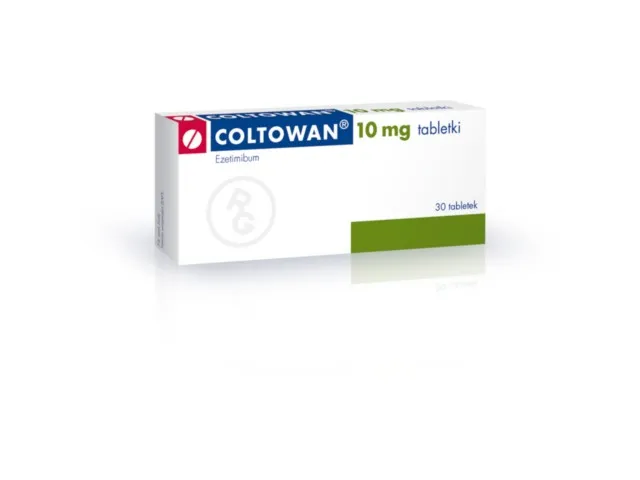
Table of Contents
Patient Information Leaflet
Coltowan, 10 mg, tablets
Ezetimibe
Please read this leaflet carefully before taking this medicine, as it contains
important information for you.
- Keep this leaflet, as you may need to read it again.
- If you have any further questions, please ask your doctor or pharmacist.
- This medicine has been prescribed for a specific individual. Do not pass it on to others. It may harm other people, even if their symptoms are the same.
- If you experience any side effects, including any not listed in this leaflet, please inform your doctor or pharmacist. See section 4.
Leaflet Contents
- What Coltowan is and what it is used for
- What you need to know before taking Coltowan
- How to take Coltowan
- Possible side effects
- How to store Coltowan
- Contents of the pack and other information
1. What Coltowan is and what it is used for
Coltowan is a medicine used to lower elevated cholesterol levels.
Coltowan reduces blood levels of total cholesterol, "bad" cholesterol (LDL cholesterol), and fat substances called triglycerides. In addition, Coltowan increases levels of "good" cholesterol (HDL cholesterol). It is used in patients in whom a cholesterol-lowering diet alone is not sufficient to control cholesterol levels in the blood. While taking this medicine, you should continue to follow a cholesterol-lowering diet.
Coltowan reduces cholesterol absorption in the gastrointestinal tract. Coltowan has no effect on weight loss.
Coltowan enhances the effect of statins, a group of medicines that reduce cholesterol produced in the body.
Cholesterol is one of several fatty substances present in the blood. Total cholesterol mainly consists of LDL and HDL cholesterol fractions.
LDL cholesterol is often called "bad" cholesterol because it can deposit in the walls of arteries as atherosclerotic plaques. Accumulation of these plaques may eventually lead to narrowing of the arteries, slowing blood flow or blocking blood supply to vital organs such as the heart and brain. Interruption of blood flow may cause heart attack or stroke.
HDL cholesterol is often called "good" cholesterol because it helps prevent the deposition of bad cholesterol in the arteries and protects against heart disease.
Triglycerides are another type of fat in the blood that may contribute to an increased risk of heart disease.
Coltowan is used as an addition to a cholesterol-lowering diet in the following cases:
-
- elevated blood cholesterol levels (primary hypercholesterolemia [heterozygous familial or non-familial]),
-
- in combination with a statin, when cholesterol levels are not adequately controlled with a statin alone,
-
- as monotherapy, when statin treatment is not suitable or poorly tolerated,
-
- in an inherited disorder (homozygous familial hypercholesterolemia) causing elevated blood cholesterol levels. In such patients, a statin will be used and other treatments may also be applied.
If you have heart disease, taking Coltowan in combination with another cholesterol-lowering medicine called a statin reduces the risk of heart attack, stroke, a surgical procedure to increase blood flow to the heart, or hospitalization due to chest pain.
2. Important information before taking Coltowan
When taking Coltowan in combination with a statin, please refer to the package leaflet of the respective statin medication.
When not to take Coltowan:
-
- if the patient is allergic to ezetimibe or any of the other ingredients of this medicine (listed in section 6).
When not to take Coltowan in combination with a statin:
- if the patient currently has liver problems,
- during pregnancy or breastfeeding.
Warnings and precautions
Before starting to take Coltowan, discuss this with your doctor or pharmacist.
- Inform your doctor about all medical conditions you have, including allergies.
- Before starting to take Coltowan in combination with a statin, your doctor should perform blood tests to assess liver function.
- Your doctor may also perform blood tests to monitor liver function after starting treatment with Coltowan in combination with a statin.
Coltowan is not recommended for use in patients with moderate or severe liver impairment.
The safety and efficacy of Coltowan in combination with certain cholesterol-lowering drugs, fibrates, have not been established.
Children and adolescents
This medicine should not be used in children and adolescents aged 6 to 17 years unless prescribed by a specialist due to lack of data on safety and efficacy in this age group.
This medicine should not be used in children under 6 years of age due to lack of data in this age group.
Coltowan with other medicines
Tell your doctor or pharmacist about all medicines you are currently taking, have recently taken, or plan to take.
In particular, inform your doctor if you are taking any of the following medicines:
- cyclosporine (commonly used in organ transplant patients),
- medicines containing active substances that prevent blood clotting, such as warfarin, phenprocoumon, acenocoumarol or fluindione (anticoagulants),
- cholestyramine (also used to reduce cholesterol levels), as it may affect the action of Coltowan,
- fibrates (also used to reduce cholesterol levels).
Pregnancy and breastfeeding
If you are pregnant or breastfeeding, think you may be pregnant, or are planning to have a baby, consult your doctor before taking this medicine.
Do not take Coltowan in combination with a statin if you are pregnant, planning to become pregnant, or think you may be pregnant. If you become pregnant while taking Coltowan in combination with a statin, stop taking the medicine immediately and contact your doctor. There are no clinical data on the use of Coltowan without a statin during pregnancy. If you are pregnant, consult your doctor before taking Coltowan.
Do not take Coltowan in combination with a statin while breastfeeding, as it is unknown whether the medicine passes into breast milk. Coltowan, even without combination with a statin, should not be used in breastfeeding women. Consult your doctor.
You should ask your doctor or pharmacist for advice before taking any medicine.
Driving and operating machinery
Coltowan is not expected to affect the ability to drive or operate machinery.
However, it should be noted that dizziness may occur in some individuals after taking Coltowan.
Coltowan contains lactose
Coltowan tablets contain a sugar called lactose. If you have been previously diagnosed with an intolerance to certain sugars, you should consult your doctor before taking this medicine.
Coltowan contains sodium
The medicine contains less than 1 mmol (23 mg) of sodium per tablet; therefore, the medicine is considered "sodium-free".
3. How to take Coltowan
This medicine should always be taken as directed by your doctor. If you have any doubts,
consult your doctor or pharmacist.
Unless otherwise advised by your doctor, continue taking any cholesterol-lowering medicines
you were previously using.
- Before starting treatment with Coltowan, a cholesterol-lowering diet should be initiated.
- While taking Coltowan, a cholesterol-lowering diet should be maintained.
The recommended dose is one 10 mg tablet of Coltowan taken orally once daily.
Coltowan can be taken at any time of day, with or without food.
If your doctor has prescribed both Coltowan and a statin, both medicines may be taken at the
same time. In this case, refer to the dosing information provided in the patient leaflet of the
respective medicine.
If your doctor has prescribed Coltowan together with another cholesterol-lowering medicine
containing the active substance colestyramine or any other medicine containing a bile acid-binding
resin, Coltowan should be taken at least 2 hours before or 4 hours after taking the bile acid-binding
resin.
Taking more Coltowan than prescribed
Contact your doctor or pharmacist immediately.
If you miss a dose of Coltowan
Do not take a double dose to make up for the missed tablet. Take your usual dose of Coltowan
at the usual time on the following day.
Stopping treatment with Coltowan
Discuss this with your doctor or pharmacist, as cholesterol levels may rise again.
If you have any further questions about the use of this medicine, consult your doctor or pharmacist.
4. Possible adverse reactions
Like all medicines, this medicine can cause adverse reactions, although not everyone will experience them.
You should contact your doctor immediately if you experience unexplained
muscle pain, tenderness or weakness. In rare cases, muscle-related problems, including rhabdomyolysis leading to kidney damage, may be serious and progress to a potentially life-threatening condition.
During regular use, allergic reactions have been reported, including swelling of the face, lips,
tongue and (or) throat, which may cause difficulty in breathing or swallowing. If these occur,
seek immediate medical help.
The following adverse reactions have been reported during use as monotherapy:
Common (may affect up to 1 in 10 patients): abdominal pain; diarrhoea; bloating with flatulence; feeling of fatigue.
Uncommon (may affect up to 1 in 100 patients): increased parameters in certain liver function tests (aminotransferases) or muscle tests (CK); cough; indigestion; heartburn; nausea; joint pain; muscle cramps; neck pain; decreased appetite; pain; chest pain; sudden flushing of the face; high blood pressure.
Additionally, the following adverse reactions have been reported when used in combination with a statin:
Common (may affect up to 1 in 10 patients): increased parameters in certain liver function tests (aminotransferases); headache; muscle pain, tenderness or weakness.
Uncommon (may affect up to 1 in 100 patients): tingling sensation; dry mouth; itching; rash; urticaria; back pain; muscle weakness; pain in arms and legs; unexplained tiredness or weakness; oedema, particularly in hands and feet.
When used in combination with fenofibrate, the following adverse reaction was commonly reported:
abdominal pain.
Additionally, during regular use, the following adverse reactions have been reported (frequency of adverse reactions is unknown: frequency cannot be estimated from available data):
dizziness; muscle pain; liver problems; allergic reactions including rash and urticaria; red, raised rash, sometimes with lesions in a target-like shape (erythema multiforme); muscle pain, tenderness or weakness; rhabdomyolysis; gallstones or cholecystitis (may cause abdominal pain, nausea, vomiting); pancreatitis, often with severe abdominal pain; constipation; decreased blood cell counts, which may lead to bruising/bleeding (thrombocytopenia); tingling sensation; depression; unexplained tiredness or weakness; shortness of breath.
Reporting of adverse reactions
If any adverse effects occur, including any not listed in this leaflet, inform your doctor, pharmacist or nurse. Adverse reactions can be reported directly to the Department of Monitoring Adverse Drug Reactions at the Office for Registration of Medicinal Products, Medical Devices and Biocidal Products:
Al. Jerozolimskie 181C, 02-222 Warsaw, tel.: 22 49-21-301, fax: 22 49-21-309, e-mail: [email protected]
Adverse reactions may also be reported to the responsible entity.
Reporting adverse reactions helps to provide more information on the safety of this medicine.
5. How to store the medicine Coltowan
Keep this medicine out of the sight and reach of children.
Do not use this medicine after the expiry date stated on the carton or
container after "Expiry date (EXP)". The expiry date refers to the last day of the stated month.
This medicine does not require any special storage conditions.
Medicines must not be disposed of via the sewage system or in household waste. Ask your
pharmacist how to dispose of medicines no longer required. Such measures will help protect
the environment.
6. Contents of the packaging and other information
What Coltowan contains
The active substance is ezetimibe. Each tablet contains 10 mg of ezetimibe.
Other components: monohydrate lactose, microcrystalline cellulose (type 102), magnesium stearate, povidone (K29/32), sodium croscarmellose, sodium lauryl sulphate.
What Coltowan looks like and contents of the pack
Coltowan tablets are white, round, flat, with a diameter of approximately 6 mm. On one side there is an imprint "CB3".
Coltowan 10 mg tablets are packed in white, opaque PVC/PE/PVDC/PE/PVC//Aluminium blisters.
The blisters are placed in a cardboard box with an enclosed patient leaflet.
Pack sizes: 15, 30, 45, 60 or 90 tablets.
Not all pack sizes may be marketed.
Marketing Authorisation Holder
GEDEON RICHTER POLSKA Sp. z o.o.
ul. Ks. J. Poniatowskiego 5
05-825 Grodzisk Mazowiecki
tel.: (22) 755 50 81
Manufacturer
Gedeon Richter Romania S.A.
99-105, Cuza Vodă Street,
540306 Târgu-Mureş,
Romania
For further information about the medicinal product and its names in other European Economic Area countries, please contact:
GEDEON RICHTER POLSKA Sp. z o.o.
Medical Department
ul. Ks. J. Poniatowskiego 5
05-825 Grodzisk Mazowiecki
[email protected]
fax: +48 (22) 755 96 24
((logo of the marketing authorisation holder))
((pharmacode))