Colchican
Poland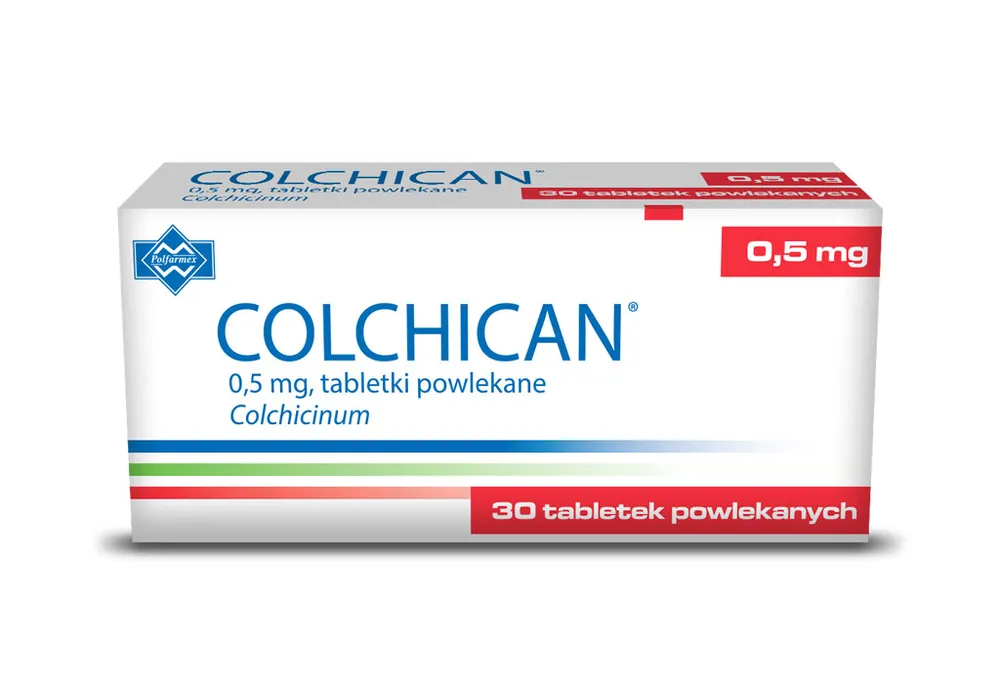
Table of Contents
Package leaflet: Information for the user
COLCHICAN, 0.5 mg, coated tablets
Colchicinum
Please read all of this leaflet carefully before taking this medicine, because it contains
important information for you.
- Keep this leaflet so that you can read it again if necessary.
- If you have any questions, please consult your doctor or pharmacist.
- This medicine has been prescribed for a specific individual. Do not pass it on to others. This medicine may harm another person, even if their symptoms are the same.
- If you experience any adverse effects, including any not listed in this leaflet, inform your doctor or pharmacist. See section 4.
Table of contents
- What Colchican is and what it is used for
- Important information before taking Colchican
- How to take Colchican
- Possible side effects
- How to store Colchican
- Contents of the pack and other information
1. What Colchican is and what it is used for
Colchican is used in the treatment of acute attacks of gout (gouty arthritis). Gout
is a disease characterized by joint inflammation caused by deposition of
monosodium urate crystals in tissues (joints and periarticular structures).
The medicine reduces inflammation during acute gout attacks.
The medicine is also used to prevent acute gout attacks during uric acid-lowering therapy with drugs such as allopurinol, febuxostat, probenecid,
and sulfinpyrazone.
The medicine does not affect the concentration of uric acid in blood and tissues.
2. Important information before using Colchican
When not to use Colchican:
- if the patient is allergic to the active substance or to any of the other ingredients of this medicine (listed in section 6),
- if the patient has severe heart disease,
- if the patient has severe gastrointestinal disorders,
- if the patient has severe liver disease,
- if the patient has severe kidney impairment,
- if the patient has blood disorders.
Warnings and precautions
Special caution is required when using Colchican:
- if the patient has heart or liver problems,
- when the patient has impaired kidney function,
- if the patient has gastrointestinal disorders, after taking the medicine diarrhea, vomiting and abdominal pain may occur.
Before using Colchican, the patient should inform the doctor if they are taking
cyclosporine or macrolide antibiotics.
Colchican and other medicines
Tell your doctor or pharmacist about all medicines the patient is currently taking
or has recently taken, as well as any medicines the patient plans to take.
The medicine may impair absorption of vitamin B.
Inform your doctor about concomitant use of medicines such as cyclosporine, statins (cholesterol-lowering medicines, e.g. simvastatin, lovastatin) or macrolide antibiotics (erythromycin, clarithromycin), especially if the patient has impaired kidney function, as co-administration with Colchican may lead to bone marrow dysfunction.
Cimetidine (a medicine used to treat gastrointestinal ulcers) may cause a life-threatening increase in blood concentration of the drug.
Pregnancy and breastfeeding
If the patient is pregnant or breastfeeding, suspects she might be pregnant, or is planning to have a child, she should consult a doctor or pharmacist before using this medicine.
Colchican must not be used in pregnant or breastfeeding women.
Driving and operating machinery
No studies have been performed on the effects of Colchican on driving and operating machinery.
Due to the possible occurrence of dizziness after taking the medicine, driving or operating machinery should be avoided.
Colchican contains lactose
The medicine contains lactose (one tablet contains 118 mg of lactose). If the patient has previously been diagnosed with intolerance to certain sugars, the patient should consult a doctor before taking this medicine.
3. How to use Colchican
This medicine should always be used exactly as directed by your doctor. If in doubt, consult your doctor or pharmacist.
The tablet should be taken with an adequate amount of water.
Repeat treatment for an acute attack of gout may only be initiated after a minimum interval of three days from the previous treatment.
Use in adults
Dose used in the treatment of acute gout attacks:
The recommended initial dose is 2 tablets, followed by 1 tablet one hour later. No further tablets should be taken for the next 12 hours. If necessary, after this period, treatment may be continued with a maximum dose of 1 tablet three times daily until symptoms resolve.
The treatment cycle should be ended either after symptoms have subsided or after a total of 12 tablets of Colchican have been taken.
Do not take more than 12 tablets in a single treatment cycle. After completing a treatment cycle with Colchican, the next cycle should not be started earlier than three days later.
Dose used to prevent acute gout attacks during initiation of treatment with other medicines:
The recommended dose is 1 to 2 tablets daily. This treatment usually lasts up to 6 months from the start of therapy with allopurinol, febuxostat, or uricosuric drugs (which increase urinary excretion of uric acid).
If gastrointestinal adverse effects occur, discontinue the medicine immediately.
Children and adolescents
Colchican is not recommended for use in children and adolescents under 18 years of age.
Elderly patients
Colchican should be used with caution in elderly patients.
Patients with liver dysfunction
Colchican should be used with caution in patients with impaired liver function. The medicine is contraindicated in patients with severe liver dysfunction.
Patients with kidney dysfunction
The following dosage adjustments are recommended:
- for creatinine clearance > 50 ml/min: 0.5 mg of colchicine orally twice daily;
- for creatinine clearance 35–49 ml/min: 0.5 mg of colchicine orally once daily;
- for creatinine clearance 10–34 ml/min: 0.5 mg of colchicine orally every 2–3 days;
- for creatinine clearance < 10 ml/min: colchicine is contraindicated. Colchicine is not recommended in patients undergoing hemodialysis.
Taking more Colchican than recommended
If you take more Colchican than prescribed, contact your doctor immediately.
The first symptoms of overdose may appear after an incubation period of 2 to 12 hours.
If you miss a dose of Colchican
Do not take a double dose to make up for a missed dose. Consult your doctor to determine when the next dose should be taken.
Stopping Colchican
Colchican should always be used as directed by your doctor.
If you have any further questions about the use of this medicine, consult your doctor or pharmacist.
4. Possible adverse reactions
Like all medicines, this medicine can cause adverse reactions, although not everyone will experience them.
During clinical trials of the medicine, the following adverse reactions were very common (observed in more than 1 in 10 people): nausea, diarrhoea, and abdominal pain.
Adverse reactions observed after the medicine was placed on the market (based on available data, the frequency cannot be estimated):
- reduction in the number of white blood cells called granulocytes (agranulocytosis),
- bone marrow failure,
- reduction in the number of normal blood cells (pancytopenia),
- reduction in the number of platelets (thrombocytopenia),
- neurogenic muscle disease,
- damage to striated muscle tissue (rhabdomyolysis),
- kidney damage,
- hypersensitivity (allergy),
- myopathy (muscle tissue disorder),
- aplastic anaemia (a disease in which the bone marrow does not produce any blood cells),
- haemolytic anaemia (shortened lifespan of red blood cells),
- liver damage,
- others: dizziness, vomiting, itching, purpura, skin burning sensation, hair loss, nail disorders.
Reporting of adverse reactions
If any adverse reactions occur, including any adverse reactions not listed in this leaflet, inform your doctor, pharmacist, or nurse. Adverse reactions can be reported directly to the Department of Monitoring of Adverse Drug Reactions at the Office for Registration of Medicinal Products, Medical Devices and Biocidal Products
Al. Jerozolimskie 181C
02-222 Warsaw
Phone: (22) 49 21 301
Fax: (22) 49 21 309
Website: https://smz.ezdrowie.gov.pl
Adverse reactions can also be reported to the marketing authorization holder.
Reporting adverse reactions helps provide more information on the safety of the medicine.
5. How to store Colchican
Keep the medicine out of sight and reach of children.
Do not use this medicine after the expiry date stated on the carton and blister after: "EXP". The expiry date refers to the last day of the stated month.
Medicines must not be disposed of via wastewater or household waste. Ask your pharmacist how to dispose of medicines no longer required. These measures will help protect the environment.
6. Contents of the pack and other information
What Colchican contains
- The active substance is colchicine. One coated tablet contains 0.5 mg of colchicine.
- Other ingredients are: lactose, microcrystalline cellulose, pregelatinized starch, povidone K-25, stearic acid, talc, magnesium stearate. Coating: monohydrate lactose, hypromellose 6 cP, titanium dioxide (E 171), macrogol 6000, red iron oxide (E 172).
What Colchican looks like and contents of the pack
Colchican is a pink, round, biconvex coated tablet,
with a nominal diameter of 8 mm, free from spots and defects.
Outer packaging: cardboard box.
The pack contains 20 or 30 tablets.
Marketing Authorisation Holder and Manufacturer
Polfarmex S.A.
ul. Józefów 9
99-300 Kutno
Poland
Tel.: (24) 357 44 44
Fax: (24) 357 45 45
e-mail: [email protected]