Claritin
Poland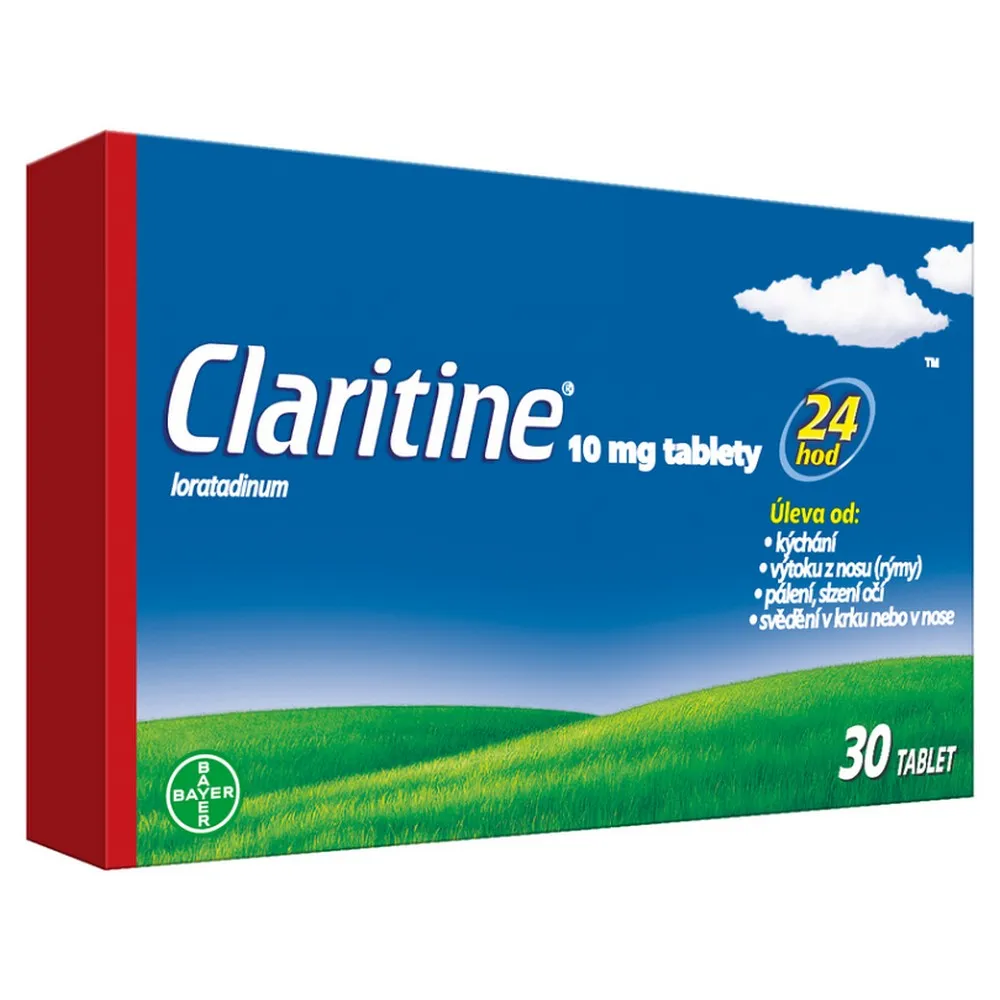
Table of Contents
Package leaflet: Information for the patient
CLARITINE, 10 mg, tablets
Loratadine
Please read the entire leaflet carefully before using this medicine, as it contains
important information for the patient.
- Keep this leaflet for future reference.
- If you have any questions, consult your doctor or pharmacist.
- This medicine has been prescribed for a specific individual. Do not share it with others. This medicine may harm other people, even if their symptoms are the same.
- If you experience any adverse reactions, including any not listed in this leaflet, inform your doctor or pharmacist. See section 4.
Table of contents
- What Claritine is and what it is used for
- Important information before taking Claritine
- How to take Claritine
- Possible side effects
- How to store Claritine
- Contents of the pack and other information
1. What Claritine is and what it is used for
The active substance in Claritine, loratadine, is a tricyclic antihistamine and a selective peripheral H_-histamine receptor antagonist.
Claritine is an antiallergic medicine that does not cause drowsiness. Claritine is indicated for the treatment of symptoms of allergic rhinitis (such as sneezing, runny nose, nasal itching, and eye itching and burning) and chronic idiopathic urticaria.
2. Important information before using Claritine
When not to use Claritine:
- if the patient is allergic to loratadine or to any of the other ingredients of this medicine (listed in section 6).
Warnings and precautions
Before starting Claritine, discuss this with your doctor or pharmacist:
- if the patient has severe liver impairment (see section 3. How to use Claritine).
Skin tests:
Claritine should be discontinued approximately 48 hours before planned skin testing, as antihistamines may produce false negative results in such tests (they may reduce or completely suppress the skin reaction which would normally be positive).
Claritine and other medicines
Adverse effects may be intensified when Claritine is used concomitantly with medicines affecting the activity of certain enzymes responsible for drug metabolism in the liver. However, in clinical studies, no increase in adverse effects has been observed during concomitant use of loratadine with drugs affecting these enzymes.
Concomitant administration of loratadine with ketoconazole, erythromycin or cimetidine increases the plasma concentration of loratadine, but without clinical consequences. Concomitant use of loratadine with drugs affecting hepatic metabolism should be carried out under medical supervision.
Inform your doctor or pharmacist about all medicines the patient is currently taking or has recently taken, as well as any medicines the patient plans to use, including those available without a prescription.
Use of Claritine with food, drink and alcohol
The medicine can be taken regardless of meals.
Administration of the medicine together with alcohol does not enhance its effects to a degree detectable by psychomotor tests.
Pregnancy, breastfeeding and fertility
If the patient is pregnant or breastfeeding, suspects she may be pregnant, or is planning to become pregnant, she should consult her doctor or pharmacist before using this medicine.
As a precautionary measure, it is recommended to avoid using Claritine during pregnancy.
Loratadine passes into breast milk; therefore, use of Claritine is not recommended during breastfeeding.
There are no data available on fertility in men and women.
Driving and operating machinery
In clinical studies, loratadine had no effect or only negligible effect on the ability to drive and operate machinery. However, in some individuals, somnolence has very rarely occurred, which may impair the ability to drive and operate machinery.
Claritine contains lactose
This medicine contains lactose as an excipient. If the patient has been previously diagnosed with intolerance to certain sugars, the patient should consult their doctor before taking this medicine.
3. How to use Claritine
This medicine should always be taken according to the doctor's instructions. If in doubt, consult your
doctor.
The break line on the tablet is only intended to facilitate splitting the tablet for easier swallowing.
Recommended dose
Adults and children over 12 years of age:
10 mg (one tablet) once daily. The medicine can be taken regardless of meals.
Children aged 2 to 12 years:
Body weight greater than 30 kg: 10 mg (one tablet) once daily.
The use of tablets (10 mg) is not recommended in children whose body weight is less than 30 kg.
In these children, Claritine can be administered in the form of syrup.
The safety and efficacy of this medicine have not been established in children under 2 years of age.
Patients with hepatic impairment:
In patients with severe liver dysfunction, a reduced initial dose should be used, as loratadine clearance may be reduced in these individuals. In such cases, adults and children weighing more than 30 kg should receive 10 mg of loratadine (as tablets or syrup) every other day, and children weighing 30 kg or less should receive 5 mg of loratadine (as syrup) every other day.
There is no need to adjust the dose in elderly patients or in patients with renal impairment.
If you feel that the effect of Claritine is too strong or too weak, consult your doctor.
Taking more Claritine than recommended
If you take more Claritine than recommended, seek immediate medical advice from a doctor or pharmacist.
Overdose of loratadine may cause: drowsiness, tachycardia, and headache.
In case of overdose, symptomatic and supportive treatment should be initiated immediately and continued as long as necessary. Activated charcoal in aqueous suspension may be administered. Gastric lavage may also be performed. Loratadine cannot be removed from the body by hemodialysis; it is not known whether peritoneal dialysis is effective. After administering treatment, the patient should continue to be monitored.
There are no data indicating that loratadine causes abuse or dependence.
Missing a dose of Claritine
Do not take a double dose to make up for a missed dose.
If you have any further doubts about using this medicine, consult your doctor or pharmacist.
4. Possible adverse reactions
Like all medicines, this medicine can cause adverse reactions, although not everyone will experience them.
Common adverse reactions associated with the use of Claritine (in 1 to 10 out of 100 patients taking the medicine) are:
- in children aged 2 to 12 years - headache, nervousness and fatigue,
- in adults and adolescents - drowsiness.
Uncommon adverse reactions associated with the use of Claritine (in 1 to 10 out of 1,000 patients taking the medicine) in adults and adolescents are:
- headache, increased appetite and insomnia, fatigue, dry mouth, gastrointestinal disorders such as nausea, gastric mucosal inflammation, and allergic symptoms such as rash.
Very rare adverse reactions (occurring in fewer than 1 out of 10,000 patients taking the medicine), observed after the medicine was placed on the market, include:
- severe allergic reaction (including difficulty breathing, wheezing, itching, urticaria, swelling). If a severe allergic reaction occurs, stop taking the medicine immediately and contact a doctor without delay.
- dizziness, convulsions, increased heart rate, palpitations, abnormal liver function, hair loss.
Adverse reaction with unknown frequency (frequency cannot be estimated from the available data): weight gain.
Other adverse reactions may occur in some individuals during treatment with Claritine.
Reporting of adverse reactions
If any adverse reactions occur, including any adverse reactions not listed in this leaflet, inform a doctor, pharmacist, or nurse. Adverse reactions can be reported directly to the Department of Monitoring Adverse Drug Reactions of the Office for Registration of Medicinal Products, Medical Devices and Biocidal Products:
Al. Jerozolimskie 181C, 02-222 Warsaw, tel.: 22 49-21-301, fax: 22 49-21-309, e-mail: [email protected].
Adverse reactions can also be reported to the marketing authorization holder.
Reporting adverse reactions helps to provide more information on the safety of the medicine.
5. How to store Claritine
Keep this medicine out of sight and reach of children.
Store below 25°C.
Do not use this medicine after the expiry date stated on the pack following: EXP.
The expiry date refers to the last day of the stated month.
Medicines should not be disposed of via wastewater or household waste. Ask your pharmacist how to dispose of medicines no longer required. Such measures help protect the environment.
6. Contents of the pack and other information
What Claritine contains
- The active substance is loratadine. One tablet contains 10 mg of loratadine.
- The other ingredients (excipients) are: monohydrate lactose, corn starch, magnesium stearate.
What Claritine looks like and contents of the pack
Claritine is a white or almost white, unblemished, oval-shaped tablet, with a division line on one side and smooth on the other.
30 or 60 tablets in Al/PVC or Al/PVC/PVDC blisters, packed in a cardboard carton.
Marketing Authorisation Holder and Manufacturer
Marketing Authorisation Holder:
Bayer Sp. z o.o.
Al. Jerozolimskie 158
02-326 Warsaw
Tel.: + 48 22 572-35-00
Manufacturer:
Bayer Bitterfeld GmbH
Ortsteil Greppin
Salegaster Chaussee 1
06803 Bitterfeld-Wolfen
Germany