Ciprinol
Poland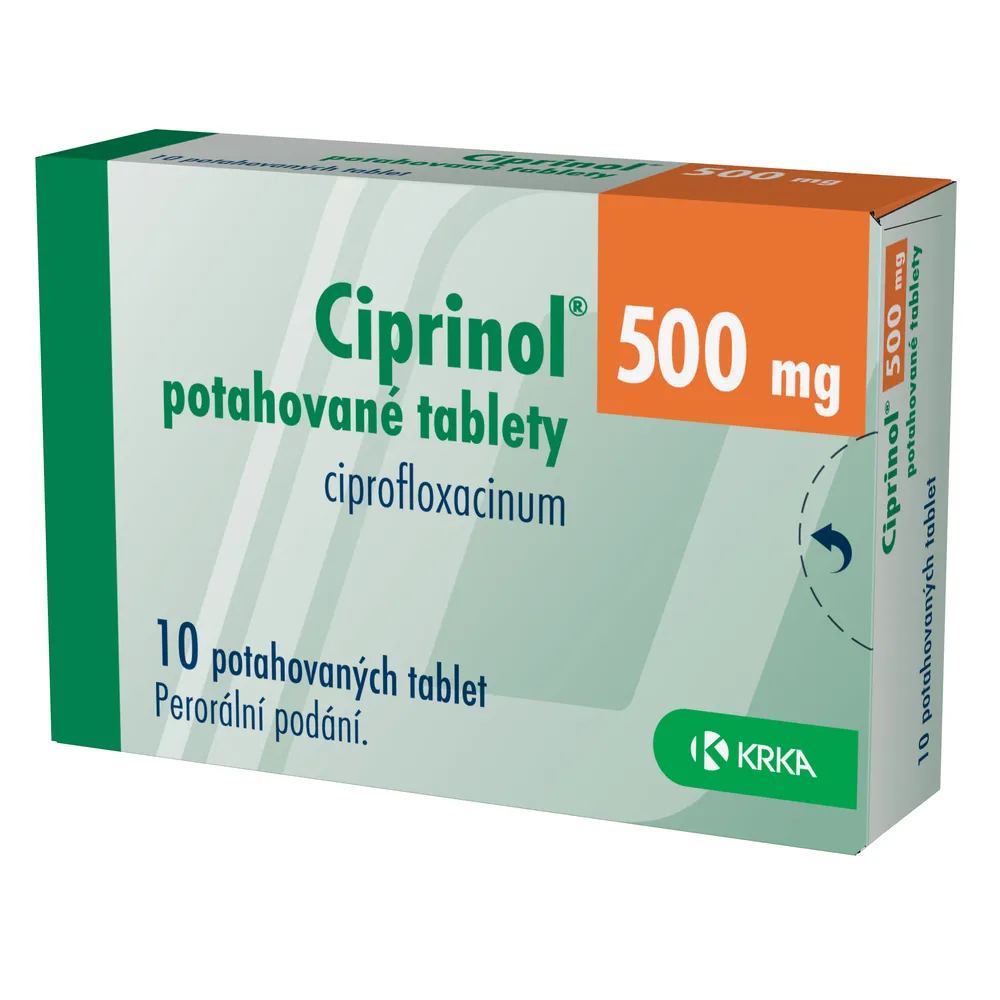
Table of Contents
Package leaflet: Information for the user
Ciprinol, 250 mg, film-coated tablets
Ciprinol, 500 mg, film-coated tablets
Ciprofloxacinum
Please read carefully the entire leaflet before taking this medicine, as it contains
important information for you.
- Keep this leaflet, as you may need to read it again.
- If you have any further questions, please ask your doctor or pharmacist.
- This medicine has been prescribed for a specific individual. Do not pass it on to others. It may harm someone else, even if their symptoms are the same.
- If you experience any adverse reactions, including any not listed in this leaflet, tell your doctor or pharmacist. See section 4.
Table of contents
- What Ciprinol is and what it is used for
- Important information before taking Ciprinol
- How to take Ciprinol
- Possible side effects
- How to store Ciprinol
- Contents of the pack and other information
1. What Ciprinol is and what it is used for
Ciprinol contains the active substance ciprofloxacin. Ciprofloxacin is an antibiotic belonging to the
fluoroquinolone group. Ciprofloxacin kills bacteria causing infections. It acts only against specific
bacterial strains.
Adults
Ciprinol is used in adults for the treatment of certain bacterial infections:
- respiratory tract infections
- chronic or recurrent ear or sinus infections
- urinary tract infections
- genitourinary infections in men and women
- gonococcal urethritis or cervicitis caused by susceptible strains of Neisseria gonorrhoeae
- epididymo-orchitis, including cases caused by susceptible strains of Neisseria gonorrhoeae
- pelvic inflammatory disease, including cases caused by susceptible strains of Neisseria gonorrhoeae
If the doctor suspects or has diagnosed that the above-mentioned genital infections are caused by Neisseria gonorrhoeae, it is particularly important for the doctor to obtain local data on ciprofloxacin resistance prevalence and to confirm susceptibility based on appropriate laboratory tests. - gastrointestinal infections and intra-abdominal infections
- skin and soft tissue infections
- bone and joint infections
- prevention of infections caused by Neisseria meningitidis
- treatment and post-exposure prophylaxis of pulmonary anthrax
Ciprofloxacin may be used to treat febrile neutropenic patients (low white blood cell count) when a bacterial infection is suspected.
If the infection is severe or caused by more than one type of bacteria, your doctor may prescribe an additional antibiotic to be used together with Ciprinol.
Children and adolescents
Ciprinol is used in children and adolescents under specialist medical supervision for the following bacterial infections:
- Pseudomonas aeruginosa-induced bronchopulmonary infections in children and adolescents with cystic fibrosis
- Complicated urinary tract infections and acute pyelonephritis
- Pulmonary anthrax (post-exposure prophylaxis and treatment)
Ciprinol may also be used to treat other severe infections in children and adolescents if the doctor considers it necessary.
2. Important Information Before Using Ciprinol
When Not to Use Ciprinol
- if the patient is allergic to the active substance, to other drugs in the quinolone group, or to any of the other ingredients of this medicine (listed in section 6),
- in patients taking tyzanicidine simultaneously (see section 2 "Ciprinol with other medicines").
Warnings and Precautions
Before Taking Ciprinol
Do not take antibacterial medicines containing fluoroquinolones or quinolones, including Ciprinol, if the patient has previously experienced any severe adverse reaction while taking a quinolone or fluoroquinolone. In such a case, inform the doctor as soon as possible.
Before starting treatment with Ciprinol, discuss with the doctor if:
- the patient has ever had kidney problems, as dose adjustment may be necessary,
- the patient suffers from epilepsy or has other neurological disorders,
- the patient has previously experienced tendon problems while being treated with antibiotics such as Ciprinol,
- the patient has diabetes – ciprofloxacin may significantly reduce blood sugar levels (hypoglycaemia),
- the patient has been diagnosed with myasthenia (a type of muscle weakness),
- the patient has been diagnosed with enlargement of a large blood vessel (aortic aneurysm or large peripheral artery),
- the patient has previously experienced aortic dissection (tearing of the aortic wall),
- the patient has been diagnosed with heart valve insufficiency,
- there is a family history of aortic aneurysm or aortic dissection, or congenital heart valve disease, or other risk factors or predisposing conditions (e.g. connective tissue disorders such as Marfan syndrome or vascular Ehlers-Danlos syndrome, Turner syndrome, Sjögren's syndrome [an autoimmune inflammatory disease], or vascular diseases such as Takayasu arteritis, giant cell arteritis, Behçet's disease, hypertension, or confirmed arterial atherosclerosis, rheumatoid arthritis [joint disease] or endocarditis [heart infection]),
- the patient or their family has glucose-6-phosphate dehydrogenase (G6PD) deficiency, inform the doctor – haemolytic anaemia may occur after administration of ciprofloxacin.
In the treatment of certain urinary and genital tract infections, the doctor may additionally prescribe another antibiotic along with ciprofloxacin. If the patient's condition does not improve after three days of treatment, consult the doctor.
Cardiac Disorders
Exercise caution when using this type of medicine if:
- the patient has been diagnosed with congenital or familial QT prolongation (visible on ECG – an examination of the heart's electrical activity),
- the patient has electrolyte imbalance in the blood (especially low blood potassium and magnesium levels),
- the patient has a very slow heart rate (called bradycardia),
- the patient has impaired heart function (heart failure),
- the patient has suffered a myocardial infarction,
- the patient is female or elderly,
- the patient is taking other medicines that may cause changes in the ECG (see section 2 "Ciprinol with other medicines").
While Taking Ciprinol
If any of the following symptoms occur while taking Ciprinol, inform the doctor immediately. The doctor will decide whether treatment with Ciprinol should be discontinued:
- Severe, sudden allergic reaction (anaphylactic reaction or shock, angioedema). Although rare, a severe allergic reaction may occur even after the first dose, with symptoms such as chest tightness, dizziness, nausea, fainting, or dizziness upon standing. If this occurs, stop taking Ciprinol and contact the doctor immediately.
- Long-lasting, disabling, and potentially irreversible severe adverse effects. Antibacterial medicines containing fluoroquinolones or quinolones, including Ciprinol, have been associated with very rare but serious adverse effects. Some of these effects may be long-lasting (persisting for months or years), disabling, or potentially irreversible. These include: tendon, muscle, and joint pain in the upper and lower limbs, difficulty walking, abnormal sensations such as pricking, tingling, tickling, numbness, or burning (paresthesia), sensory disturbances, including disturbances of vision, taste, smell, and hearing, depression, memory disturbances, severe fatigue, and severe sleep disturbances. If any of these adverse effects occur after taking Ciprinol, contact the doctor immediately before continuing treatment. The patient and the doctor will decide whether to continue treatment, considering also antibiotics from other classes.
- Rarely, pain and swelling of joints and inflammation or rupture of tendons may occur. The risk is increased in elderly patients (over 60 years), after organ transplantation, in patients with kidney problems, or those receiving corticosteroid treatment. Tendon inflammation and rupture may occur within the first 48 hours of treatment or even several months after discontinuation of Ciprinol. At the first signs of tendon pain or inflammation (e.g. in the ankle, wrist, elbow, shoulder, or knee), discontinue Ciprinol, contact the doctor, and rest the affected area. Avoid excessive physical exertion, as this may increase the risk of tendon rupture.
- In case of sudden severe abdominal, back, or chest pain, which may indicate aortic aneurysm or dissection, seek emergency medical attention immediately. The risk of these conditions may be higher in patients receiving systemic corticosteroids.
- If sudden shortness of breath occurs, especially when lying down, or if swelling of the ankles, feet, or abdomen is observed, or palpitations (sensation of rapid or irregular heartbeat) occur, consult the doctor without delay.
- If the patient has epilepsy or other neurological disorders, such as cerebral ischaemia (inadequate blood flow to the brain) or stroke, adverse effects on the central nervous system may occur. If such symptoms occur, discontinue Ciprinol and contact the doctor immediately.
- The patient may rarely experience symptoms of nerve damage (neuropathy), such as pain, burning, tingling, numbness, and (or) weakness, especially in the feet and legs, and hands and arms. In such a case, discontinue Ciprinol and inform the doctor immediately to prevent the development of potentially irreversible disease.
- Psychotic reactions may occur after the first dose of Ciprinol. If the patient has depression or psychosis, symptoms of these conditions may worsen during treatment with Ciprinol. Rarely, depression or psychosis may progress to suicidal thoughts, potentially leading to suicide attempts or suicide (see section 4 "Possible side effects"). If this occurs, discontinue Ciprinol and contact the doctor immediately.
- Quinolone antibiotics may cause increased blood sugar levels above normal (hyperglycaemia) or decreased blood sugar levels below normal, which in severe cases may lead to loss of consciousness (hypoglycaemic coma) (see section 4). This is important for patients with diabetes. Diabetic patients should carefully monitor their blood sugar levels.
- While taking antibiotics, including Ciprinol, or even several weeks after treatment ends, diarrhoea may occur. If it is severe or persistent, or if the patient notices blood or mucus in the stool, discontinue Ciprinol immediately, as this may be life-threatening. Do not take medicines that inhibit or slow intestinal motility.
- Vision disturbances or other eye-related problems should be reported immediately to an ophthalmologist.
- While taking Ciprinol, the skin becomes more sensitive to sunlight and ultraviolet (UV) radiation. Avoid exposure to strong sunlight or artificial UV radiation (e.g. in a solarium).
- If the patient is providing a blood or urine sample for analysis, inform the doctor or laboratory staff about the use of Ciprinol.
- If the patient has kidney problems, inform the doctor, as dose adjustment may be necessary.
- Ciprinol may cause liver damage. If the patient experiences any of the following symptoms: loss of appetite, jaundice (yellowing of the skin), dark urine, itching, or stomach irritation, contact the doctor immediately.
- Ciprinol may reduce the number of white blood cells, which may decrease resistance to infections. If, during an infection, symptoms such as fever and severe worsening of general condition, or fever with local signs of infection such as sore throat, laryngitis, oral cavity problems, or urinary tract issues occur, contact the doctor immediately. A blood test will be ordered to check for a reduction in white blood cells (agranulocytosis). Remember to inform the doctor about taking this medicine.
Ciprinol with Other Medicines
Inform the doctor or pharmacist about all medicines currently or recently taken, as well as any medicines the patient plans to take.
Do not take Ciprinol simultaneously with tyzanicidine, as this may cause adverse effects such as low blood pressure and drowsiness (see section 2 "When Not to Use Ciprinol").
The following medicines may interact with Ciprinol in the body.
Taking Ciprinol together with these medicines may affect their therapeutic effect. It may also increase the likelihood of adverse effects.
If the patient is taking any of the following medicines, inform the doctor:
- vitamin K antagonists (e.g. warfarin, acenocoumarol, phenprocoumon, fluindione) or other oral anticoagulants ("blood thinners"),
- probenecid (a medicine used in gout),
- metoclopramide (a medicine for nausea and vomiting),
- methotrexate (a medicine used in certain types of cancer, psoriasis, and rheumatoid arthritis),
- theophylline (a medicine used for respiratory disorders),
- tyzanicidine (a medicine reducing excessive muscle tension in multiple sclerosis),
- clozapine (an antipsychotic medicine),
- olanzapine (an antipsychotic medicine),
- ropinirole (a medicine used in Parkinson's disease),
- phenytoin (a medicine used in epilepsy),
- cyclosporine (a medicine used in skin disorders, rheumatoid arthritis, and organ transplantation),
- other medicines that may affect heart rhythm:
- antiarrhythmic medicines (e.g. quinidine, hydroquinidine, disopyramide, amiodarone, sotalol, dofetilide, ibutilide),
- tricyclic antidepressants,
- certain antibacterial medicines (belonging to the macrolide group),
- certain antipsychotic medicines.
- zolpidem (a medicine used for insomnia).
Ciprinol may increase blood levels of the following medicines:
- pentoxifylline (a medicine used for circulatory disorders),
- caffeine,
- duloxetine (a medicine used for depression, diabetic neuropathy, and urinary incontinence),
- lidocaine (a medicine used for heart disorders and anaesthesia),
- sildenafil (a medicine used, e.g. for erectile dysfunction),
- agomelatine (a medicine used for depression).
Some medicines reduce the effect of Ciprinol. Inform the doctor if the patient is taking or plans to take:
- medicines that neutralize gastric acid,
- omeprazole,
- mineral supplement preparations,
- sucralfate,
- polymeric phosphate binders (e.g. sevelamer or lanthanum carbonate),
- medicines containing calcium, magnesium, aluminium, or iron, or supplements containing these elements.
If the use of these medicines is necessary, Ciprinol should be taken approximately 2 hours before or at least 4 hours after their administration.
Taking Ciprinol with Food and Drink
Calcium contained in meals, including dairy products and calcium-rich drinks (such as milk or yoghurt) or fortified fruit juices (e.g. calcium-fortified orange juice), does not significantly affect the absorption of this medicine. However, taking ciprofloxacin tablets simultaneously with dairy products and calcium-rich drinks, when these dairy products or drinks are taken separately (not as part of a meal), may reduce the effectiveness of the medicine. Therefore, ciprofloxacin tablets should be taken 1–2 hours before a meal or no sooner than 4 hours after consuming dairy products or calcium-rich drinks taken separately (not as part of a meal) (see also section 3).
Pregnancy and Breast-feeding
If the patient is pregnant or breast-feeding, suspects she may be pregnant, or plans to have a child, she should consult a doctor or pharmacist before using this medicine.
Ciprinol is not recommended during pregnancy.
Do not take Ciprinol while breast-feeding, as ciprofloxacin passes into human milk and may be harmful to the child.
Driving and Using Machines
Ciprinol may impair concentration. Certain neurological adverse effects may occur. Before driving or operating machinery, the patient should assess how he or she reacts to Ciprinol. If any neurological adverse reactions occur or if the patient does not feel well, driving or operating machinery should be avoided. In case of doubt, consult the doctor.
Ciprinol Contains Sodium
This medicine contains less than 1 mmol (23 mg) of sodium per dose, meaning the medicine is considered "sodium-free".
3. How to use Ciprinol
Your doctor will explain exactly what dose of Ciprinol to take, how often, and for how long. This will depend on the type and severity of the infection.
If you have kidney problems, you must inform your doctor, as your dose may need to be adjusted.
Treatment usually lasts from 5 to 21 days, but may be longer for severe infections. Always take the medicine exactly as prescribed by your doctor. If you have any doubts about the number of tablets or how to take Ciprinol, consult your doctor or pharmacist.
- Swallow the tablets whole with plenty of fluid.
- Do not chew or crush the tablets. If you are unable to swallow the tablet, inform your doctor, who may prescribe a different, more suitable medicine for you.
- It is best to take the tablets at approximately the same time each day.
- Tablets may be taken with or without food. Cyprofl oxacin tablets may be taken during meals containing dairy products (such as milk or yoghurt) or with calcium-rich drinks (e.g. calcium-fortified orange juice). However, cyprofl oxacin tablets must not be taken at the same time as dairy products or calcium-rich drinks when these are taken separately (not as part of a meal). When dairy products or calcium-rich drinks are taken separately (not as part of a meal), cyprofl oxacin tablets should be taken approximately 1–2 hours before or no sooner than 4 hours after consuming such products. Remember to drink plenty of fluids while taking Ciprinol.
Taking more Ciprinol than prescribed
If you take more Ciprinol than prescribed, seek medical help immediately. If possible, take the tablets or the packaging with you to show the doctor.
Missing a dose of Ciprinol
If you forget to take a dose of Ciprinol:
If more than 6 hours remain before the next dose is due, take the missed dose immediately, then take the next dose at the usual time.
If less than 6 hours remain before the next dose is due, do not take the missed dose. Take the next dose at the usual time.
Do not take a double dose to make up for a missed dose. It is important to take all the tablets prescribed by your doctor.
Stopping Ciprinol treatment
It is important not to stop treatment early, even if you feel better after a few days. Stopping treatment too soon may result in incomplete treatment of the infection, and symptoms may return or worsen. Bacterial resistance to the antibiotic may also develop.
If you have any further questions about the use of this medicine, consult your doctor or pharmacist.
4. Possible side effects
Like all medicines, this medicine can cause side effects, although not everybody gets them.
Below are serious side effects that may occur during treatment with this
medicine.
You must stop taking Ciprinol and contact your doctor immediately, who may consider using
another antibiotic if any of the following serious side effects occur in the patient.
Rare side effects (may occur in not more than 1 in 1,000 patients):
- seizures (see section 2 "Warnings and precautions")
- inflammation of the bowel (colon) associated with antibiotic use (very rarely may be fatal) (see section 2 "Warnings and precautions")
- allergic reaction, swelling (oedema), or rapid swelling of the skin and mucous membranes (angioedema) (see section 2 "Warnings and precautions")
Very rare side effects (may occur in less than 1 in 10,000 patients):
- severe allergic reactions with symptoms such as chest tightness, dizziness, nausea or fainting, or occurrence of dizziness when standing up (anaphylactic reaction or anaphylactic shock) (see section 2 "Warnings and precautions")
- severe, life-threatening skin rash, usually in the form of blisters or ulcers in the mouth, throat, nose, eyes and other mucous membranes such as genital organs, which may progress to large blisters and peeling of skin layers (Stevens-Johnson syndrome, toxic epidermal necrolysis)
- muscle weakness, tendon inflammation, tendon rupture – especially of the large tendon at the back of the ankle (Achilles tendon) (see section 2 "Warnings and precautions")
Frequency not known (frequency cannot be estimated from the available data):
- nervous system disorders: unusual pain sensation, burning feeling, tingling, numbness or muscle weakness in limbs (peripheral neuropathy and polyneuropathy) (see section 2 "Warnings and precautions")
- drug reaction which may present with rash, fever, internal organ inflammation, abnormal blood test results and general malaise (DRESS – Drug Reaction with Eosinophilia and Systemic Symptoms; AGEP – Acute Generalised Exanthematous Pustulosis)
Administration of quinolone and fluoroquinolone antibiotics has, in some cases and regardless of pre-existing risk factors, very rarely led to long-term (lasting for months or years) or permanent side effects such as tendon inflammation, tendon rupture, joint pain, limb pain, difficulty walking, abnormal sensations such as pricking, tingling, tickling, burning, numbness or pain (neuropathy), fatigue, psychiatric symptoms (including sleep disturbances, anxiety, panic attacks, depression and suicidal thoughts), memory and concentration disturbances, hearing, vision, taste and smell disorders.
Other side effects observed during treatment with Ciprinol are listed below, grouped by their likelihood of occurrence:
Common side effects (may occur in not more than 1 in 10 patients):
- nausea, diarrhoea
- joint pain and inflammation in children
Uncommon side effects (may occur in not more than 1 in 100 patients):
- fungal superinfections
- high levels of eosinophils (a type of white blood cells)
- decreased appetite
- excessive activity, restlessness
- headache, dizziness, sleep disturbances, taste disturbances
- vomiting, abdominal pain, digestive disorders such as indigestion (dyspepsia, heartburn) or flatulence
- increased levels of certain blood substances [aminotransferases and (or) bilirubin]
- rash, itching or hives
- joint pain in adults
- impaired kidney function
- muscle and bone pain, malaise (weakness) or fever
- increased blood alkaline phosphatase activity (a specific blood substance)
Rare side effects (may occur in not more than 1 in 1,000 patients):
- muscle pain, joint inflammation, increased muscle tension or cramps
- changes in blood cell counts (leukopenia, leukocytosis, neutropenia, anaemia), increased or decreased platelet count (clotting factor)
- elevated blood sugar levels (hyperglycaemia) (see section 2 "Warnings and precautions")
- decreased blood sugar levels (hypoglycaemia), which may lead in severe cases to hypoglycaemic coma. This is important for people with diabetes (see section 2 "Warnings and precautions")
- confusion, disorientation, anxiety reactions, unusual dreams, depression (which may lead to suicidal thoughts or suicidal ideation and attempts and suicide) (see section 2 "Warnings and precautions"), hallucinations
- tingling sensation, increased sensitivity to sensory stimuli, reduced skin sensitivity, tremor or dizziness (balance disorders)
- vision disturbances, including double vision (see section 2 "Warnings and precautions")
- tinnitus, hearing loss, hearing disturbances
- rapid heartbeat (tachycardia)
- blood vessel dilation, low blood pressure or fainting
- shortness of breath, including asthma-like symptoms
- liver function disorders, jaundice (with cholestasis) or hepatitis
- light sensitivity (photosensitivity) (see section 2 "Warnings and precautions")
- kidney failure, blood or crystals in urine (see section 2 "Warnings and precautions"), urinary tract inflammation
- fluid retention or excessive sweating
- increased activity of an enzyme called amylase
Very rare side effects (may occur in less than 1 in 10,000 patients):
- a specific type of reduced red blood cell count (haemolytic anaemia); dangerous reduction in white blood cells (agranulocytosis) (see section 2 "Warnings and precautions"), reduced red and white blood cells and platelets (pancytopenia), which may be fatal, and bone marrow suppression, which may also be fatal (see section 2 "Warnings and precautions")
- mental disturbances (psychotic reactions which may lead to suicidal thoughts, suicide attempts or suicide) (see section 2 "Warnings and precautions")
- an allergic reaction known as serum sickness-like reaction (see section 2 "Warnings and precautions")
- migraine, coordination disorders, unsteady gait (gait disturbances), smell disturbances, increased pressure on the brain (increased intracranial pressure and pseudotumour cerebri)
- colour vision disturbances
- inflammation of blood vessel walls (vasculitis)
- pancreatitis
- liver cell death (hepatic necrosis), very rarely leading to life-threatening liver failure (see section 2 "Warnings and precautions")
- small dark spots visible under the skin (petechiae); various skin rashes or eruptions
- worsening of myasthenia symptoms (see section 2 "Warnings and precautions")
Frequency not known (frequency cannot be estimated from the available data):
- a disease syndrome associated with impaired water excretion from the body and reduced sodium levels in the blood (SIADH – syndrome of inappropriate secretion of antidiuretic hormone)
- feeling of unusual excitement (mania) or tendency to experience extremely good mood and hyperactivity (hypomania)
- effects on blood clotting (in patients treated with vitamin K antagonists)
- loss of consciousness caused by a significant drop in blood sugar levels (hypoglycaemic coma). See section 2.
In patients receiving fluoroquinolones, cases of arterial wall dilation and weakening or arterial wall rupture (aneurysm and dissection), which may result in rupture and lead to death, as well as cases of heart valve insufficiency, have been reported. See also section 2.
Reporting of side effects
If any side effects occur, including any not listed in this leaflet, inform your doctor or pharmacist. Side effects can be reported directly to the Department of Monitoring Adverse Drug Reactions of the Office for Registration of Medicinal Products, Medical Devices and Biocidal Products
Al. Jerozolimskie 181C,
02-222 Warsaw
Tel.: +48 22 49 21 301
Fax: +48 22 49 21 309
Website: https://smz.ezdrowie.gov.pl
Side effects can also be reported to the marketing authorisation holder.
Reporting side effects helps to provide more information on the safety of the medicine.
5. How to store the medicine Ciprinol
Keep the medicine out of sight and reach of children.
Do not use this medicine after the expiry date stated on the packaging following the abbreviation
"EXP". The expiry date refers to the last day of the stated month.
The batch number is indicated on the packaging following the abbreviation "Lot".
No special storage precautions are required.
Medicines must not be disposed of via wastewater or household waste. Ask your
pharmacist how to dispose of medicines no longer required. Such measures will help
protect the environment.
6. Contents of the packaging and other information
What Ciprinol contains
- The active substance is ciprofloxacin. Each coated tablet contains 250 mg or 500 mg of ciprofloxacin in the form of ciprofloxacin hydrochloride.
- The other ingredients are: microcrystalline cellulose, sodium starch glycolate, polyvinylpyrrolidone, sodium carboxymethylcellulose, colloidal silicon dioxide, magnesium stearate, hydroxypropylmethylcellulose, talc, titanium dioxide (E 171), propylene glycol. See section 2 "Ciprinol contains sodium".
What Ciprinol looks like and contents of the pack
Ciprinol 250 mg: white, round coated tablets with a break line on one side
Ciprinol 500 mg: white, oval coated tablets with a break line on one side
Packaging: 10 coated tablets in a blister pack, in a cardboard box
Marketing Authorisation Holder and Manufacturer
KRKA, d.d., Novo mesto, Šmarješka cesta 6, 8501 Novo mesto, Slovenia
For further information on this medicinal product, please contact the local representative of the Marketing Authorisation Holder:
KRKA-POLSKA Sp. z o.o.
Równoległa 5 Street
02-235 Warsaw
Poland
Tel.: (22) 57 37 500