Cefepime aptapharma
Poland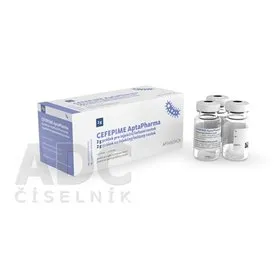
Table of Contents
- Package leaflet: Information for the user
- 1. What Cefepime AptaPharma is and what it is used for
- 2. Important information before using Cefepime AptaPharma
- 3. How to use Cefepime AptaPharma
- 4. Possible adverse reactions
- 5. How to store Cefepime AptaPharma
- 6. Contents of the pack and other information
- Information intended exclusively for healthcare professionals:
Package leaflet: Information for the user
Cefepime AptaPharma, 1 g, powder for solution for injection/infusion
Cefepime AptaPharma, 2 g, powder for solution for injection/infusion
Cefepimum
Please read all of this leaflet carefully before using this medicine, because it contains
important information for the patient.
- Keep this leaflet, as you may need to read it again.
- If you have any further questions, please ask your doctor, pharmacist or nurse.
- If you experience any adverse reactions, including any not listed in this leaflet, tell your doctor or pharmacist. See section 4.
Contents
- What Cefepime AptaPharma is and what it is used for
- What you need to know before using Cefepime AptaPharma
- How to use Cefepime AptaPharma
- Possible side effects
- How to store Cefepime AptaPharma
- Contents of the pack and other information
1. What Cefepime AptaPharma is and what it is used for
Cefepime AptaPharma is an antibiotic belonging to the cephalosporin group, which is part of the beta-lactam antibiotics.
This medicine is used to treat certain bacterial infections caused by microorganisms sensitive to cefepime.
2. Important information before using Cefepime AptaPharma
When not to use Cefepime AptaPharma
- If the patient is allergic to cefepime, other antibiotics from the cephalosporin group, or other beta-lactam antibiotics (e.g. penicillins, monobactams and carbapenems), or to arginine (listed in section 6).
Warnings and precautions
Before starting treatment with Cefepime AptaPharm, consult a doctor,
pharmacist or nurse.
Special precautions
- Encephalopathy (brain disorder) Treatment with this medicine may be associated with a risk of encephalopathy (confusion, altered consciousness, seizures or abnormal movements). If any of these symptoms occur, inform the doctor, pharmacist or nurse immediately. The likelihood of these symptoms is higher in cases of overdose or inadequate dose adjustment in patients with impaired kidney function (see sections 3 and 4).
- Allergic reactions
If an allergic reaction occurs during treatment, any symptoms of allergy (e.g. rash,
itching) should be reported immediately to the doctor.
If the patient previously experienced allergic reactions to antibiotics (cephalosporins or
beta-lactam antibiotics), inform the doctor.
Patients allergic to penicillin are at risk of allergic reactions (5% to 10% of cases).
Inform the doctor if the patient has asthma or a tendency towards allergies.
- Diarrhoea associated with Clostridioides difficile infection Diarrhoea occurring during antibiotic treatment or within several weeks after treatment ends should not be treated without medical consultation.
- Kidney function disorders If the patient has kidney problems, inform the doctor, as treatment adjustment may be necessary.
- Superinfections Treatment with cefepime may lead to secondary infections caused by other microorganisms. Inform the doctor if the patient develops another infection different from the one being treated.
Warnings
Inform the doctor:
- if the patient has impaired kidney function,
- if the patient has experienced an allergic reaction, especially to antibiotics,
- if the patient has ever been diagnosed with asthma,
- if the patient develops diarrhoea during treatment,
- if the patient develops an infection other than the one being treated. This medicine may cause falsely positive results in certain laboratory tests (urine glucose, Coombs test).
Cefepime AptaPharma and other medicines
Inform the doctor about all medicines currently used, recently used, or planned to be used by the patient, including over-the-counter medicines. This is important because some medicines should not be used with Cefepime AptaPharma. In particular, inform the doctor if the patient is taking:
- any other antibiotics, especially aminoglycosides (such as gentamicin) or diuretics (such as furosemide); in such cases, kidney function must be monitored;
- anticoagulant medicines (such as warfarin); their effect may be enhanced;
- certain types of bacteriostatic antibiotics, as they may interfere with the action of Cefepime AptaPharma.
Pregnancy, breastfeeding and fertility
If the patient is pregnant or breastfeeding, suspects she may be pregnant, or is planning to have a child, she should consult a doctor or pharmacist before using this medicine.
Pregnancy
There are no data on the use of cefepime in pregnant women. This medicine should be used during pregnancy only if absolutely necessary.
Breastfeeding
Small amounts of this medicine may pass into breast milk. Cefepime may be used during breastfeeding, but caution is advised. If the infant develops symptoms such as diarrhoea, rash or candidiasis (fungal infection caused by microscopic yeasts), breastfeeding should be discontinued, as these symptoms in the infant may be caused by this medicine.
Fertility
There are no data on the effect of this medicine on fertility.
Driving and operating machinery
This medicine may have a significant effect on the ability to drive and operate machinery due to some of the possible adverse effects (disturbances of consciousness, dizziness, confusion or hallucinations). Before driving or operating machinery, ensure how this medicine affects the patient.
3. How to use Cefepime AptaPharma
The doctor or nurse will decide the appropriate dose of the medicine to be given to an adult patient or a child, depending on the type and severity of infection and the patient's age. In infants and children, the dose is calculated according to body weight.
Recommended dose:
- Adults and children over 12 years of age weighing > 40 kg: 1 g twice daily up to 2 g two to three times daily.
- Children aged 2 months to 12 years weighing ≤ 40 kg: 50 mg/kg body weight three times daily. The dose should be adjusted in case of kidney problems.
Cefepime AptaPharma, 1g: This medicine is administered intravenously (intravenous administration iv.) or intramuscularly ( im. ).
Cefepime AptaPharma, 2g: This medicine is administered intravenously (intravenous administration iv. ).
Intravenous administration:
Before use, the medicine must be dissolved in water for injections or another compatible solvent.
Volume of solvent added and volume of the resulting solution prior to administration
| Fiolka | Volume of added solvent (mL) | Approximate available volume (mL) | Approximate concentration (mg/mL) |
| 1g iv. | 10.0 | 11.4 | 90 |
| 2g iv. | 10.0 | 12.8 | 160 |
After dissolving the powder, the resulting solution may be administered directly by slow injection (3 to 5 minutes) or via an infusion line. Alternatively, the solution may be added to a compatible infusion fluid and administered intravenously as an infusion over 30 minutes.
Intramuscular administration:
The medicinal product (1 g of cefepime) is dissolved in water for injections or in lidocaine hydrochloride solution at a concentration of 5 mg/mL (0.5%) or 10 mg/mL (1%).
Volume of added solvent and volume of the resulting solution prior to administration
| Fiolka | Volume of added solvent (mL) | Approximate available volume (mL) | Approximate concentration (mg/mL) |
| 1g im. | 3.0 | 4.4 | 230 |
Compatibility
This medicine is compatible with the following solvents and solutions: sodium chloride 9 mg/mL (0.9%) (with or without glucose 50 mg/mL (5%)), glucose 50 mg/mL (5%) or 100 mg/mL (10%), and Ringer's lactate solution.
This medicine may be administered simultaneously with other antibiotics; however, the use of the same syringe, the same infusion, or the same injection site is prohibited.
The medicine solution may change colour to yellowish-amber, but it can still be used, as this change does not affect efficacy.
Frequency of administration
The medicine should be administered 2 to 3 times daily.
Duration of treatment
To ensure effectiveness, the medicine must be taken regularly at the prescribed doses throughout the entire treatment period as directed by the physician.
The disappearance of fever or other symptoms does not mean complete recovery. If the patient feels tired, this is not caused by antibiotic treatment but rather by the infection itself.
Reducing the dose or discontinuing treatment will not affect this symptom and will delay recovery.
Use of a higher than recommended dose of Cefepime AptaPharma
As with all antibiotics in this therapeutic group, administration of this medicine, especially in cases of overdose, may carry a risk of encephalopathy, which may cause confusion, fluctuations in the level of consciousness, seizures, or abnormal movements. If any of these symptoms occur, a doctor or pharmacist should be notified immediately (see sections 2 and 4).
Missed dose of Cefepime AptaPharma
If the patient suspects that an injection or infusion was not administered, they should inform their doctor.
Discontinuation of Cefepime AptaPharma treatment
This medicine must be taken for the entire duration of treatment, even if the patient feels better after the first few doses.
If there are any further doubts regarding the use of this medicine, consult a doctor, pharmacist, or nurse.
4. Possible adverse reactions
Like all medicines, this medicine can cause adverse reactions, although not everyone will experience them.
Adult patients and children usually tolerate treatment with Cefepime AptaPharma well.
The adverse reactions that may occur during treatment are listed below by frequency of occurrence:
Very common (may occur in more than 1 in 10 people)
- Positive Coombs test (used to detect antibodies against red blood cells)
Common (may occur in up to 1 in 10 people)
- Decrease in number of red blood cells and/or hemoglobin concentration (anemia)
- Increase in number of certain white blood cells: leukocytes (eosinophilia)
- Diarrhea
- Extensive rash
- Reaction at infusion site
- Increased alkaline phosphatase activity (enzymes)
- Increased aminotransferase activity (liver enzymes)
- Increased blood bilirubin levels (hyperbilirubinemia)
- Prolonged blood clotting time (prolonged prothrombin time and activated partial thromboplastin time)
Uncommon (may occur in up to 1 in 100 people)
- Oral infection caused by certain microscopic fungi (oral candidiasis)
- Increase in number of certain white blood cells: leukocytes (leukopenia)
- Increase in number of certain white blood cells: neutrophils (neutropenia)
- Abnormally low platelet count (thrombocytopenia)
- Inflammation caused by a blood clot blocking a vein after intravenous administration (phlebitis and thrombophlebitis)
- Nausea, vomiting
- Itching (pruritus), urticaria, skin redness (erythema)
- Inflammation at infusion site
- Pain and inflammation at injection site (intravenous or intramuscular administration)
- Fever
- Increased kidney function markers (blood urea and/or creatinine levels)
Rare (may occur in up to 1 in 1,000 people)
- Infections caused by certain microscopic fungi (candidiasis)
- Allergic reactions (anaphylactic reactions)
- Fluid retention under the skin or mucous membranes (angioedema)
- Headache
- Tingling and prickling sensation (paresthesia)
- Breathing difficulties (dyspnea)
- Constipation
- Kidney failure
- Genital itching
- Chills
Very rare (may occur in fewer than 1 in 10,000 people)
- Vaginitis (vaginal infections)
- Severe generalized allergic reaction (severe discomfort with drop in blood pressure) (anaphylactic shock)
- Seizures, disturbances in taste perception (taste disturbances), dizziness
- Drop in blood pressure (hypotension)
- Increase in blood vessel diameter (vasodilation)
- Inflammation of the intestines (colitis)
- Inflammation of the intestine with diarrhea and/or abdominal pain (pseudomembranous colitis)
- Abdominal pain
- Oral mucosal ulcers
- Decreased blood phosphorus levels (hypophosphatemia)
Frequency not known (cannot be estimated from available data)
- Decreased number of red blood cells (aplastic anemia)
- Breakdown of red blood cells (hemolytic anemia)
- Marked decrease in number of certain white blood cells: neutrophils (agranulocytosis)
- Severe neurological disorders called encephalopathy with confusion, altered consciousness and alertness, seizures, abnormal movements, coma or hallucinations, particularly when high doses are used and/or in patients with impaired renal function, especially elderly patients (see sections 2 and 3)
- Risk of bleeding
- Severe skin disease called toxic epidermal necrolysis (blistering and peeling of the skin)
- Inflammatory skin redness accompanied by blisters and fever (Stevens-Johnson syndrome)
- Inflammatory skin redness (erythema multiforme)
- Kidney damage (toxic nephropathy)
- False positive urine glucose test results (false positive glucosuria)
Reporting of adverse reactions
If any adverse reactions occur, including any adverse reactions not listed in this leaflet, inform your doctor or pharmacist. Adverse reactions can be reported directly to the Department of Monitoring of Adverse Drug Reactions of the Office for Registration of Medicinal Products, Medical Devices and Biocidal Products
Al. Jerozolimskie 181C
02-222 Warsaw
Tel.: + 48 22 49 21 301
Fax: + 48 22 49 21 309
Website: https://smz.ezdrowie.gov.pl
Adverse reactions can also be reported to the marketing authorization holder. By reporting adverse reactions, more information on the safety of this medicine can be collected.
5. How to store Cefepime AptaPharma
Keep this medicine out of sight and reach of children.
Do not use this medicine after the expiry date stated on the carton and label following EXP.
The expiry date refers to the last day of the stated month.
There are no special temperature requirements for storing this medicine. Store the vial in its outer packaging to protect from light.
Information on storage and the time within which Cefepime AptaPharma must be used after reconstitution and preparation for administration is provided in the practical information for healthcare professionals (at the end of this leaflet).
Medicines must not be disposed of via wastewater or household waste. Ask your pharmacist how to dispose of medicines no longer required. These measures will help protect the environment.
6. Contents of the pack and other information
What Cefepime AptaPharma contains
- 1 g: the active substance is 1.19 g of cefepime hydrochloride monohydrate, equivalent to 1.0 g of cefepime.
- 2 g: the active substance is 2.38 g of cefepime hydrochloride monohydrate, equivalent to 2.0 g of cefepime.
- Other ingredient: arginine.
What Cefepime AptaPharma looks like and contents of the pack
Cefepime AptaPharma is a white or almost white crystalline powder for solution for
injection/infusion.
Cefepime AptaPharma 1 g
20 mL vials made of colourless type I glass, closed with a grey bromobutyl rubber stopper
with a 20 mm diameter and a salmon-coloured flip-off aluminium cap.
Cefepime AptaPharma 2 g
20 mL vials made of colourless type I glass, closed with a grey bromobutyl rubber stopper
with a 20 mm diameter and a brown flip-off aluminium cap.
This medicinal product is available in packs containing 1, 10 or 25 vials in a cardboard box.
Not all pack sizes may be marketed.
Marketing Authorisation Holder and Manufacturer
Marketing Authorisation Holder:
Apta Medica Internacional d.o.o.
Likozarjeva ulica 6
1000 Ljubljana
Slovenia
Tel.: 00386 51 615 015
e-mail: [email protected]
Manufacturer:
ACS Dobfar S.p.A.
Via Alessandro Fleming 2
37135 Verona
Italy
This medicinal product is authorised in the Member States of the European Economic Area under the following names:
Austria Cefepim AptaPharma 1 g Pulver zur Herstellung einer Injektions-/Infusionslösung
Cefepim AptaPharma 2 g Pulver zur Herstellung einer Injektions-/Infusionslösung
Bulgaria Цефепим АптаФарма 1 g прах за инжекционен / инфузионен разтвор
Цефепим АптаФарма 2 g прах за инжекционен / инфузионен разтвор
Croatia Cefepim AptaPharma 1 g prašak za otopinu za injekciju/infuziju
Cefepim AptaPharma 2 g prašak za otopinu za injekciju/infuziju
Cyprus Cefepime AptaPharma 1g powder for solution for injection/infusion
Cefepime AptaPharma 2g powder for solution for injection/infusion
Czech Republic Cefepime AptaPharma
Malta Cefepime AptaPharma 1g powder for solution for injection/infusion
Cefepime AptaPharma 2g powder for solution for injection/infusion
Poland Cefepime AptaPharma
Romania Cefepima AptaPharma 1 g pulbere pentru soluție injectabilă/perfuzabilă
Cefepima AptaPharma 2 g pulbere pentru soluție injectabilă/perfuzabilă
Slovakia Cefepime AptaPharma 1 g prášok na injekčný/infúzny roztok
Cefepime AptaPharma 2 g prášok na injekčný/infúzny roztok
Slovenia Cefepim AptaPharma 1 g prašek za raztopino za injiciranje/infundiranje
Cefepim AptaPharma 2 g prašek za raztopino za injiciranje/infundiranje
Hungary Cefepim AptaPharma 1 g por oldatos injekcióhoz vagy infúzióhoz
Cefepim AptaPharma 2 g por oldatos injekcióhoz vagy infúzióhoz
Information intended exclusively for healthcare professionals:
Dosage
Adult patients with normal renal function:
The usual recommended doses as monotherapy or in combination with other drugs are as follows:
| Type of infection | Single dose size, route of administration | Dosing frequency |
| Community-acquired respiratory tract infections, Uncomplicated pyelonephritis | 1 g iv. or im. | 2 times daily |
| Severe infections: sepsis/bacteremia, pneumonia, complicated urinary tract infections, biliary tract infections | 2 g iv. | 2 times daily |
| Febrile states in neutropenic patients* | 2 g iv. | 2 to 3 times daily |
| Severe Pseudomonas infections | 2 g iv. | 3 times daily |
* The dose of 2 g three times daily was used exclusively in monotherapy.
Treatment usually lasts from 7 to 10 days; however, in more severe infections, it may be longer.
Empirical treatment of febrile episodes in neutropenic patients usually lasts 7 days or until
resolution of neutropenia.
Patients with renal function impairment:
Cefepime is eliminated exclusively via the kidneys by glomerular filtration. Therefore, in patients
with impaired renal function (glomerular filtration rate < 50 mL/min), dosage adjustment is required
to compensate for reduced renal elimination. To determine the maintenance dose, glomerular
filtration rate should be assessed.
Dosage adjustment criteria for patients with renal function impairment are described in the table
below:
| Creatinine clearance (mL/min) | ||||
| Normal dose | 50 – 30 | 29 – 11 | ≤ 10 | Hemodialysis |
| 1 g, twice daily | 1 g, once daily | 500 mg, once daily | 250 mg, once daily | Loading dose: 1 g, then 500 mg once daily* |
| 2 g, twice daily | 2 g, once daily | 1 g, once daily | 500 mg, once daily | Loading dose: 1 g, then 500 mg once daily* |
| 2 g, three times daily | 1 g, three times daily | 1 g, twice daily | 1 g, once daily | Loading dose: 1 g, then 500 mg once daily* |
| 50 mg/kg body weight, three times daily | 25 mg/kg body weight, three times daily | 25 mg/kg body weight, twice daily | 25 mg/kg body weight, once daily | |
* On days when dialysis is performed, the drug should be administered after completion of dialysis.
If only serum creatinine concentration is available, the Cockcroft and Gault formula below may be used to estimate creatinine clearance. Serum creatinine concentration should reflect renal function in a steady state:
body weight (in kg) x (140 - age [in years])
men: CrCl = ---------------------------------------------------------
72 x serum creatinine concentration (in mg/dL)
women: CrCl = 0.85 x creatinine clearance calculated in men
In patients undergoing hemodialysis, the pharmacokinetic properties of cefepime indicate the need for dose reduction. These patients should receive a loading dose of 1 g on the first day of treatment, followed by 500 mg on subsequent days. Approximately 68% of the total amount of cefepime present in the body is eliminated within 3 hours of dialysis. On dialysis days, cefepime should be administered after completion of dialysis. Whenever possible, cefepime should be administered at the same time each day.
For patients undergoing continuous ambulatory peritoneal dialysis, cefepime may be administered at doses recommended for patients with normal renal function, but every 48 hours.
Children and adolescents
Adolescents above 12 years of age with body weight > 40 kg
The recommended dosage in monotherapy or in combination with other drugs is usually the same as the dosage in adults. The recommended duration of treatment is also the same as in adults.
Children aged 2 months to 12 years with body weight ≤ 40 kg:
Dose of 50 mg/kg body weight, administered iv. three times daily. Available clinical data in infants and children do not allow recommendation of cefepime for use in monotherapy.
The duration of treatment is the same as in adults and usually lasts from 7 to 10 days, although longer treatment may be necessary in cases of more severe infections. In the treatment of febrile episodes in patients with neutropenia, the duration of treatment should usually not be shorter than 7 days or until resolution of neutropenia.
Administration method
Intravenous administration:
Cefepime must be dissolved in water for injections or another compatible solvent for parenteral preparations (see section on compatibility below).
Reconstitution volume prior to administration
| Vial and route of administration | Volume of added solvent (mL) | Approximate available volume (mL) | Approximate concentration (mg/mL) |
| 1 g iv. | 10.0 | 11.4 | 90 |
| 2 g iv. | 10.0 | 12.8 | 160 |
Solutions for intravenous administration after reconstitution may be given directly as a slow
injection iv. (3 to 5 minutes) using a syringe or infusion line, or added to a compatible
infusion solution and administered as a 30-minute infusion.
Intramuscular administration:
Dissolve 1 g of cefepime in water for injection or in 5 mg/mL (0.5%) or 10 mg/mL (1%)
lidocaine hydrochloride solution.
Volume of added solvent and volume of resulting solution prior to administration
| Flacon | Volume of added solvent (mL) | Approximate available volume (mL) | Approximate concentration (mg/mL) |
| 1g im. | 3.0 | 4.4 | 230 |
Compatibility:
Cefepime is compatible with the following diluents and solutions: sodium chloride 9 mg/mL (0.9%) (with or without glucose 50 mg/mL (5%)), glucose 50 mg/mL (5%) or 100 mg/mL (10%), and Ringer's lactate solution.
Cefepime may be administered simultaneously with other antibiotics. However, the use of the same syringe, the same infusion line, or the same injection site is prohibited.
Visual inspection
After reconstitution, the solution is clear and free from visible particles.
Parenteral medicinal products should be inspected visually before administration to ensure they do not contain particulate matter. The medicinal product must not be used if particulate matter is observed.
As with other cephalosporins, the reconstituted solution may turn yellowish-amber in colour, which does not indicate loss of potency.
The reconstituted product is intended for single use only.
Any unused medicinal product or waste material should be disposed of in accordance with local regulations.
Shelf life
For intravenous, intramuscular injections or as an infusion (after addition to a compatible infusion fluid).
Chemical and physical stability has been demonstrated for 7 days after reconstitution when stored at 2°C - 8°C (in a refrigerator) and for 24 hours when stored below 25°C.
From a microbiological standpoint, the medicinal product should be used immediately. If not used immediately, the responsibility for storage conditions and duration prior to use lies with the user. The storage time should not exceed 24 hours at 2°C - 8°C, unless reconstitution was carried out under controlled and validated aseptic conditions.