Cefepime accord
Poland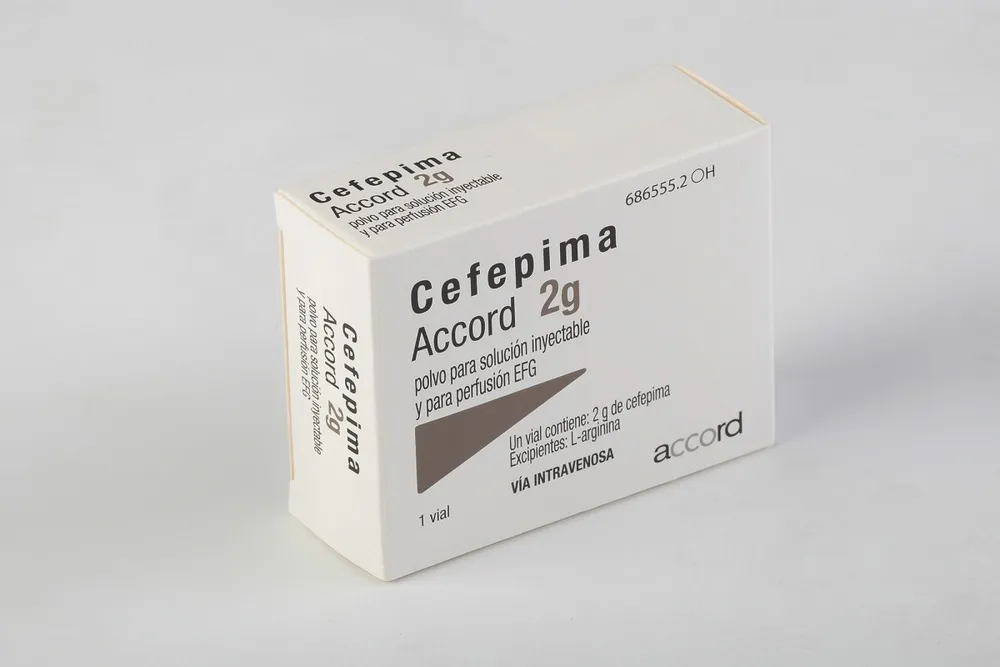
Table of Contents
- Package leaflet: Information for the user
- 1. What Cefepime Accord is and what it is used for
- 2. Important information before using Cefepime Accord
- 3. How to use Cefepime Accord
- 4. Possible adverse reactions
- 5. How to store Cefepime Accord
- 6. Contents of the pack and other information
- Information intended exclusively for professional medical personnel:
Package leaflet: Information for the user
Cefepime Accord, 2 g, powder for solution for injection/infusion
Cefepimum
Please read carefully this leaflet before using this medicine, as it contains
important information for the patient.
Keep this leaflet, as you may need to read it again.
If you have any further questions, please consult your doctor, pharmacist or nurse.
This medicine has been prescribed for a specific individual and should not be passed on to others. It may harm other people, even if their symptoms are the same.
If you experience any adverse reactions, including any not listed in this leaflet, inform your doctor. See section 4.
Contents of the leaflet
- What Cefepime Accord is and what it is used for
- Important information before using Cefepime Accord
- How to use Cefepime Accord
- Possible side effects
- How to store Cefepime Accord
- Contents of the pack and other information
1. What Cefepime Accord is and what it is used for
Cefepime Accord is an antibiotic used in adults and children. It works by killing bacteria that cause infections. It belongs to a group of antibiotics known as fourth-generation cephalosporins.
Cefepime Accord is used to treat the following infections:
In adults and adolescents over 12 years of age:
- lung infections (pneumonia),
- complicated (severe) urinary tract infections,
- complicated (severe) intra-abdominal infections,
- peritonitis (inflammation of the abdominal lining) associated with dialysis in patients undergoing continuous ambulatory peritoneal dialysis (CAPD).
In adults:
- acute infections of the gallbladder.
In children aged 2 months to 12 years with body weight below 40 kg:
- complicated (severe) urinary tract infections,
- lung infections (pneumonia),
- bacterial meningitis.
Cefepime is also used in adults and children over 2 months of age:
for the treatment of febrile episodes of unknown origin in patients with decreased immunity (when bacterial infection is suspected in patients with moderate to severe neutropenia). Combination therapy with another antibiotic is recommended if necessary,
for the treatment of bloodstream bacterial infection (bacteraemia).
2. Important information before using Cefepime Accord
When not to use Cefepime Accord
- if the patient is allergic to cefepime or to any of the other ingredients of this medicine (listed in section 6);
- if the patient has ever experienced a severe allergic reaction (hypersensitivity reaction) to another type of beta-lactam antibiotic (e.g. penicillins, monobactams, carbapenems);
- if the patient has increased blood acidity (acidosis).
Please inform your doctor before starting treatment with Cefepime Accord if you think any of the above applies to you. In such cases, Cefepime Accord must not be administered.
Warnings and precautions
Tell your doctor or healthcare professional:
- if the patient has ever had an allergic reaction to cefepime or any other beta-lactam antibiotic, or to any other medicine; if an allergic reaction occurs during treatment with cefepime, contact a doctor immediately, as the reaction may be serious; in such cases, the doctor will immediately discontinue the treatment;
- if the patient has ever been diagnosed with asthma or has a tendency towards allergies;
- if the patient has kidney function disorders; the dose of cefepime may need to be adjusted;
- if the patient develops severe and persistent diarrhoea during treatment; this may be a sign of inflammation of the bowel and urgent medical attention may be required;
- if the patient suspects a new infection has developed during prolonged treatment with Cefepime Accord; this may be an infection caused by microorganisms resistant to cefepime, and discontinuation of the medicine may be necessary;
- if the doctor has ordered blood or urine tests, the patient should inform the doctor that they are taking Cefepime Accord, as this medicine may affect the results of certain tests.
Children
Special dosage guidelines apply to infants and children (see section 3).
Elderly patients
Dosage in elderly patients should be carefully adjusted, taking into account renal function, as these patients are more likely to have impaired kidney function (see section 3).
Cefepime Accord and other medicines
Tell your doctor or pharmacist about all medicines the patient is currently taking or has recently taken, as well as any medicines the patient plans to take.
Especially inform your doctor about the following medicines:
- other antibiotics, particularly aminoglycosides (such as gentamicin), or "water pills" (diuretics, such as furosemide) – in such cases, kidney function should be monitored;
- anticoagulant medicines (coumarin derivatives, such as warfarin) – their effect may be enhanced;
- certain types of antibiotics (bacteriostatic antibiotics) – these may interfere with the action of cefepime.
Pregnancy, breastfeeding and fertility
-
If the patient is pregnant or breastfeeding, suspects she may be pregnant, or is planning to become pregnant, she should consult a doctor or pharmacist before using this medicine.
-
Cefepime Accord should be prescribed with particular caution to pregnant women due to lack of data on its use in this patient group. If the patient becomes pregnant during treatment with Cefepime Accord, she should inform her doctor.
-
Cefepime passes into human milk in very small amounts; therefore, caution should be exercised when administering this medicine to breastfeeding women.
-
There are no data on the effect of cefepime on fertility in humans.
Driving and operating machinery
No studies have been conducted on the effects of cefepime on the ability to drive or operate machinery. However, possible adverse effects such as altered consciousness, dizziness, confusion, or hallucinations may affect the ability to drive and operate machinery.
3. How to use Cefepime Accord
Method of administration:
Cefepime Accord is usually administered by a doctor or nurse. It is given as an
intravenous infusion (drip) or by injection directly into a vein.
Recommended dose:
The dose of Cefepime Accord will be determined by the doctor and depends on: severity and type of infection,
concomitant use of other antibiotics, body weight and age, and the patient's kidney function.
The duration of treatment is usually 7 to 10 days.
Adults and adolescents with body weight above 40 kg (approximately over 12 years of age)
The usual dose in adults is 4 g per day, divided into two doses (2 g every 12 hours).
In cases of very severe infections, the dose may be increased to 6 g per day (2 g every 8 hours).
Infants (over 2 months of age) and children with body weight up to 40 kg (approximately up to 12 years of age)
The recommended dose is 50 mg of cefepime per kilogram of body weight , administered every 12 hours.
In cases of very severe infections or, for example, bacterial meningitis, the same dose may be given every 8 hours.
Infants from 1 month to below 2 months of age
The recommended dose is 30 mg of cefepime per kilogram of body weight , administered every 12 hours
(or every 8 hours in cases of very severe infections).
Patients with impaired kidney function
If the patient has impaired kidney function, the dose of the medicine may be adjusted by the doctor.
Patients should inform their doctor if they believe this applies to them.
If you have any further doubts regarding the use of this medicine, consult your
doctor, pharmacist, or nurse.
Use of a higher than recommended dose of Cefepime Accord
In cases of severe overdose, especially in patients with impaired kidney function,
haemodialysis may be helpful in removing cefepime from the body (peritoneal dialysis is not beneficial).
Accidental overdose has occurred when patients with impaired kidney function received high doses of cefepime.
If you have any further doubts regarding the use of this medicine, consult your
doctor, pharmacist, or nurse.
Missed dose of Cefepime Accord
If the patient suspects that a dose of Cefepime Accord has been missed, this should be reported to the doctor.
If you have any further doubts regarding the use of this medicine, consult your
doctor, pharmacist, or nurse.
4. Possible adverse reactions
Like all medicines, this medicine can cause adverse reactions, although not everyone will experience them.
Situations to be aware of
A small number of people taking Cefepime Accord have shown an allergic reaction or skin reaction, which
can be severe. Symptoms of such reactions include:
- Severe allergic reaction – signs include raised, itchy rash, swelling , sometimes of the face or lips, which may cause difficulty breathing ,
- Skin rash , which may be accompanied by blisters , appearing as small targets (dark spots in the centre, surrounded by a lighter area and a dark ring along the edges),
- Extensive rash with blisters and peeling skin (these may be symptoms of Stevens-Johnson syndrome or toxic epidermal necrolysis [Lyell's syndrome]),
- Fungal infections: in rare cases, taking medicines such as Cefepime Accord may encourage the growth of yeast (Candida) in the body, which may lead to fungal infections (such as thrush); the likelihood of this adverse reaction is higher when Cefepime Accord is taken for a prolonged period. If the patient experiences any of these symptoms, they should contact their doctor or nurse immediately.
Very common adverse reactions observed in blood test results:
May occur more than 1 in 10 people :
- positive Coombs test
Common adverse reactions
May occur in no more than 1 in 10 people :
- pain, swelling or redness along the vein
- diarrhoea
- rash Inform the doctor if any of the above symptoms affect the patient.
Common adverse reactions observed in blood test results:
- increased activity of substances ( enzymes ) produced by the liver
- elevated bilirubin levels (a substance produced by the liver)
- change in the number of white blood cells ( eosinophilia )
- reduced number of red blood cells ( anaemia )
Uncommon adverse reactions
May occur in no more than 1 in 100 people :
- inflammation of the colon (large intestine) causing diarrhoea, usually with blood and mucus, abdominal pain
- oral thrush, vaginal infections
- increased body temperature (fever)
- skin redness, urticaria, itching
- nausea, vomiting
- headache Inform the doctor if the patient observes any of the above symptoms.
Uncommon adverse reactions observed in blood test results:
- reduced number of certain types of blood cells (leukopenia, neutropenia, thrombocytopenia)
- increased blood urea nitrogen and creatinine levels.
Rare adverse reactions
May occur in no more than 1 in 1000 people :
- allergic reactions
- fungal infections (candidiasis)
- seizures, dizziness, taste disturbances, skin tingling and numbness
- shortness of breath
- abdominal pain, constipation
- chills
- swelling of deeper layers of skin
- joint pain
- tinnitus
Other adverse reactions with unknown frequency (including isolated cases)
- severe allergic reactions
- coma, disturbances in consciousness or difficulty thinking, confusion and hallucinations
- false positive result in urine glucose test
- digestive problems
- kidney function disorders
- bleeding
Adverse reactions observed in blood test results:
- change in blood cell count (agranulocytosis)
- excessive breakdown of red blood cells (haemolytic anaemia)
Reporting of adverse reactions
If any adverse reactions occur, including any not listed
in this leaflet, the patient should inform their doctor, pharmacist or nurse. Adverse reactions
can be reported directly to the Department of Monitoring Adverse Drug Reactions of the Office for Registration of Medicinal Products, Medical Devices and Biocidal Products
Al. Jerozolimskie 181C
02-222 Warsaw
Tel.: + 48 22 49 21 301
Fax: + 48 22 49 21 309
Website: https://smz.ezdrowie.gov.pl
Adverse reactions can also be reported to the marketing authorisation holder.
Reporting adverse reactions helps to provide more information on the safety of the medicine.
5. How to store Cefepime Accord
Keep this medicine out of sight and reach of children.
Do not use this medicine after the expiry date stated on the carton and label after EXP. The expiry date refers to the last day of the stated month.
Do not store above 30 °C. Keep in the original packaging to protect from light.
Storage of solutions: see section “Information intended solely for medical or healthcare personnel” at the end of this leaflet.
Medicines must not be disposed of via wastewater or household waste. Ask your pharmacist how to dispose of medicines no longer required. These measures help protect the environment.
6. Contents of the pack and other information
What Cefepime Accord contains
- The active substance is cefepime in the form of cefepime dihydrochloride monohydrate (2.38 g).
- The other ingredient is L-arginine (used for pH adjustment).
What Cefepime Accord looks like and contents of the pack
Cefepime Accord is a powder for solution for injection/infusion, white to pale yellow in colour, contained in 17 ml vials made of colourless glass of type III, with a chlorobutyl rubber stopper type I, and an aluminium flip-off cap, packed in a cardboard box.
Pack sizes: 1, 5, 10 or 50 vials
Not all pack sizes may be marketed.
Marketing Authorisation Holder
Accord Healthcare Polska Sp. z o.o.
Taśmowa Street 7
02-677 Warsaw
Tel: +48 22 577 28 00
Manufacturer
Laboratorio Farmaceutico CT. S.r.l.
Via Dante Alighieri, 71
18038 Sanremo
Italy
This medicinal product is authorised in the Member States of the European Economic Area under the following names:
| Member State Name | Medicinal Product Name |
| Austria | Cefepim Accord 1 g / 2 g Powder for solution for injection/infusion |
| Belgium | Cefepime Accord 1 g / 2 g powder for solution for injection/infusion, poudre pour solution injectable/pour perfusion, Powder for solution for injection/infusion |
| Croatia | Cefepim Accord 1 g (2 g) powder for solution for injection/infusion |
| Czech Republic | Cefepime Accord |
| France | CEFEPIME ACCORD 1 g, poudre pour solution injectable/pour perfusion (IM/IV) CEFEPIME ACCORD 2 g, poudre pour solution injectable/pour perfusion (IV) |
| Spain | Cefepima Accord 1 g / 2 g powder for injectable solution and for perfusion EFG |
| Germany | Cefepim Accord 1 g Powder for solution for injection/infusion Cefepim Accord 2 g Powder for solution for injection/infusion |
| Poland | Cefepime Accord |
| Portugal | Cefepima Accord |
| Slovenia | Cefepim Accord 1 g and 2 g powder for solution for injection/infusion |
Information intended exclusively for professional medical personnel:
After reconstitution, the solution is clear, colorless to amber, and free of particulate matter.
Storage conditions after reconstitution:
Chemical and physical stability of the product has been demonstrated as follows:
Cefepime Accord 2 g, when dissolved in Water for Injections or 0.9% sodium chloride, may be stored
for up to 12 hours if kept at 2–8°C.
From a microbiological point of view, the product should be used immediately. If the solution is not used immediately, the person administering the medicinal product is responsible for the storage duration and conditions after opening.
Storage conditions after dilution:
Diluted infusion solutions or solutions for intramuscular administration must be used immediately.
Intravenous administration:
Cefepime Accord 2 g should be dissolved in 10 ml of Water for Injections, 5% dextrose solution, or
0.9% sodium chloride solution. The resulting solution should be injected directly into the vein (over 3 to 5 minutes) or into an intravenous infusion line when the patient is receiving compatible intravenous fluid.
The table below provides reconstitution instructions:
| Dose and route of administration | Volume of solvent added [ml] | Volume of reconstituted solution [ml] | Approximate concentration [mg/ml] |
| 2 g intravenously | 10.0 | 12.5 | 160 |
Intravenous infusion
Cefepime Accord 2 g, after reconstitution, may be administered through an infusion line or directly into an infusion fluid. The solution should be given over approximately 30 minutes.
Cefepime is compatible with the following solutions: 0.9% sodium chloride solution (with or without 5% dextrose solution), 5% Ringer's solution with lactate (with or without 5% dext游戏副本