Cephalexin tzf
Poland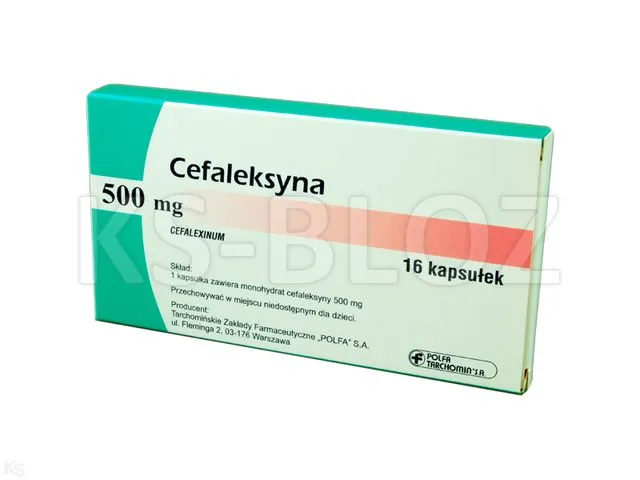
Table of Contents
Package leaflet: information for the patient
CEFALEKSYNA TZF, 500 mg, hard capsules
Cefalexinum
Please read all of this leaflet carefully before taking this medicine, because it contains
important information for you.
- Keep this leaflet as you may need to read it again.
- If you have any further questions, please ask your doctor or nurse.
- This medicine has been prescribed for a specific individual. Do not pass it on to others. It may harm someone else even if their symptoms are the same as yours.
- If you experience any adverse effects, including any not listed in this leaflet, tell your doctor or nurse. See section 4.
Contents of the leaflet
- What Cefaleksyna TZF is and what it is used for
- Important information before taking Cefaleksyna TZF
- How to take Cefaleksyna TZF
- Possible side effects
- How to store Cefaleksyna TZF
- Contents of the pack and other information
1. What Cefaleksyna TZF is and what it is used for
Cefaleksyna TZF contains cefalexin as the active substance, which is an oral, semi-synthetic antibiotic belonging to the cephalosporin group. Cephalosporins have a bactericidal effect.
Cefaleksyna TZF is indicated for the treatment of the following infections caused by susceptible bacterial strains:
- respiratory tract infections;
- skin and soft tissue infections;
- urinary and genital system infections.
2. Important information before using Cefaleksyna TZF
When not to use Cefaleksyna TZF
Do not use this medicine if the patient is allergic (hypersensitive) to cefalexin, other cephalosporins (similar antibiotics), or to any of the other ingredients of this medicine (listed in section 6).
Warnings and precautions
If any of the following situations apply to the patient, inform the doctor before taking this medicine:
- Previous allergic reaction to any antibiotic;
- Kidney disease.
If the patient experiences any of the following symptoms while taking this medicine, seek immediate medical advice:
- Severe hypersensitivity reactions such as maculopapular rash, urticaria, petechiae, laryngeal edema, or bronchospasm; in such cases, immediate medical attention is required and the doctor will initiate appropriate treatment;
- Prolonged diarrhea;
- Signs of a new infection caused by bacteria resistant to cefalexin or by fungi (superinfection), especially during prolonged antibiotic use.
Cefaleksyna TZF and other medicines
Inform the doctor about all medicines currently used, recently used, or planned for use.
In particular, inform the doctor or pharmacist if the patient is taking:
- probenecid (used in the treatment of gout).
Effect of Cefaleksyna TZF on laboratory test results
If the patient is using Cefaleksyna TZF and is scheduled for blood or urine tests, inform the doctor, as this medicine may alter the results of certain laboratory tests.
Pregnancy and breastfeeding
If the patient is pregnant or breastfeeding, suspects she may be pregnant, or is planning to become pregnant, she should consult a doctor before using this medicine.
Cefaleksyna TZF may be used during pregnancy only if the doctor considers it absolutely necessary.
Caution should be exercised when using Cefaleksyna TZF in breastfeeding women, as cefalexin passes into breast milk.
Driving and operating machinery
The effect of cefalexin on the ability to drive and operate machinery is unknown.
3. How to use Cefaleksyna TZF
Cefaleksyna TZF should always be used as directed by the physician. If in doubt,
consult a doctor or pharmacist.
Adults and children over 12 years of age
The usual dose is 1 g to 4 g per day, administered in divided doses.
For moderate and uncomplicated urinary tract infections, streptococcal tonsillitis, and skin and soft
tissue infections, the usual daily dose is 250 mg every 6 hours or 500 mg every 12 hours.
For treatment of more severe infections or infections caused by microorganisms with intermediate
sensitivity to the antibiotic, the physician may prescribe higher doses of the drug.
Children under 12 years of age
Cefalexin should be administered at doses of 25 to 50 mg/kg body weight per day, in divided doses,
usually every 12 hours.
In severe infections, the physician may prescribe a double dose of cefalexin.
Elderly patients
In elderly patients with normal renal function, dosage adjustment is not necessary.
If you feel the medicine is too strong or too weak in effect, consult your doctor.
Duration of treatment
The duration of treatment depends on the severity and type of infection.
The physician will determine the appropriate treatment duration, which should be strictly followed.
Method of administration
Capsules should be taken orally with a small amount of water, regardless of meals.
Use of a higher than recommended dose of Cefaleksyna TZF
Symptoms of overdose may include: nausea, vomiting, epigastric discomfort,
diarrhea, and hematuria. Appropriate medical treatment may be necessary.
If a higher than recommended dose has been taken, contact a doctor immediately or go to the nearest
hospital emergency department. Bring the medicine in its original packaging so that medical staff
can clearly identify which drug was taken.
Missed dose of Cefaleksyna TZF
If a dose is missed, take the medicine as soon as you remember.
If it is almost time for the next dose, skip the missed dose and take the next dose at the scheduled
time.
Do not take a double dose to make up for a missed dose.
Discontinuing treatment with Cefaleksyna TZF
It is important to use the medicine exactly as prescribed for the full course of treatment. Do not stop
treatment early just because you feel better. If treatment is stopped too soon, the infection may
return.
If you feel worse during treatment or do not feel well after completing the prescribed course of
treatment, consult your doctor.
If you have any further doubts about using this medicine, consult your doctor or pharmacist.
4. Possible adverse reactions
Like all medicines, this medicine can cause adverse reactions, although not everyone experiences them.
The frequency of the possible adverse reactions listed below is defined as follows:
- very common: (affects more than 1 in 10 people);
- common: (affects 1 to 10 in 100 people);
- uncommon: (affects 1 to 10 in 1,000 people);
- rare: (affects 1 to 10 in 10,000 people);
- very rare: (affects less than 1 in 10,000 people);
- not known: (frequency cannot be estimated from the available data).
If any of the following severe adverse symptoms occur, stop taking the medicine immediately and inform your doctor or go to the nearest hospital emergency department without delay. These symptoms usually occur rarely but may be life-threatening.
- swelling of the face, lips, tongue, or throat (angioedema);
- shortness of breath, rash, wheezing, and drop in blood pressure (anaphylactic reaction);
- itchy spots or rash on the hands and feet, or severe widespread rash with blisters (erythema multiforme, Stevens-Johnson syndrome);
- fever, sore throat, and joint pain accompanied by severe skin peeling, blistering, and red rash (toxic epidermal necrolysis);
- watery or bloody diarrhoea (may be a sign of severe colitis). Other adverse reactions that may occur during treatment with Cefalexin TZF
Occurring commonly
- nausea and diarrhoea.
Occurring uncommonly
- increase in number of certain types of white blood cells;
- rash, urticaria;
- changes in blood test results performed to monitor liver function.
Occurring rarely
- itching of genital organs and anus, vaginal inflammation;
- blood-related changes: reduction in number of various types of blood cells (manifesting as new infections or tendency to bruising or bleeding), increase in number of small blood cells essential for blood clotting; haemolytic anaemia (anaemia caused by destruction of red blood cells, may be very severe);
- headache, dizziness;
- abdominal pain, vomiting, indigestion;
- liver inflammation, yellowing of the skin and eyes (jaundice);
- kidney inflammation;
- fatigue.
Occurring with frequency not known
- fungal vaginal infections (caused by yeasts);
- hallucinations, agitation, disorientation;
- joint pain, arthritis;
- fever;
- changes in certain blood or urine test results (positive direct Coombs test; false positive urine glucose tests).
Reporting of adverse reactions
If any adverse reactions occur, including any not listed in this leaflet, inform your doctor, pharmacist, or nurse. Adverse reactions can be reported directly to the Department of Monitoring Adverse Drug Reactions of the Office for Registration of Medicinal Products, Medical Devices and Biocidal Products {current address, telephone and fax number of the above Department}
e-mail: [email protected]
Reporting adverse reactions helps to provide more information on the safety of this medicine.
5. How to store Cefaleksyna TZF
Keep this medicine out of the sight and reach of children.
Store below 25 °C. Keep in the original packaging to protect from light and moisture.
Do not use this medicine after the expiry date (EXP) stated on the packaging. The expiry date refers to the last day of the specified month.
Medicines must not be disposed of via wastewater or household waste. Ask your pharmacist how to dispose of medicines no longer required. These measures help protect the environment.
6. Contents of the packaging and other information
What Cefaleksyna TZF contains
The active substance is cefalexin in the form of cefalexin monohydrate.
One capsule contains 500 mg of cefalexin.
The other ingredients are: magnesium stearate, talc.
Capsule composition:
body – titanium dioxide (E 171), yellow iron oxide (E 172), gelatin;
cap – yellow iron oxide (E 172), indigotine (E 132), titanium dioxide (E 171), gelatin.
What Cefaleksyna TZF looks like and contents of the packaging
The capsule cap is green, the body is cream-coloured.
Packaging
16 hard capsules
Marketing Authorisation Holder and Manufacturer
Tarchomińskie Zakłady Farmaceutyczne „Polfa” Spółka Akcyjna
ul. A. Fleminga 2
03-176 Warszawa
Telephone number: (22) 811-18-14
For further information, please contact the representative of the Marketing Authorisation Holder.