Castagnus
Poland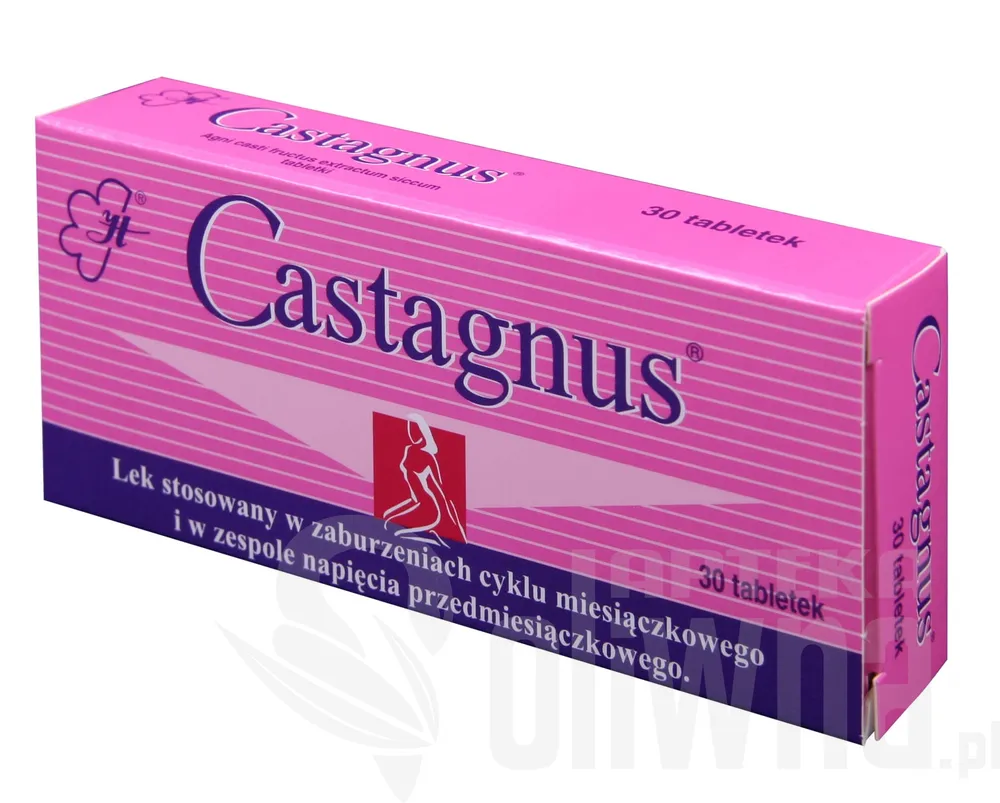
Table of Contents
Package leaflet: Information for the patient
Castagnus
Agni casti fructus extractum siccum
45 mg, tablets
Please read all of this leaflet carefully before taking this medicine, because
it contains important information for the patient.
This medicine should always be used exactly as described in this patient leaflet or
as directed by a doctor or pharmacist.
- Keep this leaflet so that you can read it again if necessary.
- If you need advice or further information, please consult your pharmacist.
- If you experience any adverse reactions, including any possible adverse reactions not listed in this leaflet, inform your doctor or pharmacist. See section 4.
- If there is no improvement after 90 days of treatment, or if you feel worse, consult your doctor.
Contents of the leaflet
- What Castagnus is and what it is used for
- Important information before taking Castagnus
- How to take Castagnus
- Possible side effects
- How to store Castagnus
- Contents of the pack and other information
1. What Castagnus is and what it is used for
Castagnus is a traditional herbal medicinal product used for the relief of mild symptoms
associated with premenstrual syndrome (premenstrual tension syndrome), i.e. symptoms
occurring shortly before the onset of menstruation, such as breast pain and breast
tenderness, emotional disturbances, migraine-type headaches, and swelling of the face,
hands and feet.
These indications are based solely on long-standing use.
If there is no improvement after 90 days of treatment, or if you feel worse, consult your doctor.
2. Important information before using Castagnus
When not to use Castagnus:
- if the patient is allergic to the active substance or to any of the other ingredients of this medicine (listed in section 6)
- do not use during pregnancy and breastfeeding
- do not use in individuals under 18 years of age
Warnings and precautions
Before starting treatment with Castagnus, consult your doctor or pharmacist.
Patients who have had or currently have estrogen-dependent tumors should consult their doctor before using this medicine.
Patients taking medications belonging to the group of dopamine receptor agonists or antagonists or estrogens should consult their doctor before using this medicine.
Use in children and adolescents under 18 years of age is not recommended due to lack of adequate data.
If symptoms worsen during treatment, consult your doctor.
It is suggested that Vitex agnus-castus extract affects the hypothalamic-pituitary axis; therefore, patients with pituitary gland disorders should consult their doctor before using this medicine.
In cases of prolactin-secreting pituitary tumors (prolactinomas), the use of Vitex agnus-castus fruit preparations may mask tumor symptoms.
Castagnus with other medicines
Inform your doctor or pharmacist about all medicines currently used or recently taken, as well as any medicines planned for future use.
Due to the possible dopaminergic and estrogenic activity of Vitex agnus-castus fruit, interactions with drugs acting on dopamine or estrogen receptors cannot be excluded (e.g. antipsychotics, anti-Parkinson drugs, hormone replacement therapy, oral contraceptives, metoclopramide, bromocriptine).
Pregnancy, breastfeeding, and effects on fertility
If the patient is pregnant or breastfeeding, suspects she may be pregnant, or is planning to become pregnant, she should consult her doctor or pharmacist before using this medicine.
Pregnancy
This medicine should not be used during pregnancy.
Breastfeeding
Preclinical reproductive studies indicate that extracts from Vitex agnus-castus fruits may affect lactation. Use during breastfeeding is not recommended.
Fertility
The effect on fertility is unknown.
Driving and operating machinery
No studies have been conducted regarding the influence of Castagnus on the ability to drive vehicles or operate machinery.
Castagnus contains monohydrate lactose
If the patient has been previously diagnosed with intolerance to certain sugars, the patient should consult their doctor before using this medicine.
3. How to use Castagnus
This medicine should always be taken exactly as described in the patient leaflet, or as advised by a doctor or pharmacist. If in doubt, consult a doctor or pharmacist.
Dosage
Adult women: 1 tablet once daily.
The medicine should be taken orally in the morning.
Administration method
The medicine is for oral use.
Children and adolescents
Do not use this medicine in individuals under 18 years of age.
Taking more Castagnus than recommended
Do not take more than the recommended dose.
In case of overdose, consult a doctor immediately.
Missed dose of Castagnus
Take the next dose as scheduled. Do not take a double dose to make up for a missed dose.
Stopping treatment with Castagnus
If you have any further questions about the use of this medicine, consult your doctor or pharmacist.
4. Possible adverse reactions
Like all medicines, this medicine can cause adverse reactions, although not everyone will experience them.
Possible adverse reactions of the medicine are presented according to organ systems as per MedDRA classification and frequency of occurrence: unknown (cannot be estimated based on available data).
The following may occur during treatment with Castagnus:
Immune system disorders – severe allergic reactions with facial swelling, shortness of breath, and difficulty swallowing.
Skin and subcutaneous tissue disorders – skin allergic reactions (rash, urticaria), acne.
Nervous system disorders – headache and dizziness.
Gastrointestinal disorders – nausea, abdominal pain.
Reproductive system and breast disorders – menstrual cycle disturbances.
The frequency of occurrence of these symptoms is unknown.
Reporting of adverse reactions
If any adverse symptoms occur, including any adverse symptoms not listed in this leaflet, inform your doctor, pharmacist, or nurse. Adverse reactions can be reported directly to the Department of Monitoring Adverse Drug Reactions of the Office for Registration of Medicinal Products, Medical Devices and Biocidal Products: Al. Jerozolimskie 181C, 02-222 Warsaw, tel.: +48 22 49-21-301, fax: +48 22 49-21-309, e-mail: [email protected].
Adverse reactions can also be reported to the marketing authorization holder.
Reporting adverse reactions enables continued monitoring of the medicine's safety profile and helps provide more information on the safe use of the medicine.
5. How to store Castagnus
Store below 25°C.
Keep in a place inaccessible and out of sight of children.
Do not use this medicine after the expiry date stated on the packaging after: Expiry
date (EXP). The expiry date refers to the last day of the stated month.
Medicines should not be disposed of via wastewater or household waste. Ask your pharmacist how to dispose of medicines no longer in use. This will help protect the environment.
6. Contents of the packaging and other information
What the medicinal product Castagnus contains
One tablet contains 4.5 mg of extract (as dry extract) from Vitex agnus castus L. fructus
(equivalent to an average of 45 mg of fruit of chaste tree)
Extraction solvent – ethanol 60% [m/m]
Other ingredients of the medicinal product are: monohydrate lactose, potato starch, povidone K 30, magnesium stearate.
What Castagnus looks like and contents of the pack
Castagnus are round, biconvex tablets of beige-greyish colour with a marbled appearance.
The tablets are packed in aluminium/PVC blisters. One blister contains 10 tablets. Three blisters are packed together with the package leaflet in a cardboard carton.
Marketing Authorisation Holder and Manufacturer
Wrocławskie Zakłady Zielarskie „Herbapol” SA
50–951 Wrocław, ul. Św. Mikołaja 65/68
tel. +48 71 335 72 25
fax: +48 71 372 47 40
e-mail: [email protected]
For further information, please contact the Marketing Authorisation Holder: tel. 71 321-86-04 ext. 123
{Herbapol Wrocław company logo}