Caspofungin neupharm
Poland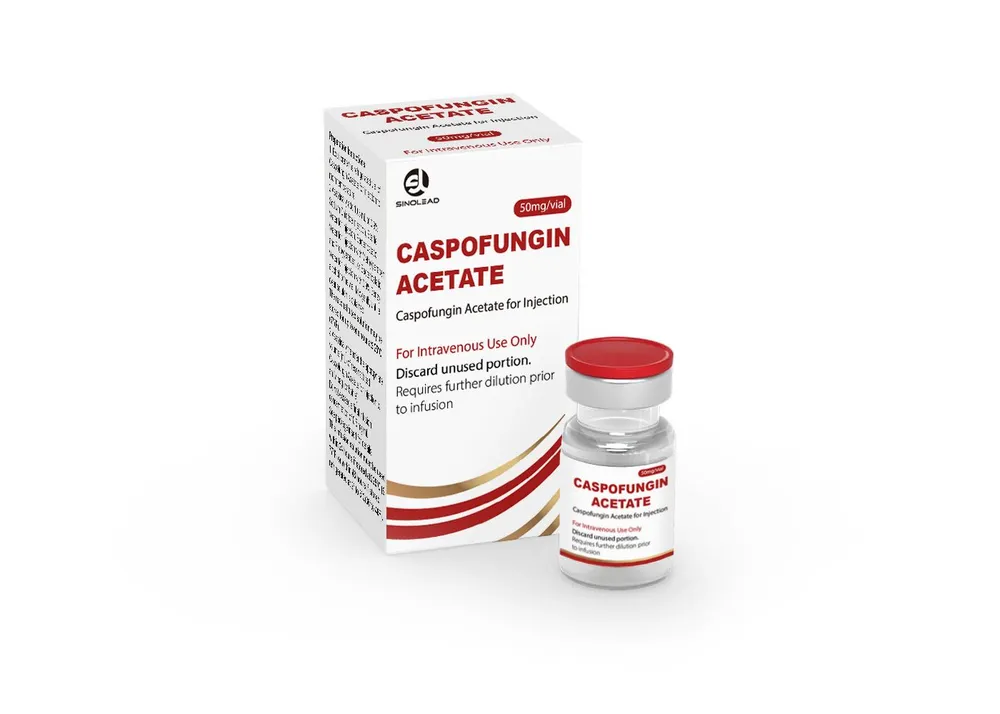
Table of Contents
- PACKAGE LEAFLET: INFORMATION FOR THE USER
- 1. What Caspofungin Neupharm is and what it is used for
- 2. Important information before using Caspofungin Neupharm
- 3. How to use Caspofungin Neupharm
- 4. Possible adverse reactions
- 5. How to store Caspofungin Neupharm
- 6. Contents of the pack and other information
PACKAGE LEAFLET: INFORMATION FOR THE USER
Warning! Keep this leaflet. The information on the immediate packaging is in a foreign language!
Caspofungin Neupharm (Caspofungin/Anfarm), 50 mg
Powder for solution for infusion concentrate
Caspofunginum
Caspofungin Neupharm and Caspofungin/Anfarm are different trade names for the same medicinal product.
Please read this leaflet carefully before using this medicine, as it contains important information for the patient.
- Keep this leaflet so that you can read it again if necessary.
- If you have any questions, please consult your doctor, pharmacist, or nurse.
- If you experience any adverse reactions, including any not listed in this leaflet, tell your doctor, pharmacist, or nurse. See section 4.
Table of contents of the leaflet
- What Caspofungin Neupharm is and what it is used for
- Important information before using Caspofungin Neupharm
- How to use Caspofungin Neupharm
- Possible side effects
- How to store Caspofungin Neupharm
- Contents of the pack and other information
1. What Caspofungin Neupharm is and what it is used for
What Caspofungin Neupharm is
Caspofungin Neupharm contains a medicinal substance called caspofungin, which belongs to a group of antifungal medicines.
What Caspofungin Neupharm is used for
Caspofungin Neupharm is used to treat the following fungal infections in children, adolescents, and adults:
- Severe fungal infections of tissues and organs (called invasive candidiasis). This infection is caused by fungi (yeasts) known as Candida. Patients who may develop this type of infection include those who have recently undergone surgery or have a weakened immune system. The most common symptoms of this infection are fever and chills that do not respond to antibiotic treatment.
- Fungal infections of the nose, sinuses, or lungs (called invasive aspergillosis), when other antifungal medicines have not worked or have caused adverse effects. These infections are caused by a mold called Aspergillus. Patients who may develop such infections include those receiving chemotherapy, organ transplant recipients, and individuals with a weakened immune system.
- Suspected fungal infection in patients with fever and low white blood cell count whose condition has not improved after antibiotic treatment. Patients at risk of developing fungal infections include those who have recently undergone surgery or have a weakened immune system.
How Caspofungin Neupharm works
Caspofungin Neupharm weakens fungal cells and inhibits their normal growth. This helps prevent the spread of the infection and allows the body's natural defense mechanisms to eliminate it completely.
2. Important information before using Caspofungin Neupharm
When not to use Caspofungin Neupharm
- if the patient is allergic to caspofungin or any of the other ingredients of this medicine (listed in section 6).
If in doubt, consult a doctor, pharmacist, or nurse before administering the medicine.
Warnings and precautions
Before starting treatment with Caspofungin Neupharm, discuss this with your doctor,
nurse, or pharmacist:
- if the patient is allergic to any medicines;
- if the patient has ever had liver function disorders – a different dose of the medicine may be required;
- if the patient is taking cyclosporine (a medicine used to prevent transplant rejection or to suppress the immune system), as the doctor may order additional blood tests during treatment;
- if the patient has ever had any other health disorders.
If any of the above statements apply to the patient (or there is such a suspicion),
consult a doctor, pharmacist, or nurse before using Caspofungin Neupharm.
Caspofungin Neupharm may also cause serious skin-related adverse reactions,
such as Stevens-Johnson syndrome (SJS) and toxic epidermal necrolysis (TEN).
Caspofungin Neupharm with other medicines
Inform your doctor, nurse, or pharmacist about all medicines the patient is currently taking or has recently taken, as well as any medicines the patient plans to take, including over-the-counter medicines and herbal preparations, because Caspofungin Neupharm may affect the way other medicines work. Likewise, some other medicines may affect the action of Caspofungin Neupharm.
If the patient is taking any of the following medicines, inform the doctor, nurse, or pharmacist:
- cyclosporine or tacrolimus (medicines used to prevent transplant rejection or to suppress the immune system), as the doctor may order additional blood tests during treatment;
- certain medicines used in HIV infection, such as efavirenz or nevirapine;
- phenytoin or carbamazepine (used to treat seizures);
- dexamethasone (a steroid medicine);
- rifampicin (an antibiotic).
If any of the above statements apply to the patient (or there is such a suspicion),
inform the doctor, nurse, or pharmacist before using Caspofungin Neupharm.
Pregnancy and breastfeeding
During pregnancy, while breastfeeding, or if pregnancy is suspected, consult a doctor before using any medicine.
- Studies on the use of Caspofungin Neupharm in pregnant women have not been conducted. Caspofungin Neupharm should be used during pregnancy only if the potential benefits of treatment justify the potential risk to the unborn child.
- Women receiving Caspofungin Neupharm should not breastfeed.
Driving and operating machinery
There is no information indicating that Caspofungin Neupharm may affect the ability
to drive or operate machinery.
Caspofungin Neupharm contains sodium
This medicine contains less than 1 mmol (23 mg) of sodium per vial, which means the medicine is considered "sodium-free".
3. How to use Caspofungin Neupharm
Caspofungin Neupharm will always be prepared and administered by medical personnel.
Caspofungin Neupharm will be given:
- once daily;
- by slow intravenous infusion (intravenous infusion);
- over approximately 1 hour.
The duration of treatment and the daily dose of Caspofungin Neupharm will be determined by the physician.
The physician will monitor the effectiveness of the treatment in the patient. In patients weighing over
80 kg, a different dose may be required.
Children and adolescents
The dose intended for children and adolescents may differ from that used in adults.
Administration of a higher than recommended dose of Caspofungin Neupharm
The treating physician will decide what daily dose of Caspofungin Neupharm the patient requires and how long the treatment should last. However, if there is any concern that the patient may have received too high a dose of Caspofungin Neupharm, immediate advice should be sought from the treating physician or nurse.
If you have any further questions about the use of this medicine, consult your doctor, nurse or pharmacist.
4. Possible adverse reactions
Like all medicines, this medicine can cause adverse reactions, although not everyone will experience them.
Some of these adverse reactions may be serious.
If you notice any of the following adverse reactions, contact your doctor or nurse immediately, as you may require immediate medical assistance:
- rash, itching, feeling of warmth, swelling of the face, lips or throat, or difficulty breathing – possible occurrence of a histamine reaction to the medicine;
- difficulty breathing with wheezing or worsening rash – possible occurrence of an allergic reaction to the medicine;
- cough, severe breathing problems – in adults with invasive aspergillosis, severe respiratory problems may occur, which could progress to respiratory failure;
- rash, skin peeling, mucosal ulceration, urticaria, large-scale skin peeling.
As with all prescription medicines, some of the adverse reactions may be severe. Please consult your doctor for additional information.
Other adverse reactions observed in adults include:
Common (may occur in up to 1 in 10 people):
- decreased haemoglobin concentration (reduced concentration in blood of the substance carrying oxygen), decreased white blood cell count;
- decreased blood albumin (a type of protein) concentration, decreased potassium concentration or low blood potassium levels;
- headache;
- phlebitis (inflammation of the vein);
- shortness of breath;
- diarrhoea, nausea or vomiting;
- changes in results of certain blood laboratory tests (including increased values in certain liver function tests);
- itching, rash, skin redness, or increased sweating;
- joint pain;
- chills, fever;
- itching at the injection site.
Uncommon (may occur in up to 1 in 100 people):
- changes in results of certain blood laboratory tests (including blood coagulation, platelet count, red blood cells and white blood cells);
- loss of appetite, increased body fluid volume, electrolyte imbalance, high blood sugar, low blood calcium, low blood magnesium, increased blood acidity;
- disorientation, feeling of nervousness, inability to sleep;
- dizziness, reduced sensation or sensitivity (especially of the skin), tremor, drowsiness, altered taste, tingling or numbness;
- blurred vision, increased tear production, eyelid swelling, yellowing of the sclera (whites of the eyes);
- sensation of rapid or irregular heartbeat, fast heartbeat, irregular heartbeat, abnormal heart rhythm, heart failure;
- facial flushing, hot flushes, high blood pressure, low blood pressure, redness of the skin along the vein, skin hypersensitivity to touch;
- bronchospasm causing wheezing or cough, rapid breathing, breathlessness causing awakening from sleep, low blood oxygen, abnormal breath sounds, crackles in the lungs, wheezing, nasal congestion, cough, sore throat;
- abdominal pain, upper abdominal pain, bloating, constipation, difficulty swallowing, dry mouth, indigestion, flatulence, stomach discomfort, swelling due to fluid accumulation in the abdominal cavity;
- reduced bile flow, enlarged liver, yellowing of the skin and/or sclera (whites of the eyes), chemical or drug-induced liver injury, liver function disorders;
- abnormal skin changes, generalized itching, urticaria, polymorphic rash, abnormal skin appearance, presence of red, often itchy spots on hands and feet, and sometimes on the face and other parts of the body;
- back pain, pain in arms or legs, bone pain, muscle pain, muscle weakness;
- impaired kidney function, sudden worsening of kidney function;
- pain at the catheter site, changes at the injection site (redness, hardening, pain, swelling, irritation, rash, urticaria, leakage of fluid from the catheter into tissues), phlebitis at the injection site;
- elevated blood pressure and changes in results of certain blood laboratory tests (including tests assessing kidney function, electrolytes, and blood coagulation), increased concentrations of immunosuppressive medicines taken;
- discomfort in the chest, chest pain, sensation of body temperature change, general malaise, generalized pain, facial swelling, ankle, hand or foot swelling, swelling, tenderness, feeling of fatigue.
Adverse reactions in children and adolescents
Very common (may occur in more than 1 in 10 people):
- fever.
Common (may occur in up to 1 in 10 people):
- headache;
- rapid heartbeat;
- sudden facial flushing, low blood pressure;
- changes in results of certain blood laboratory tests (increased values in certain liver function tests);
- itching, rash;
- pain at the catheter site;
- chills;
- changes in results of certain blood laboratory tests.
Reporting of adverse reactions
If any adverse symptoms occur, including any adverse symptoms not listed in this leaflet, inform your doctor, pharmacist or nurse. Adverse reactions can be reported directly to the Department of Monitoring Adverse Drug Reactions of the Office for Registration of Medicinal Products, Medical Devices and Biocidal Products.
Al. Jerozolimskie 181 C
02-222 Warsaw
Tel.: +48 22 49 21 301
Fax: +48 22 49 21 309
Website: https://smz.ezdrowie.gov.pl
Reporting adverse reactions helps to provide more information on the safety of the medicine.
5. How to store Caspofungin Neupharm
Keep this medicine out of the sight and reach of children.
Do not use this medicine after the expiry date stated on the vial and outer packaging, following "Expiry date (EXP)". The expiry date refers to the last day of the stated month.
Unopened vials: store in a refrigerator (2°C - 8°C).
Chemical and physical stability studies have demonstrated that the product remains stable for up to 24 hours when stored at temperatures up to 25°C or within the range of 2°C to 8°C, if the powder was reconstituted using water for injections. From a microbiological standpoint, the medicine should be used immediately, unless the method of opening/reconstitution/dilution ensures exclusion of microbiological contamination risk.
After preparation, the medicine should be used immediately, as it does not contain any antibacterial preservatives. If not used immediately, responsibility for storage conditions and duration rests with the person administering the medicine.
Stability studies have shown that the product may be used within 48 hours if stored at 2°C to 8°C or at room temperature (25°C), provided that dilution was performed using sodium chloride solution at concentrations of 9 mg/ml (0.9%), 4.5 mg/ml (0.45%), or 2.25 mg/ml (0.225%), or lactated Ringer's solution.
From a microbiological perspective, the product should be used immediately. If not used immediately, responsibility for storage conditions prior to use rests with the person administering the medicine. Storage should not exceed 24 hours at 2°C to 8°C, unless reconstitution and dilution were carried out under validated, controlled aseptic conditions.
The medicine must be prepared exclusively by trained medical personnel who have read and understood all instructions (see below, "Instructions for reconstitution and dilution of the medicinal product Caspofungin Neupharm").
Medicines must not be disposed of via wastewater or household waste. Ask your pharmacist how to properly dispose of medicines no longer in use. This will help protect the environment.
6. Contents of the pack and other information
What Caspofungin Neupharm contains
- The active substance is caspofungin. Each vial contains 50 mg of caspofungin (as caspofungin acetate). After reconstitution with 10.5 mL of water for injections, 1 mL of concentrate contains 5.2 mg of caspofungin.
- Other components: sucrose, mannitol, glacial acetic acid, sodium hydroxide (for pH adjustment).
What Caspofungin Neupharm looks like and contents of the pack
Caspofungin Neupharm is a sterile, white or almost white powder.
Caspofungin Neupharm is available in vials with a capacity of 10 mL, made of colourless glass type I, closed with a bromobutyl rubber stopper and an aluminium cap, packed in a cardboard box.
The pack contains 1 vial.
For more detailed information, please contact the marketing authorisation holder or the parallel importer.
Marketing authorisation holder in Greece, country of export:
ANFARM HELLAS S.A.
4 Achaias Str. & Trizinias Str.
14 564 Kifissia, Attiki
Greece
Manufacturer:
ANFARM HELLAS S.A.
61st km NAT.RD. ATHENS-LAMIA
32 009 Schimatari Viotias
Greece
Parallel importer:
Neupharm Sp. z o.o.
ul. Chełmska 30/34
00-725 Warszawa
Repackaged by:
LABOR Przedsiębiorstwo Farmaceutyczno-Chemiczne Sp. z o.o.
ul. Długosza 49
51-162 Wrocław
SHIRAZ PRODUCTIONS Sp. z o.o.
ul. Tymiankowa 24/28
95-054 Ksawerów
Marketing authorisation number in Greece, country of export: 88202/08-09-2020
Parallel import authorisation number: 19/24
Information intended for medical professionals only:
Instructions for reconstitution and dilution of the medicinal product Caspofungin Neupharm:
Reconstitution of the medicinal product Caspofungin Neupharm
DO NOT USE ANY SOLUTIONS CONTAINING GLUCOSE, as the medicinal product Caspofungin Neupharm is not stable in solutions containing glucose. DO NOT MIX OR ADMINISTER IN THE SAME INFUSION WITH OTHER MEDICINAL PRODUCTS, as there are no data available on the concomitant administration of Caspofungin Neupharm with other intravenous active substances, excipients or other medicinal products. The infusion solution should be inspected visually for particulate matter and discoloration.
Caspofungin Neupharm, 50 mg,
powder for preparation of concentrate for infusion solution
INSTRUCTIONS FOR USE IN ADULT PATIENTS
Step 1 Dissolving the contents of the vial
To dissolve the powder, bring the unopened vial to room temperature and then aseptically add 10.5 mL of water for injections. The concentration of the resulting concentrate will be: 5.2 mg/mL.
Dissolve the white or almost white, lyophilized powder by gently mixing until a clear solution is obtained. The prepared solution should be inspected visually for particulate matter and discoloration. The prepared solution may be stored for up to 24 hours at a temperature not exceeding 25°C or at 2°C to 8°C.
Step 2 Adding the reconstituted medicinal product Caspofungin Neupharm to the patient's infusion solution
The following solutions may be used for the preparation of the final infusion solution: sodium chloride 0.9% solution for injection or Ringer's lactate solution. The infusion solution should be prepared by aseptically adding the appropriate volume of the prepared concentrate (as shown in the table below) to a 250 mL infusion bag or bottle. The daily dose of 50 mg or 35 mg, if indicated, may be administered in an infusion volume reduced to 100 mL. Do not use the solution if cloudiness or precipitation occurs.
PREPARATION OF INFUSION SOLUTION FOR ADULTS
| Dose* | Volume of reconstituted Caspofungin Neupharm 50 mg medicinal product to be transferred to an infusion bag or bottle | Standard preparation (reconstituted Caspofungin Neupharm 50 mg diluted in 250 ml, final concentration) | Reduced infusion volume (reconstituted Caspofungin Neupharm 50 mg diluted in 100 ml, final concentration) |
| 50 mg | 10 ml | 0.20 mg/ml | |
| 50 mg in reduced volume | 10 ml | 0.47 mg/ml | |
| 35 mg in moderate hepatic impairment (from one 50 mg vial) | 7 ml | 0.14 mg/ml | |
| 35 mg in moderate hepatic impairment (from one 50 mg vial) in reduced volume | 7 ml | 0.34 mg/ml |
* To dissolve the contents of each vial, use 10.5 mL of diluent.
INSTRUCTIONS FOR USE IN CHILDREN AND ADOLESCENTS
Calculation of Body Surface Area (BSA) for dose determination in children and adolescents
Before preparing the infusion, calculate the patient's body surface area using the following formula (Mosteller formula):
BSA (m²) = √Height (cm) × Weight (kg)
Preparation of intravenous infusion containing a dose of 70 mg/m² BSA for children and adolescents aged >3 months (using a vial containing 50 mg product)
- Determine the actual loading dose for children and adolescents based on body surface area (calculated as above) using the following equation:
BSA (m²) × 70 mg/m² = loading dose
The maximum loading dose administered on day 1 of therapy should not exceed 70 mg, regardless of the calculated dose for the individual patient. - Remove the Caspofungin Neupharm 50 mg medicinal product vial from the refrigerator and allow it to warm to room temperature.
- Under aseptic conditions, add 10.5 mL of Water for Injections. The prepared solution may be stored for up to 24 hours at a temperature not exceeding 25°C or at 2°C to 8°C. This results in a vial solution with a final concentration of caspofungin of 5.2 mg/mL.
- Withdraw from the vial the volume of medicinal product corresponding to the calculated loading dose (step 1). Under aseptic conditions, transfer this volume (mL) of diluted Caspofungin Neupharm 50 mg medicinal product into an intravenous infusion bag (or bottle) containing 250 mL of 0.9%, 0.45%, or 0.225% Sodium Chloride Injection or Lactated Ringer's Injection. Alternatively, the specified volume (mL) of diluted Caspofungin Neupharm 50 mg medicinal product may be added to a smaller volume of 0.9%, 0.45%, or 0.225% Sodium Chloride Injection or Lactated Ringer's Injection, provided that the final concentration does not exceed 0.5 mg/mL. The ready-to-use infusion solution should be used within 48 hours if stored at 2°C to 8°C or at room temperature (25°C).
Preparation of intravenous infusion containing a dose of 50 mg/m² BSA for children and adolescents aged >3 months (using a vial containing 50 mg product)
- Determine the actual daily maintenance dose for children and adolescents based on body surface area (calculated as above) using the following equation:
BSA (m²) × 50 mg/m² = daily maintenance dose
The daily maintenance dose should not exceed 70 mg, regardless of the calculated dose for the individual patient. - Remove the Caspofungin Neupharm 50 mg medicinal product vial from the refrigerator and allow it to warm to room temperature.
- Under aseptic conditions, add 10.5 mL of Water for Injections. The prepared solution may be stored for up to 24 hours at a temperature not exceeding 25°C or at 2°C to 8°C. This results in a vial solution with a final concentration of caspofungin of 5.2 mg/mL.
- Withdraw from the vial the volume of medicinal product corresponding to the calculated daily maintenance dose (step 1). Under aseptic conditions, transfer this volume (mL) of diluted Caspofungin Neupharm 50 mg medicinal product into an intravenous infusion bag (or bottle) containing 250 mL of 0.9%, 0.45%, or 0.225% Sodium Chloride Injection or Lactated Ringer's Injection. Alternatively, the specified volume (mL) of diluted Caspofungin Neupharm 50 mg medicinal product may be added to a smaller volume of 0.9%, 0.45%, or 0.225% Sodium Chloride Injection or Lactated Ringer's Injection, provided that the final concentration does not exceed 0.5 mg/mL. The ready-to-use infusion solution should be used within 48 hours if stored at 2°C to 8°C or at room temperature (25°C).
Notes on preparation of the medicinal product:
a. The white or almost white compact substance should dissolve completely. Gently swirl the contents until a clear, transparent solution is obtained.
b. The prepared solution should be visually inspected during dilution and before administration for the presence of particulate matter or discoloration. If the solution is cloudy or contains precipitate, it should not be administered.
c. The Caspofungin Neupharm medicinal product is formulated so that the full dose stated on the vial label (50 mg) can be withdrawn by removing 10 mL of solution from the vial.