Carvedilol-ratiopharm
Poland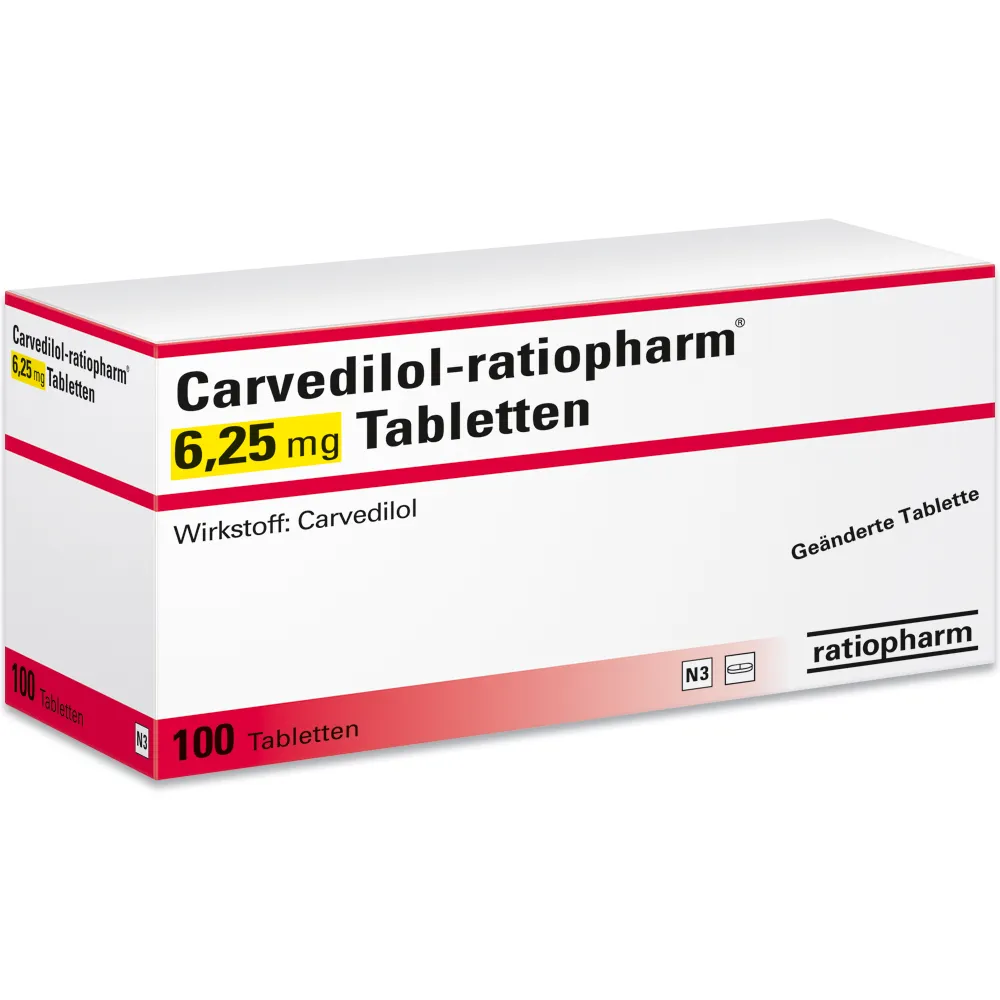
Table of Contents
- Package leaflet: Information for the user
- 1. What Carvedilol-ratiopharm is and what it is used for
- 2. Important information before using Carvedilol-ratiopharm
- 3. How to use Carvedilol-ratiopharm
- 4. Possible adverse reactions
- 5. How to store Carvedilol-ratiopharm
- 6. Contents of the packaging and other information
Package leaflet: Information for the user
Carvedilol-ratiopharm, 6.25 mg, tablets
Carvedilol-ratiopharm, 12.5 mg, tablets
Carvedilol-ratiopharm, 25 mg, tablets
Carvedilolum
Please read all of this leaflet carefully before taking this medicine, because it contains
important information for the patient.
- Keep this leaflet so that you can read it again if necessary.
- If you have any doubts, please consult your doctor or pharmacist.
- This medicine has been prescribed for a specific individual. Do not pass it on to others. This medicine may harm another person, even if their symptoms are the same.
- If the patient experiences any adverse reactions, including any not listed in this leaflet, inform the doctor or pharmacist. See section 4.
Contents of the leaflet
- What Carvedilol-ratiopharm is and what it is used for
- Important information before taking Carvedilol-ratiopharm
- How to take Carvedilol-ratiopharm
- Possible side effects
- How to store Carvedilol-ratiopharm
- Contents of the pack and other information
1. What Carvedilol-ratiopharm is and what it is used for
Carvedilol-ratiopharm belongs to a group of medicines called alpha- and beta-adrenoreceptor blockers (alpha- and beta-blockers).
Carvedilol-ratiopharm is used to treat high blood pressure (hypertension) and angina pectoris. Carvedilol-ratiopharm is also used in supportive treatment of heart failure.
2. Important information before using Carvedilol-ratiopharm
When not to use Carvedilol-ratiopharm
if the patient is allergic to carvedilol or any of the other ingredients of this medicine
(listed in section 6),
if the patient has untreated or decompensated heart failure or certain types of heart
conduction disorders (so-called second- or third-degree atrioventricular block in
patients without a pacemaker or so-called sick sinus syndrome),
if the patient has clinically apparent liver disorder,
if the patient has a very slow heart rate (less than 50 beats per minute) or very low
arterial blood pressure,
if the patient has been diagnosed with severe cardiac dysfunction (cardiogenic shock),
if the patient has severe disturbances in acid-base balance (metabolic acidosis),
in patients with bronchial asthma or other respiratory diseases with tendency to
throat constriction due to spasms (e.g. chronic obstructive pulmonary disease),
if the patient has severe breathing disorders (acute pulmonary embolism),
if the patient has atypical angina pectoris (Prinzmetal's angina),
if the patient has heart failure secondary to respiratory disease (cor pulmonale),
if the patient has untreated adrenal hyperfunction (pheochromocytoma),
if the patient is taking MAO inhibitors (e.g. moklobemide) (except MAO-B inhibitors),
if the patient is receiving intravenous verapamil, diltiazem, or another medicine used to treat
heart rhythm disorders (antiarrhythmics),
if the patient is breastfeeding.
Warnings and precautions
Before starting treatment with Carvedilol-ratiopharm, discuss this with your doctor or
pharmacist
If the patient has been diagnosed with heart failure accompanied by
- low blood pressure,
- reduced blood and oxygen supply to the heart (ischaemic heart disease) and arterial wall sclerosis (atherosclerosis),
- and (or) kidney function impairment. In such cases, the doctor will monitor kidney function. Dose reduction of the medicine may be necessary.
In patients after myocardial infarction. The condition must be adequately treated before starting Carvedilol-ratiopharm.
In certain types of heart conduction disorders (so-called first-degree atrioventricular block).
If the patient has secondary hypertension.
If the patient has been diagnosed with diabetes. Treatment with Carvedilol-ratiopharm may mask symptoms of low blood sugar. Therefore, blood glucose levels should be monitored regularly.
In severe peripheral circulatory disorders in hands and feet.
Concomitant treatment with medicines used for heart failure (digitalis glycosides) or heart rhythm disorders (e.g. verapamil, diltiazem).
Low blood pressure (orthostatic hypotension).
Acute inflammatory heart disease.
Heart valve stenosis or outflow tract obstruction.
End-stage peripheral arterial disease.
Uncontrolled or secondary hypertension.
Concomitant treatment with other blood pressure-lowering medicines (alpha1-receptor antagonists or alpha2-receptor agonists).
If the patient has Raynaud's phenomenon (fingers or toes turn blue, then pale, then red, accompanied by pain). Carvedilol-ratiopharm may worsen these symptoms.
If the patient has hyperthyroidism with increased thyroid hormone secretion; Carvedilol-ratiopharm may mask symptoms.
If the patient is taking Carvedilol-ratiopharm and is scheduled for surgery under general anaesthesia. In such cases, inform the anaesthesiologist about the use of Carvedilol-ratiopharm.
If the patient has a very slow heart rate (less than 55 beats per minute).
If the patient has ever experienced severe allergic reactions (e.g. insect sting or food allergy) or if the patient is undergoing (or planning) desensitisation therapy. Carvedilol-ratiopharm may increase sensitivity to allergens and the risk of severe anaphylactic reactions. Also, during treatment with Carvedilol-ratiopharm, medicines used to treat allergic (anaphylactic) reactions, such as adrenaline (epinephrine), may be less effective.
In case of psoriasis.
Severe skin reactions (e.g. toxic epidermal necrolysis (TEN) or Stevens-Johnson syndrome (SJS)).
If the patient wears contact lenses. Carvedilol-ratiopharm may reduce tear secretion.
Children and adolescents
There is insufficient data on the efficacy and safety of carvedilol in children and adolescents under 18 years of age. Therefore, Carvedilol-ratiopharm should not be used in this patient group.
Elderly patients
Elderly patients may be more sensitive to carvedilol and should be monitored more closely.
Carvedilol-ratiopharm and other medicines
Tell your doctor or pharmacist about all medicines you are currently taking or have recently taken, as well as any medicines you plan to take.
Other medicines taken concomitantly may affect the action of Carvedilol-ratiopharm, and Carvedilol-ratiopharm may also affect the action of other medicines.
It is especially important to inform your doctor about taking the following medicines:
Digoxin or digitoxin (used in the treatment of heart failure).
Insulin or oral antidiabetic medicines (medicines that reduce blood glucose levels), as their antidiabetic effect may be enhanced and symptoms of low blood glucose may be masked.
Rifampicin (an antibiotic used to treat tuberculosis).
Carbamazepine (a medicine used to treat epilepsy).
Fluconazole (an antifungal medicine).
Paroxetine, fluoxetine, bupropion (medicines used to treat depression).
Medicines containing reserpine, guanethidine, methyldopa, guanfacine, and monoamine oxidase inhibitors (MAOIs) (used to treat depression and Parkinson's disease), as they may further slow heart rate.
Cyclosporine or tacrolimus (medicines used to suppress immune responses to prevent organ transplant rejection, and also in the treatment of certain rheumatological or dermatological disorders).
Medicines used to treat heart rhythm disorders (e.g. verapamil, diltiazem, quinidine, amiodarone).
Clonidine (a medicine used to treat hypertension).
Sympathomimetics (medicines stimulating the sympathetic nervous system).
Medicines used to treat respiratory disorders, e.g. salbutamol, formoterol.
Dihydropyridine derivatives (medicines used to treat high blood pressure and heart conditions).
Other antihypertensive medicines. Carvedilol-ratiopharm may enhance the effect of other concomitantly used antihypertensive medicines (e.g. alpha1-adrenergic receptor antagonists, nitrates) and medicines in which blood pressure reduction is an adverse effect, e.g. barbiturates (medicines used to treat epilepsy), phenothiazines (medicines used to treat psychosis), tricyclic antidepressants (medicines used to treat depression), vasodilators.
Neuromuscular blocking agents (medicines reducing muscle tone).
Ergotamine (a medicine used to treat migraine).
Anaesthetics (medicines used in anaesthesia).
Certain painkillers (NSAIDs - non-steroidal anti-inflammatory drugs), estrogens (hormones), and corticosteroids (adrenal hormones), as they may in some cases reduce the blood pressure-lowering effect of Carvedilol-ratiopharm.
Cinacalcet (a medicine used to treat parathyroid disorders).
Carvedilol-ratiopharm with food, drink and alcohol
Avoid drinking grapefruit juice together with Carvedilol-ratiopharm or immediately after taking the medicine. Grapefruit or its juice may increase the blood concentration of the active substance carvedilol and cause unexpected adverse effects. Alcohol intake should be limited during treatment with Carvedilol-ratiopharm, as alcohol may affect the action of Carvedilol-ratiopharm.
Pregnancy and breastfeeding
If the patient is pregnant or breastfeeding, suspects she may be pregnant, or is planning to have a child, she should consult a doctor or pharmacist before using this medicine.
There is a risk of fetal harm during treatment with Carvedilol-ratiopharm. Carvedilol-ratiopharm may be used during pregnancy only if the doctor considers it necessary. Therefore, always consult a doctor before using Carvedilol-ratiopharm during pregnancy.
It is not known whether Carvedilol-ratiopharm passes into breast milk, and therefore it should not be used during breastfeeding.
Driving and operating machinery
Dizziness and fatigue may occur at the beginning of treatment, after dose increase, when switching to another medicine, or during concomitant alcohol consumption. It is not known whether carvedilol at therapeutic doses impairs the ability to drive or operate machinery. If dizziness or weakness occurs during treatment, avoid driving or performing activities requiring increased attention.
Carvedilol-ratiopharm contains lactose.
If the patient has previously been diagnosed with intolerance to certain sugars, the patient should contact the doctor before taking the medicine.
3. How to use Carvedilol-ratiopharm
This medicine should always be taken exactly as your doctor has instructed. If in doubt, consult your doctor or pharmacist. If you feel that the effect of Carvedilol-ratiopharm is too strong or too weak, consult your doctor.
The tablets should be swallowed with at least half a glass of water. Carvedilol-ratiopharm may be taken with or without food. However, patients with heart failure should take the tablets with food to reduce the risk of dizziness that may occur when standing up suddenly.
The tablets may be divided into equal doses.
Carvedilol-ratiopharm tablets are available in the following strengths:
6.25 mg, 12.5 mg and 25 mg.
High blood pressure
Adults
The usual dose is 1 tablet of Carvedilol-ratiopharm 12.5 mg (equivalent to 12.5 mg of carvedilol) once daily for the first two days, followed by 2 tablets of Carvedilol-ratiopharm 12.5 mg (equivalent to 25 mg of carvedilol) once daily.
Other strengths of Carvedilol-ratiopharm tablets are available to achieve the recommended dose.
If necessary, your doctor may recommend further gradual dose increases at intervals of at least two weeks. The maximum recommended daily dose is 50 mg.
Elderly patients
The recommended dose is 1 tablet of Carvedilol-ratiopharm 12.5 mg (equivalent to 12.5 mg of carvedilol) once daily.
If necessary, your doctor may recommend further gradual dose increases at intervals of at least two weeks, up to a maximum daily dose of 50 mg.
Angina pectoris
Adults
The usual dose is 1 tablet of Carvedilol-ratiopharm 12.5 mg (equivalent to 12.5 mg of carvedilol) twice daily for the first two days, followed by 2 tablets of Carvedilol-ratiopharm 12.5 mg (equivalent to 25 mg of carvedilol) twice daily.
Other strengths of Carvedilol-ratiopharm tablets are available to achieve the recommended dose.
If necessary, your doctor may recommend further gradual dose increases at intervals of at least two weeks. The maximum recommended daily dose is 100 mg.
Elderly patients
The usual dose is 1 tablet of Carvedilol-ratiopharm 12.5 mg (equivalent to 12.5 mg of carvedilol) twice daily for the first two days, followed by 2 tablets of Carvedilol-ratiopharm 12.5 mg (equivalent to 25 mg of carvedilol) twice daily.
The recommended maximum daily dose is 50 mg.
Heart failure
The usual initial dose is 3.125 mg of carvedilol twice daily for two weeks. Your doctor may recommend gradual dose increases, usually every two weeks.
Your doctor may recommend either increasing or decreasing the dose and will inform you accordingly.
The recommended maximum daily dose is 25 mg twice daily for patients weighing less than 85 kg and 50 mg twice daily for patients weighing more than 85 kg, provided that heart failure is not severe. Dose escalation to 50 mg twice daily will be conducted under strict medical supervision.
Taking more Carvedilol-ratiopharm than recommended
If you take more than the recommended dose or if a child accidentally takes any amount of the medicine, contact your doctor immediately, go to the nearest hospital or call emergency services for appropriate assistance.
Symptoms of overdose may include feeling faint due to excessive lowering of blood pressure, slow heart rate, and in severe cases, cardiac arrest. Breathing difficulties, bronchospasm, malaise, disturbances of consciousness and seizures may also occur.
If you miss a dose of Carvedilol-ratiopharm
If you miss a dose (or several doses), take the next dose at the usual time. Do not take a double (or larger) dose to make up for the missed dose(s).
Stopping Carvedilol-ratiopharm
Do not stop treatment or change the dose suddenly unless instructed by your doctor. The medicine should be discontinued gradually over a period of two weeks. Abruptly stopping the medicine may worsen your symptoms.
If you have any further doubts about the use of this medicine, consult your doctor or pharmacist.
4. Possible adverse reactions
Like all medicines, this medicine can cause adverse reactions, although not everybody will get them.
Most adverse reactions are dose-dependent and resolve after dose reduction or discontinuation of treatment. Some adverse reactions occur at the beginning of treatment and resolve spontaneously during continued treatment.
You should contact your doctor immediately if any of the following adverse reactions occur:
- Chest pain accompanied by shortness of breath, sweating and nausea (may occur in up to 1 in 100 people).
- Severe skin reactions such as rash, redness, blisters on the lips, around the eyes or in the mouth, skin peeling (symptoms of erythema multiforme), ulcers in the mouth, on the lips or skin (symptoms of Stevens-Johnson syndrome), shedding of the outer layer of skin from lower layers of the skin over the entire body (symptoms of toxic epidermal necrolysis) (very rare).
Very common (may occur in more than 1 in 10 people)
- Dizziness
- Headache
- Heart failure
- Low blood pressure
- Weakness
Common (may occur in up to 1 in 10 people)
- Bronchitis, pneumonia, upper respiratory tract infection
- Urinary tract infection
- Decreased number of red blood cells
- Weight gain
- Increased cholesterol levels
- Worsening of blood sugar control in patients with diabetes
- Depression, low mood
- Vision disturbances
- Reduced tear secretion, eye irritation
- Slowing of heart rate
- Swelling (edema of the entire body or parts of it), fluid retention, increased blood volume
- Dizziness upon sudden standing
- Fainting
- Circulatory disorders (which may manifest as cold hands and feet), arterial hardening (atherosclerosis), worsening of symptoms in patients with Raynaud's disease (initially bluish discoloration of fingers or toes, followed by paleness, then redness with associated pain) or intermittent claudication (leg pain worsening during walking)
- Asthma and breathing difficulties
- Fluid accumulation in the lungs
- Diarrhea
- Malaise, nausea, vomiting, abdominal pain, indigestion
- Pain (e.g. in arms and legs)
- Acute kidney failure and kidney function disorders in patients with atherosclerosis and (or) kidney dysfunction
- Difficulty urinating
Uncommon (may occur in up to 1 in 100 people)
- Sleep disorders
- Confusion, hallucinations
- Nightmares
- Sensory disturbances
- Impulse conduction disorders in the heart, angina pectoris (associated with chest pain)
- Specific skin reactions (e.g. allergic dermatitis, urticaria, itching and inflammatory skin conditions, excessive sweating, skin changes resembling psoriasis or lichen planus)
- Constipation
- Impotence
Rare (may occur in up to 1 in 1,000 people)
- Decreased number of platelets (thrombocytopenia)
- Nasal congestion
- Dryness of the oral mucosa
Very rare (may occur in up to 1 in 10,000 people, including single cases)
- Low number of white blood cells
- Psychosis
- Allergic reactions
- Changes in liver function test results
- Uncontrolled urination in women (urinary incontinence)
Frequency not known (frequency cannot be estimated from available data)
- Hair loss
Medicines from the class of beta-blockers may unmask latent diabetes.
Sinoatrial block (lack of impulse from the sinoatrial node, the heart's "pacemaker" which controls heart contractions and regulates heart rhythm) in predisposed patients (e.g. elderly patients or patients with pre-existing bradycardia, sinoatrial node dysfunction or atrioventricular block).
Reporting of adverse reactions
If any adverse reactions occur, including any adverse reactions not listed in this leaflet, inform your doctor or pharmacist. Adverse reactions can be reported directly to the Department for Monitoring of Adverse Reactions to Medicinal Products, Office for Registration of Medicinal Products, Medical Devices and Biocidal Products
Al. Jerozolimskie 181C,
02-222 Warsaw
Tel.: +48 22 49 21 301
Fax: +48 22 49 21 309
Website: https://smz.ezdrowie.gov.pl
Reporting adverse reactions helps to provide more information on the safety of the medicine.
5. How to store Carvedilol-ratiopharm
Keep this medicine out of the sight and reach of children.
Do not use this medicine after the expiry date stated on the packaging – after Exp.
The expiry date refers to the last day of the stated month.
Blisters (PVC/PVDC/Aluminium)
Carvedilol-ratiopharm 6.25 mg:
Do not store above 30°C.
Store in the original packaging to protect from light.
Carvedilol-ratiopharm 12.5 mg and 25 mg:
Store in the original packaging to protect from light.
No special storage temperature requirements for this medicinal product.
Blister (OPA/Aluminium/PVC/Aluminium)
Store in the original packaging to protect from light.
No special storage temperature requirements for this medicinal product.
Medicines must not be disposed of via the sewage system or household waste. Ask your
pharmacist how to dispose of medicines no longer required. These measures will help
protect the environment.
6. Contents of the packaging and other information
What Carvedilol-ratiopharm contains
- The active substance is carvedilol. Each tablet contains 6.25 mg, 12.5 mg, or 25 mg of carvedilol.
- The other ingredients are: microcrystalline cellulose, lactose monohydrate, crospovidone, povidone, colloidal anhydrous silica, magnesium stearate.
What Carvedilol-ratiopharm looks like and contents of the pack
6.25 mg: White, capsule-shaped, biconvex tablets, embossed with "C", with a break line and the code "2" on one side and smooth on the other side.
12.5 mg: White, capsule-shaped, biconvex tablets, embossed with "C", with a break line and the code "3" on one side and smooth on the other side.
25 mg: White, capsule-shaped, biconvex tablets, embossed with "C", with a break line and the code "4" on one side and smooth on the other side.
The tablets can be divided into equal doses.
Pack sizes: 30, 50, 60, 100 tablets.
Not all pack sizes may be marketed.
Marketing Authorisation Holder and Manufacturer
Marketing Authorisation Holder:
ratiopharm GmbH, Graf-Arco-Strasse 3, 89079 Ulm, Germany
Manufacturer:
Merckle GmbH, Ludwig-Merckle-Strasse 3, 89143 Blaubeuren, Germany
Teva Operations Poland Sp. z o.o., ul. Mogilska 80, 31-546 Kraków, Poland
TEVA Pharmaceutical Works Private Limited Company, Pallagi út 13, Debrecen H-4042, Hungary
For further information, please contact the Marketing Authorisation Holder's representative:
Teva Pharmaceuticals Polska Sp. z o.o.
Tel.: (22) 345 93 00
This medicinal product is authorised in the European Economic Area countries under the following names:
Austria, Germany: Carvedilol-ratiopharm 6.25/12.5/25 mg Tabletten
Finland, Sweden: Carveratio
Spain: Carvedilol Teva-ratiopharm 6.25 mg comprimidos EFG
Carvedilol Teva-ratiopharm 25 mg comprimidos EFG
Poland, Portugal: Carvedilol-ratiopharm