Buventol easyhaler
Poland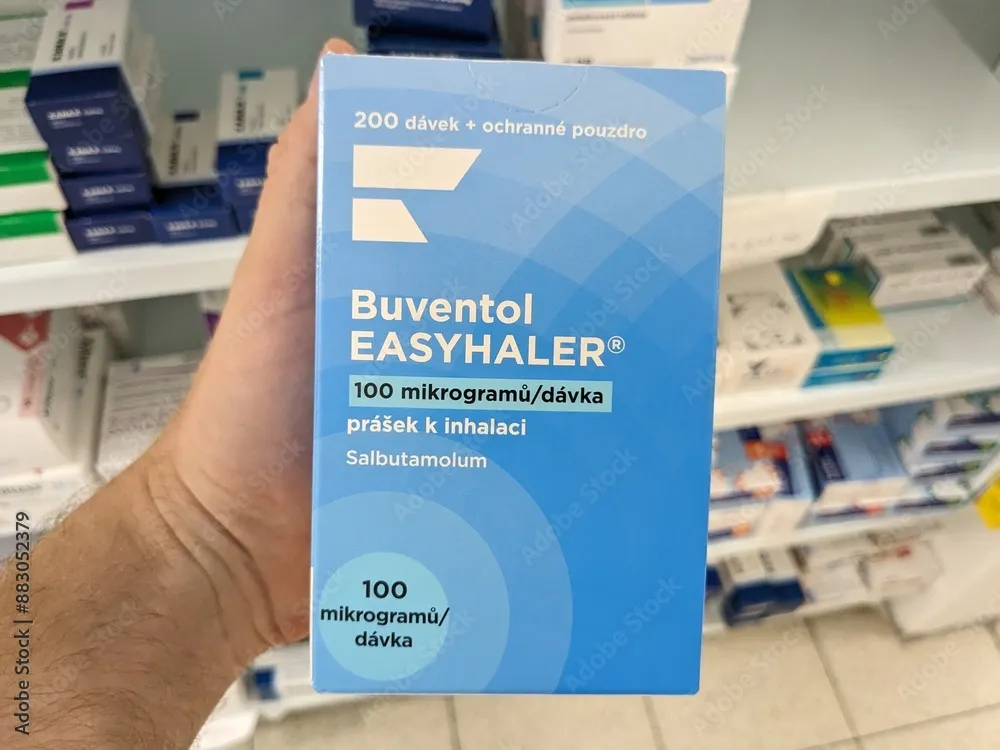
Table of Contents
QR code for the website: www.oeh.fi/spl
To obtain information on how to use the Easyhaler inhaler, please scan this QR code. The same
information is also available on the website: www.oeh.fi/spl
Package leaflet: Information for the user
Buventol Easyhaler
100 micrograms/dose, powder for inhalation
200 micrograms/dose, powder for inhalation
Salbutamol
Please read carefully the entire leaflet before using this medicine, as it contains
important information for the patient.
- Keep this leaflet for future reference.
- If you have any questions, please consult your doctor or pharmacist.
- This medicine has been prescribed for a specific individual. Do not pass it on to others. This medicine may harm other people, even if their symptoms are the same.
- If you experience any adverse reactions, including those not listed in this leaflet, inform your doctor or pharmacist. See section 4.
Table of contents of the leaflet:
- What Buventol Easyhaler is and what it is used for
- What you need to know before using Buventol Easyhaler
- How to use Buventol Easyhaler
- Possible side effects
- How to store Buventol Easyhaler
- Contents of the pack and other information
1. What Buventol Easyhaler is and what it is used for
Salbutamol belongs to a group of medicines known as short-acting beta-2 agonists, which cause relaxation of the smooth muscles of the bronchi. It opens up the airways and thereby helps maintain airway patency. It relieves respiratory symptoms such as chest tightness, wheezing, and cough. The effect of salbutamol begins within a few minutes and lasts for a short period (4 to 6 hours).
Buventol Easyhaler is indicated in adults and children over 6 years of age for symptomatic treatment of asthma attacks and asthma exacerbations, as well as for prevention of exercise-induced asthma attacks or asthma attacks expected after exposure to allergens known to trigger breathlessness.
In adults, the medicine is also indicated for symptomatic treatment of exacerbations of chronic obstructive pulmonary disease (COPD) with reversible airway obstruction.
2. Important information before using Buventol Easyhaler
When not to use Buventol Easyhaler
- if the patient is allergic to salbutamol, milk proteins, or any of the other ingredients of this medicine (listed in section 6).
- in case of threatened miscarriage or for prevention of premature labour.
Warnings and precautions
Before starting treatment with Buventol Easyhaler, discuss this with a doctor or pharmacist if the patient has:
- high blood pressure,
- any heart or blood vessel disorder,
- problems with blood sugar levels, including diabetes,
- hyperthyroidism,
- low potassium levels in the blood. The doctor may recommend monitoring blood potassium levels during treatment with Buventol Easyhaler.
If the patient experiences shortness of breath or chest pain, medical advice should be sought.
Buventol Easyhaler and other medicines
Inform the doctor or pharmacist about all medicines currently used, recently used, or planned for use.
In particular, inform the doctor if the patient is taking the following medicines:
- other medicines that relax smooth muscles of the airways,
- beta-blockers (e.g. propranolol) (used in the treatment of high blood pressure or other heart conditions),
- theophylline or aminophylline (used in the treatment of asthma or chronic bronchitis),
- medicines used to treat depression,
- diuretics,
- cardiac glycosides (medicines used in the treatment of heart conditions).
Pregnancy and breastfeeding
If the patient is pregnant or breastfeeding, suspects she may be pregnant, or is planning to have a child, she should consult a doctor or pharmacist before using this medicine.
This medicine should not be used in pregnant women, women planning pregnancy, or women who are breastfeeding, unless otherwise advised by a doctor.
Driving and operating machinery
There are no data available on the effect of this medicine on the ability to drive vehicles or operate machinery.
Buventol Easyhaler contains lactose
The medicine contains a small amount of lactose (milk sugar), which is unlikely to cause problems in patients with lactose intolerance. However, if the patient has previously been diagnosed with intolerance to certain sugars, the patient should consult a doctor before taking this medicine.
3. How to use Buventol Easyhaler
This medicine should always be used as directed by a doctor or pharmacist. If in doubt, consult your doctor or pharmacist.
The active substance of this medicine – salbutamol – is contained in the Easyhaler inhaler. The medicine is in the form of a dry powder intended for inhalation through the inhaler mouthpiece.
Buventol Easyhaler should be used when needed, not on a regular basis.
Recommended dose:
Adults:
- For treatment of acute bronchospasm, 100 µg (micrograms) to 200 µg of salbutamol is used.
- For prevention of asthma attacks triggered by physical exertion or anticipated exposure to allergens, administer 100 µg or 200 µg of salbutamol 15–30 minutes before physical exertion or anticipated allergen exposure.
Children over 6 years of age:
- For treatment of acute bronchospasm, the initial recommended dose is 100 µg of salbutamol. If necessary, the dose may be increased to 200 µg of salbutamol.
- For prevention of asthma attacks triggered by physical exertion or allergens, administer 100 µg or 200 µg of salbutamol 15–30 minutes before physical exertion or anticipated allergen exposure.
Buventol Easyhaler is not indicated for use in children under 6 years of age.
In adults and children, the maximum daily dose (within 24 hours) is 800 μg (8 inhalations of Buventol Easyhaler, 100 micrograms per inhalation, or 4 inhalations of Buventol Easyhaler, 200 micrograms per inhalation).
IT IS VERY IMPORTANT NOT TO USE Buventol Easyhaler IN HIGHER DOSES OR MORE FREQUENTLY THAN PRESCRIBED BY YOUR DOCTOR.
Important
If a patient's asthma is active (for example, frequent symptoms or exacerbations such as breathlessness interfering with speaking, eating, or sleeping, coughing, wheezing, chest tightness, or reduced physical performance), they should immediately inform their doctor. The doctor may then initiate or increase the dose of a controller medication, such as an inhaled corticosteroid, to maintain asthma control.
If a patient feels that the medicine is not working as well as usual, they should inform their doctor as soon as possible (for example, if higher doses are needed to relieve breathing difficulties, or if asthma symptoms do not resolve within at least 3 hours after using the inhaler), because asthma may be worsening and another medication may be required.
If a patient uses Buventol Easyhaler more than twice a week to relieve asthma symptoms, excluding prophylactic use before physical exertion, this indicates poorly controlled asthma and increases the risk of severe asthma attacks (asthma exacerbations), which may lead to serious complications, be life-threatening, or even fatal. The patient should contact their doctor as soon as possible to reassess their asthma treatment.
If a patient is using a daily anti-inflammatory lung medication, such as an "inhaled corticosteroid," it is important to continue using it regularly, even if they feel better.
If a patient feels that the effect of Buventol Easyhaler is too strong or too weak, they should consult their doctor.
Instructions for using the inhaler are provided at the end of this leaflet.
Overdose of Buventol Easyhaler
If more medicine is taken than recommended, symptoms such as increased heart rate and tremor may occur. These symptoms should resolve spontaneously within a few hours, but the doctor or pharmacist should be informed. Additionally, decreased blood potassium levels and increased blood glucose may occur, along with symptoms suggesting lactic acidosis (increased blood lactate levels), such as abdominal pain, increased lung ventilation (rapid breathing), shortness of breath despite reduced wheezing in the airways, cold hands and feet, irregular heartbeat, and increased thirst.
Missed dose of Buventol Easyhaler
If a dose of Buventol Easyhaler is missed, take the next dose at the usual time or before symptoms of breathlessness occur. The doctor may recommend taking the medicine regularly every day or only when the patient experiences breathlessness or shallow breathing.
If you have any further doubts about the use of this medicine, consult your doctor or pharmacist.
4. Possible adverse reactions
Like all medicines, this medicine can cause adverse reactions, although not everyone will experience them.
If the patient experiences any of the symptoms listed below, stop using the medicine
Buventol Easyhaler and contact a doctor immediately:
- Uncommon (may occur in up to 1 in 100 people): itching, rash, skin redness, swelling of the eyelids, lips, face or larynx, wheezing, low blood pressure or collapse. These may be symptoms of a severe hypersensitivity reaction (anaphylactic reaction or angioedema).
- Rare (may occur in up to 1 in 1,000 people): worsening of wheezing and worsening of breathlessness (paradoxical bronchospasm) immediately after using the inhaler.
Other possible adverse reactions:
Common (may occur in up to 1 in 10 people)
- headache
- increased heart rate, palpitations (awareness of a faster or stronger heartbeat than usual)
- peripheral vasodilation
- tremor
Uncommon (may occur in up to 1 in 100 people)
- dryness of the oral mucosa, irritation of the oral and pharyngeal mucosa – rinsing the mouth and throat after inhalation helps prevent irritation
Rare (may occur in up to 1 in 1,000 people)
- decreased blood potassium levels
- anxiety
- dizziness
- insomnia
- hyperactivity in children
- cough
- muscle cramps
- muscle pain
Very rare (may occur in up to 1 in 10,000 people)
- sensation of irregular heartbeat
Frequency not known (cannot be estimated from the available data)
- myocardial ischaemia (may present, for example, as chest pain)
Reporting of adverse reactions
If any adverse reactions occur, including any not listed in this leaflet, inform a doctor or pharmacist. Adverse reactions can be reported directly to the Department of Monitoring Adverse Drug Reactions of the Office for Registration of Medicinal Products, Medical Devices and Biocidal Products, Al. Jerozolimskie 181 C, 02-222 Warsaw, Tel.: +48 22 49 21 301, Fax: +48 22 49 21 309, Website: https://smz.ezdrowie.gov.pl
Adverse reactions can also be reported to the marketing authorisation holder.
Reporting adverse reactions helps provide more information on the safety of this medicine.
5. How to store Buventol Easyhaler
Keep out of the sight and reach of children.
Store below 25 °C.
Before first use, keep the medicine in its original packaging.
After opening the aluminium foil pack, protect the medicine from moisture. It is recommended to store the inhaler in a protective container.
If the inhalator becomes damp, it should be replaced with a new one.
The inhalator should be replaced 6 months after opening the foil pack. To help remember the date of opening, write it down in the box provided:
Do not use Buventol Easyhaler after the expiry date stated on the pack following:
Expiry date (EXP). The expiry date refers to the last day of the stated month.
Medicines must not be disposed of via wastewater or household waste. Ask your pharmacist how to dispose of medicines no longer required. This will help protect the environment.
6. Contents of the pack and other information
What Buventol Easyhaler contains
- The active substance is salbutamol in the form of salbutamol sulfate.
Buventol Easyhaler, 100 micrograms/inhalation dose:
One metered dose contains 100 micrograms (µg) of salbutamol as salbutamol sulfate 120.5 µg.
One delivered dose contains 90 micrograms (µg) of salbutamol as salbutamol sulfate 108.5 µg.
Buventol Easyhaler, 200 micrograms/inhalation dose:
One metered dose contains 200 micrograms (µg) of salbutamol as salbutamol sulfate 241 µg.
One delivered dose contains 180 micrograms (µg) of salbutamol as salbutamol sulfate 217 µg.
- The other ingredient is monohydrate lactose (contains milk proteins).
What Buventol Easyhaler looks like and contents of the pack
White or almost white powder.
1 powder inhaler (Easyhaler) contains 200 doses.
The plastic powder inhaler Easyhaler is equipped with a mouthpiece and a dose counter, packed in a laminated aluminium foil sachet (PET/Al/PE) and placed in a cardboard box.
Pack size:
- 200 doses in a powder inhaler
- 200 doses in a powder inhaler with a protective case
Marketing Authorisation Holder
Orion Corporation
Orionintie 1
FI-02200 Espoo
Finland
For further information, please contact the representative of the Marketing Authorisation Holder:
Orion Pharma Poland Sp. z o.o.
[email protected]
Detailed and up-to-date information on this product regarding the use of this medicine is available by
scanning with a smartphone the QR code indicated in the Patient Leaflet, on the outer packaging of the medicine, as well as on the label of the inhaler. The same information is also available on the website: www.oeh.fi/spl
QR code for the website: www.oeh.fi/spl
How to use the Easyhaler inhaler
Information about the Easyhaler inhaler
The Buventol Easyhaler inhaler may differ from inhalers previously used by the patient.
Therefore, it is very important to use it correctly, as incorrect use may result in the patient not receiving the proper amount of medicine. This could lead to worsening of the patient's condition or result in asthma or COPD (chronic obstructive pulmonary disease) not being properly treated.
The doctor, nurse, or pharmacist will show the patient how to use the inhaler correctly.
The patient should ensure they understand how to use the inhaler properly. If in doubt, contact the doctor, nurse, or pharmacist. As with all inhalers, caregivers should ensure that children prescribed Buventol Easyhaler use the correct inhalation technique as described below. Instructional videos are also available at: www.oeh.fi/spl
Using the Easyhaler inhaler for the first time
| The Easyhaler inhaler is supplied in a laminated foil sachet. The sachet should not be opened until the medicine is to be used, as it helps to keep the dry powder in the inhaler dry. When the patient is ready to start treatment, open the packaging and record the date of opening, for example in a calendar. The Buventol Easyhaler inhaler can be used for 6 months after removal from the foil sachet. | 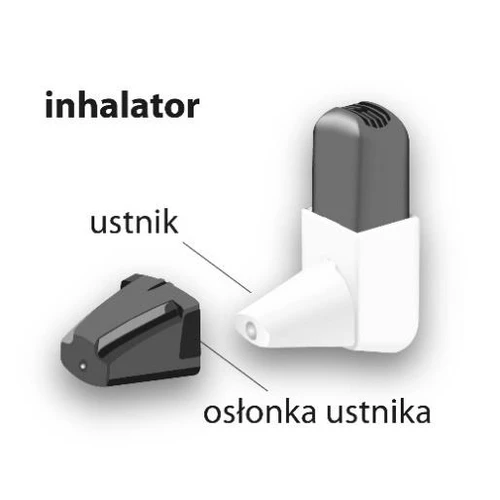 |
HOW TO USE THE INHALER CORRECTLY
Step 1: SHAKING
| SHAKE 3 TO 5 TIMES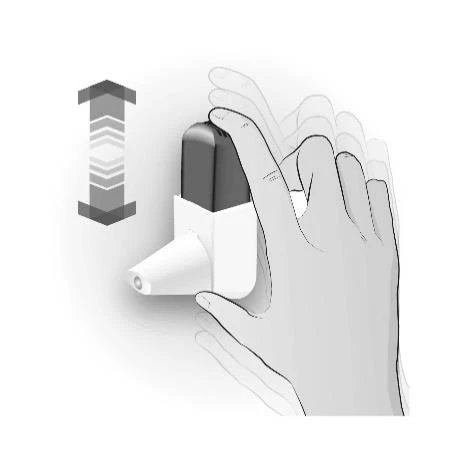 | Important information to remember
|
Step 2: ACTUATING
| ACTUATE ONCE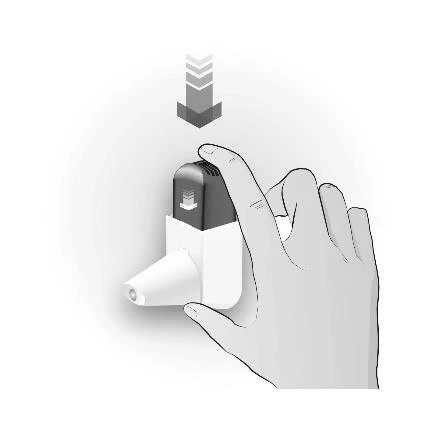 | Important information to remember
|
Step 3: INHALATION
| INHALATION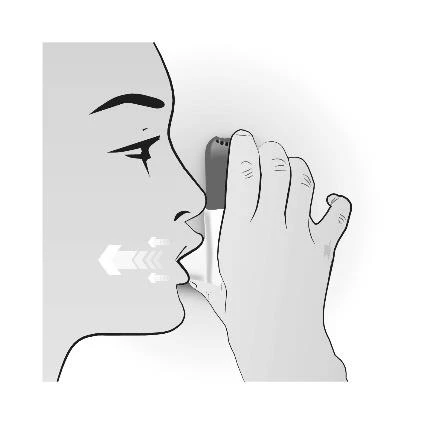 | Important information to remember
|
If an additional inhalation is necessary, repeat the steps described in points 1–3
"Shake, Click, Breathe In."
After using the inhaler:
- Replace the mouthpiece cover to prevent accidental activation of the inhaler.
| How to remove powder from the mouthpiece If the inhaler is accidentally actuated or actuated multiple times, or if exhalation into the inhaler occurs, remove the powder from the mouthpiece:
| 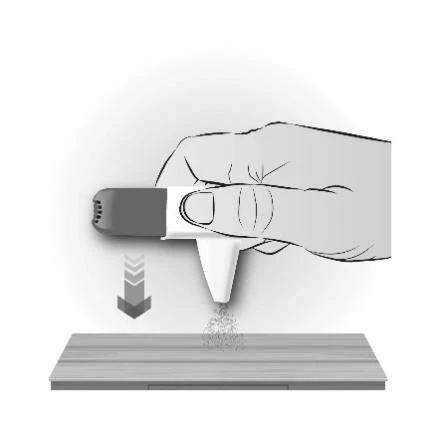 |
Cleaning the Easyhaler inhaler
The inhaler should be kept dry and clean. If necessary, the mouthpiece of the inhaler can be cleaned with a dry cloth or wipe. Do not use water. The powder in the Easyhaler inhaler is sensitive to moisture.
| Use of the Easyhaler inhaler in the protective packaging The inhaler can be used within the protective packaging, which helps extend the product's shelf life. Before placing the inhaler into the protective packaging, ensure the mouthpiece cap covers the mouthpiece to prevent accidental actuation of the inhaler. The inhaler can be used without removing it from the protective packaging. | |
Use according to the instructions above: 1. Shaking,
| 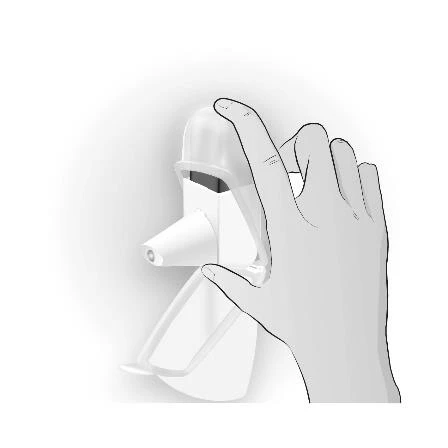 |
| Switching to a new Easyhaler inhaler The inhaler is equipped with a dose counter indicating the number of doses remaining. The counter rotates every five actuations. When the dose counter turns red, this indicates that 20 doses remain. If the patient does not yet have a new Easyhaler inhaler, they should contact their doctor to obtain a new prescription. When the counter displays 0, the Easyhaler inhaler must be replaced. If the patient is using the protective packaging, it should be retained and the new inhaler placed inside it. | 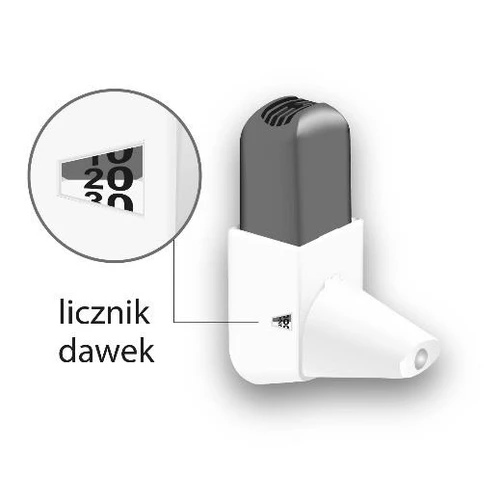 |
To remember
- 1. Shake, 2. Click, 3. Inhale.
- Do not allow the inhaler to get wet; protect it from moisture.
If you have any further questions regarding the use of this medicine, consult your
doctor or pharmacist.