Bloxazoc
Poland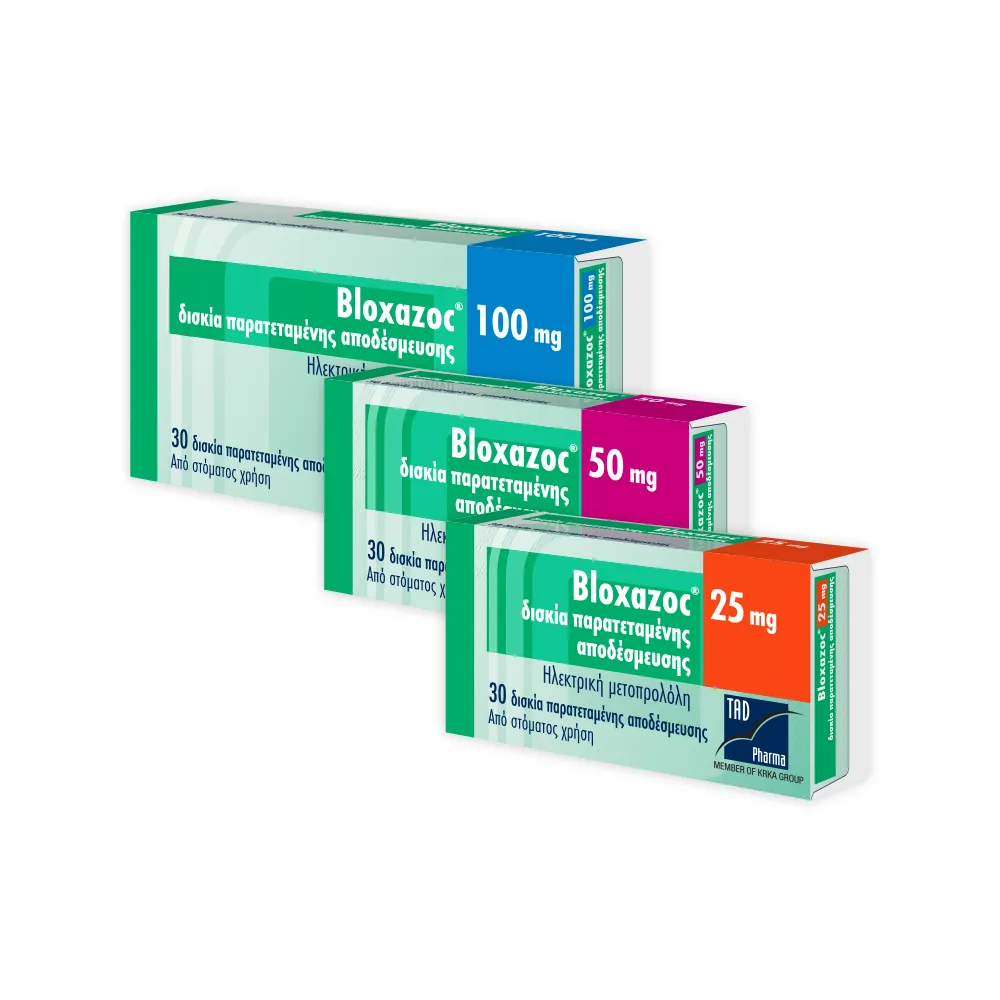
Table of Contents
Package leaflet: Information for the patient
Bloxazoc, 23.75 mg, prolonged-release tablets
Bloxazoc, 47.5 mg, prolonged-release tablets
Bloxazoc, 95 mg, prolonged-release tablets
Bloxazoc, 190 mg, prolonged-release tablets
Metoprolol succinate
Please read the entire leaflet carefully before taking this medicine, as it contains
important information for the patient.
- Keep this leaflet for future reference.
- If you have any further questions, please consult your doctor or pharmacist.
- This medicine has been prescribed for a specific individual. Do not pass it on to others. This medicine may harm others, even if their symptoms are similar.
- If you experience any adverse reactions, including any not listed in this leaflet, inform your doctor or pharmacist. See section 4.
Table of contents
- What Bloxazoc is and what it is used for
- Important information before taking Bloxazoc
- How to take Bloxazoc
- Possible side effects
- How to store Bloxazoc
- Contents of the pack and other information
1. What Bloxazoc is and what it is used for
Metoprolol succinate belongs to a group of medicines called beta-blockers. Metoprolol reduces the effects of stress hormones on the heart during physical and emotional stress. This results in a slower heart rate (reduced pulse rate).
Bloxazoc is used in the treatment of:
- high blood pressure (hypertension),
- chest pain caused by insufficient oxygen supply to the heart (angina pectoris),
- irregular heart rhythm (arrhythmia),
- palpitations (awareness of heartbeat) due to non-organic (functional) heart disorders,
- stable heart failure (with symptoms such as breathlessness and ankle swelling), in combination with other heart failure medications.
Bloxazoc is used in preventing:
- recurrence of myocardial infarction or further heart damage after a heart attack,
- migraine attacks.
Bloxazoc is used to treat high blood pressure in children and adolescents aged 6 to 18 years.
2. Important information before using Bloxazoc
When not to use Bloxazoc:
- if the patient is allergic to the active substance, other beta-blockers, or any of the other ingredients of this medicine (listed in section 6),
- if the patient has unstable heart failure and is taking medicines that increase heart contractility,
- if the patient has heart failure and blood pressure drops below 100 mmHg,
- if the patient has a slow heart rate (less than 45 beats per minute) or low blood pressure (hypotension),
- if the patient is in shock caused by heart disease,
- if the patient has disturbances in cardiac conduction (second- or third-degree atrioventricular block) or heart rhythm disorders (sick sinus syndrome),
- if the patient has severe circulatory disorders (severe peripheral arterial disease).
Warnings and precautions
Before starting treatment with Bloxazoc, discuss this with your doctor or pharmacist:
- if the patient is receiving verapamil intravenously,
- if the patient has circulatory disorders that may cause tingling, cyanosis, or pallor of the fingers and toes,
- if the patient has constricting chest pain, usually at night (Prinzmetal's angina),
- if the patient has asthma or another chronic obstructive pulmonary disease,
- if the patient has diabetes (low blood sugar levels may be masked by Bloxazoc),
- if the patient has disturbances in cardiac conduction (heart block),
- if the patient is being treated to reduce allergic reactions – Bloxazoc may increase sensitivity to substances to which the patient is allergic and worsen the severity of allergic reactions,
- if the patient has high blood pressure due to a rare adrenal gland tumor (pheochromocytoma),
- if the patient has heart failure,
- if the patient is scheduled to receive an anesthetic, inform the doctor or dentist about taking metoprolol,
- if the patient has increased blood acidity (metabolic acidosis),
- if the patient has severe kidney function impairment,
- if the patient is being treated with cardiac glycosides.
Bloxazoc with other medicines
Tell your doctor or pharmacist about all medicines the patient is currently taking,
has recently taken, or plans to take.
The following medicines may enhance the blood pressure-lowering effect of Bloxazoc:
- propafenone, amiodarone, quinidine, verapamil, diltiazem, clonidine, disopyramide, hydralazine, cardiac glycosides/digoxin (medicines used for cardiovascular diseases),
- barbituric acid derivatives (antiepileptic medicines),
- anti-inflammatory medicines (e.g. indomethacin and celecoxib),
- adrenaline (used in acute shock and severe allergic reactions),
- phenylpropanolamine (administered for nasal mucosa),
- diphenhydramine (used in allergic conditions),
- terbinafine (used in fungal infections),
- rifampicin (an antibiotic),
- other beta-blockers (e.g. eye drops),
- MAO inhibitors (medicines used in depression and Parkinson's disease),
- inhaled anesthetics (medicines used in anesthesia),
- medicines used in diabetes treatment: symptoms of low blood sugar may be masked,
- cimetidine (used in treatment of heartburn and acid reflux),
- paroxetine, fluoxetine, and sertraline (medicines used in depression).
Bloxazoc with food and drink
Bloxazoc may be taken independently of meals.
Pregnancy and breastfeeding
Beta-blockers (including metoprolol) may reduce heart rate in the fetus and newborn.
The use of Bloxazoc is not recommended during pregnancy and breastfeeding.
If the patient is pregnant or breastfeeding, suspects she might be pregnant, or is planning to have a child, she should consult a doctor or pharmacist before using this medicine.
Driving and operating machinery
Bloxazoc may cause fatigue and dizziness. Before driving a car or operating machinery, ensure these effects are not present, especially after changing medications or when taken with alcohol.
3. How to use Bloxazoc
This medicine should always be taken as instructed by your doctor or pharmacist. If in doubt,
consult your doctor or pharmacist.
Bloxazoc tablets with prolonged release are formulated to ensure consistent action throughout the day. The medicine should be taken once daily in the morning, with a glass of water.
The 23.75 mg Bloxazoc tablet may be divided into equal doses.
The break line on the 47.5 mg, 95 mg, and 190 mg Bloxazoc tablets is intended only to facilitate breaking the tablet for easier swallowing and does not allow for division into equal doses.
Do not chew or crush the tablets (or their halves).
Swallow the tablets whole with water.
Typical dosages:
High blood pressure (hypertension):
47.5–95 mg metoprolol succinate (50–100 mg metoprolol tartrate) once daily.
Chest pain due to heart disease (angina pectoris):
95–190 mg metoprolol succinate (100–200 mg metoprolol tartrate) once daily.
Irregular heartbeat (arrhythmia):
95–190 mg metoprolol succinate (100–200 mg metoprolol tartrate) once daily.
Prevention of recurrent heart attack:
190 mg metoprolol succinate (200 mg metoprolol tartrate) once daily.
Heart palpitations due to heart disease:
95 mg metoprolol succinate (100 mg metoprolol tartrate) once daily.
Prevention of migraine:
95–190 mg metoprolol succinate (100–200 mg metoprolol tartrate) once daily.
Patients with stable heart failure, treated concomitantly with other medicines:
Initial dose: 11.88–23.75 mg metoprolol succinate (12.5–25 mg metoprolol tartrate) once daily. Your doctor may gradually increase the dose as needed, up to a maximum of 190 mg metoprolol succinate (200 mg metoprolol tartrate) once daily.
Patients with impaired liver function:
If the patient has severe liver function impairment, the doctor may adjust the dose. Always follow your doctor’s instructions.
Use in children and adolescents
Bloxazoc is not recommended for children under 6 years of age. Bloxazoc should always be used in children and adolescents under the guidance of a doctor.
The doctor will determine the appropriate dose based on the child’s body weight.
The recommended initial dose for treating high blood pressure is 0.48 mg/kg body weight of metoprolol succinate (0.5 mg/kg body weight of metoprolol tartrate) once daily (half a 23.75 mg tablet for a 25 kg child). The doctor will adjust the dose to the closest available tablet strength. In patients who do not respond to a dose of 0.5 mg/kg body weight of metoprolol tartrate, the doctor may increase the dose to 0.95 mg/kg body weight of metoprolol succinate (1.0 mg/kg body weight of metoprolol tartrate), but the dose should not exceed 50 mg of metoprolol tartrate. In patients who do not respond to 1.0 mg/kg body weight of metoprolol tartrate, the doctor may increase the dose to 1.9 mg/kg body weight of metoprolol succinate (2 mg/kg body weight of metoprolol tartrate) once daily (one 47.5 mg tablet for a 25 kg child). Doses higher than 190 mg metoprolol succinate (200 mg metoprolol tartrate) once daily have not been studied in children and adolescents.
Taking more Bloxazoc than recommended
If you accidentally take more than the prescribed dose, seek immediate medical attention at the nearest hospital emergency department or contact your doctor or pharmacist.
Missed dose of Bloxazoc
If you miss a dose, take it as soon as possible, then continue with your regular dosing schedule.
Do not take a double dose to make up for a missed dose.
Stopping treatment with Bloxazoc
Do not stop taking Bloxazoc suddenly, as this may worsen heart failure and increase the risk of heart attack. Any change in dose or discontinuation of treatment must only be done after consulting your doctor.
If you have any further questions about the use of this medicine, consult your doctor or pharmacist.
4. Possible side effects
Like all medicines, this medicine can cause side effects, although not everybody gets them.
Very common side effects (may affect at least 1 in 10 people):
- fatigue.
Common side effects (may affect less than 1 in 10 people):
- headache, dizziness,
- cold hands and feet, slow heart rate, palpitations,
- shortness of breath during intense physical exertion,
- nausea, abdominal pain, vomiting, diarrhoea, constipation.
Uncommon side effects (may affect less than 1 in 100 people):
- depression, nightmares, sleep disorders,
- tingling/numbness sensation,
- transient worsening of heart failure symptoms,
- during myocardial infarction, significant drop in blood pressure (cardiogenic shock in patients with acute myocardial infarction),
- shortness of breath, worsening of bronchial disorders,
- skin hypersensitivity reactions,
- chest pain, fluid retention (oedema), weight gain.
Rare side effects (may affect less than 1 in 1000 people):
- blood count changes (thrombocytopenia),
- forgetfulness, confusion, hallucinations, nervousness, anxiety,
- taste disturbances,
- visual disturbances, dryness or irritation of the eyes,
- cardiac conduction disorders, cardiac arrhythmias,
- changes in liver function tests,
- exacerbation of pre-existing psoriasis or development of psoriasis (skin disease), photosensitivity, increased sweating, hair loss,
- impotence (inability to achieve erection),
- tinnitus.
Side effects of unknown frequency (frequency cannot be determined from available data):
- concentration impairment,
- muscle cramps,
- eye inflammation,
- tissue necrosis in patients with severe circulatory disorders,
- catarrh,
- dryness of the oral mucosa,
- hepatitis,
- joint pain.
Reporting of side effects
If any side effects occur, including any side effects not listed in this leaflet, tell your doctor, pharmacist or nurse.
Side effects can also be reported directly to the Department of Monitoring Adverse Drug Reactions at the Office for Registration of Medicinal Products, Medical Devices and Biocidal Products:
Al. Jerozolimskie 181C, 02-222 Warsaw
Tel.: + 48 22 49 21 301
Fax: + 48 22 49 21 309
e-mail: [email protected]
Side effects can also be reported to the Marketing Authorisation Holder.
Reporting side effects helps provide more information on the safety of this medicine.
5. How to store the medicine Bloxazoc
Keep the medicine out of sight and reach of children.
Do not use this medicine after the expiry date stated on the packaging following the abbreviation
EXP. The expiry date refers to the last day of the stated month.
Do not store above 30°C.
Medicines should not be disposed of via wastewater or household waste. Ask your pharmacist how to
dispose of medicines no longer in use. This will help protect the environment.
6. Package contents and other information
What the medicine Bloxazoc contains
- The active substance is metoprolol succinate. Each prolonged-release tablet contains 23.75 mg of metoprolol succinate, equivalent to 25 mg of metoprolol tartrate. Each prolonged-release tablet contains 47.5 mg of metoprolol succinate, equivalent to 50 mg of metoprolol tartrate. Each prolonged-release tablet contains 95 mg of metoprolol succinate, equivalent to 100 mg of metoprolol tartrate. Each prolonged-release tablet contains 190 mg of metoprolol succinate, equivalent to 200 mg of metoprolol tartrate.
- Other components are: colloidal anhydrous silica, microcrystalline cellulose, hypromellose, sodium lauryl sulfate, polysorbate 80, glycerol, hydroxypropyl cellulose, ethylcellulose, and sodium stearyl fumarate in the tablet core; hypromellose, titanium dioxide (E 171), talc, and propylene glycol in the tablet coating.
What Bloxazoc looks like and contents of the pack
23.75 mg: white to almost white, oval, biconvex film-coated tablets with a breakline on one side (dimensions: 8.5 mm x 4.5 mm). On one side of the breakline, the mark C is embossed, and on the other side, the mark 1.
47.5 mg: white to almost white, oval, slightly biconvex film-coated tablets with a breakline on one side (dimensions: 10.5 mm x 5.5 mm). On one side of the breakline, the mark C is embossed, and on the other side, the mark 2.
95 mg: white to almost white, oval, biconvex film-coated tablets with a breakline on one side (dimensions: 13 mm x 8 mm). On one side of the breakline, the mark C is embossed, and on the other side, the mark 3.
190 mg: white to almost white, biconvex, capsule-shaped film-coated tablets with a breakline on both sides (dimensions: 19 mm x 8 mm). On one side of the tablet, on one side of the breakline, the mark C is embossed, and on the other side of the breakline, the mark 4.
Pack sizes: 10, 14, 28, 30, 50, 56, 60, 84, 90, 98 and 100 prolonged-release tablets in blister packs, packed in a cardboard carton.
Not all pack sizes may be marketed.
Marketing Authorisation Holder
KRKA, d. d., Novo mesto, Šmarješka cesta 6, 8501 Novo mesto, Slovenia
Manufacturer
KRKA, d. d., Novo mesto, Šmarješka cesta 6, 8501 Novo mesto, Slovenia
TAD Pharma GmbH, Heinz-Lohmann-Straße 5, 27472 Cuxhaven, Germany
For further information on product names in other European Economic Area countries, please contact the local representative of the Marketing Authorisation Holder:
KRKA-POLSKA Sp. z o.o.
ul. Równoległa 5
02-235 Warszawa
Tel. 22 57 37 500