Bixebra
Poland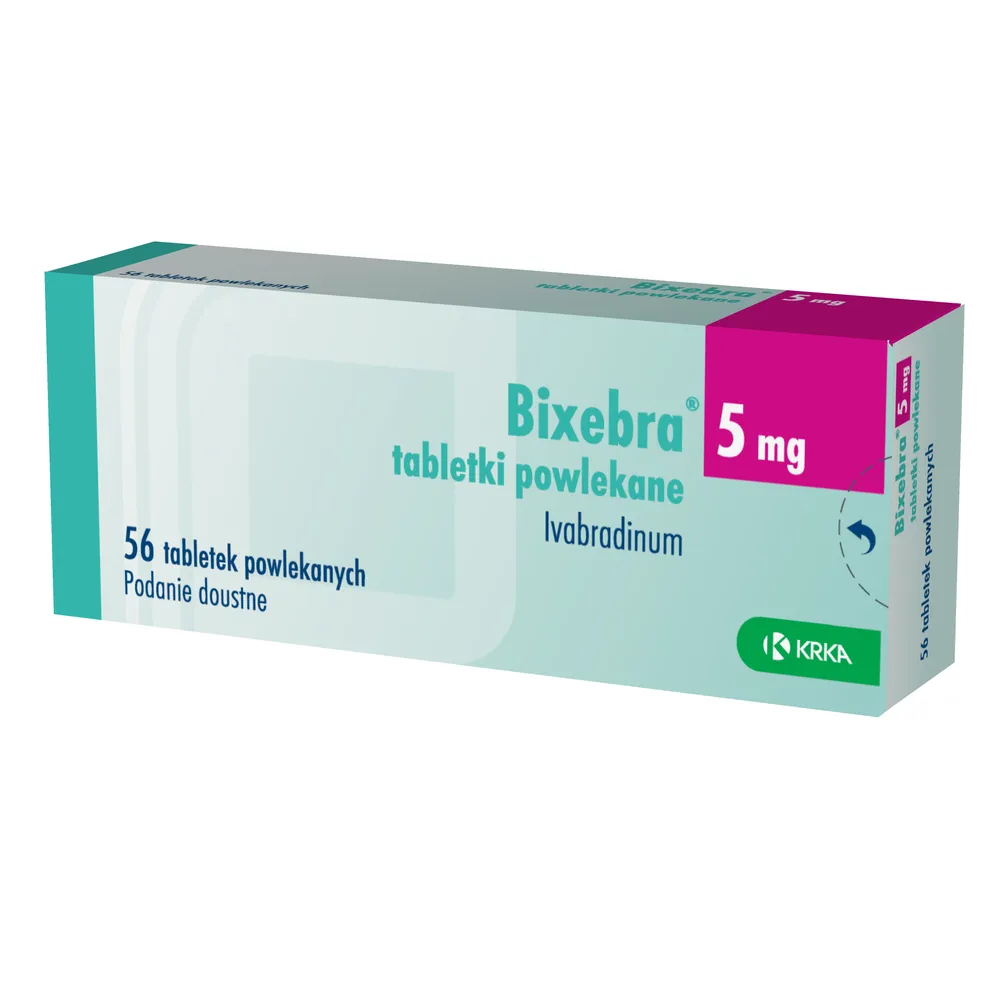
Table of Contents
Patient Information Leaflet
Warning! Keep this leaflet. Information on the immediate packaging is in a foreign language.
Bixebra (Ivabradin HCS 5 mg Filmtabletten)
5 mg, film-coated tablets
Ivabradinum
Bixebra and Ivabradin HCS 5 mg Filmtabletten are different trade names for the same medicine.
Please read the entire leaflet carefully before using this medicine, as it contains
important information for the patient.
- Keep this leaflet for future reference.
- If you have any doubts, consult your doctor, pharmacist, or nurse.
- This medicine has been prescribed for a specific individual. Do not pass it on to others. This medicine may harm other people, even if their symptoms are the same.
- If you experience any adverse reactions, including any not listed in this leaflet, inform your doctor, pharmacist, or nurse. See section 4.
Table of Contents
- What Bixebra is and what it is used for
- Important information before taking Bixebra
- How to take Bixebra
- Possible side effects
- How to store Bixebra
- Contents of the pack and other information
1. What Bixebra is and what it is used for
Bixebra contains ivabradine (as ivabradine hydrochloride) as the active substance.
Bixebra is a heart medication used for:
- symptomatic stable angina (which causes chest pain) in adult patients with a heart rate of 70 beats per minute or higher. Bixebra is used in adults who do not tolerate or cannot take certain heart medications called beta-blockers. It is also used in combination with beta-blockers in adult patients whose condition is not fully controlled with a beta-blocker alone.
- chronic heart failure in adult patients with a heart rate of 75 beats per minute or higher. Bixebra is used in combination with standard therapy, including beta-blockers, or when beta-blockers are contraindicated or not tolerated.
About stable angina (commonly referred to as "angina")
Stable angina is a heart disease that occurs when the heart muscle does not receive enough oxygen. The most common symptom of angina is pain or discomfort in the chest.
About chronic heart failure
Chronic heart failure is a heart condition that occurs when the heart cannot pump enough blood to meet the body's needs. The most common symptoms of heart failure are shortness of breath, fatigue, tiredness, and swelling of the ankles.
How Bixebra works
Ivabradine's specific action of reducing heart rate helps:
- control and reduce the number of angina attacks by decreasing the heart's oxygen demand
- improve heart function and prognosis in patients with chronic heart failure.
Page 1 of 6
2. Important information before using Bixebra
When not to use Bixebra:
- if the patient is allergic to ivabradine or any of the other ingredients of this medicine (listed in section 6);
- in patients whose resting heart rate is too low (below 70 beats per minute);
- in patients with cardiogenic shock (a heart condition treated in hospital);
- in patients with heart rhythm disorders (sick sinus syndrome, sinoatrial block, third-degree atrioventricular block);
- in patients with recent myocardial infarction (heart attack);
- in patients with very low blood pressure;
- in patients with unstable angina (a severe form of angina with frequent chest pain occurring with or without exertion);
- in patients whose heart failure has recently worsened;
- if heart activity is maintained solely by a cardiac pacemaker;
- in patients with severe liver disease;
- in patients currently taking antifungal medicines (such as ketoconazole, itraconazole), macrolide antibiotics (e.g. josamycin, clarithromycin, telithromycin or oral erythromycin), HIV treatments (such as nelfinavir, ritonavir) or nefazodone (a medicine used to treat depression), or diltiazem, verapamil (medicines used to treat high blood pressure or angina);
- in women of childbearing potential who are not using appropriate contraceptive methods;
- in pregnant women or women planning to become pregnant;
- in breastfeeding women.
Warnings and precautions
Before starting treatment with Bixebra, discuss with your doctor or pharmacist:
- if the patient has heart rhythm disorders (such as irregular heartbeat, palpitations, worsening chest pain) or has a certain abnormality in the electrocardiogram (ECG), known as long QT syndrome;
- if the patient experiences symptoms such as fatigue, dizziness or shortness of breath (which may indicate that the heart rate is too low);
- if the patient develops symptoms of atrial fibrillation [extremely high resting heart rate (over 110 beats per minute) or irregular pulse, without apparent cause, difficult to measure];
- if the patient has recently had a stroke;
- if the patient has mild or moderately low blood pressure;
- if the patient has uncontrolled blood pressure, especially after changing antihypertensive treatment;
- if the patient has severe heart failure or heart failure with a certain ECG abnormality called bundle branch block;
- if the patient has chronic retinal disease;
- if the patient has moderate to severe liver disease;
- if the patient has severe kidney disease.
If any of the above conditions occur, the doctor should be informed immediately before or during treatment with Bixebra.
Children and adolescents
Page 2 of 6
This medicine should not be given to children and adolescents under 18 years of age. Available data in this age group are insufficient.
Bixebra with other medicines
Tell your doctor or pharmacist about all medicines the patient is currently taking, has recently taken, or plans to take.
Inform your doctor if taking any of the following medicines, as dose adjustment of Bixebra or close monitoring may be required:
- fluconazole (an antifungal medicine);
- rifampicin (an antibiotic);
- barbiturates (medicines used for sleep difficulties or epilepsy);
- phenytoin (a medicine used for epilepsy);
- St John’s wort (Hypericum perforatum) preparations (herbal medicines used for depression);
- medicines that prolong the QT interval used to treat heart rhythm disorders or other conditions, such as:
- quinidine, disopyramide, ibutilide, sotalol, amiodarone (medicines used to treat heart rhythm disorders);
- bepridil (a medicine used to treat angina);
- certain types of medicines used to treat anxiety, schizophrenia or other psychoses (such as pimozide, ziprasidone, sertindole);
- antimalarial medicines (such as mefloquine or halofantrine);
- intravenous erythromycin (an antibiotic);
- pentamidine (an antiparasitic medicine);
- cisapride (a medicine for gastroesophageal reflux);
- certain types of diuretics that may reduce potassium levels in the blood, such as furosemide, hydrochlorothiazide, indapamide (medicines used to treat oedema, high blood pressure).
Bixebra with food and drink
Grapefruit juice should be avoided during treatment with Bixebra.
Pregnancy and breastfeeding
If the patient is pregnant or breastfeeding, suspects she may be pregnant, or is planning to become pregnant, she should consult her doctor or pharmacist before using this medicine.
Bixebra must not be used during pregnancy or if the patient is planning to become pregnant (see “When not to use Bixebra”).
If pregnancy occurs during treatment with Bixebra, consult a doctor immediately.
Women of childbearing potential must not take Bixebra unless they are using appropriate contraceptive methods (see “When not to use Bixebra”).
Bixebra must not be taken during breastfeeding (see “When not to use Bixebra”). The patient should consult her doctor if she is breastfeeding or intends to breastfeed, as breastfeeding must be discontinued if the patient is taking Bixebra.
Driving and using machines
Bixebra may cause transient visual disturbances (brief sensations of bright light within the visual field, see “Possible side effects”). If such symptoms occur, caution should be exercised when driving or operating machinery, especially in situations involving sudden changes in lighting intensity, particularly when driving at night.
Bixebra contains lactose monohydrate
If the patient has previously been diagnosed with an intolerance to certain sugars, the patient should consult their doctor before taking this medicine.
Page 3 of 6
3. How to take Bixebra
This medicine should always be taken according to the instructions given by your doctor or pharmacist. If in doubt,
you should consult your doctor or pharmacist.
Bixebra tablets should be taken during meals.
Bixebra is available in the following strengths: 5 mg and 7.5 mg.
The 5 mg coated tablet of Bixebra can be divided into equal doses.
Patients with stable angina pectoris
The initial dose should not exceed one 5 mg tablet of Bixebra taken twice daily. If symptoms of angina pectoris persist and the patient tolerates the 5 mg dose twice daily well, the dose may be increased. The maintenance dose should not exceed 7.5 mg twice daily. Your doctor will prescribe the appropriate dose for you. The usual dose is one tablet in the morning and one tablet in the evening. In some cases (e.g. if the patient is 75 years of age or older), the doctor may prescribe half the dose, i.e. half a 5 mg tablet of Bixebra (corresponding to 2.5 mg of ivabradine) in the morning and half a 5 mg tablet in the evening.
Patients with chronic heart failure
The usual recommended starting dose is one 5 mg tablet of Bixebra taken twice daily. If necessary, the dose may be increased to one 7.5 mg tablet of Bixebra taken twice daily. Your doctor will determine the appropriate dose for you. The usual dose is one tablet in the morning and one tablet in the evening. In some cases (e.g. if the patient is 75 years of age or older), the doctor may recommend half the dose, i.e. half a 5 mg tablet of Bixebra (corresponding to 2.5 mg of ivabradine) in the morning and half a 5 mg tablet in the evening.
Taking more Bixebra than prescribed
After taking a larger than recommended dose of Bixebra, shortness of breath or fatigue may occur due to excessive slowing of the heart rate. In such a case, you should contact your doctor immediately.
Missing a dose of Bixebra
If you miss a dose of Bixebra, take the next dose at your usual time. Do not take a double dose to make up for the missed dose.
Stopping Bixebra
Since treatment for angina pectoris or chronic heart failure is usually long-term, you should consult your doctor before stopping this medicine.
If you feel that the effect of Bixebra is too strong or too weak, you should consult your doctor or pharmacist.
If you have any further doubts about the use of this medicine, you should consult your doctor or pharmacist.
4. Possible adverse reactions
Like all medicines, this medicine can cause adverse reactions, although not everyone experiences them.
The most common adverse reactions of this medicine are dose-dependent and are related to the
mechanism of action of the medicine:
Page 4 of 6
Very common adverse reactions (may occur in more than 1 in 10 patients):
visual disturbances (transient perception of bright light, most often caused by sudden changes in light intensity). These disturbances are also described as halos, colored flashes, split image, or multiple images. They usually occur within the first two months of treatment and may recur and resolve during therapy or after treatment.
Common adverse reactions (may occur in less than 1 in 10 patients):
changes in heart function (symptoms of slowed heart rate). Symptoms occur particularly within the first 2 to 3 months after starting treatment.
Other adverse reactions have also been reported:
Common adverse reactions (may occur in less than 1 in 10 patients):
irregular, rapid heartbeats (atrial fibrillation), unusual awareness of heartbeat (bradycardia, ventricular extrasystoles, first-degree atrioventricular block (prolonged PQ interval on ECG)), uncontrolled blood pressure, headache, dizziness, and blurred vision (blurred vision).
Uncommon adverse reactions (may occur in less than 1 in 100 patients):
palpitations and extra heartbeats, nausea, constipation, diarrhea, abdominal pain, sensation of spinning (vertigo), difficulty breathing (dyspnea), muscle cramps, changes in laboratory parameters: high levels of uric acid in blood, increased number of eosinophils in blood (a type of white blood cells), increased creatinine levels in blood (a product of muscle breakdown), skin rash, angioedema (such as swelling of the face, tongue or throat, difficulty breathing or swallowing), low blood pressure, fainting, feeling of fatigue, feeling of weakness, abnormal heart activity visible on ECG recording, double vision, impaired vision.
Rare adverse reactions (may occur in less than 1 in 1000 patients):
urticaria, itching, redness of the skin, malaise.
Very rare adverse reactions (may occur in less than 1 in 10,000 patients):
irregular heartbeat (second-degree atrioventricular block, third-degree atrioventricular block, sick sinus syndrome).
Reporting of adverse reactions
If any adverse reactions occur, including any adverse reactions not listed in this leaflet, inform your doctor, pharmacist, or nurse. Adverse reactions can be reported directly to the Department of Monitoring Adverse Drug Reactions of the Office for Registration of Medicinal Products, Medical Devices and Biocidal Products
Al. Jerozolimskie 181C, 02-222 Warsaw
tel.: + 48 22 49 21 301
fax: + 48 22 49 21 309
website: https://smz.ezdrowie.gov.pl
By reporting adverse reactions, additional information on the safety of the medicine can be collected.
5. How to store Bixebra
Keep this medicine out of the sight and reach of children.
Do not use this medicine after the expiry date stated on the packaging. The expiry date refers to the last day of the stated month.
No special storage conditions apply.
Page 5 of 6
Medicines must not be disposed of via wastewater or household waste. Ask your pharmacist how to dispose of medicines no longer required. This will help protect the environment.
6. Contents of the pack and other information
What Bixebra contains
- The active substance is ivabradine. Each coated tablet contains 5 mg of ivabradine (as 5.390 mg ivabradine hydrochloride).
- The other ingredients (excipients) are: maltodextrin, lactose monohydrate, corn starch, colloidal anhydrous silica, magnesium stearate, hypromellose 3 cP. Coating: hypromellose 6 cP, titanium dioxide (E 171), talc, propylene glycol, yellow iron oxide (E 172), red iron oxide (E 172). See section 2. "Bixebra contains lactose monohydrate".
What Bixebra looks like and contents of the pack
Light pink-orange, rectangular, slightly biconvex coated tablets with a division line on one side; tablet dimensions: 8 mm x 4.5 mm. The tablet can be divided into equal doses.
Available pack sizes:
56 coated tablets in blisters made of OPA/Aluminium/PVC/Aluminium foil, packed in a cardboard box.
For further information, please contact the marketing authorisation holder or the parallel importer.
Marketing authorisation holder in Austria, country of export:
HCS BV
H. Kennisstraat 53, 2650 Edegem, Belgium
Manufacturer:
KRKA, d.d., Novo mesto
Šmarješka cesta 6, 8501 Novo mesto, Slovenia
TAD Pharma GmbH
Heinz-Lohmann-Straße 5, 27472 Cuxhaven, Germany
Parallel importer:
Delfarma Sp. z o.o.
ul. Św. Teresy od Dzieciątka Jezus 111, 91-222 Łódź, Poland
Repackaged by:
Delfarma Sp. z o.o.
ul. Św. Teresy od Dzieciątka Jezus 111, 91-222 Łódź, Poland
Marketing authorisation number in Austria, country of export: 137968
Parallel import authorisation number: 99/21
Page 6 of 6