Bisohexal 10
Poland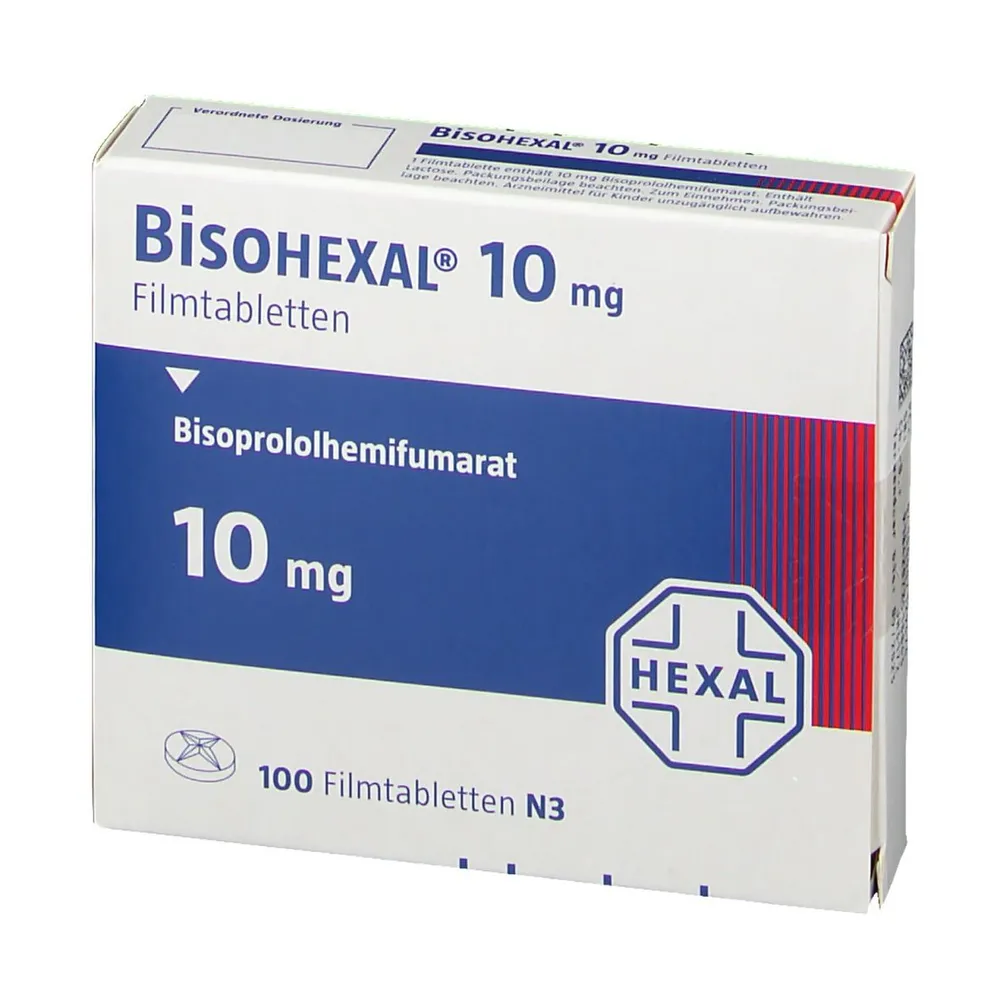
Table of Contents
Package leaflet: Information for the patient
BisoHEXAL 5, 5 mg, film-coated tablets
BisoHEXAL 10, 10 mg, film-coated tablets
Bisoprolol fumarate
Please read the entire leaflet before taking the medicine, as it contains important information
for the patient.
- Keep this leaflet so that you can read it again if necessary.
- If you have any questions, please consult your doctor or pharmacist.
- This medicine has been prescribed for a specific individual. Do not pass it on to others. The medicine may harm another person, even if their symptoms are the same.
- If the patient experiences any adverse reactions, including any adverse reactions not listed in this leaflet, inform the doctor or pharmacist. See section 4.
Table of contents:
- What BisoHEXAL is and what it is used for
- Important information before taking BisoHEXAL
- How to take BisoHEXAL
- Possible side effects
- How to store BisoHEXAL
- Contents of the pack and other information
1. What BisoHEXAL is and what it is used for
BisoHEXAL contains the active substance bisoprolol. Bisoprolol is a highly selective beta-1 adrenolytic agent which does not exhibit intrinsic sympathomimetic activity or membrane-stabilizing effects. It shows only minimal affinity for beta-2 adrenergic receptors in the smooth muscles of bronchi and blood vessels, as well as for beta-2 adrenergic receptors involved in metabolic regulation. In patients with angina pectoris, blockade of beta receptors reduces heart rate and thus decreases oxygen demand.
Acute administration of bisoprolol in patients with coronary artery disease without chronic heart failure reduces heart rate and stroke volume, thereby decreasing cardiac output and oxygen consumption. During chronic treatment, initially elevated peripheral resistance is reduced.
BisoHEXAL is indicated for the treatment of:
arterial hypertension;
ischaemic heart disease.
2. Important information before using BisoHEXAL
When not to use BisoHEXAL
Do not use BisoHEXAL if you have:
hypersensitivity to bisoprolol or to any of the other ingredients of this medicine (listed in section 6);
acute heart failure or during episodes of decompensation (uncompensated heart failure), heart failure requiring intravenous inotropic agents (affecting the force of heart muscle contraction);
cardiogenic shock;
second- or third-degree atrioventricular block (without a pacemaker);
sick sinus syndrome;
sinoatrial block;
symptomatic bradycardia;
symptomatic hypotension;
severe asthma or severe chronic obstructive pulmonary disease;
severe peripheral arterial disease or severe Raynaud's syndrome;
untreated phaeochromocytoma;
metabolic acidosis.
BisoHEXAL must not be used in children.
Warnings and precautions
Before starting treatment, discuss with your doctor or pharmacist if you have:
first-degree atrioventricular block;
diagnosed diabetes with large fluctuations in blood glucose levels, as BisoHEXAL may mask symptoms of hypoglycaemia (low blood sugar), such as tachycardia (rapid heartbeat), palpitations or sweating;
strict fasting;
diagnosed and treated phaeochromocytoma;
Prinzmetal's angina: episodes of coronary artery spasm have been observed. In patients with Prinzmetal's angina treated with bisoprolol, angina attacks cannot be completely excluded;
severe peripheral arterial disease (due to possible worsening of symptoms, especially at the beginning of treatment);
mild peripheral circulatory disorders (such as Raynaud's disease or intermittent claudication);
diagnosed mild obstructive respiratory disease or bronchial asthma; your doctor will monitor for new symptoms (e.g. shortness of breath, exercise intolerance, cough) in patients with obstructive respiratory disease;
planned general anaesthesia before surgery. Inform the anaesthetist that you are taking BisoHEXAL due to possible interactions with other medicines, which may lead to slowed heart rate and rhythm disturbances (bradyarrhythmia), reduced reflex tachycardia (increased heart rate), and reduced reflex compensatory capacity in case of blood loss. If discontinuation of BisoHEXAL is necessary before surgery, your doctor will recommend gradually reducing the dose so that the withdrawal process ends approximately 48 hours before anaesthesia;
diagnosed psoriasis or history of psoriasis;
severe allergic reactions in medical history;
ongoing desensitisation treatment. BisoHEXAL may increase patient sensitivity to allergens and intensify anaphylactic reactions;
impaired liver or kidney function.
BisoHEXAL with other medicines
Tell your doctor about all medicines you are currently taking or have recently taken, as well as any medicines you plan to use.
Concomitant use of BisoHEXAL is not recommended with:
calcium channel blockers of the verapamil and diltiazem type, as they have negative effects on contractility and atrioventricular conduction. Intravenous verapamil administered to patients receiving bisoprolol may cause severe hypotension and atrioventricular block;
centrally acting antihypertensive agents (such as clonidine, methyldopa, moxonidine, rilmenidine) due to possible worsening of heart failure. Sudden withdrawal of these agents may increase the risk of hypertension, especially if it occurs before stopping BisoHEXAL.
Use caution when using BisoHEXAL together with the following medicines:
Class I antiarrhythmic agents (such as quinidine, disopyramide, lidocaine, phenytoin, flecainide, propafenone) and other beta-blockers, as they may enhance the effect on atrial conduction time and increase negative inotropic action (reduced heart contraction force);
dihydropyridine-type calcium antagonists (such as felodipine and amlodipine), due to increased risk of hypotension and, in patients with heart failure, risk of worsening ventricular contractile function;
Class III antiarrhythmic agents (e.g. amiodarone) due to possible enhanced effect on atrioventricular conduction time;
topically applied beta-adrenergic blocking agents (e.g. eye drops for glaucoma treatment) due to possible additive effects with the systemic action of bisoprolol;
cholinomimetic agents due to possible prolonged atrioventricular conduction time and increased risk of bradycardia (slow heart rate);
insulin and oral antidiabetic agents due to possible enhanced blood glucose-lowering effect and possible masking of hypoglycaemia symptoms;
medicines used for general anaesthesia due to possible suppression of reflex tachycardia and increased risk of hypotension;
digitalis glycosides due to possible reduced heart rate and prolonged atrioventricular conduction time;
non-steroidal anti-inflammatory drugs (NSAIDs) due to possible reduced antihypertensive effect of bisoprolol;
beta-adrenomimetic agents (such as isoprenaline, dobutamine) due to possible reduced efficacy of both medicines;
adrenergic agents activating both beta- and alpha-adrenergic receptors (e.g. noradrenaline, adrenaline) due to possible vasoconstrictive effects of these agents, leading to increased blood pressure and worsening of intermittent claudication;
antihypertensive agents and other medicines reducing blood pressure (such as tricyclic antidepressants, barbiturates, phenothiazine derivatives) due to increased risk of hypotension.
The following medicines should be used with caution:
mefloquine may increase the risk of bradycardia;
monoamine oxidase inhibitors (except MAO-B inhibitors): enhance the blood pressure-lowering effect of bisoprolol, but also carry the risk of so-called hypertensive crisis.
BisoHEXAL with food and drink
Take BisoHEXAL in the morning, on an empty stomach or with breakfast. Swallow the tablets whole with liquid, without chewing.
Pregnancy and breastfeeding
If you are pregnant, breastfeeding, think you may be pregnant, or plan to become pregnant, consult your doctor before using this medicine.
Pregnancy
BisoHEXAL must not be used during pregnancy unless absolutely necessary, as determined by your doctor. Bisoprolol may have harmful effects on pregnancy and/or fetal or neonatal development (possible fetal growth retardation, intrauterine death, miscarriage or premature birth).
If bisoprolol treatment is necessary, your doctor will monitor the course of pregnancy and fetal development and may consider alternative treatment methods. The newborn should remain under close observation. Symptoms of hypoglycaemia and bradycardia in the newborn usually occur within the first 3 days after birth.
Breastfeeding
It is unknown whether BisoHEXAL passes into breast milk. Breastfeeding is not recommended during treatment with BisoHEXAL.
Driving and operating machinery
Treatment with bisoprolol may impair the ability to drive or operate machinery, especially at the beginning of treatment, when changing medication, or when consuming alcohol.
BisoHEXAL contains lactose and sodium
If you have been previously diagnosed with intolerance to certain sugars, consult your doctor before taking this medicine.
This medicine contains less than 1 mmol (23 mg) of sodium per tablet, meaning it is considered "sodium-free".
Information for diabetic patients
One coated tablet contains less than 0.01 carbohydrate exchange unit.
3. How to use BisoHEXAL
This medicine should always be taken exactly as prescribed by your doctor. In case of doubt, consult your doctor or pharmacist.
Treatment with bisoprolol should be initiated at low doses and increased gradually and slowly. Your doctor will adjust the dose according to heart rate and treatment effectiveness.
Dosage in hypertension and ischemic heart disease
Your doctor will determine the individual dose for each patient. In some patients, a dose of 5 mg once daily may be sufficient. If necessary, your doctor may increase the dose to 10 mg once daily. The maximum dose is 20 mg per day.
Dosage in patients with impaired liver or kidney function
In patients with mild to moderate impairment of liver or kidney function, dosage adjustment is generally not required.
In patients with severe renal insufficiency (creatinine clearance <20 ml/min) and in patients with severe impairment of liver function, the dose should not exceed 10 mg per day.
Dosage in elderly patients
Dosage adjustment is not necessary.
Use in children
BisoHEXAL should not be given to children due to lack of experience with use in this age group.
Method and duration of administration
The tablets should be taken in the morning, on an empty stomach or with breakfast.
Swallow the tablets whole, without chewing, with an adequate amount of liquid.
The coated tablets of BisoHEXAL have two deep notches, specially designed to allow easy division of the tablet into four parts.
To divide the tablet, place it on a hard surface with the notches facing upwards and press with your finger.
There are no limitations regarding the duration of bisoprolol treatment. This depends on the indication and severity of disease symptoms. Bisoprolol treatment should not be stopped abruptly. Discontinuation of the drug, especially in patients with coronary heart disease, should be carried out gradually by reducing the daily dose over 7–10 days. Sudden discontinuation of BisoHEXAL may worsen the patient's condition.
Overdose of BisoHEXAL
In case of overdose, seek immediate medical advice from your doctor or pharmacist.
The most common symptoms that may occur after overdose of drugs in this class include bradycardia (slowing of heart rate), hypotension (low blood pressure), bronchospasm, acute heart failure, and decreased blood glucose levels.
Treatment of overdose is usually supportive and symptomatic.
- In case of bradycardia: administer atropine intravenously. If the response is inadequate, carefully administer isoprenaline or another agent with positive chronotropic effect (increasing heart rate). In certain situations, temporary cardiac pacing via a vein may be necessary.
- In case of hypotension: administer intravenous fluids and vasoconstrictor agents. Intravenous glucagon may also be beneficial.
- In case of atrioventricular block (second- or third-degree): closely monitor the patient and treat with intravenous isoprenaline or temporary cardiac pacing via a vein.
- In case of worsening heart failure: administer intravenous diuretics, agents with positive inotropic effect (increasing myocardial contractility), and vasodilators.
- In case of bronchospasm: use bronchodilators such as isoprenaline, beta-2-adrenergic agonists, and/or theophylline.
- In case of hypoglycemia: administer glucose intravenously.
Limited data indicate that bisoprolol is poorly removed by hemodialysis.
Missed dose of BisoHEXAL
Do not take a double dose to make up for a missed dose.
Stopping BisoHEXAL treatment
Do not stop treatment without consulting your doctor. Abrupt discontinuation is only allowed in cases of absolute necessity and on explicit medical advice, as it increases the risk of myocardial infarction and sudden death in patients with ischemic heart disease. The drug should be discontinued gradually by reducing the daily dose over 7 to 10 days.
If you have any further questions about the use of this medicine, consult your doctor or pharmacist.
4. Possible adverse reactions
Like all medicines, this medicine can cause adverse reactions, although not everyone experiences them.
The observed adverse reactions occurred with the following frequency:
Very common (may affect more than 1 in 10 people):
slowing of heart function (in patients with chronic heart failure)
Common (may affect up to 1 in 10 people):
worsening of heart failure (in patients with chronic heart failure), dizziness, headaches (especially at the beginning of treatment, usually mild and often resolve within 1-2 weeks), nausea, vomiting, diarrhoea, constipation, sensation of coldness or numbness in limbs, hypotension (especially in patients with heart failure), feeling of fatigue, exhaustion.
Uncommon (may affect up to 1 in 100 people):
slowing of heart function (in patients with hypertension or angina pectoris), atrioventricular conduction disturbances, worsening of heart failure, bronchospasm in patients with bronchial asthma or obstructive airway disease in medical history, muscle weakness and cramps, sleep disturbances, depression.
Rare (may affect up to 1 in 1000 people):
increased triglyceride levels, increased liver enzyme activity (AlAT, AspAT), fainting, reduced tear production (should be considered in patients using contact lenses), hearing disturbances, allergic rhinitis, hypersensitivity reactions (itching, sudden skin redness, rash), hepatitis, erectile dysfunction, nightmares, hallucinations.
Very rare (may affect up to 1 in 10,000 people):
conjunctivitis, alopecia, psoriasis (or exacerbation of existing psoriasis), psoriasiform rash.
Reporting of adverse reactions
If any adverse reactions occur, including any adverse reactions not listed in this leaflet, inform your doctor, pharmacist, or nurse. Adverse reactions can also be reported directly to the Department of Monitoring Adverse Drug Reactions at the Office for Registration of Medicinal Products, Medical Devices and Biocidal Products: Al. Jerozolimskie 181C, 02-222 Warsaw
tel: + 48 22 49 21 301/fax: + 48 22 49 21 309/website: https://smz.ezdrowie.gov.pl
By reporting adverse reactions, additional information on the safety of the medicine can be collected.
5. How to store BisoHEXAL
Keep this medicine out of sight and reach of children.
Do not use this medicine after the expiry date stated on the packaging after EXP.
The expiry date refers to the last day of the stated month.
Store below 25°C.
Medicines must not be disposed of via wastewater or household waste. Ask your pharmacist how to dispose of medicines no longer required. This will help protect the environment.
6. Contents of the pack and other information
What BisoHEXAL contains
The active substance is bisoprolol fumarate.
One coated tablet contains 5 mg or 10 mg of bisoprolol fumarate.
The other ingredients are: calcium hydrogen phosphate anhydrous, microcrystalline cellulose,
corn starch, sodium croscarmellose, colloidal anhydrous silica, magnesium stearate.
Coating:
BisoHEXAL 5
Opadry [lactose monohydrate, hypromellose, titanium dioxide (E 171), polyethylene glycol 4000], yellow iron oxide (E 172)
BisoHEXAL 10
Opadry [lactose monohydrate, hypromellose, titanium dioxide (E 171), polyethylene glycol 4000], yellow iron oxide (E 172), red iron oxide (E 172)
What BisoHEXAL looks like and contents of the pack
The tablets have two deep, intersecting grooves, facilitating division into four parts.
Aluminum blisters in cardboard packaging contain 30 coated tablets.
Marketing Authorisation Holder and Manufacturer
Marketing Authorisation Holder
Sandoz GmbH
Biochemiestrasse 10
6250 Kundl, Austria
Manufacturers
Lek S.A.
Domaniewska 50 C
02-672 Warsaw, Poland
Salutas Pharma GmbH
Otto-von-Guericke-Allee 1
39179 Barleben, Germany
Lek S.A.
Podlipie 16
95-010 Stryków, Poland
For further information, please contact:
Sandoz Polska Sp. z o.o.
Domaniewska 50 C
02-672 Warsaw, Poland
Tel. 22 209 70 00