Bibloc
Poland
Table of Contents
Patient Information Leaflet
Warning! Keep this leaflet. Information on the immediate packaging is in a foreign language.
Bibloc (BisoHEXAL), 7.5 mg, film-coated tablets
Bisoprolol fumarate
Bibloc and BisoHEXAL are different trade names for the same medicine.
Please read the entire leaflet carefully before taking the medicine, as it contains important information for the patient.
- Keep this leaflet so that you can read it again if necessary.
- If you have any questions, please consult your doctor or pharmacist.
- This medicine has been prescribed for a specific individual. Do not share it with others. This medicine may harm someone else, even if their symptoms are similar.
- If you experience any adverse reactions, including any adverse reactions not listed in this leaflet, inform your doctor, pharmacist, or nurse. See section 4.
Table of Contents:
- What is Bibloc and what is it used for
- Important information before taking Bibloc
- How to take Bibloc
- Possible side effects
- How to store Bibloc
- Contents of the pack and other information
1. What is Bibloc and what is it used for
Bibloc belongs to a group of medicines called beta-blockers. They protect the heart from excessive activity.
Bibloc is used in the treatment of:
- heart failure, characterized by shortness of breath during exertion or fluid retention in the body. In such cases, Bibloc may be used as additional treatment for heart failure already managed with other medicines.
2. Important information before using Bibloc
When not to use Bibloc
- If the patient is allergic to bisoprolol fumarate or to any of the other ingredients of this medicine (listed in section 6).
- If the patient has cardiogenic shock — a severe heart condition characterized by rapid, weak pulse, low blood pressure, cold and clammy skin, weakness, and fainting.
- If the patient has ever had wheezing or severe bronchial asthma, as breathing problems may occur.
- If the patient has a slow heart rate (less than 60 beats per minute). In case of doubt, consult a doctor.
- If the patient has very low blood pressure.
- If the patient has severe circulatory disorders (which may cause tingling, paleness, or blueness of fingers and toes).
- If the patient has severe heart rhythm disorders.
- If the patient has developed acute heart failure or has pre-existing heart failure that is decompensated and requires hospital treatment.
- If the patient has an accumulation of acids in the body, diagnosed as metabolic acidosis. The doctor will provide further information.
- If the patient has a pheochromocytoma (a so-called chromaffin tumor) that is untreated.
If in any doubt, consult a doctor.
Warnings and precautions
Before starting to take Bibloc, consult a doctor:
- If the patient has wheezing or difficulty breathing (bronchial asthma), they may need to take bronchodilator medicines simultaneously. A higher dose of beta-2 agonists may be necessary.
- If the patient has diabetes. Bibloc tablets may mask symptoms of low blood sugar (such as increased heart rate, palpitations, or excessive sweating).
- If the patient does not consume food of consistent composition.
- If the patient is undergoing anti-allergy treatment. Bibloc may increase sensitivity to allergens and worsen the severity of hypersensitivity reactions. Treatment with adrenaline may then be ineffective and a higher dose may be required.
- If the patient has first-degree atrioventricular block (a conduction disorder in the heart).
- If the patient has Prinzmetal's angina (chest pain caused by spasm of the coronary arteries supplying blood to the heart muscle).
- If the patient has circulation disorders in the hands and feet.
- If the patient is to undergo a procedure under anesthesia, inform the doctor, hospital staff, or dentist about all medicines being taken.
- If the patient has psoriasis (a recurring skin condition characterized by skin scaling and dry rash), either currently or in the past.
- If the patient has a chromaffin tumor (adrenal medulla tumor). Before prescribing Bibloc, the doctor must initiate appropriate treatment.
- If the patient has thyroid dysfunction. Bisoprolol tablets may mask symptoms of hyperthyroidism.
There is currently no therapeutic experience with the use of Bibloc in heart failure in the following patients:
- with type I diabetes treated with insulin,
- with severe kidney disease,
- with severe liver disease,
- with certain heart conditions,
- who have had a myocardial infarction within the last 3 months.
Treatment of heart failure with Bibloc requires regular medical monitoring. This is absolutely essential, especially at the beginning and after discontinuation of treatment.
Bibloc must not be stopped suddenly unless absolutely necessary. Consult a doctor if any of the warnings described apply to the patient or applied in the past.
Bibloc and other medicines
Tell your doctor or pharmacist about all medicines currently taken or recently taken, as well as any medicines the patient plans to take. This includes medicines available without a prescription. Some medicines must not be taken at the same time as Bibloc, while others may require adjustments, e.g., in dosage.
In every case, inform the doctor if the patient is taking or receiving, in addition to Bibloc, any of the following medicines:
- medicines used to control blood pressure or heart rhythm disorders (e.g., amiodarone, amlodipine, clonidine, digitalis glycosides, diltiazem, disopyramide, felodipine, flecainide, lidocaine, methyldopa, moxonidine, phenytoin, propafenone, quinidine, rilmenidine, verapamil);
- sedatives and medicines used to treat psychosis (mental illness), e.g., barbiturates (also used in epilepsy treatment), phenothiazines (also used to treat nausea and vomiting);
- medicines used to treat depression, e.g., tricyclic antidepressants, MAO-A inhibitors;
- medicines used for anesthesia during surgery (see also "Warnings and precautions");
- certain painkillers (e.g., acetylsalicylic acid, diclofenac, indomethacin, ibuprofen, naproxen);
- medicines used to treat bronchial asthma, nasal congestion, or certain eye conditions such as glaucoma (increased intraocular pressure) or pupil dilation;
- certain medicines used to treat shock (e.g., adrenaline, dobutamine, noradrenaline);
- mefloquine (a medicine used to treat malaria);
- rifampicin (an antibiotic);
- ergotamine derivatives (used to treat migraine). All these medicines, as well as Bibloc, may affect blood pressure and/or heart function.
- insulin or other antidiabetic medicines. There is a possibility of enhanced glucose-lowering effect and masking of symptoms of low blood sugar.
Bibloc with alcohol
Alcohol may worsen dizziness and drowsiness caused by Bibloc. In such cases, alcohol consumption should be avoided.
Pregnancy and breastfeeding
If the patient is pregnant or breastfeeding, suspects she may be pregnant, or is planning to become pregnant, she should consult a doctor before using this medicine. Bibloc may have harmful effects on pregnancy and/or the fetus. The risk of premature birth, miscarriage, low blood sugar in the newborn, and slowed fetal heart rate increases. The medicine may also affect the child's development. Therefore, Bibloc should not be used during pregnancy.
It is not known whether bisoprolol passes into breast milk; therefore, the use of Bibloc is not recommended during breastfeeding.
Driving and operating machinery
This medicine may cause fatigue, drowsiness, or dizziness. If these symptoms occur, the patient should not drive or operate machinery. Be aware that such symptoms may occur especially at the beginning of treatment, when switching from another medicine, or when alcohol is consumed simultaneously.
Bibloc contains monohydrate lactose and sodium
If the patient has previously been diagnosed with intolerance to certain sugars, they should consult a doctor before taking this medicine.
This medicine contains less than 1 mmol (23 mg) of sodium per coated tablet, meaning it is considered "sodium-free".
3. How to take Bibloc
This medicine should always be taken exactly as directed by your doctor or pharmacist.
If in doubt, please consult your doctor or pharmacist.
Your doctor will tell you how many tablets to take. This medicine should be taken in the morning, before, during or after breakfast. Swallow the tablet(s) whole with a small amount of water. Do not chew or crush the tablets.
Usual dose
Heart failure (reduced heart contraction strength)
Before starting treatment with Bibloc, patients usually already receive an angiotensin-converting enzyme (ACE) inhibitor, a diuretic or a cardiac glycoside (a heart and antihypertensive medicine).
The dose will be gradually increased until the appropriate dose for the patient is reached:
- 1.25 mg once daily for 1 week. If this dose is well tolerated, it may be increased to:
- 2.5 mg once daily for the next week. If this dose is well tolerated, it may be increased to:
- 3.75 mg once daily for the next week. If this dose is well tolerated, it may be increased to:
- 5 mg once daily for the next 4 weeks. If this dose is well tolerated, it may be increased to:
- 7.5 mg once daily for the next 4 weeks. If this dose is well tolerated, it may be increased to:
- 10 mg once daily (maintenance dose).
The maximum dose is 10 mg once daily.
Your doctor will determine the optimal dose for you, taking into account, among other factors, any adverse effects.
After the first 1.25 mg dose is administered, your doctor will monitor your blood pressure, pulse rate and heart function.
Impaired liver or kidney function
Your doctor will increase the dose particularly cautiously.
Elderly patients
Dose adjustment is usually not necessary.
If you feel that the effect of Bibloc is too strong or too weak, inform your doctor or pharmacist.
Place the tablet on a hard, flat surface with the score side facing upwards.
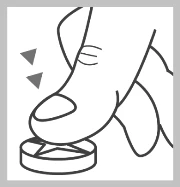
Press your thumb in the center of the tablet. The tablet will break into 3 parts.
Duration of treatment
Bibloc is generally used for long-term treatment.
Use in children and adolescents
Due to lack of data on the use of Bibloc in children and adolescents, its use is not recommended in this age group.
If you take more Bibloc than you should
In case of accidental overdose, contact your doctor or pharmacist immediately. Bring any remaining tablets or this leaflet with you so that medical personnel know which medicine has been taken. Symptoms of overdose may include dizziness, feeling faint, fatigue, shortness of breath and/or wheezing. There may also be slowed heart function, low blood pressure, reduced heart contraction strength and low blood glucose levels (which may cause feelings of hunger, excessive sweating and palpitations).
If you forget to take Bibloc
Do not take a double dose to make up for a missed dose. Take the usual dose as soon as you remember, then return to your normal dosing schedule the next day.
Stopping Bibloc
Do not stop taking Bibloc suddenly. Abruptly stopping treatment may worsen your condition. The dose should be gradually reduced over several weeks, as directed by your doctor.
If you have any further questions about the use of this medicine, please consult your doctor or pharmacist.
4. Possible adverse reactions
Like all medicines, this medicine can cause adverse reactions, although not everyone will experience them.
If an adverse reaction is severe, occurs suddenly, or worsens rapidly, contact a doctor immediately to prevent serious reactions.
The most serious adverse reactions are related to heart function:
- Slowing of heart function (may occur in more than 1 in 10 people)
- Worsening of existing heart failure (may occur in fewer than 1 in 10 people)
- Slow or irregular heartbeat (may occur in fewer than 1 in 100 people)
If the patient experiences dizziness, weakness, or difficulty breathing, contact a doctor as quickly as possible.
If the patient experiences severe allergic reactions, which may include swelling of the face, neck, tongue, lips or throat, or difficulty breathing, seek immediate medical attention.
The following adverse reactions are listed below by frequency of occurrence:
Common (may occur in fewer than 1 in 10 people):
- Feeling of fatigue, exhaustion
- Dizziness
- Headaches
- Feeling of coldness or numbness in fingers of hands or feet, ears and nose; increased occurrence of cramping leg pain during walking
- Very low blood pressure (arterial hypotension), especially in patients with heart failure
- Nausea, vomiting
- Diarrhea
- Constipation
Uncommon (may occur in fewer than 1 in 100 people):
- Decrease in blood pressure upon standing, which may cause dizziness, lightheadedness or fainting
- Sleep disturbances
- Depression
- Irregular heartbeat
- Breathing difficulties in patients with bronchial asthma or a history of respiratory disorders
- Muscle weakness and muscle cramps
Rare (may occur in fewer than 1 in 1000 people):
- Nightmares
- Hallucinations
- Fainting
- Hearing impairment
- Nasal mucosal inflammation causing watery nasal discharge with irritation
- Allergic skin reactions (such as itching, sudden redness of the skin, rash)
- Dry eyes due to reduced tear production (which may be particularly bothersome in patients wearing contact lenses)
- Hepatitis, causing abdominal pain, loss of appetite and sometimes jaundice with yellowing of eyes and skin, as well as darkening of urine
- Reduced sexual function (impotence)
- Increased levels of blood lipids (triglycerides) and increased liver enzyme activity
Very rare (may occur in fewer than 1 in 10,000 people):
- Worsening of psoriasis symptoms or appearance of similar dry, scaly rash and hair loss
- Itching or redness of the eyes (conjunctivitis)
Reporting of adverse reactions
If any adverse reactions occur, including any not listed in this leaflet, inform a doctor, pharmacist or nurse. Adverse reactions can be reported directly to the Department of Monitoring Adverse Drug Reactions at the Office for Registration of Medicinal Products, Medical Devices and Biocidal Products
Al. Jerozolimskie 181C
02-222 Warsaw
Phone: +48 22 49 21 301
Fax: +48 22 49 21 309
Website: https://smz.ezdrowie.gov.pl
Reporting adverse reactions helps provide more information on the safety of this medicine.
5. How to store the medicine Bibloc
- Keep the medicine out of sight and reach of children.
- Do not use this medicine after the expiry date stated on the packaging. The expiry date refers to the last day of the stated month.
- No special storage instructions apply.
- Translation of certain information on the immediate packaging: Ch.-B./verwendbar bis siehe Prägung - Batch number/Expiry date: see imprint.
- Medicines must not be disposed of via wastewater or household waste. Ask your pharmacist how to dispose of medicines no longer required. These measures will help protect the environment.
6. Contents of the pack and other information
What Bibloc contains
The active substance is 7.5 mg of bisoprolol fumarate. Each coated tablet contains 7.5 mg of bisoprolol fumarate.
The other ingredients are: calcium hydrogen phosphate, microcrystalline cellulose, pregelatinized starch (maize), sodium croscarmellose, colloidal anhydrous silica, magnesium stearate, lactose monohydrate, hypromellose, macrogol 4000, titanium dioxide (E 171), yellow iron oxide (E 172).
What Bibloc looks like and contents of the pack
Yellow, round coated tablets with a score line, marked "BIS 7.5" on one side.
The tablets can be divided into three equal doses.
Aluminum blisters (OPA/Al/PVC/Al) in cardboard packaging contain 25 or 30 coated tablets.
For more detailed information, please contact the responsible party or parallel importer.
Marketing Authorisation Holder in Germany, the country of export:
Hexal AG
Industriestraße 25
83607 Holzkirchen
Germany
Manufacturer:
Lek Pharmaceuticals d.d.
Verovškova 57
1526 Ljubljana
Slovenia
Salutas Pharma GmbH
Otto-von-Guericke-Allee 1
39179 Barleben
Germany
Rowa Pharmaceuticals Limited
Newtown, Bantry, Co. Cork
Ireland
Lek S.A.
ul. Podlipie 16
95-010 Stryków
Poland
Parallel Importer:
Delfarma Sp. z o.o.
ul. Św. Teresy od Dzieciątka Jezus 111
91-222 Łódź
Poland
Repackaged in:
Delfarma Sp. z o.o.
ul. Św. Teresy od Dzieciątka Jezus 111
91-222 Łódź
Poland
German Marketing Authorisation Number (country of export): 71882.00.00
Parallel Import Authorisation Number: 297/17