Bi-profenid
Poland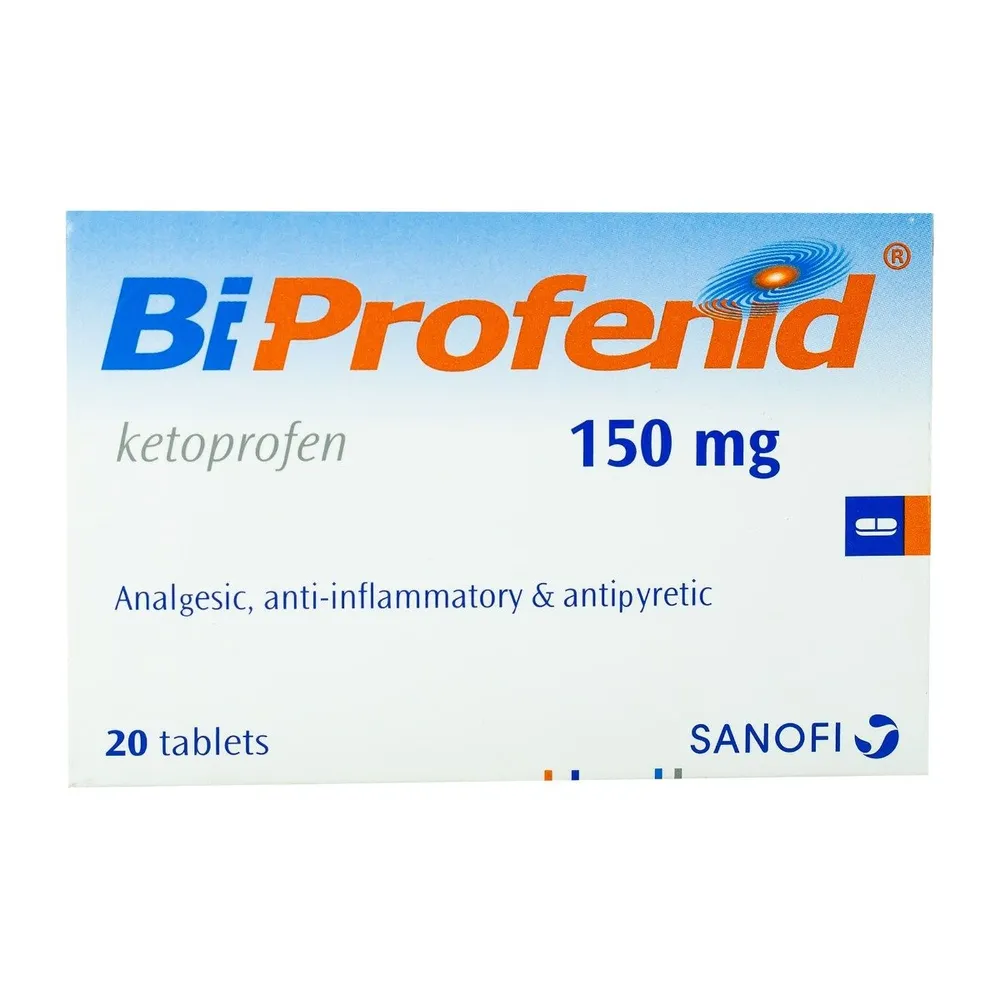
Table of Contents
Package leaflet: Information for the user
Bi-Profenid, 150 mg, modified-release tablets
Ketoprofenum
Please read all of this leaflet carefully before taking this medicine because it contains
important information for you.
- Keep this leaflet. You may need to read it again.
- If you have any further questions, ask your doctor, pharmacist, or nurse.
- This medicine has been prescribed for you only. Do not pass it on to others. It may harm other people, even if their symptoms are the same as yours.
- If you experience any side effects, including any not listed in this leaflet, tell your doctor, pharmacist, or nurse. See section 4.
Contents of the leaflet
- What Bi-Profenid is and what it is used for
- Important information before taking Bi-Profenid
- How to take Bi-Profenid
- Possible side effects
- How to store Bi-Profenid
- Contents of the pack and other information
1. What Bi-Profenid is and what it is used for
Bi-Profenid 150 mg modified-release tablets contain the active substance
ketoprofen. Ketoprofen is a medicine with anti-inflammatory, analgesic,
and antipyretic properties (it belongs to the group of non-steroidal anti-inflammatory drugs – NSAIDs).
The mechanism of action of ketoprofen is probably due to inhibition of prostaglandin synthesis.
Bi-Profenid is a modified-release medicine. The tablets consist of two layers:
one with rapid release and one with slow release of the active substance.
Bi-Profenid is used for symptomatic treatment of:
- rheumatic diseases, including rheumatoid arthritis,
- arthritis of other origins,
- extra-articular inflammatory conditions such as tenosynovitis or painful shoulder syndrome,
- degenerative joint disease with severe pain and significantly impaired patient mobility.
2. Important information before taking Bi-Profenid
When not to take Bi-Profenid:
- if you are allergic to ketoprofen or any of the other ingredients of this medicine (listed in section 6), have aspirin-induced asthma, or other hypersensitivity reactions after taking non-steroidal anti-inflammatory drugs (NSAIDs). In these patients, who have had hypersensitivity reactions in their medical history such as bronchospasm, asthma attacks, rhinitis, urticaria, or other allergic-type reactions, severe, rarely fatal anaphylactic reactions have been observed,
- if you have active gastric or duodenal ulcer disease, or have ever had gastrointestinal bleeding, ulcers, or perforations,
- if you have severe liver or kidney failure,
- if you have severe heart failure,
- if you have a bleeding disorder,
- if you have diagnosed gluten hypersensitivity or intolerance (the tablets contain wheat starch),
- if you are in the third trimester of pregnancy.
Warnings and precautions
Before starting treatment with Bi-Profenid, inform your doctor if you have:
- bronchial asthma, chronic rhinitis, chronic sinusitis, nasal polyps; Administration of ketoprofen may trigger an asthma attack or bronchospasm, especially in individuals hypersensitive to acetylsalicylic acid or non-steroidal anti-inflammatory drugs;
- ulceration or bleeding while taking oral corticosteroids, anticoagulants (such as warfarin), selective serotonin reuptake inhibitors, antiplatelet drugs (such as aspirin), or nicorandil. The use of Bi-Profenid may increase the risk of gastrointestinal ulceration or bleeding in these patients;
- a history of gastrointestinal disease (previous gastric or duodenal ulcer, ulcerative colitis, Crohn's disease), due to the possibility of exacerbating the condition;
- photosensitivity or UV radiation sensitivity;
- heart disease (heart failure), liver disease (liver function disorders), or kidney disease (chronic kidney function disorders), and fluid balance disorders (e.g., dehydration due to diuretic use or after recent surgery). The use of Bi-Profenid may reduce renal blood flow, leading to kidney function disorders, especially in elderly patients. Kidney function should be closely monitored at the beginning of treatment in these patients. In patients with liver function disorders, the doctor may consider reducing the dose. Very rare cases of jaundice and hepatitis have been reported during ketoprofen treatment. Your doctor may recommend appropriate tests;
- infection – see below, section titled “Infections”;
- a history of erythema multiforme (circular or oval redness and swelling of the skin, which usually recur in the same location(s), blisters, urticaria, and skin itching), if it occurred during ketoprofen treatment.
The use of ketoprofen, especially at high doses, may be associated with a higher risk
of serious gastrointestinal toxicity compared to other NSAIDs.
In patients with diabetes, kidney failure, and/or those treated simultaneously with drugs increasing
serum potassium levels, concurrent use of ketoprofen may lead to increased potassium
levels in the blood.
Infections
Bi-Profenid may mask symptoms of infection such as fever and pain. Therefore, Bi-Profenid may
delay appropriate treatment of infection and consequently lead to an increased
risk of complications. This has been observed in bacterial pneumonia and bacterial
skin infections associated with chickenpox. If you are taking this medicine during an
infection and symptoms persist or worsen, consult your doctor immediately.
In women taking ketoprofen long-term, secondary anovulatory infertility may occur.
Ketoprofen, like other NSAIDs, may impair fertility. If you plan to become pregnant
or have difficulty conceiving, you should inform your doctor.
The use of non-steroidal anti-inflammatory drugs other than acetylsalicylic acid, such as
Bi-Profenid, may be associated with a small increased risk of heart attack (myocardial infarction) or stroke.
This risk increases with long-term use of high doses. Do not use higher doses
or longer treatment duration than recommended.
If you have heart disease (heart failure, ischemic heart disease), peripheral arterial disease, and/or cerebrovascular disease, have had a stroke, or suspect you have an increased risk of cardiovascular diseases (e.g., high blood pressure, diabetes, elevated cholesterol, smoking), discuss treatment options with your doctor or pharmacist. Patients with heart disease who develop edema and fluid retention should be appropriately monitored and treatment individually adjusted.
Inform your doctor if you recently underwent coronary artery bypass surgery.
The use of medicines such as Bi-Profenid may be associated with a small increased risk of
atrial fibrillation.
If visual disturbances occur, discontinue the medicine and contact your doctor.
During treatment, inform your doctor if you experience:
- signs of drug hypersensitivity, especially: shortness of breath, urticaria, skin rash, mucosal damage, sudden itching of the face and neck. You should contact your doctor immediately, who will decide whether to discontinue the medicine.
- signs of gastrointestinal bleeding, such as: vomiting blood, blood in stool, tarry stool. Gastrointestinal ulceration or perforation may occur. You should contact your doctor immediately, who will decide whether to discontinue the medicine.
- severe skin reactions (in the form of exfoliative dermatitis, Stevens-Johnson syndrome, or toxic epidermal necrolysis). You should contact your doctor immediately, who will decide whether to discontinue the medicine. The highest risk of these disorders occurs at the beginning of treatment. In most cases, these skin reactions occur during the first month of treatment.
Patients with severe gastrointestinal diseases in their history, especially elderly individuals,
should report any unusual abdominal symptoms (especially gastrointestinal bleeding), particularly during the initial treatment period.
Warning
Bi-Profenid contains the non-steroidal anti-inflammatory drug: ketoprofen.
Concomitant use of other medicines containing non-steroidal anti-inflammatory drugs is not recommended, including acetylsalicylic acid or selective cyclooxygenase-2 (COX-2) inhibitors.
Always read the patient leaflet of any other medicine you are taking simultaneously to
ensure it does not contain a non-steroidal anti-inflammatory drug.
Use of Bi-Profenid in children and adolescents
The use of this medicine is not recommended in children and adolescents under 15 years of age.
Bi-Profenid and other medicines
Tell your doctor about all medicines you are currently taking or have recently taken,
as well as any medicines you plan to take, even those available without a prescription.
Concomitant use of ketoprofen with the following medicines is not recommended:
- other non-steroidal anti-inflammatory drugs (including selective cyclooxygenase-2 (COX-2) inhibitors) and high-dose salicylates. Concomitant use leads to an increased risk of adverse effects (especially risk of gastrointestinal ulceration and gastrointestinal bleeding).
- anticoagulants such as: heparin, vitamin K antagonists (e.g., warfarin), antiplatelet drugs (e.g., clopidogrel, ticlopidine), thrombin inhibitors (e.g., dabigatran), direct factor Xa inhibitors (e.g., apixaban, rivaroxaban, edoxaban)
Ketoprofen inhibits platelet aggregation and irritates the gastric mucosa, leading
to an increased risk of bleeding, especially gastrointestinal bleeding.
Concomitant use of the listed medicines with ketoprofen is not recommended. If concomitant use
of these medicines is necessary, clinical symptoms should be carefully monitored and
periodic laboratory tests performed.
Do not use NSAID treatment for longer than a few days.
- lithium Ketoprofen inhibits lithium excretion, increasing its blood concentration (even to toxic levels). Concomitant use of ketoprofen with lithium salts is not recommended. If such treatment is necessary, strictly follow your doctor's recommendations and regularly perform appropriate tests ordered by your doctor during and after NSAID treatment.
- methotrexate (at doses greater than 15 mg per week) Concomitant use of high-dose methotrexate (greater than 15 mg per week) increases the likelihood of hematological toxicity.
Exercise caution when using concomitantly with the following medicines:
- medicines that increase blood potassium levels In patients taking potassium salts, potassium-sparing diuretics, angiotensin-converting enzyme inhibitors, angiotensin II receptor blockers, other NSAIDs, heparins (low molecular weight or unfractionated), cyclosporine, tacrolimus, and trimethoprim, blood potassium levels may increase.
- diuretics, angiotensin-converting enzyme inhibitors, and angiotensin II receptor blockers Patients taking these medicines concomitantly with ketoprofen should be adequately hydrated before starting treatment. After starting treatment, follow your doctor's recommendations regarding monitoring kidney function.
- methotrexate (at doses less than 15 mg per week) During the first weeks of concomitant use of ketoprofen and methotrexate at doses less than 15 mg per week, regular complete blood counts (morphology) ordered by your doctor should be performed.
- corticosteroids Increased risk of gastrointestinal ulceration and bleeding.
- pentoxifylline Increased risk of bleeding when used concomitantly with ketoprofen. Follow your doctor's recommendations when using these medicines together.
- tenofovir Concomitant use of tenofovir disoproxil fumarate with ketoprofen increases the risk of kidney failure.
- nicorandil Patients taking nicorandil and NSAIDs simultaneously have an increased risk of severe complications such as ulceration, perforation, and gastrointestinal bleeding (see section 4.4).
- cardiac glycosides Non-steroidal anti-inflammatory drugs may exacerbate heart failure and increase blood levels of cardiac glycosides. Caution is advised, especially in patients
with kidney function disorders, due to the fact that NSAIDs may impair
kidney function and reduce renal clearance of cardiac glycosides.
- cyclosporine Increased likelihood of nephrotoxic effects, especially in elderly patients.
- tacrolimus Increased likelihood of nephrotoxic effects, especially in elderly patients.
- quinolone antibiotics Patients taking non-steroidal anti-inflammatory drugs and a quinolone antibiotic simultaneously have an increased risk of seizures.
Particular attention should be paid to concomitant use of ketoprofen with:
- antihypertensive medicines (β-adrenergic receptor blockers, angiotensin-converting enzyme inhibitors, diuretics) – risk of reduced effectiveness of these medicines (inhibition of vasodilatory prostaglandins by NSAIDs);
- thrombolytic agents – increased risk of bleeding;
- probenecid – reduced renal excretion of ketoprofen;
- selective serotonin reuptake inhibitors (SSRIs) – increased risk of gastrointestinal bleeding.
Ketoprofen may reduce the effectiveness of oral contraceptives.
Pregnancy, breastfeeding, and effects on fertility
Pregnancy
If you are pregnant or breastfeeding, think you may be pregnant, or are planning to have a
child, you should consult your doctor before taking this medicine.
The use of Bi-Profenid during the last three months of pregnancy is contraindicated, as it may
harm the unborn child or cause complications during delivery. It may cause
kidney and heart function disorders in the unborn child. It may affect bleeding tendency
in both the mother and child and may cause delivery to be later or longer than expected.
Bi-Profenid should not be used during the first 6 months of pregnancy unless absolutely
necessary and prescribed by a doctor. If treatment is necessary during this period or when trying to conceive, the lowest effective dose should be used for the shortest possible duration. Bi-Profenid taken for longer than a few days from week 20 of pregnancy may cause kidney disorders
in the unborn child, which may lead to low levels of amniotic fluid surrounding
the child (oligohydramnios), or narrowing of a blood vessel (ductus arteriosus) in the child's heart. If
you require treatment for longer than a few days, your doctor may recommend additional
monitoring.
Breastfeeding
If you are breastfeeding, you should consult your doctor before taking this medicine.
The use of ketoprofen is not recommended in breastfeeding women. There are no data
on the passage of ketoprofen into breast milk.
Effect on fertility
See section "Warnings and precautions".
Driving and using machines
If dizziness, drowsiness, or seizures occur while taking ketoprofen, refrain
from driving and operating machinery until your doctor determines
that there are no obstacles to performing these activities.
Important information about some ingredients of Bi-Profenid
Bi-Profenid contains gluten
This medicine contains very small amounts of gluten (derived from wheat starch) and is classified as
"gluten-free". Therefore, it is very unlikely to cause any
problems in patients with celiac disease.
One tablet contains no more than 3.8 micrograms of gluten.
Patients with wheat allergy (other than celiac disease) should not use this medicine.
Bi-Profenid contains lactose
The medicine also contains lactose; therefore, if you have previously been diagnosed with intolerance to certain sugars, you should contact your doctor before taking this medicine.
Bi-Profenid contains sodium
The medicine contains less than 1 mmol (23 mg) of sodium per tablet, meaning the medicine is considered "sodium-free".
3. How to use Bi-Profenid
This medicine should always be used according to the doctor's instructions. If in doubt, consult
your doctor.
The maximum daily dose is 200 mg. Higher doses are not recommended.
Use the lowest effective dose for the shortest duration necessary to relieve symptoms. If, during an infection, symptoms (such as fever and pain) persist or worsen, consult your doctor immediately (see section 2).
Dosage and method of administration:
Adults and adolescents over 15 years of age:
- 150 mg once daily, i.e. 1 modified-release tablet. The tablets should be taken during a meal, with a glass of water. The tablet must be swallowed whole and not chewed.
In case of mild gastric discomfort, it may be advisable to use agents that neutralize gastric acid or protect the gastric mucosa. Aluminum-containing compounds with neutralizing action do not reduce ketoprofen absorption.
Use of a higher than recommended dose of Bi-Profenid
Symptoms observed after ingestion of an excessive dose of ketoprofen include: lethargy, drowsiness, nausea, vomiting, and abdominal pain. In cases of overdose with large doses of ketoprofen, the following may occur: hypotension, respiratory depression, and gastrointestinal bleeding.
There is no specific antidote.
If a higher than recommended dose of the medicine has been taken, contact a doctor immediately.
The doctor will provide symptomatic treatment and initiate life-supporting therapy.
Missed dose of Bi-Profenid
Take the next dose at the usual time. Do not take a double dose to make up for a missed dose.
If you have any further questions about the use of this medicine, consult your doctor or pharmacist.
4. Possible adverse effects
Like all medicines, this medicine can cause adverse effects, although not everyone will experience them.
The frequency of the adverse effects listed below has been defined as follows:
The following adverse effects may occur:
Common (affects 1 to 10 patients in 100):
- Dyspepsia, nausea, abdominal pain, vomiting.
Uncommon (affects 1 to 10 patients in 1,000):
- Central origin dizziness and headache, drowsiness.
- Constipation, diarrhoea, flatulence, gastric mucosal inflammation.
- Rash, redness, itching.
- Oedema, fatigue.
Rare (affects 1 to 10 patients in 10,000):
- Anaemia caused by haemorrhage or bleeding.
- Paraesthesia (sensory disturbances).
- Visual disturbances (blurred vision).
- Tinnitus.
- Dyspnoea, risk of asthma attack.
- Oral mucosal inflammation, gastric ulceration.
- Hepatitis, increased aminotransferase activity, increased plasma bilirubin concentration due to hepatitis.
- Weight gain.
Frequency not known (frequency cannot be estimated from available data):
- Agranulocytosis (reduction in number of certain types of granulocytes in the blood), thrombocytopenia (decreased number of blood platelets), bone marrow suppression, haemolytic anaemia, leukopenia (reduced number of white blood cells in the blood).
- Anaphylactic reactions (including anaphylactic shock).
- Depression, hallucinations, disorientation, mood disturbances.
- Aseptic meningitis, convulsions, taste disturbances, peripheral origin dizziness.
- Heart failure, atrial fibrillation, arterial hypertension, vasodilation, vasculitis.
- Bronchospasm (especially in patients diagnosed with hypersensitivity to acetylsalicylic acid or other NSAIDs), nasal mucosal inflammation.
- Exacerbation of colitis and Crohn's disease, gastrointestinal bleeding, perforations, pancreatitis.
- Photosensitivity, alopecia, urticaria, angioedema, bullous eruptions including Stevens-Johnson syndrome and toxic epidermal necrolysis, acute generalized exanthematous pustulosis.
- Persistent erythema recurring in the same location(s) upon re-exposure to the drug, which may present as circular or oval redness and swelling of the skin, blisters (urticaria), itching of the skin.
- Acute renal failure, particularly in individuals with pre-existing kidney function disorders and/or in dehydrated patients, tubulo-interstitial nephritis, nephrotic syndrome, abnormal kidney function test results.
- Hyponatraemia, hyperkalaemia.
Reporting of adverse effects
If any adverse effects occur, including any adverse effects not listed in this leaflet, inform your doctor or pharmacist. Adverse effects can be reported directly to the Department of Monitoring Adverse Drug Reactions of the Office for Registration of Medicinal Products, Medical Devices and Biocidal Products:
Al. Jerozolimskie 181C, 02-222 Warsaw, tel.: + 48 22 49 21 301, fax: + 48 22 49 21 309, website: https://smz.ezdrowie.gov.pl
Adverse effects can also be reported to the marketing authorisation holder or the representative of the marketing authorisation holder in Poland.
Reporting adverse effects helps to provide more information on the safety of the medicine.
5. How to store Bi-Profenid
Keep this medicine out of sight and reach of children.
Store below 25 °C.
Do not use this medicine after the expiry date stated on the carton after: Expiry.
The expiry date refers to the last day of the stated month.
Medicines must not be disposed of via wastewater or household waste. Ask your pharmacist how to dispose of medicines no longer required. Such measures help protect the environment.
6. Contents of the packaging and other information
What Bi-Profenid contains
- The active substance is ketoprofen. Each tablet contains 150 mg of ketoprofen.
- Other ingredients are: White coating composition: lactose monohydrate, wheat starch, hydrated silica, gelatin, magnesium stearate. Yellow coating composition: hydroxyethylcellulose, calcium hydrogen phosphate dihydrate, sodium phosphate of riboflavin, magnesium stearate.
What Bi-Profenid looks like and contents of the pack
Bi-Profenid tablets are modified-release, divisible tablets.
The tablets are packed in blisters and cardboard boxes. The pack contains 20 or 100 tablets.
Not all pack sizes may be marketed.
Marketing Authorisation Holder and Manufacturer
Marketing Authorisation Holder
Sanofi Winthrop Industrie
82, Avenue Raspail
94250 Gentilly
France
Manufacturers
Famar Lyon
29, avenue du General de Gaulle
69230 Saint Genis Laval
France
Opella Healthcare International SAS
56, route de Choisy
60200 Compiègne
France
For further information, please contact the local representative of the Marketing Authorisation Holder:
Sanofi Sp. z o.o.
ul. Marcina Kasprzaka 6
01-211 Warsaw
Tel.: +48 22 280 00 00