Babyfen
Poland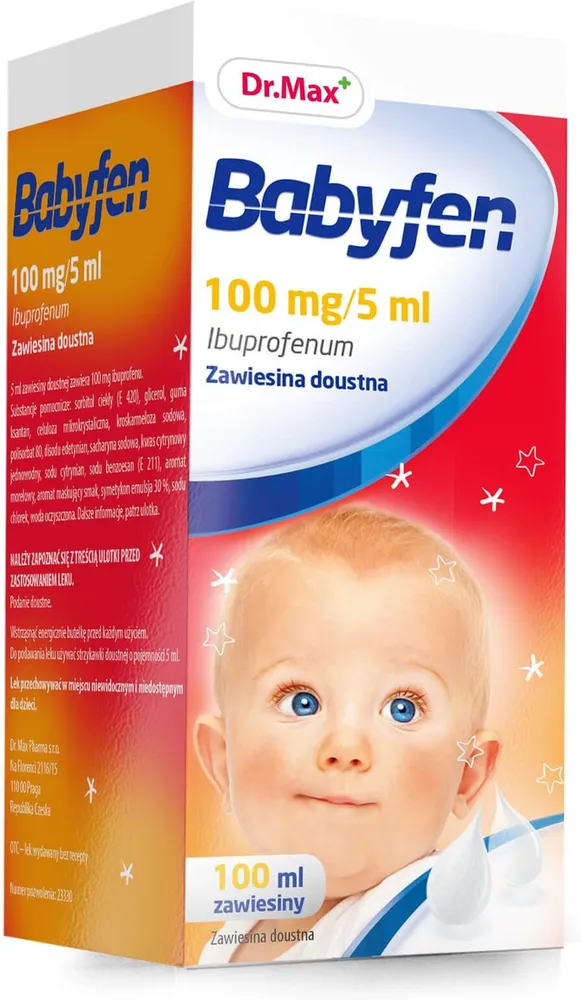
Table of Contents
Package leaflet: Information for the patient
Babyfen, 20 mg/mL, oral suspension
Ibuprofen
Please read all of this leaflet carefully before taking this medicine, as it contains
important information for you.
This medicine should always be taken exactly as described in this patient leaflet or as directed by
your doctor or pharmacist.
- Keep this leaflet, so that you can read it again if necessary.
- If you need advice or further information, please consult your pharmacist.
- If you experience any adverse reactions, including any possible side effects not listed in this leaflet, inform your doctor or pharmacist. See section 4.
- If symptoms in a child or adolescent worsen or do not improve after 3 days, consult a doctor.
- If this medicine is given to infants aged 3–5 months, consult a doctor immediately if symptoms worsen, or within 24 hours if symptoms do not improve.
Table of contents
- What Babyfen is and what it is used for
- Important information before taking Babyfen
- How to take Babyfen
- Possible side effects
- How to store Babyfen
- Contents of the pack and other information
1. What Babyfen is and what it is used for
This medicine contains ibuprofen. Ibuprofen belongs to a group of medicines called non-steroidal anti-inflammatory drugs (NSAIDs), which reduce pain and swelling and lower body temperature during fever.
Babyfen is used in children from the age of 3 months (with body weight above 5 kg) and older, for short-term symptomatic treatment of:
- mild to moderate pain, such as headache and toothache,
- fever,
- feverish conditions and pain associated with cold and flu.
2. Important information before taking Babyfen
When not to give Babyfen:
- if the child is allergic to ibuprofen or any of the other ingredients of this medicine (listed in section 6);
- if the child has ever experienced breathlessness, asthma, rhinitis, swelling or hives while being treated with acetylsalicylic acid or other similar non-steroidal anti-inflammatory drugs (NSAIDs);
- if the patient has gastric or duodenal ulcers, or gastrointestinal bleeding (or has had at least two such episodes in the past);
- if the child has or has ever had gastrointestinal bleeding or perforation (a hole in the gut) due to previous use of NSAIDs;
- if the child has severe liver, kidney or heart failure;
- if the child has a disease that increases the risk of bleeding;
- if the child is significantly dehydrated (due to vomiting, diarrhoea or insufficient fluid intake);
- if the child has bleeding in the brain (cerebral haemorrhage) or any other active bleeding.
Women must not take this medicine during the last three months of pregnancy.
If you have any doubts regarding the above conditions, consult a doctor or pharmacist before using this medicine.
Warnings and precautions
Before starting treatment with Babyfen, discuss with a doctor or pharmacist if the child has any of the following conditions.
Babyfen should only be used after consultation with a doctor in the following cases:
- in patients with a history of gastric or duodenal ulcer disease, due to an increased risk of gastrointestinal bleeding;
- in patients with asthma, as this medicine may increase the risk of bronchospasm (airway narrowing);
- in patients with kidney disease, as this medicine may impair kidney function;
- in patients with liver function disorders;
- in patients with high blood pressure or heart failure (see section "Effect on the circulatory system" below);
- in patients with chronic inflammatory bowel diseases (including ulcerative colitis or Crohn’s disease), as these conditions may worsen;
- in patients with systemic lupus erythematosus (SLE) or mixed connective tissue disease, due to an increased risk of developing aseptic meningitis;
- in children with hay fever, nasal polyps or chronic obstructive pulmonary disease (COPD), as this medicine may increase the risk of allergic reactions.
When using Babyfen in adults, discuss with a doctor or pharmacist:
- if a woman is planning pregnancy (for further information, see section "Pregnancy, breastfeeding and fertility" below);
- if a woman is in the first six months of pregnancy;
- if a woman is breastfeeding.
Elderly patients
If this medicine must be used in elderly patients, the lowest effective dose should be used for the shortest possible time, as elderly patients have an increased risk of adverse effects, which may be more severe.
Effect on the gastrointestinal tract
The risk of adverse effects, especially gastrointestinal bleeding, ulcers and perforation, increases with higher doses. If gastrointestinal bleeding or gastric or duodenal ulceration occurs during treatment with Babyfen, treatment should be discontinued immediately.
If the child experiences any unusual gastrointestinal symptoms, these should be reported to a doctor immediately.
Effect on the circulatory system
Anti-inflammatory and pain-relieving medicines such as ibuprofen may be associated with a small increased risk of heart attack or stroke, especially when used at high doses. Do not exceed the recommended dose or duration of treatment.
Before using Babyfen, discuss treatment with a doctor or pharmacist if:
- there are heart diseases, including heart failure, angina (chest pain), history of heart attack, coronary artery bypass surgery, peripheral arterial disease (poor circulation in legs or feet due to narrowed or blocked arteries), or any type of stroke (including mini-stroke or transient ischaemic attack (TIA));
- high blood pressure, diabetes, high cholesterol levels, family history of heart disease or stroke, or if the patient smokes.
Symptoms of allergic reaction to this medicine, including difficulty breathing, facial and neck swelling (angioedema), and chest pain, have occurred during ibuprofen use. If any of these symptoms occur, discontinue Babyfen immediately and contact a doctor or emergency medical services without delay.
Other warnings
- Dehydrated children and adolescents, as well as elderly individuals, are at risk of kidney function impairment. This condition may occur, for example, due to vomiting, diarrhoea or insufficient fluid intake.
- Frequent use of painkillers may lead to permanent kidney damage, and this risk increases during physical exertion – therefore, avoid physical exertion during treatment.
- Consult a doctor or pharmacist if the child has an infection – see section "Infections" below.
- Prolonged use of any painkillers may lead to medication-overuse headache, which cannot be relieved by increasing the dose. In such cases, medical advice is required regarding further treatment.
Skin reactions
Severe skin reactions, such as exfoliative dermatitis, erythema multiforme, Stevens-Johnson syndrome, toxic epidermal necrolysis, drug reaction with eosinophilia and systemic symptoms (DRESS), and acute generalized exanthematous pustulosis (AGEP), have occurred with the use of ibuprofen. If the patient develops any of the symptoms associated with these severe skin reactions described in section 4, Babyfen should be stopped immediately and medical help should be sought.
Infections
Babyfen may mask symptoms of infection such as fever and pain. Therefore, Babyfen may delay appropriate treatment of infection and consequently increase the risk of complications. This has been observed in bacterial pneumonia and bacterial skin infections associated with chickenpox. If the patient is taking this medicine during an ongoing infection and symptoms persist or worsen, immediate medical advice should be sought.
This medicine should not be used during chickenpox infection.
Adverse effects can be minimized by using the lowest effective dose for the shortest possible duration.
Babyfen and other medicines
Taking Babyfen together with other medicines may lead to drug interactions.
Tell your doctor or pharmacist about all medicines the child is currently taking or has recently taken, including over-the-counter medicines, especially:
- acetylsalicylic acid, other NSAIDs including COX-2 inhibitors (e.g. celecoxib), anticoagulants (e.g. warfarin), antiplatelet agents (e.g. ticlopidine), corticosteroids, and antidepressants known as SSRIs (selective serotonin reuptake inhibitors), which increase the risk of gastrointestinal adverse effects, including bleeding and gastric ulcers;
- digoxin (used in heart disease treatment), lithium (used in psychiatric disorders), and phenytoin (used in epilepsy treatment), as ibuprofen may increase their blood levels, thereby enhancing their effects;
- acetylsalicylic acid, as it may interfere with the anticoagulant effect;
- antihypertensive medicines (ACE inhibitors such as captopril, beta-blockers such as atenolol, angiotensin II receptor antagonists such as losartan) and diuretics (water tablets), as ibuprofen may reduce their effectiveness, and diuretics may increase the risk of kidney damage;
- methotrexate (used in cancer or rheumatic disease treatment), as its excretion may be reduced; antidiabetic medicines (sulfonylurea derivatives), as their effect may be enhanced; rare cases of hypoglycaemia (low blood sugar) have been reported when these medicines are used together;
- tacrolimus and cyclosporine (used in skin diseases or after organ transplantation), as kidney damage may occur;
- mifepristone (used to terminate pregnancy), as its effect may be weakened;
- zidovudine (used in HIV or AIDS treatment), as ibuprofen use may increase the risk of joint bleeding or bleeding leading to swelling in HIV-positive patients with haemophilia;
- quinolone antibiotics, as they may increase the risk of seizures;
- aminoglycoside antibiotics, as their excretion may be prolonged;
- CYP2C9 inhibitors (voriconazole or fluconazole, used in fungal infections), as they may enhance the effect of ibuprofen;
- cholestyramine (used to lower cholesterol), as it may reduce the absorption rate of ibuprofen;
- products containing Ginkgo biloba (herbal remedy), as they may increase the risk of bleeding.
Babyfen may also alter the effect of other medicines and vice versa. Therefore, always consult a doctor or pharmacist before using Babyfen together with other medicines.
Babyfen and alcohol
Avoid alcohol consumption, as it increases the risk of adverse effects.
Pregnancy, breastfeeding and fertility
If a woman is pregnant or breastfeeding, suspects she may be pregnant, or is planning to have a baby, she should consult a doctor or pharmacist before using this medicine.
Pregnancy
Do not take Babyfen if you are in the last three months of pregnancy, as it may harm the unborn child or cause complications during delivery. It may cause kidney and heart problems in the unborn child. It may affect bleeding tendency in both mother and child and may result in delayed or prolonged labour. Do not take Babyfen during the first six months of pregnancy unless absolutely necessary and recommended by a doctor. If treatment is required during this period or when trying to conceive, use the lowest possible dose for the shortest possible time. If Babyfen is used for longer than a few days after the 20th week of pregnancy, it may cause narrowing of a blood vessel (ductus arteriosus) in the child’s heart or kidney problems, which may lead to low levels of amniotic fluid surrounding the child (oligohydramnios). If treatment is required for longer than a few days, the doctor may recommend additional monitoring.
Breastfeeding
Only small amounts of ibuprofen and its metabolites pass into breast milk. This medicine may be used during breastfeeding if taken at the recommended dose and for the shortest possible duration. Prolonged treatment is not recommended for breastfeeding mothers.
Fertility
Babyfen belongs to a group of medicines that may impair fertility in women. This effect reverses after stopping the medicine. Therefore, ibuprofen is not recommended for women trying to conceive or who have difficulty becoming pregnant.
Driving and operating machinery
Ibuprofen generally does not affect the ability to drive or operate machinery. However, some patients taking ibuprofen may experience dizziness, visual disturbances or other central nervous system disorders. As these adverse effects may occur, do not drive or operate machinery unless the patient is certain that ibuprofen treatment does not affect their ability to perform these activities. This recommendation is even more important when combined with alcohol.
Babyfen contains sorbitol (E 420), aspartame (E 951), sodium, sodium benzoate (E 211) and propylene glycol (E 1520)
Babyfen contains 210 mg of sorbitol in each mL of suspension. Sorbitol is a source of fructose. If fructose intolerance has previously been diagnosed in the patient (or their child) or hereditary fructose intolerance (HFI), a rare genetic disorder in which the body cannot break down fructose, the patient should consult a doctor before taking this medicine or giving it to the child. Sorbitol may cause gastrointestinal discomfort and mild laxative effects.
Babyfen contains 0.038 mg of aspartame (E 951) in each mL of suspension. Aspartame is a source of phenylalanine. It may be harmful to patients with phenylketonuria, a rare genetic disorder in which phenylalanine accumulates in the body due to improper excretion.
Babyfen contains less than 1 mmol (23 mg) of sodium in 10 mL (maximum single dose), meaning the medicine is considered "sodium-free".
Babyfen contains 0.1 mg of sodium benzoate (E 211) in each mL of suspension. Sodium benzoate (E 211) may worsen jaundice (yellowing of the skin and eyes) in newborns (up to 4 weeks of age).
Babyfen contains 2.4 mg of propylene glycol (E 1520) in each mL of suspension. If the child is under 4 weeks of age, consult a doctor or pharmacist before administering this medicine, especially if the child is receiving other medicines containing propylene glycol or alcohol.
3. How to take Babyfen
This medicine should always be taken exactly as described in this patient leaflet or as directed by a doctor or pharmacist. If in doubt, consult a doctor or pharmacist.
This medicine is intended for short-term oral use only. The lowest effective dose for the shortest necessary duration should be used to relieve symptoms.
If, during an infection, a child's symptoms (such as fever and pain) persist or worsen, consult a doctor immediately (see section 2).
Patients with gastric sensitivity are advised to take Babyfen with food.
Doses should be administered every 6–8 hours, depending on need. The intervals between doses should be determined by symptoms. The maximum daily dose must not be exceeded.
The dose is:
| Body weight (age) | Dosing frequency | Single dose | Maximum daily dose |
| 5–7.6 kg (3–6 months) | 3 times a day | 50 mg (2.5 mL) | 150 mg (7.5 mL) |
| 7.7–9 kg (6–12 months) | 3 to 4 times a day | 50 mg (2.5 mL) | 150–200 mg (7.5–10 mL) |
| 10–15 kg (1–3 years) | 3 times a day | 100 mg (5 mL) | 300 mg (15 mL) |
| 16–20 kg (4–6 years) | 3 times a day | 150 mg (7.5 mL) | 450 mg (22.5 mL) |
| 21–29 kg (7–9 years) | 3 times a day | 200 mg (10 mL) | 600 mg (30 mL) |
| 30–40 kg (10–12 years) | 4 times a day | 200 mg (10 mL) | 800 mg (40 mL) |
The package includes a 5 mL oral plastic syringe, which should be used to measure the correct dose and administer the medication.
Instructions for using the oral syringe:
- Shake the bottle vigorously before each use.
- Remove the bottle cap.
- Remove the syringe cap.
- Place the bottle on a hard, flat surface and insert the syringe into the bottle.
- Slowly pull back the syringe plunger to the graduation mark corresponding to the required number of millilitres (mL), according to the dosing table.
- Remove the syringe from the bottle.
- Ensure the child is held in an upright position.
- Place the tip of the syringe into the child's mouth and slowly push the plunger to gently release the medication.
- Wait until the child swallows the medication.
- Repeat steps 4 to 9 in the same manner until the full single dose has been administered.
- After administering the medication, close the bottle tightly. Wash the syringe with warm water and leave it to dry.
Duration of treatment
In infants aged 3 to 5 months, consult a doctor immediately if symptoms worsen or do not improve within 24 hours.
If this medicine needs to be used for longer than 3 days in children aged 6 months or in adolescents (aged 12 to 18 years), or if symptoms worsen, consult a doctor.
This medicine is not intended for children under 3 months of age or with body weight less than 5 kg.
Elderly patients
In these patients, there is an increased risk of adverse reactions; therefore, the lowest effective dose for the shortest duration necessary to achieve symptom relief should be used. Dosing should be individually adjusted in patients with renal or hepatic impairment.
Renal or hepatic impairment
No dose adjustment is necessary in patients with mild to moderate renal or hepatic impairment.
This medicine should not be used in patients with severe renal or hepatic failure.
Taking more Babyfen than recommended
If a child has been given more of this medicine than recommended, has taken an overdose of Babyfen, or has accidentally ingested the medicine, seek medical advice immediately from a doctor or go to the nearest hospital to assess potential health risks and receive guidance on necessary actions.
Symptoms of overdose may include nausea, stomach pain, vomiting (possibly with blood), headache, ringing in the ears, disorientation, and nystagmus. After large doses, drowsiness, chest pain, palpitations, loss of consciousness, seizures (mainly in children), weakness, dizziness, blood in urine, low blood potassium levels, feeling cold, and breathing difficulties have been reported.
Other symptoms of overdose include drowsiness or dry mouth. In cases of severe overdose, renal failure and liver damage may occur.
Missing a dose of Babyfen
Do not administer a double dose to make up for a missed dose. Continue treatment according to the recommended dosing schedule outlined above.
If you have any further questions about the use of this medicine, consult your doctor or pharmacist.
4. Possible adverse effects
Like all medicines, this medicine can cause adverse effects, although not everyone will experience them.
Adverse effects can be minimized by taking the lowest possible dose for the shortest duration necessary to relieve symptoms. In elderly individuals, there is a higher risk of adverse effects occurring.
If severe reactions occur, such as facial swelling or breathlessness, blisters on the skin, vision disturbances, black stools or bloody vomiting, the medicine should be discontinued immediately and medical advice should be sought without delay.
If any of the following symptoms occur in a child, ibuprofen should be stopped immediately and medical help should be sought (see also section 2):
- red, flat, target-like or circular spots on the trunk, often with blisters in the center, peeling skin, mouth ulcers in the mouth, throat, nose, genital organs and eyes. These severe skin rashes may be preceded by fever and flu-like symptoms (exfoliative dermatitis, erythema multiforme, Stevens-Johnson syndrome, toxic epidermal necrolysis) (very rare: may occur in 1 out of 10,000 patients),
- a severe skin reaction called DRESS syndrome (drug reaction with eosinophilia and systemic symptoms) may occur. Symptoms of DRESS syndrome include: skin rash, fever, swollen lymph nodes and increased eosinophil count (a type of white blood cells), frequency unknown (frequency cannot be estimated based on available data),
- a severe skin reaction called acute generalized exanthematous pustulosis (AGEP) may occur. Symptoms of AGEP include: red, peeling, widespread rash with subcutaneous papules and blisters located mainly in skin folds, trunk and upper limbs, accompanied by fever at the beginning of treatment, frequency unknown (frequency cannot be estimated based on available data).
The following adverse effects may occur during ibuprofen use,
listed according to their frequency of occurrence:
Common (may occur in 1 out of 10 patients):
- nausea,
- vomiting,
- diarrhoea,
- constipation,
- flatulence,
- indigestion,
- abdominal pain,
- gastrointestinal bleeding (black stools or bloody vomiting),
- dizziness,
- fatigue,
- headache,
- restlessness,
- irritability,
- rash.
Uncommon (may occur in 1 out of 100 patients):
- hypersensitivity reactions,
- various forms of kidney function disorders, e.g. nephritis, nephrotic syndrome (a group of symptoms in kidney disease) and renal failure, acute renal failure,
- inflammation of the nasal mucosa,
- inflammation of the gastric mucosa,
- duodenal ulcer,
- gastric ulcer,
- oral cavity ulceration,
- perforation of the gastrointestinal mucosa,
- hepatitis,
- jaundice,
- liver function disturbances,
- bronchial asthma,
- bronchospasm,
- breathlessness,
- insomnia,
- tingling sensation,
- drowsiness,
- anxiety,
- urticaria,
- itching,
- purpura (spotty bleeding into the skin),
- angioedema (vascular swelling affecting various body parts, e.g. subcutaneous, causing difficulties depending on the affected area),
- increased skin sensitivity to sunlight,
- visual disturbances,
- hearing disturbances,
- balance disorders,
- tinnitus.
Rare (may occur in 1 out of 1,000 patients):
- aseptic meningitis (inflammation of the meninges without bacterial infection),
- systemic lupus erythematosus,
- depression,
- disorientation,
- hallucinations,
- optic neuritis,
- toxic optic neuropathy (damage to the optic nerve),
- edema,
- decreased number of certain blood components (e.g. red or white blood cells, or platelets).
Very rare (may occur in 1 out of 10,000 patients):
- pancreatitis,
- esophagitis,
- intestinal stricture,
- liver failure,
- palpitations,
- heart failure,
- myocardial infarction,
- acute pulmonary edema,
- high blood pressure,
- severe skin reactions,
- papillary necrosis (especially after prolonged use),
- severe hypersensitivity reactions, which may present as facial, tongue or laryngeal swelling, breathlessness, tachycardia, hypotension (anaphylaxis, angioedema or severe shock).
Frequency unknown (frequency cannot be estimated based on available data):
- exacerbation of ulcerative colitis and Crohn's disease,
- chest pain, which may be a symptom of a potentially serious allergic reaction called Kounis syndrome.
Medicines such as Babyfen may be associated with a small increased risk of myocardial infarction ("heart attack") or stroke.
Dysphagia, as well as burning sensation in the throat or mouth, have been reported during administration of the medicine.
Reporting of adverse effects
If any adverse effects occur, including any not listed in this leaflet, inform your doctor or pharmacist. Adverse effects can be reported directly to the Department of Monitoring Adverse Drug Reactions of the Office for Registration of Medicinal Products, Medical Devices and Biocidal Products, Al. Jerozolimskie 181C, 02-222 Warsaw, tel.: +48 22 49 21 301, fax: +48 22 49 21 309, website: https://smz.ezdrowie.gov.pl
Adverse effects can also be reported to the marketing authorization holder.
Reporting adverse effects helps to provide more information on the safety of the medicine.
5. How to store Babyfen
Keep this medicine out of sight and reach of children.
After first opening the container, the suspension can be stored for 3 months.
Do not use this medicine after the expiry date stated on the carton and label following: EXP.
The expiry date refers to the last day of the specified month.
No special storage conditions are required for this medicine.
Medicines must not be disposed of via wastewater or household waste. Ask your pharmacist how to dispose of medicines no longer in use. This will help protect the environment.
6. Package contents and other information
What Babyfen contains
The active substance is ibuprofen. Each mL of oral suspension contains 20 mg of ibuprofen.
- Other ingredients are: glycerol, sorbitol, liquid (non-crystallizing) (E 420), xanthan gum, microcrystalline cellulose and sodium croscarmellose, polysorbate 80, disodium edetate, sodium saccharin, citric acid monohydrate, sodium citrate, sodium benzoate (E 211), simethicone emulsion 30%, sodium chloride, purified water. Peach flavour contains: propylene glycol (E 1520), flavouring substances, natural flavouring substance, orange oil, lemon oil. Taste-masking flavour contains: potato maltodextrin, flavouring substances, aspartame (E 951), potassium acesulfame (E 950).
What Babyfen looks like and contents of the pack
Babyfen is a white or brownish, homogeneous oral suspension with a peach-like odour.
100 mL of oral suspension is directly packed in a 125 mL amber neutral glass bottle with a PP cap or a child-resistant PP cap, placed together with a 5 mL oral syringe in a cardboard box.
The cardboard box contains one (1) bottle and one plastic oral syringe with dosing graduations of 5 mL capacity. On the 5 mL plastic oral syringe, volumes of 2.5 mL and 5 mL are marked to measure the correct doses.
Marketing Authorisation Holder and Manufacturer/Importer
Marketing Authorisation Holder:
Dr. Max Pharma s.r.o.
Na Florenci 2116/15
Nové Město
110 00 Prague 1
Czech Republic
Tel.: (+420) 516 770 199
Manufacturer/Importer:
ALKALOID-INT d.o.o.
Šlandrova ulica 4
1231 Ljubljana – Črnuče
Slovenia
This medicinal product is authorised in the European Economic Area countries under the following names:
Czech Republic: Ibuprofen Dr.Max
Poland: Babyfen
Romania: Ibuprofen Dr. Max 20 mg/ml suspensie orală
Slovakia: Ibuprofen Dr.Max 20 mg/ml perorálna suspenzia
Italy: Binofenkid