Azelamed
Poland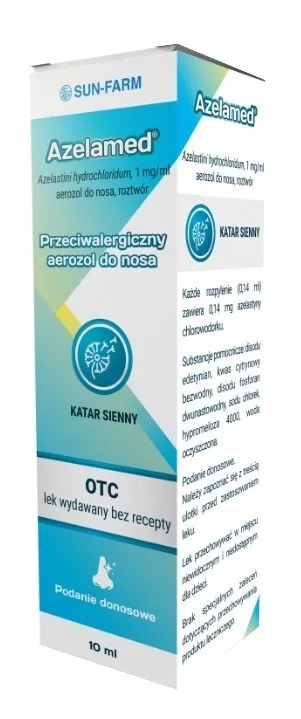
Table of Contents
Package leaflet: Information for the patient
Azelamed, 1 mg/ml, nasal spray, solution
Azelastini hydrochloridum
For use in adults, adolescents and children over 6 years of age
Please read the entire leaflet carefully before using this medicine, as it contains
important information for the patient.
This medicine should always be used exactly as described in the patient leaflet or as
directed by the doctor or pharmacist.
- Keep this leaflet, so that you can read it again if necessary.
- If you need advice or further information, please contact your pharmacist.
- If you experience any adverse reactions, including any possible side effects not listed in this leaflet, inform your doctor or pharmacist. See section 4.
- If there is no improvement after 2 days or if your condition worsens, contact your doctor.
Table of contents
- What Azelamed is and what it is used for
- Important information before using Azelamed
- How to use Azelamed
- Possible side effects
- How to store Azelamed
- Contents of the pack and other information
1. What Azelamed is and what it is used for
Azelamed contains azelastine, which belongs to a group of medicines called antihistamines. Antihistamines work by preventing the action of histamine, a substance produced by the body during an allergic reaction. Azelastine has been shown to reduce inflammation of the nasal mucosa.
Azelamed is used to treat symptoms of hay fever (seasonal allergic rhinitis) in adults, adolescents and children over 6 years of age.
If there is no improvement after 2 days or if your condition worsens, contact your doctor.
2. Important information before using Azelamed
When not to use Azelamed
- if the patient is allergic to azelastine hydrochloride or any of the other ingredients of this medicine (listed in section 6).
Warnings and precautions
Before starting to use Azelamed, consult with a doctor or pharmacist.
If the head is tilted too far backwards during administration, drowsiness and a bitter taste in the mouth may occur due to increased absorption.
Other medicines and Azelamed
Inform your doctor or pharmacist about all medicines the patient is currently taking or has recently taken, as well as any medicines planned for future use.
No interactions with other medicines have been observed so far.
Azelamed may be used simultaneously with other antihistamines and/or medicines affecting the central nervous system only after consultation with a doctor.
Use of Azelamed with alcohol
As a general rule, consumption of alcoholic beverages should be avoided during treatment with any medicine.
Pregnancy and breastfeeding
If the patient is pregnant, breastfeeding, suspects she may be pregnant, or is planning to have a child, she should consult a doctor or pharmacist before using this medicine.
Pregnancy
There is insufficient experience with the use of azelastine during pregnancy. Therefore, to avoid risk, Azelamed should not be used during the first three months of pregnancy.
During the second and third trimesters of pregnancy, Azelamed should be used only if absolutely necessary and under medical supervision.
Breastfeeding
The active substance of Azelamed passes into human milk in small amounts. Therefore, Azelamed should not be used during breastfeeding.
Driving and operating machinery
Very rarely, patients may experience symptoms such as fatigue, exhaustion, tiredness, dizziness, or weakness, which may also be caused by the underlying disease. In such cases, the ability to drive or operate machinery may be impaired.
Consumption of alcohol or use of other medicines affecting alertness may worsen these symptoms.
3. How to use Azelamed
This medicine should always be used exactly as described in this patient leaflet or as directed by your doctor or pharmacist. If in doubt, consult your doctor or pharmacist.
The recommended dose is 1 spray of Azelamed into each nostril, twice daily (morning and evening) (corresponding to a daily dose of 0.56 mg azelastine hydrochloride).
Children
There are no adequate studies available on dosing and pharmacokinetics in children; therefore, Azelamed should not be used in children under 6 years of age.
Patients with hepatic or renal impairment
There is insufficient experience with the use of Azelamed in patients with hepatic and/or renal impairment.
Method of administration
When administering Azelamed, keep your head in an upright position (see instructions (diagrams) below).
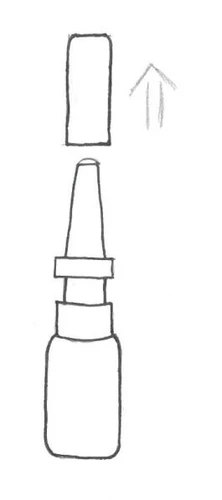
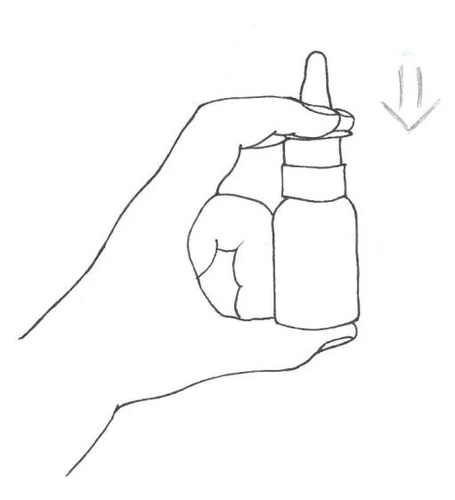
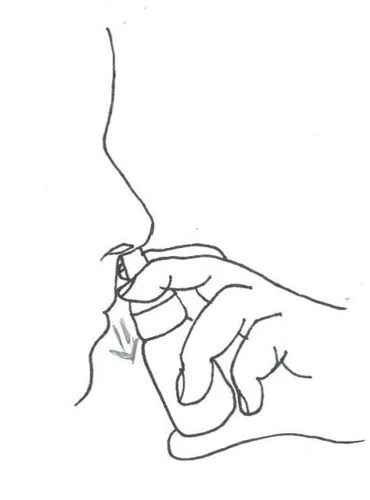
- Remove the 2. … before first use 3. Prime the pump by pressing it several times (three times) until a uniform spray appears. protective cap
- After use, wipe the tip with a clean tissue and replace the protective cap.
Note: If the nasal spray has not been used for three weeks or longer and treatment is to be resumed, the pump should be re-primed by pressing it several times before administration.
Duration of treatment
The duration of treatment with Azelamed depends on the type, severity, and progression of symptoms.
Azelamed is suitable for long-term treatment.
If you feel that the effect of Azelamed is too strong or too weak, consult your doctor or pharmacist.
Use of a higher than recommended dose of Azelamed
Azelamed is a locally administered nasal spray. Since each spray contains a small dose of the active substance, the occurrence of poisoning symptoms is unlikely, even if a much higher than recommended dose is used locally.
However, if a large amount of the medicine is accidentally swallowed (e.g. if a child swallows the entire contents of the bottle), contact a doctor immediately.
There is no human experience with toxic (very high, poisonous) doses of azelastine hydrochloride. Based on animal studies, after significant overdose or poisoning, symptoms related to the central nervous system may occur (e.g. restlessness, agitation, or deep, prolonged fatigue or drowsiness). In such cases, symptomatic treatment should be applied.
Missed dose of Azelamed
If a dose of Azelamed is missed, no specific action is required. Continue treatment with the same dose when the next dose is due. If necessary, Azelamed may also be used between the time of the missed dose and the time the next dose is due.
Stopping Azelamed treatment
If possible, Azelamed should be used regularly until symptoms subside.
If treatment with Azelamed is discontinued, there is a possibility of recurrence of typical disease symptoms.
If you have any doubts concerning the use of this medicine, consult your doctor or pharmacist.
4. Possible adverse reactions
Like all medicines, this medicine can cause adverse reactions, although not everyone will experience them.
Common (may affect up to 1 in 10 patients):
A bitter taste in the mouth, usually caused by incorrect positioning during aerosol administration (head tilted backward during administration, see section 3 "Instructions for use"), which may sometimes cause nausea.
Uncommon (may affect up to 1 in 100 patients):
Irritation of inflamed nasal mucosa (burning, tingling), sneezing, nosebleeds.
Rare (may affect up to 1 in 1,000 patients):
Nausea.
Very rare (may affect up to 1 in 10,000 patients):
Hypersensitivity reactions, drowsiness (dullness, lethargy), skin rash, itching, urticaria, fatigue (exhaustion, tiredness), dizziness or weakness, which may also be caused by the underlying disease.
What to do
The adverse reactions listed above are usually transient. Therefore, no specific action is usually required.
If a bitter taste in the mouth occurs after using Azelamed, it can be counteracted by drinking a non-alcoholic beverage (e.g. juice, milk).
Reporting of adverse reactions
If any adverse effects occur, including any adverse effects not listed in this leaflet, inform your doctor or pharmacist. Adverse reactions can be reported directly to the Department for Monitoring Adverse Drug Reactions of the Office for Registration of Medicinal Products, Medical Devices and Biocidal Products
Al. Jerozolimskie 181C
02-222 Warszawa
Tel.: + 48 22 49 21 301
Fax: + 48 22 49 21 309
Website: https://smz.ezdrowie.gov.pl
Adverse reactions can also be reported to the marketing authorization holder.
Reporting adverse reactions helps to provide more information on the safety of the medicine.
5. How to store Azelamed
Keep the medicine out of sight and reach of children.
Do not use this medicine after the expiry date stated on the label and the outer carton following "EXP". The expiry date refers to the last day of the specified month.
Store in an upright position.
Shelf life after first opening of the container
After first opening of the bottle, Azelamed product should not be used for more than 6 months.
Medicines should not be disposed of via wastewater. Ask your pharmacist how to properly dispose of medicines no longer in use. This will help protect the environment.
6. Contents of the pack and other information
What Azelamed contains:
- The active substance is azelastine hydrochloride. 1 ml of solution contains 1 mg of azelastine hydrochloride. Each spray (0.14 ml) contains 0.14 mg of azelastine hydrochloride.
- The other ingredients are: disodium edetate, anhydrous citric acid, disodium phosphate dodecahydrate, sodium chloride, hypromellose 4000, purified water.
What Azelamed looks like and contents of the pack
Azelamed is a clear, colourless to slightly yellow nasal aerosol solution (for nasal administration).
Azelamed is available in a brown glass bottle with a spray pump, including an applicator and a protective cap.
Pack size:
10 ml solution in a 10 ml bottle.
Marketing Authorisation Holder and Manufacturer:
Marketing Authorisation Holder
SUN-FARM Sp. z o.o.
ul. Dolna 21
05-092 Łomianki
Manufacturer
mibe GmbH Arzneimittel
Münchener Straße 15
06796 Brehna
Germany
This medicinal product is authorised in the European Economic Area countries under the following names:
Germany: Azelastin axicur 1 mg/ml Nasenspray, Lösung
Austria: Azedil 1 mg/ml Nasenspray
Poland: Azelamed
Croatia: Azelamed 1 mg/ml nasal spray, solution