Avedol
Poland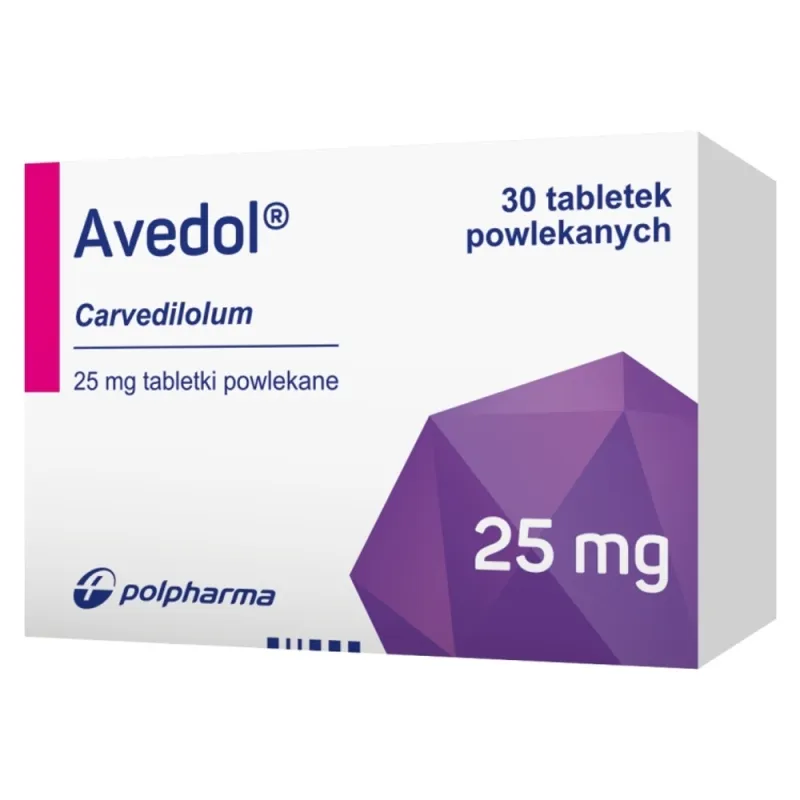
Table of Contents
- Package leaflet: Information for the patient
- 1. What Avedol is and what it is used for
- 2. Important information before using Avedol
- 3. How to use Avedol
- 4. Possible adverse effects
- 5. How to store Avedol
- 6. Contents of the pack and other information
- Package leaflet: information for the patient
- 1. What Avedol is and what it is used for
- 2. Important information before taking Avedol
- 3. How to take Avedol
- 4. Possible side effects
- 5. How to store Avedol
- 6. Contents of the pack and other information
Package leaflet: Information for the patient
Avedol, 6.25 mg, film-coated tablets
Avedol, 12.5 mg, film-coated tablets
Avedol, 25 mg, film-coated tablets
Carvedilolum
Please read this leaflet carefully before taking this medicine, as it contains
important information for you.
- Keep this leaflet, as you may need to read it again.
- If you have any further questions, please ask your doctor or pharmacist.
- This medicine has been prescribed for a specific individual. Do not pass it on to others. This medicine may harm other people, even if their symptoms are the same.
- If you experience any adverse reactions, including any not listed in this leaflet, inform your doctor. See section 4.
Contents of the leaflet
- What Avedol is and what it is used for
- What you need to know before taking Avedol
- How to take Avedol
- Possible side effects
- How to store Avedol
- Contents of the pack and other information
1. What Avedol is and what it is used for
Avedol contains carvedilol, which belongs to a group of medicines called alpha- and beta-adrenolytics. Avedol is used in the treatment of high blood pressure and angina pectoris. Avedol is also indicated as adjunctive therapy in heart failure, improving cardiac function.
2. Important information before using Avedol
When not to use Avedol:
- if the patient is allergic to carvedilol or any of the other ingredients of this medicine (listed in section 6).
- if the patient has severe heart failure being treated mainly with intravenous medications.
- if the patient has previously experienced bronchial asthma or another lung disease.
- if the patient has untreated heart failure or certain types of conduction disorders in the heart (known as second- or third-degree atrioventricular block, or sick sinus syndrome).
- if the patient has severe cardiac dysfunction (cardiogenic shock).
- if the patient has significant slowing of the heart rate or very low blood pressure.
- if the patient has severe acid-base balance disorders (metabolic acidosis).
- if the patient has increased adrenal gland activity (pheochromocytoma) and it is not being treated with medication.
- if the patient has reduced blood circulation in the hands and feet, resulting in coldness, pain, or intermittent claudication.
- if the patient has severe liver disease.
- if the patient is being treated with intravenous medications used to treat high blood pressure or heart conditions (verapamil or diltiazem).
Warnings and precautions
Before starting treatment with Avedol, discuss this with your doctor.
- if the patient has heart failure accompanied by:
- low blood pressure
- impaired blood and oxygen supply to the heart (ischaemic heart disease) and vascular disease
- and (or) impaired kidney function. In such cases, the doctor should monitor kidney function. Dose reduction may be necessary.
- when the patient has diabetes. Treatment with Avedol may mask symptoms of low blood sugar. Therefore, blood glucose levels should be monitored regularly.
- if the patient has severe respiratory disorders that are untreated, as Avedol may worsen breathing difficulties.
- when the patient has peripheral vascular disease.
- if the patient wears contact lenses. Avedol may reduce tear secretion.
- when the patient has Raynaud's syndrome (initially bluish discoloration of fingers or toes, followed by paleness, then redness, accompanied by pain). Avedol may worsen existing symptoms.
- if the patient has hyperthyroidism – increased production of thyroid hormones – Avedol may mask symptoms of this condition.
- if Avedol is being used and a surgical procedure involving general anaesthesia is planned. Inform the anaesthesiologist that Avedol is being taken.
- when the patient has slowed heart rate (below 55 beats per minute).
- if the patient has experienced severe hypersensitivity reactions (e.g. after insect stings or food ingestion) or is undergoing or has undergone desensitisation therapy, because Avedol may reduce the effectiveness of medications used to treat allergic reactions.
- if the patient has psoriasis.
- if the patient has Prinzmetal's angina.
- if the patient has adrenal pheochromocytoma.
Avedol and other medicines
Tell your doctor or pharmacist about all medicines currently taken, recently taken, or planned to be taken.
It is particularly important to inform your doctor about the use of the following medicines:
- Digoxin (a medicine used to treat heart failure)
- Rifampicin (an antibiotic used to treat tuberculosis)
- Cimetidine (a medicine used to treat gastric ulcers, heartburn, and acid reflux)
- Cyclosporine (a medicine that suppresses the immune system to prevent organ transplant rejection, also used, for example, in rheumatological or dermatological conditions)
- Clonidine (a medicine used to lower blood pressure or treat migraine)
- Verapamil, diltiazem, amiodarone (medicines used to treat irregular heartbeat)
- Quinidine, disopyramide, mexiletine, propafenone, flecainide (medicines used to treat irregular heartbeat)
- Other medicines that lower blood pressure. Avedol may enhance the effect of other antihypertensive medicines due to similar mechanisms of action (e.g. alpha-receptor antagonists)
- Insulin or oral antidiabetic medicines (medicines that lower blood sugar), because the blood sugar-lowering effect may be enhanced and symptoms of low blood sugar may be masked
- Anaesthetics (medicines used in anaesthesia)
- Sympathomimetics (medicines that increase sympathetic nervous system activity)
- Dihydropyridine derivatives (medicines used to treat high blood pressure and heart conditions)
- Nitrates (medicines used to treat heart conditions), as they may cause a sudden drop in blood pressure, weakening the effect of Avedol
- Neuromuscular blocking agents (medicines that reduce muscle tension)
- Ergotamine (an anti-migraine medicine)
- Certain painkillers (non-steroidal anti-inflammatory drugs), estrogens (hormones), and corticosteroids (adrenal hormones), as they may in some cases reduce blood pressure, weakening the effect of Avedol
- Medicines containing reserpine, guanethidine, methyldopa, guanfacine, and monoamine oxidase inhibitors (MAOIs) – medicines used to treat depression, as they may further slow heart rate
- Fluoxetine (a medicine used to treat depression)
- Beta-adrenergic receptor agonists with bronchodilating effects (medicines used to treat asthma), e.g. salbutamol and formoterol.
Avedol with food, drink, and alcohol
Avedol may enhance the effects of alcohol.
Pregnancy and breastfeeding
If the patient is pregnant, breastfeeding, suspects she may be pregnant, or is planning to have a child, she should consult her doctor or pharmacist before using this medicine.
There is a risk of harmful effects of the medicine on the unborn child. Avedol may be used during pregnancy only if the doctor considers it necessary. Always consult a doctor before using Avedol during pregnancy.
Based on animal studies in lactating animals, Avedol may pass into breast milk; therefore, the medicine should not be used during breastfeeding.
Driving and operating machinery
Avedol has a minor influence on the ability to drive and operate machinery. At the beginning of treatment or when the dose is changed, dizziness and fatigue may occur.
If dizziness or weakness occurs after taking the tablet, driving or performing tasks requiring special concentration should be avoided.
Avedol contains lactose
If the patient has previously been diagnosed with intolerance to certain sugars, the patient should consult a doctor before taking this medicine.
3. How to use Avedol
This medicine should always be taken exactly as prescribed by your doctor. If in doubt, consult your doctor or pharmacist.
The coated tablets should be swallowed with at least half a glass of water. The coated tablets may be taken regardless of meals. However, it is recommended that patients with heart failure take the coated tablets with food to reduce the risk of dizziness upon sudden standing.
Avedol tablets are available in the following strengths:
6.25 mg, 12.5 mg, 25 mg
High blood pressure:
The usual dose is 1 Avedol tablet 12.5 mg (corresponding to 12.5 mg of carvedilol) for the first 2 days of treatment, followed by 2 Avedol tablets 12.5 mg (corresponding to 25 mg of carvedilol) once daily. Other available strengths of Avedol may also be used.
Angina pectoris:
The usual dose is 1 Avedol tablet 12.5 mg (corresponding to 12.5 mg of carvedilol) twice daily for 2 days, followed by 2 Avedol tablets 12.5 mg (corresponding to 25 mg of carvedilol) twice daily. Other available strengths of Avedol may also be used.
Heart failure:
The usual dose is half an Avedol tablet 6.25 mg (corresponding to 3.125 mg of carvedilol) twice daily for 2 weeks. The dose may be gradually increased by the doctor, usually at two-week intervals.
However, in some cases, the dose may be decreased or increased as decided by the doctor.
Taking more Avedol than recommended
If you take more Avedol than prescribed, or if a child swallows the medicine, contact your doctor or go to the nearest hospital for advice on further management.
Symptoms of overdose include fainting due to excessive lowering of blood pressure, slow heartbeat, and sometimes in severe cases, cardiac arrest.
Breathing difficulties, bronchoconstriction, malaise, reduced consciousness, and seizures may also occur.
Missed dose of Avedol
If you miss a dose (or several doses), take the next dose at your usual time. Do not take a double dose to make up for a missed dose.
Stopping Avedol
Do not stop treatment without consulting your doctor. Your doctor will advise you to discontinue Avedol gradually by slowly reducing the dose over a period of approximately 2 weeks.
If you have any further questions about the use of this medicine, consult your doctor or pharmacist.
4. Possible adverse effects
Like all medicines, this medicine can cause adverse effects, although not everyone will experience them.
Most adverse effects are dose-dependent and symptoms resolve after dose reduction or discontinuation of treatment. Some adverse effects may occur at the beginning of treatment and resolve spontaneously during treatment.
Very common (occur in more than 1 in 10 patients):
- dizziness (e.g. when standing up suddenly), headache
- heart diseases. Symptoms may include chest pain, fatigue, shortness of breath, and swelling of the hands and feet
- decreased blood pressure. Symptoms may include fainting and dizziness
- feeling of weakness and fatigue
Dizziness, headache, and feeling of weakness and fatigue are usually mild and more likely to occur at the beginning of treatment.
Common (occur in 1 to 10 in 100 patients):
- respiratory tract infections (bronchitis), lungs (pneumonia), nose and throat (upper respiratory tract infection). Symptoms include wheezing, shortness of breath, chest tightness, and sore throat
- urinary tract infections, which may cause problems with urination
- reduced number of red blood cells (anaemia). Symptoms include feeling of fatigue, pale skin, palpitations, and shallow breathing
- weight gain
- increased blood cholesterol levels (detected in blood tests)
- loss of blood sugar control in people with diabetes
- feeling of depression
- vision disturbances, eye pain or dry eye sensation due to reduced tear production
- slow heart rate
- fainting or dizziness when standing up
- fluid retention. Symptoms include general body swelling, swelling of body parts such as hands, feet, ankles and legs, and increased blood volume in the body
- circulation problems in arms and legs. Symptoms include cold hands and feet, paleness, tingling and pain in fingers, and leg pain that worsens during walking
- breathing problems
- nausea, vomiting
- diarrhoea
- stomach upset and/or indigestion
- pain in hands, feet
- kidney problems, including changes in urination.
Uncommon (occur in 1 to 10 in 1,000 patients):
- sleep disturbances
- fainting
- tingling or numbness in hands and feet
- skin problems, including skin rashes which may affect large parts of the body, raised itchy rash (urticaria), itching, and patches of dry skin
- disturbances of the heart's conduction system
- heart problems. Symptoms include chest pain and shortness of breath (angina pectoris)
- hair loss
- erectile dysfunction (difficulty achieving or maintaining an erection).
Rare (occur in 1 to 10 in 10,000 patients):
- reduced number of platelets. Symptoms include easy bruising and nosebleeds
- nasal congestion.
Very rare (occur in less than 1 in 10,000 patients):
- reduced number of white blood cells in the blood. Symptoms include infections of the mouth, gums, throat and lungs
- allergic reactions (hypersensitivity). Symptoms may include difficulty breathing or swallowing due to sudden swelling of the throat or face, or swelling of hands, feet and ankles
- dry mouth
- liver function disturbances (detected in blood tests)
- some women may experience problems with urine retention. This condition improves after stopping treatment
- impotence
- skin rashes or skin redness, which may worsen up to severe skin reactions, including widespread blistering rash and peeling of the outer layer of skin, particularly affecting the areas around the mouth, nose, eyes and genitals (Stevens-Johnson syndrome, toxic epidermal necrolysis or erythema multiforme).
Avedol may also cause the development of diabetes symptoms in patients who have a very mild form of diabetes called "latent diabetes".
Reporting of adverse effects
If any adverse effects occur, including any not listed in this leaflet, inform your doctor or pharmacist. Adverse effects can be reported directly to the Department of Monitoring Adverse Drug Reactions of the Office for Registration of Medicinal Products, Medical Devices and Biocidal Products
Al. Jerozolimskie 181C
02-222 Warsaw
Tel.: + 48 22 49 21 301
Fax: + 48 22 49 21 309
Website: https://smz.ezdrowie.gov.pl
Adverse effects can also be reported to the marketing authorisation holder.
Reporting adverse effects helps to provide more information on the safety of this medicine.
5. How to store Avedol
Keep the medicine out of sight and reach of children.
Do not use this medicine after the expiry date stated on the packaging. The expiry date refers to the last day of the stated month.
The marking on the packaging following the abbreviation EXP indicates the expiry date, and following the abbreviation Lot/LOT indicates the batch number.
Do not store above 30°C.
Store in the original packaging to protect from light.
Medicines must not be disposed of via wastewater or household waste. Ask your pharmacist how to dispose of medicines no longer in use. This will help protect the environment.
6. Contents of the pack and other information
What Avedol contains
- The active substance is carvedilol. Each tablet contains 6.25 mg, 12.5 mg or 25 mg of carvedilol, respectively.
- The other ingredients are Tablet core: microcrystalline cellulose, monohydrate lactose, crospovidone CL, povidone K30, colloidal anhydrous silica, magnesium stearate. Coating: HPMC 2910/Hypromellose 3cP, HPMC 2910/Hypromellose 6cP, HPMC 2910/Hypromellose 50cP, titanium dioxide (E 171), triethyl citrate, macrogol 8000, polidextrose Fcc.
What Avedol looks like and contents of the pack
6.25 mg coated tablets: white, oval-shaped, with a score line on both sides and embossed with "6.25" on one side.
12.5 mg coated tablets: white, oval-shaped, with a score line on both sides and embossed with "12.5" on one side.
25 mg coated tablets: white, oval-shaped, with a score line on both sides and embossed with "25" on one side.
The 6.25 mg, 12.5 mg and 25 mg tablets can be divided into equal doses.
The pack contains 30 or 60 coated tablets.
Marketing Authorisation Holder and Manufacturer
Zakłady Farmaceutyczne POLPHARMA S.A.
ul. Pelplińska 19, 83-200 Starogard Gdański
tel. + 48 22 364 61 01
Package leaflet: information for the patient
Avedol, 6.25 mg, coated tablets
Avedol, 12.5 mg, coated tablets
Avedol, 25 mg, coated tablets
Carvedilol
Please read all of this leaflet carefully before taking this medicine, because it contains important
information for you.
- Keep this leaflet. You may need to read it again.
- If you have any further questions, ask your doctor or pharmacist.
- This medicine has been prescribed for a specific individual. Do not pass it on to others. It may harm someone else, even if their symptoms are the same.
- If you experience any adverse effects, including any not listed in this leaflet, tell your doctor. See section 4.
Contents of the leaflet
- What Avedol is and what it is used for
- Important information before taking Avedol
- How to take Avedol
- Possible side effects
- How to store Avedol
- Contents of the pack and other information
1. What Avedol is and what it is used for
Avedol contains carvedilol, which belongs to a group of medicines called alpha- and beta-adrenergic blockers. Avedol is used to treat high blood pressure and angina pectoris. Avedol is also indicated as an adjunctive treatment in heart failure, improving heart function.
2. Important information before taking Avedol
Do not take Avedol:
- if you are allergic to carvedilol or any of the other ingredients of this medicine (listed in section 6).
- if you have severe heart failure treated mainly with intravenous medicines.
- if you have had bronchial asthma or another lung disease in the past.
- if you have untreated heart failure or certain types of conduction disorders in the heart (called second- or third-degree atrioventricular block, or sick sinus syndrome).
- if you have severe heart dysfunction (cardiogenic shock).
- if you have marked bradycardia (slow heart rate) or very low blood pressure.
- if you have severe acid-base imbalance (metabolic acidosis).
- if you have increased adrenal gland activity (pheochromocytoma) and it is not being treated with medication.
- if you have reduced blood circulation in hands and feet, resulting in coldness, pain or intermittent claudication.
- if you have severe liver disease.
- if you are being treated with intravenous medicines used to treat high blood pressure or heart diseases (verapamil or diltiazem).
Warnings and precautions
Before starting Avedol, discuss this with your doctor:
- if you have heart failure associated with:
- low blood pressure
- impaired blood and oxygen supply to the heart (ischaemic heart disease) and vascular disease
- and/or kidney function disorders
In such cases, your doctor should monitor kidney function. A dose reduction may be necessary. - if you have diabetes. Avedol may mask symptoms of low blood sugar. Therefore, blood glucose levels should be monitored regularly.
- if you have severe respiratory disorders that are untreated, as Avedol may worsen breathing difficulties.
- if you have peripheral vascular disease.
- if you wear contact lenses. Avedol may reduce tear production.
- if you have Raynaud's syndrome (initially bluish discoloration of fingers or toes, followed by paleness and then redness with accompanying pain). Avedol may worsen existing symptoms.
- if you have hyperthyroidism (increased production of thyroid hormones). Avedol may mask symptoms of hyperthyroidism.
- if you are taking Avedol and are scheduled for surgery requiring general anaesthesia. Inform your anaesthetist that you are taking Avedol.
- if you have bradycardia (heart rate below 55 beats per minute).
- if you have experienced severe hypersensitivity reactions (e.g. after insect bites or food ingestion) or if you have undergone or are undergoing desensitisation therapy, because Avedol may reduce the effectiveness of medicines used to treat allergic reactions.
- if you have psoriasis.
- if you have Prinzmetal's angina.
- if you have adrenal pheochromocytoma.
Avedol with other medicines
Tell your doctor or pharmacist about all medicines you are currently taking, have recently taken or plan to take.
It is especially important to inform your doctor about the use of the following medicines:
- Digoxin (a medicine used to treat heart failure)
- Rifampicin (an antibiotic used to treat tuberculosis)
- Cimetidine (a medicine used to treat gastric ulcers, heartburn and acid reflux)
- Cyclosporine (an immunosuppressive medicine used to prevent organ rejection after transplantation, also used e.g. in rheumatological or dermatological conditions)
- Clonidine (a medicine used to lower blood pressure or treat migraine)
- Verapamil, diltiazem, amiodarone (medicines used to treat irregular heartbeat)
- Quinidine, disopyramide, mexiletine, propafenone, flecainide (medicines used to treat irregular heartbeat)
- Other medicines that lower blood pressure. Avedol may enhance the effect of other blood pressure-lowering medicines due to similar mechanisms (e.g. alpha-receptor antagonists)
- Insulin or oral antidiabetic medicines (medicines that lower blood glucose), as their glucose-lowering effect may be enhanced and symptoms of low blood glucose may be masked
- Anaesthetics (medicines used in anaesthesia)
- Sympathomimetics (medicines that increase sympathetic nervous system activity)
- Dihydropyridine derivatives (medicines used to treat high blood pressure and heart diseases)
- Nitrates (medicines used to treat heart diseases), as they may cause a sudden drop in blood pressure, weakening the effect of Avedol
- Neuromuscular blocking agents (medicines that reduce muscle tension)
- Ergotamine (an anti-migraine medicine)
- Certain painkillers (non-steroidal anti-inflammatory drugs), estrogens (hormones) and corticosteroids (adrenal hormones), as they may in some cases reduce blood pressure, weakening the effect of Avedol
- Medicines containing reserpine, guanethidine, methyldopa, guanfacine and monoamine oxidase inhibitors (MAOIs) – medicines used to treat depression, as they may further slow heart rate
- Fluoxetine (a medicine used to treat depression)
- Beta-adrenergic receptor agonists with bronchodilating effect (medicines used to treat asthma), e.g. salbutamol and formoterol.
Avedol with food, drink and alcohol
Avedol may enhance the effects of alcohol.
Pregnancy and breastfeeding
If you are pregnant, breastfeeding, think you may be pregnant or plan to become pregnant, consult your doctor or pharmacist before taking this medicine.
There is a risk of harmful effects on the unborn child. Avedol may be used during pregnancy only if the doctor considers it necessary. Always consult your doctor before using Avedol during pregnancy.
Based on studies in lactating animals, Avedol may pass into breast milk and therefore should not be used during breastfeeding.
Driving and operating machinery
This medicine has a minor influence on the ability to drive and operate machinery. Dizziness and fatigue may occur at the beginning of treatment or when the dose is changed.
If dizziness or weakness occurs after taking the tablet, avoid driving or performing tasks requiring high concentration.
Avedol contains lactose
If you have been previously diagnosed with intolerance to certain sugars, you should consult your doctor before taking this medicine.
3. How to take Avedol
Always take this medicine exactly as your doctor has told you. If you are unsure, consult your doctor or pharmacist.
Coated tablets should be swallowed with at least half a glass of water. Coated tablets may be taken independently of meals. However, patients with heart failure are advised to take the coated tablets with meals to reduce the risk of dizziness upon sudden standing.
Avedol tablets are available in the following strengths:
6.25 mg, 12.5 mg, 25 mg
High blood pressure:
The usual dose is 1 tablet of Avedol 12.5 mg (equivalent to 12.5 mg of carvedilol) for the first 2 days of treatment, followed by 2 tablets of Avedol 12.5 mg (equivalent to 25 mg of carvedilol) once daily. Other available strengths of Avedol may also be used.
Angina pectoris:
The usual dose is 1 tablet of Avedol 12.5 mg (equivalent to 12.5 mg of carvedilol) twice daily for 2 days, followed by 2 tablets of Avedol 12.5 mg (equivalent to 25 mg of carvedilol) twice daily. Other available strengths of Avedol may also be used.
Heart failure:
The usual dose is half a tablet of Avedol 6.25 mg (equivalent to 3.125 mg of carvedilol) twice daily for 2 weeks. The dose may be gradually increased by the doctor, usually at two-week intervals.
However, in some cases, the dose may be decreased or increased, as decided by the doctor.
Taking more Avedol than recommended
If you take more Avedol than recommended or if a child swallows the medicine, contact your doctor or go to the nearest hospital for advice on further management.
Symptoms of overdose include fainting due to excessive lowering of blood pressure, slow heartbeat and, in severe cases, cardiac arrest. Breathing difficulties, airway constriction, malaise, reduced consciousness and seizures may also occur.
Missing a dose of Avedol
If you miss a dose (or several doses), take the next dose at the usual time. Do not take a double dose to make up for a missed dose.
Stopping Avedol treatment
Do not stop treatment without consulting your doctor. Your doctor will advise gradually reducing the dose of Avedol over a period of about 2 weeks.
If you have any further questions about the use of this medicine, consult your doctor or pharmacist.
4. Possible side effects
Like all medicines, this medicine can cause side effects, although not everybody gets them.
Most side effects are dose-dependent and symptoms resolve after dose reduction or discontinuation of treatment. Some side effects may occur at the beginning of treatment and resolve spontaneously during treatment.
Very common (occur in more than 1 in 10 patients):
- dizziness (e.g. upon sudden standing), headache
- heart disorders. Symptoms may include chest pain, fatigue, shortness of breath and swelling of hands and feet
- low blood pressure. Symptoms may include fainting and dizziness
- feeling of weakness and fatigue.
Dizziness, headache, and feelings of weakness and fatigue are usually mild and more likely to occur at the beginning of treatment.
Common (occur in 1 to 10 in 100 patients):
- respiratory tract infections (bronchitis), lungs (pneumonia), nose and throat (upper respiratory tract infections). Symptoms include wheezing, shortness of breath, chest tightness and sore throat
- urinary tract infections, which may cause problems with urination
- reduced number of red blood cells (anaemia). Symptoms include fatigue, pale skin, palpitations and shallow breathing
- weight gain
- increased blood cholesterol levels (shown in blood tests)
- loss of blood glucose control in patients with diabetes
- feeling of depression
- vision disorders, eye pain or dry eye sensation due to reduced tear production
- slow heartbeat
- fainting or dizziness upon standing
- fluid retention. Symptoms include general body swelling, swelling of body parts such as hands, feet, ankles and legs, and increased blood volume
- circulation problems in arms and legs. Symptoms include cold hands and feet, paleness, tingling and finger pain, and leg pain that worsens during walking
- breathing problems
- nausea, vomiting
- diarrhoea
- stomach upset and/or indigestion
- pain in hands, feet
- kidney problems, including changes in urination.
Uncommon (occur in 1 to 10 in 1,000 patients):
- sleep disorders
- fainting
- tingling or numbness in hands and feet
- skin problems, including skin rashes affecting large parts of the body, nodular rash (urticaria), itching and dry skin patches
- conduction disorders in the heart
- heart problems. Symptoms include chest pain and shortness of breath (angina pectoris)
- hair loss
- erectile dysfunction (difficulty achieving or maintaining erection).
Rare (occur in 1 to 10 in 10,000 patients):
- reduced number of platelets. Symptoms include easy bruising and nosebleeds
- nasal congestion.
Very rare (occur in less than 1 in 10,000 patients):
- reduced number of white blood cells in blood. Symptoms include infections of the mouth, gums, throat and lungs
- allergic reactions (hypersensitivity). Symptoms may include breathing or swallowing difficulties due to sudden swelling of the throat or face, or swelling of hands, feet and ankles
- dry mouth
- liver function disorders (shown in blood tests)
- some women may experience problems with urine retention. This condition improves after stopping treatment
- impotence
- skin rashes or redness of the skin, which may worsen to severe skin reactions, including extensive blistering rash and skin peeling, particularly affecting the areas around the mouth, nose, eyes and genitals (Stevens-Johnson syndrome, toxic epidermal necrolysis or erythema multiforme).
Avedol may also cause the development of diabetes symptoms in patients who have a very mild form of diabetes called "latent diabetes".
Reporting of side effects
If you experience any adverse effects, including any not listed in this leaflet, tell your doctor or pharmacist. Side effects can be reported directly to the Department of Monitoring Adverse Drug Reactions, Office for Registration of Medicinal Products, Medical Devices and Biocidal Products
Al. Jerozolimskie 181C
02-222 Warsaw
Tel.: + 48 22 49 21 301
Fax: + 48 22 49 21 309
Website: https://smz.ezdrowie.gov.pl
Side effects can also be reported to the marketing authorisation holder.
Reporting side effects helps to provide more information on the safety of this medicine.
5. How to store Avedol
Keep the medicine out of sight and reach of children.
Do not use this medicine after the expiry date stated on the pack. The expiry date refers to the last day of the stated month.
The marking on the pack after the abbreviation EXP indicates the expiry date, and after the abbreviation Lot/LOT indicates the batch number.
Do not store above 30°C.
Store in the original packaging to protect from light.
Do not dispose of medicines via wastewater or household waste. Ask your pharmacist how to dispose of medicines no longer in use. This will help protect the environment.
6. Contents of the pack and other information
What Avedol contains
- The active substance is carvedilol. Each tablet contains 6.25 mg, 12.5 mg or 25 mg of carvedilol, respectively.
- The other ingredients are Tablet core: microcrystalline cellulose, monohydrate lactose, crospovidone CL, povidone K30, colloidal anhydrous silica, magnesium stearate. Coating: HPMC 2910/Hypromellose 3cP, HPMC 2910/Hypromellose 6cP, HPMC 2910/Hypromellose 50cP, titanium dioxide (E 171), triethyl citrate, macrogol 8000, polidextrose Fcc.
What Avedol looks like and contents of the pack
6.25 mg coated tablets: white, oval-shaped, with a score line on both sides and embossed with "6.25" on one side.
12.5 mg coated tablets: white, oval-shaped, with a score line on both sides and embossed with "12.5" on one side.
25 mg coated tablets: white, oval-shaped, with a score line on both sides and embossed with "25" on one side.
The 6.25 mg, 12.5 mg and 25 mg tablets can be divided into equal doses.
The pack contains 30 or 60 coated tablets.
Marketing Authorisation Holder and Manufacturer
Zakłady Farmaceutyczne POLPHARMA S.A.
ul. Pelplińska 19, 83-200 Starogard Gdański
tel. + 48 22 364 61 01