Auromirta oro
Poland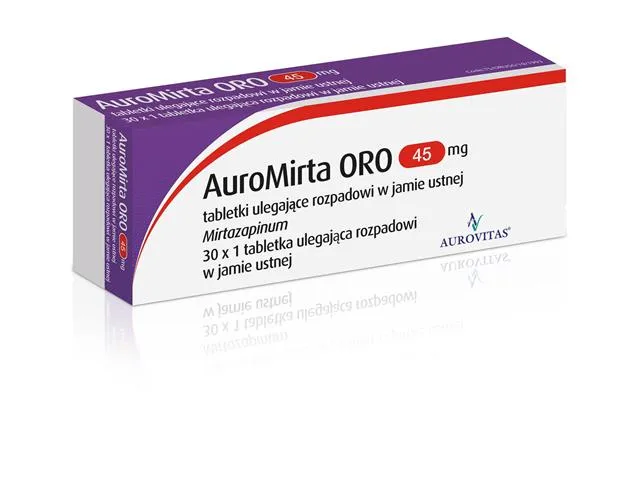
Table of Contents
Package leaflet: Information for the patient
AuroMirta ORO, 15 mg, orodispersible tablets
AuroMirta ORO, 30 mg, orodispersible tablets
AuroMirta ORO, 45 mg, orodispersible tablets
Mirtazapinum
Please read carefully the entire leaflet before using the medicine, as it contains
important information for the patient.
- Keep this leaflet, so that you can read it again if necessary.
- If you have any doubts, please consult your doctor or pharmacist.
- This medicine has been prescribed for a specific individual. Do not give it to others. The medicine may harm another person, even if their symptoms are the same.
- If you experience any adverse reactions, including any adverse reactions not listed in this leaflet, inform your doctor or pharmacist. See section 4.
Table of contents of the leaflet:
- What AuroMirta ORO is and what it is used for
- Important information before taking AuroMirta ORO
- How to take AuroMirta ORO
- Possible side effects
- How to store AuroMirta ORO
- Contents of the pack and other information
1. What AuroMirta ORO is and what it is used for
AuroMirta ORO belongs to a group of medicines called antidepressants.
AuroMirta ORO is used in the treatment of depression in adults.
It usually takes 1 to 2 weeks before treatment with AuroMirta ORO begins to show effects.
After 2 to 4 weeks, the patient may start to feel better. If the patient does not feel better or feels worse after 2–4 weeks, medical advice should be sought immediately. More information can be found in section 3, "When to expect improvement in well-being".
2. Important information before using AuroMirta ORO
Do not take AuroMirta ORO - OR - before taking AuroMirta ORO,
consult your doctor:
- if the patient is allergic to mirtazapine or any of the other ingredients of this medicine (listed in section 6). If so, speak to your doctor immediately before taking AuroMirta ORO.
- if the patient is taking or has recently taken (within the last two weeks) medicines called monoamine oxidase inhibitors (MAOIs).
- if the patient has ever experienced severe skin rash, skin peeling, blistering, and/or mouth ulcers after taking AuroMirta ORO or other medicinal products.
Exercise special caution when using AuroMirta ORO:
Severe skin reactions have been reported with the use of AuroMirta ORO, including
Stevens-Johnson syndrome (SJS), toxic epidermal necrolysis (TEN), and drug reaction with
eosinophilia and systemic symptoms (DRESS). Discontinue use and seek immediate medical
attention if the patient develops any of the symptoms listed in section 4 related to these serious
skin reactions.
If the patient has ever had a serious skin reaction, treatment with AuroMirta ORO must not be
restarted.
Warnings and precautions
Discuss this with your doctor or pharmacist before starting AuroMirta ORO.
Children and adolescents
Mirtazapine is generally not recommended for use in children and adolescents under 18 years of age, as efficacy has not been demonstrated in this age group. It should also be noted that in patients under 18 years of age, there is an increased risk of adverse events such as suicidal behaviour, suicidal thoughts, and hostility (mainly aggression, oppositional behaviour, and anger) when taking this type of medicine. Nevertheless, your doctor may prescribe AuroMirta ORO to patients under 18 years of age if they consider it beneficial. If your doctor has prescribed AuroMirta ORO to a patient under 18 years of age and the patient wishes to discuss this, advice should be sought from the doctor. Inform the doctor if any of the above-mentioned symptoms occur or worsen during treatment with AuroMirta ORO in patients under 18 years of age. Furthermore, the long-term effects on growth, puberty, and cognitive and behavioural development have not yet been established in this age group. In addition, significant weight gain has been observed more frequently in this age group during treatment with AuroMirta ORO compared to adults.
Suicidal thoughts and worsening depression
If the patient has depression, they may sometimes experience thoughts of self-harm or suicide. These may increase after starting antidepressant treatment, as these medicines require time to take effect, usually about two weeks, and sometimes longer.
The patient may be particularly at risk:
- if they have previously had thoughts of suicide or self-harm.
- if they are a young adult. Clinical data indicate an increased risk of suicidal behaviour in adults under 25 years of age with psychiatric disorders treated with antidepressants. If at any time the patient has thoughts of self-harm or suicide, contact the doctor immediately or go to hospital.
It may be helpful to inform a relative or close friend about the depression and ask them to read this leaflet. You may also ask them to inform you if they notice worsening depression or changes in behaviour.
Exercise particular caution when using AuroMirta ORO:
- if the patient has or has ever had any of the following conditions: Inform the doctor about the following conditions before taking AuroMirta ORO, if not already done.
- seizures (epilepsy). If seizures occur or become more frequent, discontinue AuroMirta ORO and contact the doctor immediately;
- liver disease, including jaundice. If jaundice occurs, discontinue AuroMirta ORO and contact the doctor immediately;
- kidney disease;
- heart disease or low blood pressure;
- schizophrenia. If psychotic symptoms such as paranoid thoughts become more frequent or severe, contact the doctor immediately;
- manic depression (alternating periods of excitement/hyperactivity and low mood). If the patient feels excessive excitement or agitation, discontinue AuroMirta ORO and contact the doctor immediately;
- diabetes (dose adjustment of insulin or other antidiabetic medicines may be necessary);
- eye disorders such as increased intraocular pressure (glaucoma);
- difficulty in passing urine, which may be due to an enlarged prostate;
- certain types of heart disease that may affect heart rhythm, recent heart attack, heart failure, or use of certain medicines that may affect heart rhythm.
- if symptoms of infection occur, such as unexplained high fever, sore throat, and mouth ulcers. Discontinue AuroMirta ORO and consult the doctor immediately for blood tests. In rare cases, these symptoms may indicate bone marrow suppression affecting blood cell production. Although rare, these symptoms usually appear 4–6 weeks after starting treatment.
- if the patient is elderly. The patient may be more sensitive to the adverse effects of antidepressants.
AuroMirta ORO and other medicines
Tell your doctor or pharmacist about all medicines the patient is currently taking or has recently taken, as well as any medicines the patient plans to take.
Do not take AuroMirta ORO in combination with:
- monoamine oxidase inhibitors (MAOIs). Do not take AuroMirta ORO for two weeks after stopping MAOIs. If AuroMirta ORO is discontinued, do not take MAOIs for the next two weeks. Examples of MAOIs include moclobemide, tranylcypromine (both antidepressants), and selegiline (used in Parkinson’s disease).
Exercise caution when taking AuroMirta ORO together with:
-
antidepressants such as SSRIs, venlafaxine, and L-tryptophan or triptans (used to treat migraine), tramadol (a painkiller), linezolid (an antibiotic), lithium (used to treat certain psychiatric disorders), methylene blue (used to treat high levels of methemoglobin in blood), and St. John’s wort (Hypericum perforatum) (a herbal remedy for depression). In very rare cases, AuroMirta ORO alone or in combination with these medicines may lead to a condition known as serotonin syndrome. Symptoms may include unexplained fever, sweating, rapid heartbeat, diarrhoea, involuntary muscle contractions, shivering, hyperreflexia, restlessness, mood changes, and loss of consciousness. If a combination of these symptoms occurs, contact the doctor immediately.
-
nefazodone, an antidepressant. This may increase the amount of AuroMirta ORO in the blood. Inform the doctor if the patient is taking this medicine. It may be necessary to reduce the dose of AuroMirta ORO or, if nefazodone is discontinued, to increase the dose of AuroMirta ORO again.
-
medicines for anxiety or insomnia, such as benzodiazepines.
-
medicines used in schizophrenia, such as olanzapine.
-
antihistamines, such as cetirizine.
-
strong painkillers, such as morphine. In combination with these medicines, AuroMirta ORO may increase drowsiness caused by them.
-
antibiotics used for bacterial infections (such as erythromycin), antifungals (such as ketoconazole), medicines used in HIV/AIDS (such as HIV protease inhibitors), and medicines used to treat stomach ulcers (such as cimetidine).
These medicines may increase the blood concentration of AuroMirta ORO. Inform the doctor if the patient is taking any of these medicines. It may be necessary to reduce the dose of AuroMirta ORO or, after stopping these medicines, to increase the dose of AuroMirta ORO again. -
antiepileptic medicines, such as carbamazepine and phenytoin.
-
antituberculosis medicines, such as rifampicin. In combination with AuroMirta ORO, these medicines may decrease the blood concentration of AuroMirta ORO. Inform the doctor if the patient is taking these medicines. It may be necessary to increase the dose of AuroMirta ORO or, after stopping these medicines, to reduce the dose of AuroMirta ORO again.
-
anticoagulants such as warfarin. AuroMirta ORO may enhance the effect of warfarin. Inform the doctor if the patient is taking this medicine. Close monitoring of blood parameters is recommended when used together.
-
medicines that may affect heart rhythm, such as certain antibiotics and certain antipsychotics.
AuroMirta ORO with food and alcohol
The patient may feel drowsy if alcohol is consumed while taking AuroMirta ORO. Do not drink alcohol.
AuroMirta ORO may be taken with or without food.
Pregnancy and breastfeeding
If the patient is pregnant or breastfeeding, suspects she may be pregnant, or plans to become pregnant, she should consult her doctor or pharmacist before using this medicine.
Limited experience with AuroMirta ORO in pregnant women does not indicate an increased risk. However, caution should be exercised during pregnancy.
If AuroMirta ORO is used until delivery or shortly before delivery, the newborn should be monitored for possible adverse effects.
Use of similar medicines (SSRIs) during pregnancy may increase the risk of a serious condition in newborns called persistent pulmonary hypertension of the newborn (PPHN), causing the baby to breathe faster and appear bluish. These symptoms usually occur within the first 24 hours after birth. In such cases, contact the midwife and/or doctor immediately.
Driving and operating machinery
Mirtazapine may affect concentration or attention. Do not drive or operate machinery until you are sure it does not affect these abilities. If the doctor has prescribed AuroMirta ORO to a patient under 18 years of age, ensure before driving (e.g. a bicycle) that the medicine does not impair concentration and attention on the road.
AuroMirta ORO contains aspartame, a source of phenylalanine. It may be harmful to people with phenylketonuria. This is a rare genetic disorder in which phenylalanine accumulates in the body due to improper excretion.
3. How to use AuroMirta ORO
This medicine should always be taken exactly as prescribed by your doctor. If in doubt, consult your doctor or pharmacist.
Recommended dosage
The usual starting dose is 15 mg or 30 mg once daily. Your doctor may recommend increasing the dose after a few days to the amount that may be best for you (from 15 mg to 45 mg daily). The dose is generally the same for all age groups. However, if you are elderly or have kidney or liver disease, your doctor may adjust the dose.
When to take AuroMirta ORO
AuroMirta ORO should be taken every day at the same time.
It is best to take AuroMirta ORO as a single dose before going to bed. However, your doctor may advise splitting the dose of AuroMirta ORO – once in the morning and once in the evening before going to bed. The larger dose should be taken before going to bed.
Orally disintegrating tablets should be taken as follows:
The tablets are for oral use.
1. Do not crush the orally disintegrating tablet
To prevent crushing the orally disintegrating tablet, do not press on the blister pack (Figure A).
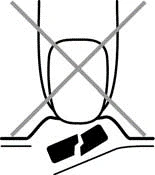
Figure A
2. Detach one blister
Each blister strip contains six blisters separated by perforations. Detach one blister along the dotted lines (Fig. 1).
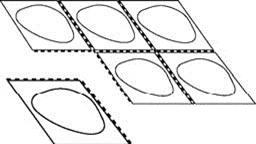
Fig. 1
3. Open the packaging
Carefully peel off the foil cover, starting from the corner as indicated by the arrow (Figs. 2 and 3).
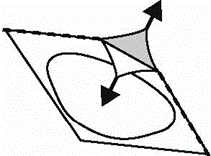
Fig. 2
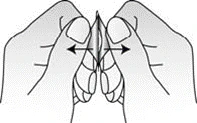
Fig. 3
4. Remove the orally disintegrating tablet
Remove the orally disintegrating tablet with dry hands and place it on the tongue (Fig. 4).
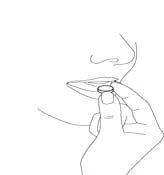
Fig. 4
The tablet dissolves quickly and can be swallowed without water.
When can you expect to feel better?
AuroMirta ORO usually starts working after 1 to 2 weeks, and after 2 to 4 weeks you may begin to feel better. It is important to discuss the effect of AuroMirta ORO with your doctor during the first few weeks of treatment:
2–4 weeks after starting AuroMirta ORO, talk to your doctor about how the medicine is affecting you.
If you still do not feel better, your doctor may prescribe a higher dose. In this case, talk to your doctor again after another 2–4 weeks. AuroMirta ORO is usually taken for 4 to 6 months, until symptoms of depression have disappeared.
Taking more AuroMirta ORO than prescribed
If you or someone else has taken too much AuroMirta ORO, contact a doctor immediately. The most likely symptoms of overdose (without other medicines or alcohol) are drowsiness, confusion, and rapid heartbeat. Symptoms of possible overdose may include changes in heart rate (fast, irregular heartbeat) and/or fainting, which may be signs of a life-threatening condition called torsade de pointes.
If you miss a dose of AuroMirta ORO
If you are taking the medicine once daily
- Do not take a double dose to make up for a missed dose. Take the next dose at the usual time.
If you are taking the medicine twice daily
- If you forget the morning dose, take it together with the evening dose.
- If you miss the evening dose, do not take it with the next morning dose; skip it and continue taking your doses in the morning and evening as usual.
- If you forget both doses, do not take the missed doses. Skip both doses and continue with your normal dosing schedule the next day, taking doses in the morning and evening.
Stopping AuroMirta ORO
You should stop taking AuroMirta ORO only after consulting your doctor.
If you stop taking the medicine too early, depression may return. When you start feeling better, talk to your doctor. Your doctor will decide when it is appropriate to stop treatment.
Do not stop taking AuroMirta ORO suddenly, even if your depression has improved. If you stop taking AuroMirta ORO abruptly, you may experience nausea, dizziness, agitation or anxiety, and headaches.
These symptoms can be avoided by gradually stopping the medicine. Your doctor will advise you on how to gradually reduce the dose.
If you have any further questions about the use of this medicine, consult your doctor or pharmacist.
4. Possible adverse reactions
Like all medicines, this medicine can cause adverse reactions, although not everyone will experience them.
If any of the following serious adverse reactions occur,
discontinue use of AuroMirta ORO and consult a doctor immediately:
Uncommon (may affect less than 1 in 100 people):
- feeling of excitement or emotional imbalance (mania).
Rare (may affect 1 in 1,000 people):
- yellowing of the eyes or skin; this may indicate liver dysfunction (jaundice).
Not known (frequency cannot be estimated from available data):
- signs of infection such as sudden unexplained high fever, sore throat, and mouth ulcers (agranulocytosis). In rare cases, mirtazapine may cause disturbances in blood cell production (bone marrow suppression). Some people become more susceptible to infections because mirtazapine may cause a transient deficiency of white blood cells (granulocytopenia). In rare cases, mirtazapine may also cause deficiency of red and white blood cells as well as platelets (aplastic anaemia), deficiency of platelets (thrombocytopenia), or increased number of white blood cells (eosinophilia);
- seizure (convulsion);
- combination of symptoms such as unexplained fever, sweating, rapid heartbeat, diarrhoea, (involuntary) muscle contractions, chills, exaggerated reflexes, restlessness, mood changes, loss of consciousness, and increased salivation. In very rare cases, these may be symptoms of serotonin syndrome;
- thoughts of self-harm or suicide;
- red, target-shaped or circular rashes on the trunk, often with blisters in the centre, peeling skin, mouth ulcers, throat, nose, genital organs, and around the eyes. Such serious skin rashes may be preceded by fever and flu-like symptoms (Stevens-Johnson syndrome, toxic epidermal necrolysis);
- widespread rash, high fever, and swollen lymph nodes (DRESS syndrome or drug hypersensitivity syndrome).
Other possible adverse reactions associated with mirtazapine include:
Very common (may affect more than 1 in 10 people):
- increased appetite and weight gain;
- feeling of drowsiness or somnolence;
- headache;
- dry mouth.
Common (may affect less than 1 in 10 people):
- lethargy;
- dizziness;
- tremor;
- nausea;
- diarrhoea;
- vomiting;
- constipation;
- rash or vesicular eruption;
- joint pain (arthralgia) or muscle pain (myalgia);
- back pain;
- dizziness or fainting upon sudden standing (orthostatic hypotension);
- swelling (usually in the ankles or feet) due to fluid retention (oedema);
- fatigue;
- vivid dreams;
- confusion;
- feeling of anxiety;
- sleep problems;
- memory problems, which in most cases resolved after discontinuation of treatment.
Uncommon (may affect less than 1 in 100 people):
- abnormal skin sensations, e.g. burning, prickling, tickling, or tingling (paraesthesiae);
- restless legs;
- fainting;
- sensation of numbness in the mouth (oral hypoaesthesia);
- low blood pressure;
- nightmares;
- feeling of agitation;
- hallucinations;
- feeling of need to move.
Rare (may affect 1 in 1,000 people):
- muscle twitching or jerking (myoclonus);
- aggression;
- abdominal pain and nausea: this may indicate pancreatitis.
Not known (frequency cannot be estimated from available data):
- abnormal sensations in the mouth (oral paraesthesia);
- swelling of the mouth;
- swelling throughout the body (generalised oedema);
- localized oedema;
- hyponatraemia;
- inappropriate antidiuretic hormone secretion;
- severe skin reactions (bullous dermatitis, erythema multiforme);
- sleepwalking (somnambulism);
- speech disorder;
- elevated blood creatine kinase levels;
- difficulty in urination (urinary retention);
- muscle pain, stiffness and (or) weakness, darkening or discoloration of urine (rhabdomyolysis).
Additional adverse reactions in children and adolescents
In clinical trials, the following adverse events were commonly observed in children under 18 years of age: significant weight gain, itchy skin rash (urticaria), and increased blood triglyceride levels.
Reporting of adverse reactions
If any adverse symptoms occur, including any adverse reactions not listed in this leaflet, inform a doctor or pharmacist. Adverse reactions can be reported directly to the Department of Monitoring Adverse Drug Reactions of the Office for Registration of Medicinal Products, Medical Devices and Biocidal Products, Al. Jerozolimskie 181C, 02-222 Warsaw, tel.: +48 22 49 21 301, fax: +48 22 49 21 309, website: https://smz.ezdrowie.gov.pl
Adverse reactions can also be reported to the marketing authorization holder.
Reporting adverse reactions helps to provide more information on the safety of the medicine.
5. How to store AuroMirta ORO
Keep the medicine out of the sight and reach of children.
Do not use this medicine after the expiry date stated on the packaging and blister after
"Expiry date (EXP)". The expiry date refers to the last day of the stated month.
No special storage instructions are required for this medicine.
Medicines must not be disposed of via wastewater or household waste. Ask your pharmacist how to dispose of medicines no longer required. This will help protect the environment.
6. Contents of the packaging and other information
What AuroMirta ORO contains
- Each orodispersible tablet contains 15 mg of mirtazapine. Each orodispersible tablet contains 30 mg of mirtazapine. Each orodispersible tablet contains 45 mg of mirtazapine.
- Other ingredients: crospovidone (type B), mannitol, microcrystalline cellulose, aspartame, colloidal anhydrous silica, magnesium stearate, strawberry-guarana flavour (maltodextrin, propylene glycol, artificial flavouring substances, acetic acid), and mint flavour (artificial flavouring substances, corn starch).
What AuroMirta ORO looks like and contents of the pack
AuroMirta ORO, 15 mg, orodispersible tablets
White, round orodispersible tablets with "36" engraved on one side and "A" on the other, and a circular rim engraved around the edge.
AuroMirta ORO, 30 mg, orodispersible tablets
White, round orodispersible tablets with "37" engraved on one side and "A" on the other, and a circular rim engraved around the edge.
AuroMirta ORO, 45 mg, orodispersible tablets
White, round orodispersible tablets with "38" engraved on one side and "A" on the other, and a circular rim engraved around the edge.
Single-dose blisters made of Poliamide/Aluminium/PVC/Paper/Polyester/Aluminium, packed in a cardboard box.
Pack sizes:
15 mg: 6 x 1 and 30 x 1 orodispersible tablet.
30 mg and 45 mg: 30 x 1 orodispersible tablet.
Not all pack sizes may be marketed.
Marketing Authorisation Holder and Manufacturer
Marketing Authorisation Holder:
Aurovitas Pharma Polska Sp. z o.o.
ul. Sokratesa 13D, lokal 27
01-909 Warszawa
Manufacturer/Importer:
APL Swift Services (Malta) Ltd.
HF26, Hal Far Industrial Estate, Hal Far
Birzebbugia, BBG 3000
Malta
Generis Farmacêutica, S.A.
Rua João De Deus 19, Venda Nova
2700-487 Amadora
Portugal
This medicinal product is authorised in the European Economic Area countries under the following names:
Czech Republic: Mirtazapine Aurovitas
Malta: Mirtazapine Aurobindo 15 mg/ 30 mg/ 45 mg orodispersible tablets
Poland: AuroMirta ORO
Spain: MIRTAZAPINA AUROVITAS 15 mg/ 30 mg/ 45 mg comprimidos bucodispersables
Portugal: Mirtazapina Aurovitas