Ascorgem
Poland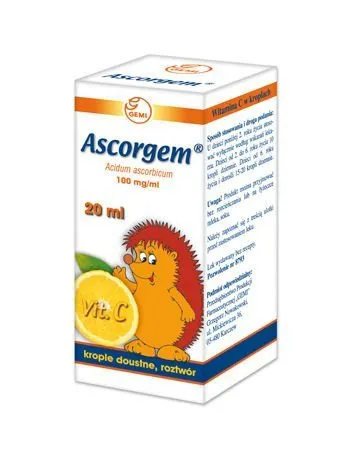
Table of Contents
Patient Information Leaflet
ASCORGEM
100 mg/ml, oral drops, solution
Acidum ascorbicum
Vitamin C in drops
Please read all of this leaflet carefully before you start taking this medicine, because it contains
important information for you.
This medicine should always be taken exactly as described in this patient leaflet or as directed by your
doctor or pharmacist.
- Keep this leaflet so that you can read it again if necessary.
- If you need advice or further information, please consult your pharmacist.
- If you experience any side effects, including any possible side effects not listed in this leaflet, inform your doctor or pharmacist. See section 4.
- If there is no improvement or if you feel worse after a few days, you should contact your doctor.
Leaflet Contents:
- What A is and what it is used for
- What you need to know before you take A
- How to take A
- Possible side effects
- How to store A
- Contents of the pack and other information
1. What A is and what it is used for
A is an oral drop formulation containing vitamin C. This vitamin participates in oxidation and reduction processes within cells, such as cellular respiration. It also plays a role in amino acid metabolism, the synthesis of adrenal cortical steroid hormones and insulin. Furthermore, it is essential for the formation of collagen and intercellular substances in various tissues (skin, bones, teeth, cartilage, tendons, capillary endothelium).
The requirement for vitamin C is increased in the following conditions: AIDS, alcoholism, gastrointestinal disorders (e.g. prolonged diarrhoea – increased loss of ascorbic acid, achylia gastrica – reduced absorption, resection of the small intestine), prolonged exposure to low temperatures, prolonged fever, chronic haemodialysis, certain infectious diseases (pneumonia, tuberculosis) and during convalescence, prolonged stress, wound healing and bone fractures, hyperthyroidism, burns, smoking, cancer, and surgical procedures.
A is indicated for:
- States of vitamin C deficiency (e.g. inflammation of mucous membranes, scurvy);
- Artificial feeding of infants;
- Conditions associated with increased demand for vitamin C (e.g. colds, recurrent upper respiratory tract infections, reduced immunity, convalescence).
2. Important information before using medicine A
When not to use medicine A
- if the patient is allergic (hypersensitive) to the active substance or to any of the other ingredients of this medicine (listed in section 6);
- if the patient has:
- urinary tract stones or excessive excretion of oxalates in urine;
- excessive absorption of iron from the gastrointestinal tract.
Warnings and precautions
Before starting to use this medicine, discuss it with your doctor or pharmacist.
Use with caution if the patient has:
- a tendency to form mineral deposits in the urinary system;
- cystinuria (excretion of increased amounts of the amino acid cystine in urine);
- gout – a disorder of uric acid metabolism;
- thalassemia – disorders of hemoglobin synthesis;
- glucose-6-phosphate dehydrogenase deficiency, as doses higher than recommended may cause breakdown of red blood cells;
- diabetes.
Children
The medicine is especially recommended for use in children.
A and other medicines
Tell your doctor about all medicines the patient is currently taking or has recently taken, as well as any medicines the patient plans to take.
Vitamin C contained in this medicine:
- reduces the effectiveness of amphetamine derivatives and tricyclic antidepressants;
- enhances the effect of paracetamol and coumarin-derived anticoagulants (e.g. acenocoumarol);
- when used together with sulfonamides (antibacterial drugs), may cause formation of their crystals in urine;
- may intensify the adverse effect of acetylsalicylic acid on the stomach;
- increases absorption of iron from the gastrointestinal tract. When doses exceeding 1 g per day are necessary, inform the doctor about all currently used medicines, as vitamin C may affect their action. Use of high-dose vitamin C may interfere with blood, urine, and stool test results; therefore, if such tests are required, inform the doctor about the use of medicine A.
Pregnancy, breastfeeding, and fertility
If the patient is pregnant or breastfeeding, suspects she may be pregnant, or is planning to have a child, she should consult a doctor or pharmacist before using this medicine.
Do not exceed the recommended doses of this medicine during pregnancy due to the risk of subsequent vitamin C deficiency in the child.
Do not exceed the recommended doses of this medicine during breastfeeding.
Driving and operating machinery
Ascorbic acid does not affect psycho-physical performance or the ability to drive vehicles and operate machinery.
A contains sucrose
10 drops contain 0.25 g of sucrose. This should be taken into account in patients with diabetes. If the patient has previously been diagnosed with intolerance to certain sugars, the patient should contact a doctor before taking this medicine.
3. How to use A
This medicine should always be used exactly as described in the patient leaflet or as directed by a doctor or pharmacist. If in doubt, consult a doctor or pharmacist.
Oral administration
In infants (under 2 years of age), this medicine should only be used as directed by a doctor.
Children from 2 to 6 years: 10 drops per day.
Children over 6 years and adults: 15 to 20 drops per day.
The drops may be taken undiluted or mixed with a teaspoon of milk, juice, etc.
If you feel the effect of the medicine is too strong or too weak, consult your doctor.
Use of a higher than recommended dose of medicine A
In case of overdose, adverse effects may occur in the form of mild gastrointestinal symptoms (e.g. diarrhea), without systemic toxicity.
If you have taken more medicine than recommended, consult a doctor or pharmacist.
Missed dose of medicine A
Take the next dose as scheduled. Do not take a double dose to make up for a missed dose.
Stopping medicine A
If you have any further doubts regarding the use of this medicine, consult your doctor or pharmacist.
4. Possible adverse reactions
Like all medicines, this medicine can cause adverse reactions, although not everyone experiences them.
Long-term use of medicines containing vitamin C in doses exceeding 1 g daily may cause, in some individuals:
- gastrointestinal disturbances (heartburn, diarrhoea);
- urinary system disturbances (due to increased risk of formation of urate, cystine, and oxalate kidney stones);
- increased tolerance to vitamin C, which after discontinuation of the medicine may lead to deficiency and scurvy.
Reporting of adverse reactions
If any adverse reactions occur, including any adverse reactions not listed in this leaflet, inform your doctor, pharmacist, or nurse. Adverse reactions can be reported directly to the Office for Registration of Medicinal Products, Medical Devices and Biocidal Products, Al. Jerozolimskie 181C, 02-222 Warsaw, Tel.: +48 22 49 21 301, Fax: +48 22 49 21 309, Website: https://smz.ezdrowie.gov.pl.
Reporting adverse reactions enables further collection of information on the medicine's safety profile.
5. How to store A
Keep out of the reach and sight of children.
Store below 25°C.
Do not use medicine A after the expiry date stated on the packaging. The expiry date refers to the last day of the specified month.
The shelf life after first opening the bottle is 3 months. After this period, any remaining contents should be discarded.
Medicines must not be disposed of via wastewater or household waste. Ask your pharmacist what to do with medicines no longer required. This will help protect the environment.
6. Contents of the packaging and other information
What A contains
- The active substance is ascorbic acid (vitamin C). 1 ml (approximately 20 drops) contains 100 mg of ascorbic acid.
- Other ingredients: sucrose, citric acid, purified water.
What A looks like and contents of the pack
An amber glass bottle with a dropper cap, placed in a cardboard box, containing 20 ml of a colourless to slightly yellow liquid with a slightly sour taste.
Marketing Authorisation Holder and Manufacturer
Gemipharma Sp. z o.o.
ul. Mickiewicza 36
05-480 Karczew
tel. +48 (22) 780 83 05 ext. 70
e-mail: [email protected]