Antygrypin
Poland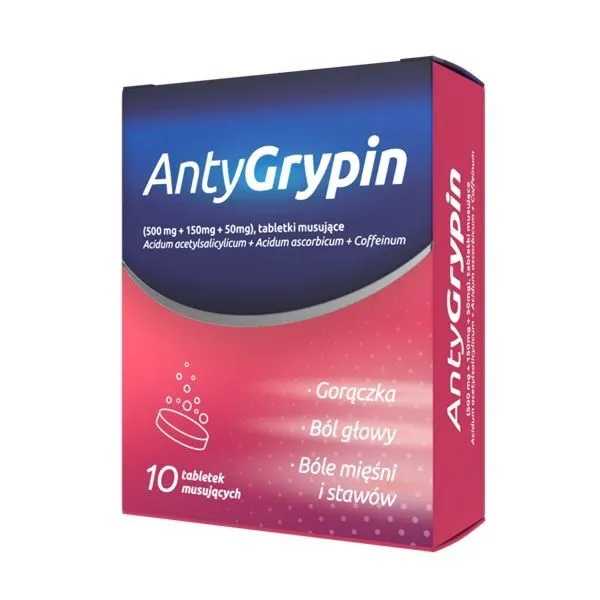
Table of Contents
Package leaflet: Information for the patient
AntyGrypin,
500 mg + 150 mg + 50 mg, effervescent tablets
Acetylsalicylic acid + Ascorbic acid + Caffeine
Please read the entire leaflet carefully before taking this medicine, as it contains important information
for the patient.
This medicine should always be used exactly as described in this patient leaflet or as directed by a
physician or pharmacist.
- Keep this leaflet for future reference.
- If you need advice or further information, consult your pharmacist.
- If you experience any adverse reactions, including any possible adverse reactions not listed in this leaflet, inform your doctor or pharmacist. See section 4.
- If there is no improvement after 3 days, or if your condition worsens, consult a doctor.
Table of contents
- What AntyGrypin is and what it is used for
- Important information before taking AntyGrypin
- How to take AntyGrypin
- Possible side effects
- How to store AntyGrypin
- Contents of the pack and other information
1. What AntyGrypin is and what it is used for
AntyGrypin contains acetylsalicylic acid, vitamin C, and caffeine.
AntyGrypin is indicated for the short-term relief of symptoms associated with cold or flu (fever, headache, muscle and joint pain).
Acetylsalicylic acid has analgesic, anti-inflammatory, and antipyretic effects.
Vitamin C helps meet the increased requirement for ascorbic acid during cold or flu.
Caffeine enhances the analgesic effect of acetylsalicylic acid in headache associated with cold or flu by acting directly on cerebral blood vessels.
If there is no improvement after 3 days, or if you feel worse, consult a doctor.
2. Important information before using AntyGrypin
When not to use AntyGrypin:
- if the patient is allergic to the active substances or to any of the other ingredients of this medicine (listed in section 6);
- in case of active peptic ulcer of the stomach and/or duodenum, or gastrointestinal inflammatory conditions;
- in case of tendency to bleeding;
- in case of acid-base imbalance (e.g. in diabetes, uraemia);
- in patients with asthma attacks, hay fever with nasal polyps induced by salicylates or substances with similar action, particularly non-steroidal anti-inflammatory drugs;
- in patients with renal insufficiency;
- during pregnancy and breastfeeding;
- in patients with severe hepatic insufficiency;
- in severe heart failure;
- in children and adolescents under 16 years of age;
- when used concomitantly with methotrexate at doses of 15 mg per week or higher.
The medicine contains sorbitol; do not use in patients with hereditary fructose intolerance.
Warnings and precautions
Exercise special caution when using AntyGrypin because:
- prolonged use of acetylsalicylic acid may lead to interstitial nephritis and permanent impairment of kidney function;
- AntyGrypin should not be used for longer than 3 days without consulting a doctor;
- acetylsalicylic acid inhibits platelet aggregation (clumping), increasing the risk of bleeding, especially when used concomitantly with anticoagulant drugs;
- acetylsalicylic acid reduces excretion of uric acid from the body, which may trigger an attack of gout in patients with reduced uric acid excretion;
- AntyGrypin belongs to a group of medicines that may adversely affect fertility in women. This effect is reversible and resolves after discontinuation of therapy.
Use of medicines containing acetylsalicylic acid may be associated with a small increased risk of heart attack (myocardial infarction) or stroke. This risk increases with long-term use of high doses of the medicine. Do not use higher doses or for longer than recommended.
If heart disease, previous stroke, or risk factors for these conditions (such as high blood pressure, diabetes, elevated cholesterol, smoking) are present, discuss treatment options with your doctor or pharmacist.
AntyGrypin should be used with caution:
- in patients with a history of peptic ulcer disease of the stomach and/or duodenum;
- in patients with glucose-6-phosphate dehydrogenase deficiency (an inherited metabolic disorder);
- in case of hypersensitivity to anti-inflammatory and anti-rheumatic drugs or other allergenic substances;
- in patients with hypertension (due to caffeine content).
Children and adolescents
Use of AntyGrypin is not recommended in children and adolescents under 16 years of age.
AntyGrypin and other medicines
Acetylsalicylic acid contained in AntyGrypin increases the toxicity of methotrexate on bone marrow.
It enhances the effect of anticoagulant drugs (heparin, coumarin derivatives) and antidiabetic drugs (insulin, sulfonylurea derivatives), and increases blood levels of digoxin.
Concomitant use of acetylsalicylic acid and valproic acid increases the risk of bleeding. It reduces the effectiveness of diuretics (e.g. spironolactone, furosemide), drugs promoting uric acid excretion used in gout treatment (e.g. sulfinpyrazone, benzbromarone), and reduces the effect of antihypertensive drugs from the angiotensin-converting enzyme inhibitor group (e.g. captopril, enalapril).
Concomitant use of acetylsalicylic acid and other non-steroidal anti-inflammatory drugs (e.g. ibuprofen) increases the risk of gastrointestinal mucosal damage and kidney function disorders.
When used concomitantly with glucocorticoids (except hydrocortisone in Addison's disease), there is an increased risk of gastrointestinal mucosal damage and gastrointestinal bleeding.
Caffeine contained in AntyGrypin may enhance the effect of central nervous system stimulants and reduce the effect of sedatives and hypnotics.
Medicines that neutralize gastric juice reduce the absorption of AntyGrypin.
AntyGrypin with food, drink and alcohol
AntyGrypin should be taken after meals.
Consumption of alcohol during treatment with AntyGrypin increases the risk of gastrointestinal mucosal damage.
Pregnancy and breastfeeding
Both acetylsalicylic acid and caffeine contained in AntyGrypin pass through the placenta and into breast milk.
AntyGrypin should not be used during pregnancy or while breastfeeding.
Driving and operating machinery
AntyGrypin does not affect the ability to drive or operate machinery.
AntyGrypin contains sodium, sorbitol (E 420), and glucose (component of maltodextrin with flavour).
Sorbitol and glucose
The medicine contains 305.3 mg of sorbitol in each tablet. Sorbitol is a source of fructose. If the patient has previously been diagnosed with intolerance to certain sugars or hereditary fructose intolerance, a rare genetic disorder in which the patient's body cannot break down fructose, the patient should consult a doctor before taking this medicine.
If the patient has previously been diagnosed with intolerance to certain sugars, the patient should consult a doctor before taking this medicine.
Sodium
The medicine contains 460.1 mg of sodium (main component of table salt) in each tablet. This corresponds to 23.0% of the maximum recommended daily dietary sodium intake for adults. This should be taken into account in patients on a sodium-controlled diet.
3. How to use AntyGrypin
This medicine should always be taken exactly as described in this patient leaflet or as directed by your doctor or pharmacist. If in doubt, consult your doctor or pharmacist.
Recommended dose of AntyGrypin
Adults: 1 to 2 tablets at a time, once or several times a day (not more than 5 tablets per day).
Before taking, dissolve the tablet in a glass of water. The medicine should be taken after a meal.
If symptoms worsen or do not improve within 3 days, consult a doctor.
Use in children and adolescents
AntyGrypin is not recommended for use in children and adolescents under 16 years of age.
Taking more than the recommended dose of AntyGrypin
The following may occur: increased breathing rate, nausea, vomiting, abdominal pain and dizziness, tinnitus, fever, excessive sweating, urticaria, reduced blood coagulation, gastrointestinal bleeding, decreased blood glucose concentration, acid-base imbalance, coma, circulatory shock, respiratory failure, haematuria, seizures.
In case of caffeine overdose, symptoms such as excitation, hand tremors, cardiac arrhythmias, insomnia, anxiety, and concentration disturbances may be observed. If more than the recommended dose has been taken, seek immediate medical advice from a doctor or pharmacist. Treatment of overdose includes gastric lavage and administration of activated charcoal. The doctor will monitor acid-base balance parameters and provide general symptomatic treatment.
Missed dose of AntyGrypin
AntyGrypin is used for the symptomatic relief of cold or flu symptoms. If a dose is missed and symptoms persist, take the next dose as scheduled.
Do not take a double dose to make up for a missed tablet.
If you have any further doubts regarding the use of this medicine, consult your doctor or pharmacist.
4. Possible adverse reactions
Like all medicines, this medicine can cause adverse reactions, although not everyone experiences them.
The following adverse reactions may occur:
- abdominal pain, nausea, vomiting;
- overt gastrointestinal bleeding presenting as coffee-ground vomit and tarry stools, or occult gastrointestinal bleeding, which may lead to iron-deficiency anaemia;
- gastric or duodenal mucosal ulceration, perforation;
- rare hypersensitivity reactions: urticaria, skin rashes, angioedema, bronchial asthma attack;
- rare: decreased platelet count, blood coagulation disorders, prolonged bleeding time;
- transient increase in liver enzyme activity (aminotransferases);
- excessive sweating, dizziness, tinnitus – usually symptoms of overdose;
- urinary stones, renal colic, renal papillary necrosis, acute renal failure;
- insomnia, anxiety, headache and dizziness related to caffeine contained in the medicine.
Treatment with NSAIDs (non-steroidal anti-inflammatory drugs) has been associated with reported cases of edema,
hypertension and heart failure.
Use of medicines such as AntyGrypin may be associated with a small increased risk of heart attack (myocardial infarction) or stroke.
Reporting of adverse reactions
If any adverse reactions occur, including any adverse reactions not listed
in this leaflet, inform your doctor or pharmacist. Adverse reactions can be reported
directly to the Department of Monitoring Adverse Drug Reactions of the Office for Medicinal Products, Medical Devices and Biocidal Products
Al. Jerozolimskie 181C
02-222 Warsaw
Phone: +48 22 4921 301
Fax: +48 22 4921 309
Website: https://smz.ezdrowie.gov.pl
Adverse reactions can also be reported to the marketing authorization holder.
Reporting adverse reactions helps to provide more information on the safety of the medicine.
5. How to store the medicine AntyGrypin
Store below 25 °C.
The medicine should be kept out of the sight and reach of children.
Do not use this medicine after the expiry date stated on the carton and tablet container.
The expiry date refers to the last day of the stated month.
Medicines must not be disposed of via wastewater or household waste. Ask your pharmacist how to dispose of medicines no longer required. This will help protect the environment.
6. Contents of the packaging and other information
What AntyGrypin contains
- The active substances in the medicine are: acetylsalicylic acid, ascorbic acid (vitamin C), caffeine. Each effervescent tablet contains 500 mg of acetylsalicylic acid, 150 mg of ascorbic acid, and 50 mg of caffeine.
- Other ingredients are: sodium hydrogen carbonate, anhydrous citric acid, sorbitol (E 420), corn starch, povidone, sodium cyclamate, sodium saccharin, lemon flavour (Tetrarome Lemon P 0551 987323): corn maltodextrin, flavouring substances, alpha tocopherol (E 307), quinoline yellow (E 104).
What AntyGrypin looks like and contents of the pack
The medicine is in the form of effervescent tablets.
10 or 20 effervescent tablets in 1 or 2 polypropylene containers with a polyethylene cap
containing silica gel, in a cardboard box.
Marketing Authorisation Holder and Manufacturer
Natur Produkt Pharma Sp. z o.o.
ul. Podstoczysko 30
07-300 Ostrów Mazowiecka
Poland
Tel.: +48 29 644 29 00