Amiokordin
Poland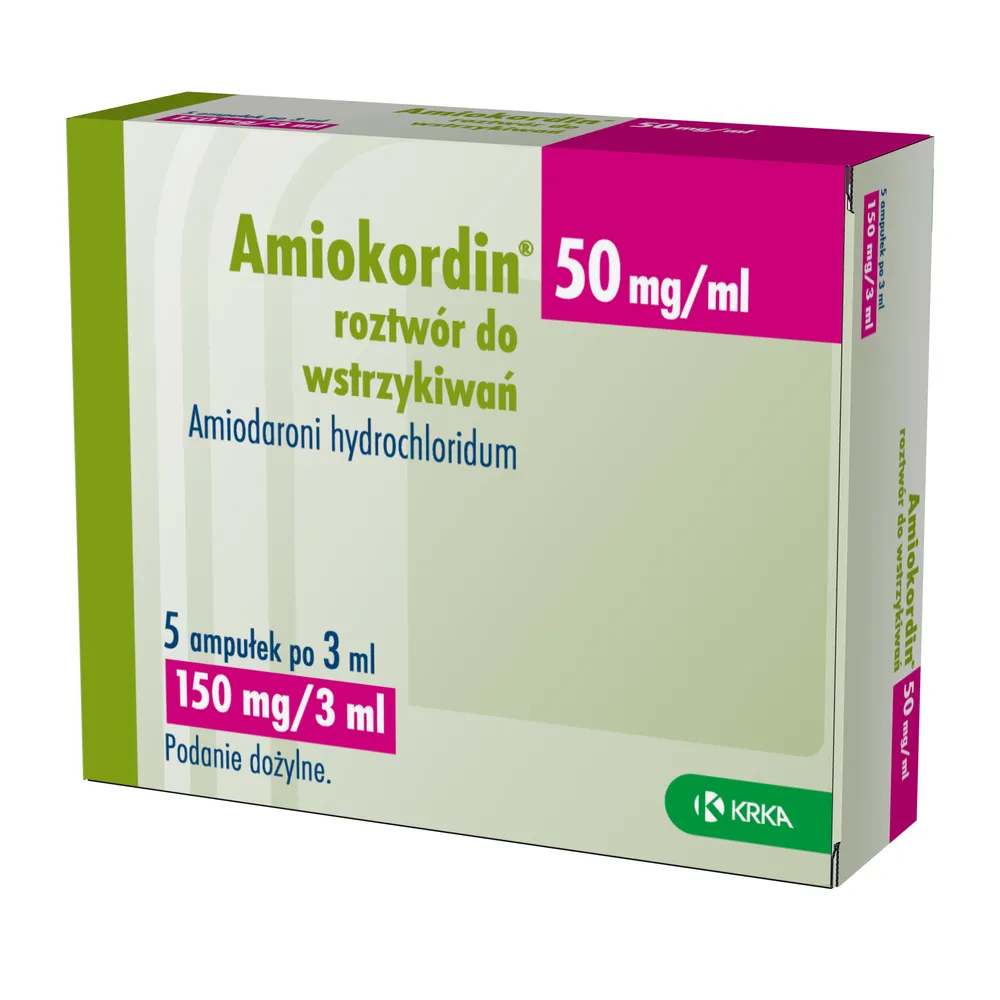
Table of Contents
- Package leaflet: information for the patient
- 1. What Amiokordin is and what it is used for
- 2. Important information before using Amiokordin
- 3. How to use Amiokordin
- 4. Possible adverse reactions
- 5. How to store Amiokordin
- 6. Contents of the pack and other information
- Information intended exclusively for healthcare professionals:
Package leaflet: information for the patient
Amiokordin, 50 mg/ml, solution for injection
Amiodarone hydrochloride
Please read all of this leaflet carefully before using this medicine, because it contains
important information for the patient.
- Keep this leaflet, as you may need to read it again.
- If you have any questions, please consult your doctor or nurse.
- This medicine has been prescribed for a specific individual. Do not pass it on to others. This medicine may harm other people, even if their symptoms are the same.
- If the patient experiences any adverse reactions, including any not listed in this leaflet, inform a doctor, pharmacist, or nurse. See section 4.
Table of contents:
- What Amiokordin is and what it is used for
- Important information before using Amiokordin
- How to use Amiokordin
- Possible side effects
- How to store Amiokordin
- Contents of the pack and other information
1. What Amiokordin is and what it is used for
Amiokordin is available as an injectable solution and contains the active substance
amiodarone hydrochloride. Amiodarone is a potent antiarrhythmic medicine used in the
treatment of irregular heartbeats.
Amiodarone is administered intravenously when a rapid effect is required or when oral
administration is not possible.
Amiokordin is used to treat life-threatening cardiac arrhythmias:
- Arrhythmias associated with Wolff-Parkinson-White syndrome
- Atrial fibrillation and atrial flutter, paroxysmal supraventricular tachycardias: supraventricular and nodal tachycardias, when other medications cannot be used
- Ventricular arrhythmias (ventricular tachycardia, ventricular fibrillation), when other antiarrhythmic drugs are ineffective.
2. Important information before using Amiokordin
When not to use Amiokordin:
- if the patient is allergic to iodine, amiodarone, or any of the other components of this medicine (listed in section 6) – in case of allergic reactions such as itchy rash, difficulty swallowing or breathing, or swelling of the lips, face, throat, or tongue, contact a doctor immediately;
- in patients with heart diseases: sinus bradycardia, sinoatrial block, or sick sinus syndrome, except in patients with an implanted pacemaker (risk of sinus node suppression);
- in patients with second- or third-degree atrioventricular block, except in patients with an implanted pacemaker;
- in patients with bifascicular or trifascicular block, except in patients with an implanted cardiac pacemaker or temporary pacing system;
- concomitantly with medicines that may cause life-threatening arrhythmias, such as torsade de pointes (see section "Amiokordin with other medicines");
- if the patient has thyroid disease;
- if the patient is pregnant or breastfeeding;
- in case of circulatory collapse or severe hypotension;
- in case of severe respiratory insufficiency;
- in patients with congestive cardiomyopathy or heart failure;
- in newborns (including premature infants), infants, and children under 3 years of age.
The above contraindications do not apply if amiodarone is used in an intensive care unit during cardiopulmonary resuscitation for sudden cardiac arrest due to ventricular fibrillation when defibrillation is ineffective.
Warnings and precautions
Amiokordin should be administered intravenously only in an intensive care unit where the patient's clinical condition is continuously monitored (ECG recording, arterial blood pressure values).
- Amiokordin causes changes in the ECG trace – however, this does not indicate drug toxicity.
- Amiokordin may cause cardiac arrhythmias or worsen existing rhythm disorders, particularly due to interactions with certain drugs (see section "Amiokordin with other medicines" and section 4) and/or in the presence of electrolyte imbalances (low blood potassium and/or magnesium levels). Hypokalemia (low potassium levels in the body) must be avoided and corrected if present.
- Concomitant use of Amiokordin with the following drugs is not recommended: beta-blockers, calcium antagonists that slow heart rate (verapamil, diltiazem), and laxatives that may cause hypokalemia (see section "Amiokordin with other medicines"). Before starting Amiokordin, discuss with your doctor or pharmacist:
- if the patient is currently taking a medicine containing sofosbuvir used to treat hepatitis C virus infection, as this may cause life-threatening bradycardia. The doctor may consider alternative treatment options. If treatment with both amiodarone and sofosbuvir is necessary, additional cardiac monitoring may be required.
Contact your doctor immediately if the patient is taking a medicine containing sofosbuvir used to treat hepatitis C virus infection and experiences any of the following during treatment:
-
slow or irregular heartbeat, or arrhythmias;
-
shortness of breath or worsening of existing breathlessness;
-
chest pain;
-
dizziness;
-
palpitations;
-
near-fainting or fainting.
-
Amiokordin may cause interstitial pneumonitis. Symptoms include dyspnea and dry cough. If interstitial pneumonitis is suspected, the doctor should perform a chest X-ray and consider continuing or discontinuing Amiokordin treatment, as interstitial pneumonitis usually resolves if the drug is discontinued promptly. The doctor may also consider corticosteroid therapy.
-
Very rarely, severe respiratory complications, sometimes fatal, have been observed, usually in the immediate postoperative period (see section "Amiokordin with other medicines" and section 4).
-
Before surgery, the anesthesiologist must be informed that the patient has received Amiokordin.
-
During and within 24 hours after administration of Amiokordin, acute or chronic liver dysfunction may occur, sometimes leading to death. Therefore, the doctor will regularly order liver function tests (measurement of serum aminotransferase activity) from the start of treatment. If liver dysfunction occurs, the doctor may consider reducing the dose or discontinuing treatment.
-
Treatment with Amiokordin must be stopped immediately if severe skin reactions occur during therapy (e.g., progressive rash with blisters or mucosal lesions, fever, joint pain, or a severe rapidly progressing illness with large subepidermal blisters, extensive skin erosions, sloughing of large skin sheets, and fever – see also section 4). These symptoms may be life-threatening.
-
If blurred vision or visual deterioration occurs, a complete ophthalmologic examination, including fundoscopy, should be performed immediately. If optic nerve damage and/or optic neuritis is diagnosed, Amiokordin must be discontinued due to the risk of permanent vision loss.
-
To avoid local adverse effects at the infusion site, Amiokordin should be administered via a central venous line.
-
If the patient is on a heart transplant waiting list, the treating physician may change the treatment regimen prior to transplantation. This is because amiodarone use before heart transplantation increases the risk of a life-threatening complication (primary graft dysfunction), in which the transplanted heart fails to function properly within the first 24 hours after surgery.
Amiokordin with other medicines
Inform your doctor about all medicines currently or recently taken, as well as any medicines planned for use.
Amiokordin must not be used concomitantly with medicines that may cause life-threatening arrhythmias (such as torsade de pointes). These include:
- antiarrhythmic drugs (for irregular heartbeat): quinidine, disopyramide, procainamide, sotalol, bretylium, bepridil;
- intravenous erythromycin (antibiotic), cotrimoxazole (antibacterial), or the antiprotozoal agent pentamidine;
- antipsychotics such as chlorpromazine, thioridazine, fluphenazine, pimozide, haloperidol, amisulpride, sertindole;
- certain drugs used for other psychiatric disorders: lithium preparations and tricyclic antidepressants, e.g., doxepin, amitriptyline;
- certain antihistamines used for allergies: terfenadine, astemizole, mizolastine;
- antimalarial drugs: quinine, chloroquine, mefloquine, halofantrine;
- vincamine – used to treat cerebral circulation disorders, dizziness, tinnitus, memory and learning difficulties, especially in the elderly;
- neuroleptics;
- cisapride – used to treat delayed gastric emptying.
Concomitant use of Amiokordin is not recommended with:
- fluoroquinolone antibiotics: ciprofloxacin, ofloxacin, levofloxacin;
- beta-blockers used for heart conditions, e.g., propranolol;
- calcium antagonists that slow heart rate, used for angina (heart disease) or hypertension (high blood pressure): verapamil, diltiazem;
- sofosbuvir, used to treat hepatitis C virus infection;
- certain laxatives (used for constipation) that cause low blood potassium: bisacodyl, senna;
- cholesterol-lowering drugs – statins, e.g., simvastatin, atorvastatin, lovastatin.
Use Amiokordin with caution when used concomitantly with:
- diuretics, e.g., furosemide;
- anti-inflammatory drugs – systemic corticosteroids, e.g., hydrocortisone, prednisolone;
- tetracosactide (a drug used in diagnosing certain hormonal disorders);
- antifungal agents;
- intravenous amphotericin B;
- general anesthetics or high-concentration oxygen administered during surgical procedures (see section "Warnings and precautions" and section 4) – the anesthesiologist must be informed about Amiokordin use before surgery;
- phenytoin, used to treat epileptic seizures – the doctor will closely monitor the patient and immediately reduce the phenytoin dose and measure serum phenytoin levels if signs of toxicity occur;
- digitalis glycosides, e.g., digoxin, used for heart conditions – the doctor will order serum digoxin level measurements, perform an ECG, adjust the digoxin dose, and monitor the patient for signs of digitalis toxicity;
- anticoagulants such as warfarin, dabigatran – regular coagulation tests are necessary to adjust the dose of oral anticoagulants during and after Amiokordin treatment;
- immunosuppressants to prevent transplant rejection: cyclosporine, tacrolimus, sirolimus;
- flecainide, used to treat arrhythmias – treatment must be closely supervised by a doctor, and the flecainide dose may need adjustment;
- fentanyl, a potent analgesic;
- lidocaine, a local anesthetic;
- sildenafil, used to treat erectile dysfunction;
- midazolam, used for anxiety and sedation before surgery;
- triazolam, used for insomnia;
- dihydroergotamine and ergotamine (anti-migraine drugs);
- colchicine, used to treat acute gout attacks.
Amiokordin with food and drink
Grapefruit juice should be avoided during treatment with Amiokordin.
Pregnancy, breastfeeding, and effect on fertility
If the patient is pregnant, breastfeeding, suspects she may be pregnant, or plans to become pregnant, she should consult a doctor before using this medicine.
Pregnancy
Due to the effects of Amiokordin on the fetal thyroid gland, use of this medicine during pregnancy is contraindicated. Consult a doctor before use.
Breastfeeding
Use of Amiokordin during breastfeeding is contraindicated. Consult a doctor before use.
Effect on fertility
There are no data on the effect of amiodarone on human fertility.
Driving and operating machinery
Based on safety data for amiodarone, the medicine does not impair the ability to drive or operate machinery.
Amiokordin contains benzyl alcohol
This medicine contains 20.2 mg of benzyl alcohol per ml of solution. 3 ml of solution (1 ampoule) contains 60.6 mg of benzyl alcohol.
Benzyl alcohol may cause allergic reactions.
Administration of benzyl alcohol to young children is associated with the risk of severe adverse reactions, including respiratory disturbances (so-called "gasping syndrome").
Amiokordin must not be administered to newborns (including premature infants), infants, and children under 3 years of age (see section "When not to use Amiokordin").
Pregnant or breastfeeding women, and patients with liver or kidney disease should consult a doctor before using this medicine, as large amounts of benzyl alcohol may accumulate in their bodies and cause adverse effects (so-called metabolic acidosis).
3. How to use Amiokordin
The medicine is administered by a doctor or nurse according to the doctor's instructions. If in doubt, consult your doctor.
Amiokordin is administered intravenously under continuous monitoring of the patient's condition (ECG recording, arterial blood pressure values).
Amiokordin must be diluted before administration to the patient.
The doctor will determine the appropriate dose for each patient based on body weight and the disease being treated.
The usual dosing regimen is as follows:
Adults:
Intravenous infusion
Loading dose: 5 mg/kg body weight given in 250 ml of 5% glucose solution by infusion lasting from 20 minutes to 2 hours. The infusion may be repeated 2 to 3 times daily. The infusion rate should be adjusted according to the clinical response.
Maintenance dose: 10–20 mg/kg body weight/day (usually 600 to 800 mg/24 hours up to 1200 mg/24 hours) administered as an infusion in 250 ml of 5% glucose solution for several days.
As soon as the desired therapeutic effect has been achieved, the doctor will recommend initiating concomitant oral administration of amiodarone at the standard loading dose (3 x 200 mg daily). The intravenous dose should then be gradually reduced.
In emergency situations, 150–300 mg amiodarone in 10–20 ml of 5% glucose solution should be administered by slow intravenous injection over at least 3 minutes.
A subsequent injection may be repeated no sooner than after 15 minutes, even if in the first injection only the solution from one ampoule (150 mg) was administered. If further doses of amiodarone are required, they should be administered by intravenous infusion.
Cardiopulmonary resuscitation
In exceptional cases of cardiopulmonary resuscitation of a patient with defibrillation-resistant ventricular fibrillation, the initial dose of 300 mg (or 5 mg/kg) of amiodarone should be administered as an intravenous bolus after dilution of the appropriate volume of Amiokordin solution in 20 ml of 5% glucose solution. If ventricular fibrillation persists, an additional intravenous dose of amiodarone of 150 mg (or 2.5 mg/kg body weight) may be considered.
Do not mix other medicines with Amiokordin in the same syringe.
Do not administer other medicines through the same intravenous access.
If you feel that the effect of Amiokordin is too strong or too weak, consult your doctor.
Use in elderly patients
There are no specific dosing data available for elderly patients. Special caution should be exercised when administering Amiokordin to elderly patients.
Use in children
The safety and efficacy of amiodarone in children have not been established. Do not use Amiokordin in premature infants, newborns, infants, or children under 3 years of age.
Use of a higher than recommended dose of Amiokordin
Since the medicine will be administered to the patient during hospitalization, it is unlikely that too low or too high a dose will be given. However, if the patient has any doubts, they should inform the doctor or nurse.
Missed dose of Amiokordin
Amiokordin is used in inpatient treatment settings.
Stopping treatment with Amiokordin
If you have any further questions about the use of this medicine, consult your doctor or nurse.
4. Possible adverse reactions
Like all medicines, this medicine can cause adverse reactions, although not everyone will experience them.
Treatment with Amiokordin should be discontinued and immediate medical advice sought if any of the following occur:
Frequency unknown (cannot be estimated from available data)
- Quincke's oedema – a severe allergic reaction causing facial swelling and difficulty breathing or swallowing;
- Life-threatening skin reactions characterised by rash, blisters, skin peeling and pain (toxic epidermal necrolysis - TEN, Stevens-Johnson syndrome - SJS, bullous dermatitis, drug reaction with eosinophilia and systemic symptoms - DRESS);
- Irregular heartbeat – this may be a symptom of a life-threatening arrhythmia known as torsade de pointes (see sections "Warnings and precautions" and "Amiokordin and other medicines");
- Seeing, hearing or feeling things that are not there (hallucinations);
- Increased frequency of infections. This may be due to a reduced number of white blood cells (neutropenia);
- Marked reduction in white blood cells, increasing the likelihood of infections (agranulocytosis);
- Blurred or worsening vision – these may be symptoms of optic nerve damage, which may lead to vision loss (see section "Warnings and precautions").
Very rare (occurs in fewer than 1 in 10,000 patients)
- Anaphylactic shock (a significant drop in blood pressure causing inadequate blood flow to vital organs and tissues due to a severe allergic reaction), manifesting as confusion, weakness, fainting;
- Dizziness, fatigue and shortness of breath – these may be symptoms of significant slowing of heart rate, sinus node arrest, particularly in patients with sinus node dysfunction and/or elderly patients, or symptoms of new-onset arrhythmias or worsening of existing arrhythmias, sometimes with cardiac arrest;
- Yellowing of eyes and skin (jaundice), abdominal pain, loss of appetite, fatigue, fever, elevated aminotransferase activity (detected in blood tests) – these are symptoms of life-threatening acute liver dysfunction or liver failure;
- Shortness of breath and dry cough – these may be symptoms of life-threatening interstitial lung disease or pulmonary fibrosis (see section "Warnings and precautions"), or bronchospasm and/or apnoea in patients with severe respiratory failure, particularly in those with bronchial asthma;
- Headache worsening in the morning or after exertion, nausea, seizures, fainting, visual disturbances or disorientation – these may be symptoms of brain dysfunction due to
increased intracranial pressure (pseudotumour cerebri).
Other adverse reactions with Amiokordin may occur with the following frequencies:
Common (occurs in fewer than 1 in 10 patients)
- Slowing of heart rate, usually mild to moderate;
- Reactions at the injection site such as pain, redness, swelling, necrosis, extravasation, infiltration, inflammation, sclerosis, thrombophlebitis, phlebitis, connective tissue inflammation, infection, skin discoloration;
- Decreased blood pressure, usually mild and transient, manifesting as dizziness, disorientation and fainting (cases of severe hypotension or vascular collapse have been reported following overdose or too rapid administration of the drug);
- Itchy red rash (urticaria);
- Decreased libido.
Very rare (occurs in fewer than 1 in 10,000 patients)
- Malaise, disorientation or weakness, nausea, loss of appetite, irritability – these may be symptoms of a condition known as syndrome of inappropriate antidiuretic hormone secretion (SIADH);
- Nausea;
- Increased aminotransferase activity (detected in blood tests), usually mild (1.5 to 3 times above the upper limit of normal), occurring at the beginning of treatment – these abnormalities may return to normal values after dose reduction or spontaneously;
- Headache;
- Excessive sweating;
- Sudden flushing of the face.
Frequency unknown (cannot be estimated from available data):
- Back pain;
- Urticaria;
- Hyperthyroidism manifesting as restlessness, weight loss, increased sweating;
- Pancreatitis or acute pancreatitis;
- Delirium (including confusion), hallucinations;
- Life-threatening complication after heart transplantation (primary graft dysfunction), in which the transplanted heart fails to function properly (see section 2. Warnings and precautions).
Reporting of adverse reactions
If any adverse reactions occur, including any not listed in this leaflet, inform your doctor or nurse. Adverse reactions can be reported directly to the Department of Monitoring Adverse Drug Reactions, Office for Registration of Medicinal Products, Medical Devices and Biocidal Products,
Al. Jerozolimskie 181C, 02-222 Warsaw
tel.: + 48 22 49 21 301, fax: + 48 22 49 21 309, website: https://smz.ezdrowie.gov.pl
Adverse reactions may also be reported to the marketing authorisation holder or its representative in Poland.
Reporting adverse reactions helps to provide more information on the safety of the medicine.
5. How to store Amiokordin
Keep this medicine out of the sight and reach of children.
Do not use this medicine after the expiry date stated on the carton after: EXP. The expiry date refers to the last day of the stated month.
Do not store above 25°C.
Keep in the original packaging to protect from light.
Medicines should not be disposed of via wastewater or household waste. Ask your pharmacist how to dispose of medicines no longer required. Such measures will help protect the environment.
6. Contents of the pack and other information
What Amiokordin contains
- The active substance is amiodarone hydrochloride. 1 ml of solution contains 50 mg of amiodarone hydrochloride, equivalent to 47.33 mg of amiodarone. 3 ml of solution (1 ampoule) contains 150 mg of amiodarone hydrochloride, equivalent to 141.98 mg of amiodarone.
- The other ingredients are: benzyl alcohol, polysorbate 80, water for injections. See section 2. "Amiokordin contains benzyl alcohol".
What Amiokordin looks like and contents of the pack
The solution for injection is clear and slightly yellowish in colour.
Ampoules made of colourless glass with a red ring, packed in a cardboard box.
Pack sizes: 5 ampoules of 3 ml
Marketing Authorisation Holder and Manufacturer
KRKA, d. d., Novo mesto, Šmarješka cesta 6, 8501 Novo mesto, Slovenia
Information intended exclusively for healthcare professionals:
For complete drug information, refer to the Product Characteristics (SmPC).
Dosage and administration
Amiokordin, injection solution, should be used only in intensive care units equipped with cardiac monitoring, defibrillation, and cardiac pacing capabilities. The medication must be administered via intravenous infusion. For continuous or repeated infusions, amiodarone should be given through a central venous access to avoid adverse reactions at the injection site (see section 4.8 of the SmPC).
Due to the risk of severe hypotension and circulatory collapse, intravenous amiodarone should be administered only in emergency situations when other drugs have failed, and exclusively in an intensive care unit with continuous ECG monitoring. The recommended dose is approximately 5 mg/kg body weight. Except in cases of cardiopulmonary resuscitation for ventricular fibrillation when defibrillation is ineffective, the amiodarone injection should last at least 3 minutes.
The medicinal product Amiokordin, injection solution, is incompatible with physiological sodium chloride solution and must be used exclusively with 5% glucose solution. An amiodarone solution with a concentration lower than 300 mg (2 vials) in 500 ml of 5% glucose solution is unstable and should not be used.
Intravenous infusion
Loading dose: The usual loading dose is 5 mg/kg body weight, administered in 250 ml of 5% glucose solution via infusion lasting from 20 minutes to 2 hours. The infusion may be repeated 2 to 3 times per day. The infusion rate should be adjusted according to the therapeutic response.
Therapeutic effects appear within the first few minutes and then gradually diminish; therefore, to prolong the effect, continued infusion administration is required.
Maintenance dose: 10–20 mg/kg body weight/day (typically 600 to 800 mg/24 hours, up to a maximum of 1200 mg/24 hours) administered via infusion in 250 ml of 5% glucose solution for several days. In all cases, the lowest effective dose should be used.
Transition from intravenous to oral administration: As soon as the desired therapeutic effect is achieved, oral amiodarone should be initiated at the standard loading dose (3 x 200 mg daily). The intravenous dose should then be gradually reduced.
Emergency dosing: 150–300 mg of amiodarone in 10–20 ml of 5% glucose solution should be administered as a slow intravenous bolus injection lasting at least 3 minutes.
A subsequent injection may be repeated no sooner than 15 minutes later, even if only one vial (150 mg) was used in the first injection, due to the risk of circulatory collapse. If further doses of amiodarone are required, they should be administered via intravenous infusion.
Cardiopulmonary resuscitation
In the specific case of cardiopulmonary resuscitation for defibrillation-resistant ventricular fibrillation, the initial dose of 300 mg (or 5 mg/kg) of amiodarone, diluted in an appropriate volume of Amiokordin solution in 20 ml of 5% glucose solution, should be administered as an intravenous bolus. If ventricular fibrillation persists, an additional intravenous dose of 150 mg (or 2.5 mg/kg) of amiodarone may be considered.
Do not mix other medications with amiodarone in the same syringe.
Do not administer other drugs through the same venous access.
Use in elderly patients
There are no specific dosage recommendations for elderly patients. However, particular caution should be exercised in elderly patients due to the potential risk of severe bradycardia or conduction disturbances.
Children and adolescents
The safety and efficacy of amiodarone in children have not been established. Therefore, the use of the drug is not recommended in this patient group. Available data are described in sections 5.1 and 5.2 of the SmPC.
Due to the presence of benzyl alcohol, intravenous administration of Amiokordin is contraindicated in neonates, infants, and children under 3 years of age (see section 4.4 of the SmPC for detailed information).
Pharmaceutical incompatibilities
The use of plastic medical devices containing DEHP (di-2-ethylhexyl phthalate) in the presence of intravenous amiodarone solution may lead to DEHP leaching. To minimize patient exposure to DEHP, it is recommended to perform final dilution before infusion and to use infusion sets that are DEHP-free.
The medicinal product Amiokordin for intravenous administration is also incompatible with physiological sodium chloride solution and must be used exclusively with 5% glucose solution. An amiodarone solution with a concentration lower than 300 mg (2 vials) in 500 ml of 5% glucose solution is unstable and should not be used.
Special warnings and precautions for use
Amiodarone may be administered intravenously only in intensive care units where the patient's clinical status is continuously monitored (ECG recording, blood pressure values).
Whenever possible, intravenous amiodarone should be administered via central venous access to avoid local adverse reactions (see section 4.8 of the SmPC).
Clinical signs of hypotension, severe respiratory insufficiency, or uncompensated or severe heart failure should be carefully monitored.
Detailed information on intravenous injections
Due to the risk of hemodynamic disturbances (severe hypotension, circulatory collapse), intravenous bolus injection is not routinely recommended. Intravenous infusion is preferred whenever possible.
Intravenous amiodarone injection may be used only in emergency situations when other drugs are ineffective, and exclusively in an intensive care unit with continuous patient monitoring (ECG recording, blood pressure values).
The dose is approximately 5 mg per kg of body weight. Amiodarone should be administered as an intravenous injection lasting at least 3 minutes, except in cases of cardiopulmonary resuscitation for ventricular fibrillation when defibrillation is ineffective. A subsequent injection may be repeated no sooner than 15 minutes later, even if only one vial (150 mg) was administered in the first injection, due to the risk of irreversible circulatory collapse.
If further doses of amiodarone are required, they should be administered via intravenous infusion.
Do not mix other medications with amiodarone in the same syringe. Do not administer other drugs through the same venous access.
Cardiac function disturbances (see section 4.8 of the SmPC)
The pharmacological action of amiodarone causes changes in ECG findings: QT interval prolongation (due to prolonged repolarization phase), with possible appearance of U waves. However, these changes do not indicate amiodarone toxicity.
Cases of new-onset arrhythmias or worsening of existing arrhythmias, sometimes leading to death, have been reported. It is important, but difficult, to differentiate whether this is due to lack of drug efficacy (proarrhythmic effect) or progression of the underlying arrhythmia. Proarrhythmic effects of amiodarone are reported less frequently than with other antiarrhythmic drugs. The proarrhythmic effect of amiodarone may occur particularly as a result of interactions with QT-prolonging drugs and/or in the presence of electrolyte disturbances (see sections 4.5 and 4.8 of the SmPC). Despite QT interval prolongation, amiodarone has low activity in inducing torsade de pointes arrhythmias.
Severe bradycardia and heart block (see section 4.5 of the SmPC)
Life-threatening cases of bradycardia and heart block have been observed when amiodarone is used concomitantly with sofosbuvir-containing regimens.
Bradycardia usually occurs within hours to days, but cases with longer onset times, up to 2 weeks after initiating HCV treatment, have also been reported.
Amiodarone should be administered to patients receiving a sofosbuvir-containing regimen only if alternative antiarrhythmic drugs are contraindicated or not tolerated.
If concomitant use is necessary, cardiac monitoring in a hospital setting is recommended for the first 48 hours after initiating combination therapy. Thereafter, heart rate should be monitored in outpatient settings or by the patient daily for at least the first 2 weeks of treatment.
Due to the long half-life of amiodarone, cardiac monitoring as described above should also be performed in patients who have discontinued amiodarone within the past few months and are about to start a sofosbuvir-containing regimen.
All patients receiving amiodarone in combination with a sofosbuvir-containing regimen should be informed about the risk of bradycardia and heart block symptoms and advised to seek immediate medical help if such symptoms occur.
Respiratory system disorders (see section 4.8 of the SmPC)
Dyspnea and non-productive cough may be related to pulmonary toxicity, such as interstitial pneumonitis. Very rare cases of interstitial pneumonitis have been reported after intravenous amiodarone administration. In suspected cases, especially when exertional dyspnea occurs, either as an isolated symptom or associated with worsening general condition (fatigue, weight loss, fever), a chest X-ray should be performed. The continuation of amiodarone therapy should be re-evaluated, as interstitial pneumonitis is usually reversible upon early discontinuation of amiodarone (clinical symptoms typically resolve within 3 to 4 weeks, followed by gradual improvement in radiological and pulmonary function test results over several months). Consideration should also be given to initiating corticosteroid therapy.
A few very rare cases of severe respiratory complications, sometimes fatal, have been reported, usually occurring immediately after surgical procedures (adult respiratory distress syndrome). This may be related to interactions with high-concentration oxygen (see sections 4.5 and 4.8 of the SmPC).
Anesthesia (see sections 4.5 and 4.8 of the SmPC)
The anesthesiologist should be informed about the patient's amiodarone therapy prior to surgery.
Hepatic function disorders (see section 4.8 of the SmPC)
Regular and close monitoring of liver function (measurement of aminotransferase activity) is recommended from the start of amiodarone therapy.
Amiodarone dosage should be reduced or treatment discontinued if aminotransferase activity increases to more than three times the upper limit of normal, which may indicate acute, severe liver dysfunction (including severe hepatocellular failure or liver failure, sometimes fatal) or chronic liver dysfunction. These disorders may occur during both oral and intravenous administration and within 24 hours of intravenous amiodarone administration. Clinical and biological signs of chronic liver dysfunction may be mild (possible hepatomegaly, aminotransferase activity increased 1.5 to 5 times above the upper limit of normal). These abnormalities usually resolve after discontinuation of amiodarone. However, fatal cases have been reported.
Severe skin reactions
Amiodarone treatment should be discontinued immediately if skin reactions occur that may indicate Stevens-Johnson syndrome (SJS) (progressive rash with blisters or mucosal lesions, fever, and joint pain), toxic epidermal necrolysis (TEN) (severe, rapidly progressing disease with ruptured subepidermal bullae, extensive skin erosions, detachment of large epidermal sheets, and fever), or drug reaction with eosinophilia and systemic symptoms (DRESS). These symptoms may be life-threatening and even fatal.
Ocular disorders (see section 4.8 of the SmPC)
In case of blurred vision or visual deterioration, a complete ophthalmological examination, including fundoscopy, should be performed immediately.
Optic neuropathy and/or optic neuritis require discontinuation of amiodarone therapy due to the risk of progression to vision loss.
Interactions with other medicinal products (see section 4.5 of the SmPC)
Concomitant use of amiodarone with the following drugs is not recommended: beta-blockers, calcium channel blockers that slow heart rate (verapamil, diltiazem), and stimulant laxatives that may cause hypokalemia.
Concomitant administration of amiodarone with sofosbuvir-containing regimens may lead to severe symptomatic bradycardia.
If concomitant use cannot be avoided, careful monitoring of cardiac function is recommended (see section 4.4).
Heart transplantation
Retrospective studies have shown that amiodarone use before heart transplantation in the recipient is associated with an increased risk of primary graft dysfunction (PGD).
Primary graft dysfunction (PGD) is a life-threatening complication of heart transplantation, characterized by left ventricular, right ventricular, or biventricular dysfunction occurring within the first 24 hours after transplantation, with no identifiable secondary cause (see section 4.8 of the SmPC). Severe PGD may be irreversible.
In patients on the heart transplant waiting list, consideration should be given to using an alternative antiarrhythmic drug as early as possible before transplantation.
Children and adolescents
The safety and efficacy of amiodarone in children have not been established. Therefore, the use of the drug is not recommended in this patient group. Available data are described in sections 5.1 and 5.2 of the SmPC.
The product Amiokordin, injection solution, contains benzyl alcohol at a concentration of 20 mg/ml (see section 6.1 of the SmPC). Since benzyl alcohol may cause toxic and allergic reactions in neonates, infants, and children under 3 years of age, intravenous administration of the product is contraindicated in these age groups. After intravenous administration of solutions containing this preservative, cases of "gasping syndrome," sometimes fatal, have been reported in neonates (children under one month of age). Symptoms include sudden onset of "gasping syndrome," hypotension, bradycardia, and cardiovascular collapse.
Special warnings regarding certain excipients
Amiokordin, injection solution, contains 20.2 mg of benzyl alcohol per ml of solution. 3 ml of solution (1 vial) contains 60.6 mg of benzyl alcohol.
Benzyl alcohol may cause allergic reactions.
Intravenous administration of benzyl alcohol to neonates is associated with a risk of severe adverse effects and death (so-called "gasping syndrome"). The minimum amount of benzyl alcohol that may cause toxicity is unknown.
In young children, there is an increased risk due to accumulation. Additional information is provided above under "Children and adolescents" (see also section 4.4 of the SmPC).
Large volumes of benzyl alcohol should be administered with caution and only if necessary, especially in patients with renal or hepatic impairment, due to the risk of accumulation and toxicity (metabolic acidosis).
Pregnant or breastfeeding women should consult a physician before using the medicinal product, as large amounts of benzyl alcohol may accumulate in their bodies and cause adverse effects (so-called metabolic acidosis).
Overdose
There are no available data on overdose with intravenously administered amiodarone.
There are few reports of overdose with orally administered amiodarone.
Symptoms may include sinus bradycardia, atrioventricular block, ventricular tachycardia, torsade de pointes arrhythmia, circulatory failure, hypotension, and liver damage.
Neither amiodarone nor its metabolites are removed by dialysis.
Overdose requires professional medical assistance; treatment is symptomatic.