Ambrisentan accord
Poland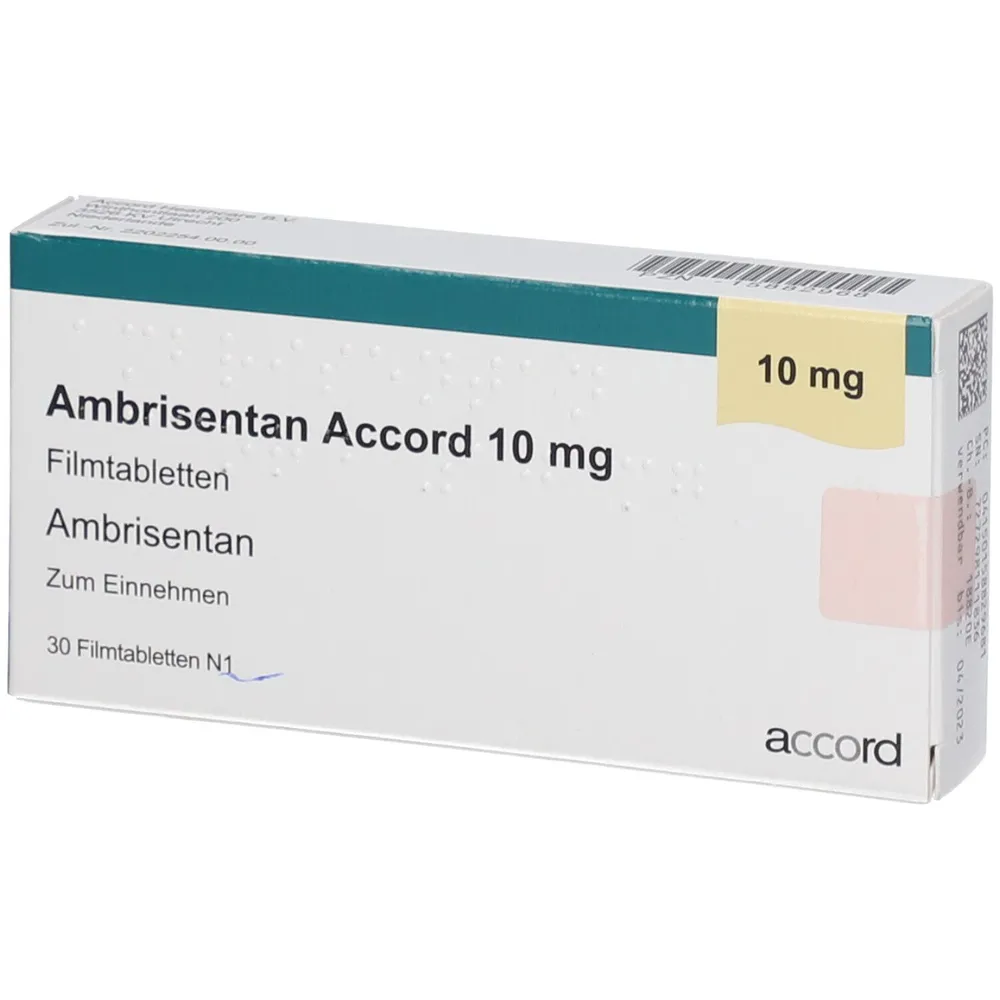
Table of Contents
Package leaflet: Information for the user
Ambrisentan Accord, 5 mg, film-coated tablets
Ambrisentan Accord, 10 mg, film-coated tablets
Ambrisentanum
Read this leaflet carefully before taking this medicine because it contains important information for you.
- Keep this leaflet. You may need to read it again.
- If you have any further questions, ask your doctor, pharmacist, or nurse.
- This medicine has been prescribed for you personally. Do not pass it on to others. It may harm them, even if their symptoms are the same as yours.
- If you experience any side effects, including any not listed in this leaflet, tell your doctor, pharmacist, or nurse. See section 4.
Leaflet contents:
- What Ambrisentan Accord is and what it is used for
- What you need to know before taking Ambrisentan Accord
- How to take Ambrisentan Accord
- Possible side effects
- How to store Ambrisentan Accord
- Contents of the pack and other information
1. What Ambrisentan Accord is and what it is used for
Ambrisentan Accord contains the active substance ambrisentan. It belongs to a group of medicines used to treat high blood pressure (antihypertensives).
It is used to treat pulmonary arterial hypertension (PAH) in adults, adolescents, and children aged 8 years and older. PAH means high blood pressure in the blood vessels that carry blood from the heart to the lungs (pulmonary arteries). In people with PAH, these arteries become narrowed, causing the heart to work harder to pump blood through them. This leads to symptoms such as fatigue, dizziness, and shortness of breath.
Ambrisentan Accord works by relaxing and widening the pulmonary arteries, making it easier for the heart to pump blood through them. This reduces blood pressure and helps relieve symptoms.
Ambrisentan Accord may also be used in combination with other medicines used to treat PAH.
2. Important information before taking Ambrisentan Accord
When not to take Ambrisentan Accord:
- if the patient is allergic to ambrisentan, soy, or any other ingredient of the medicine (listed in section 6);
- if the patient is pregnant, intends to become pregnant, or may become pregnant and is not using an effective method of birth control (contraception). Please refer to the information provided in the section "Pregnancy";
- if the patient is breastfeeding. Please refer to the information provided in the section "Breastfeeding";
- in case of liver disease. In such cases, consult the treating physician, who will decide whether this medicine is suitable for the patient;
- if the patient has lung damage (fibrosis) of unknown cause (idiopathic pulmonary fibrosis).
Warnings and precautions:
Before starting treatment with this medicine, consult a doctor:
- if the patient has impaired liver function;
- if the patient has anaemia (low red blood cell count);
- if the patient has swelling of the hands, ankles or feet due to fluid retention (peripheral oedema);
- if the patient has a lung disease causing blockage of blood vessels in the lungs (pulmonary veno-occlusive disease).
→ The doctor will decide whether Ambrisentan Accord is suitable for the patient.
Regular blood tests are required
Before starting treatment with Ambrisentan Accord and at regular intervals during treatment, the doctor will order blood tests to check:
- whether the patient has anaemia;
- whether liver function is normal.
→ It is important to have the above-mentioned blood tests performed regularly while taking Ambrisentan Accord.
The following symptoms may indicate impaired liver function:
- loss of appetite;
- nausea;
- vomiting;
- elevated body temperature (fever);
- stomach (abdominal) pain;
- yellowing of the skin or whites of the eyes (jaundice);
- dark urine;
- itching of the skin.
If any of the symptoms listed above occur:
→ contact the treating physician immediately.
Children
This medicine should not be given to children under 8 years of age, as efficacy and safety have not been established in this age group.
Other medicines and Ambrisentan Accord
Inform the doctor or pharmacist about all medicines currently taken or recently taken, as well as any medicines the patient plans to take.
If the patient has started taking cyclosporine A (a medicine used after organ transplantation or in the treatment of psoriasis), the doctor will adjust the dose of Ambrisentan Accord.
If the patient is taking rifampicin (an antibiotic used in severe infections), the doctor will monitor the patient after the first dose of Ambrisentan Accord.
If the patient is taking other medicines used in the treatment of PAH (e.g. iloprost, epoprostenol, sildenafil), the doctor may need to monitor the patient.
→ Inform the doctor or pharmacist if any of these medicines are being taken.
Pregnancy
Ambrisentan Accord may harm an unborn child if pregnancy occurs before, during, or shortly after treatment.
→ If pregnancy is possible, effective methods of birth control (contraception) must be used during treatment with Ambrisentan Accord. Discuss this with the treating physician.
→ Do not take Ambrisentan Accord if the patient is pregnant or intends to become pregnant.
→ If the patient becomes pregnant or suspects she may be pregnant while taking Ambrisentan Accord, contact the treating physician immediately.
For women who may become pregnant, the treating physician will recommend a pregnancy test before starting treatment with Ambrisentan Accord and at regular intervals during treatment.
Breastfeeding
There is no data available on whether the active substance in Ambrisentan Accord passes into human milk.
→ Do not breastfeed while taking Ambrisentan Accord. Discuss this with the treating physician.
Effect on fertility
In men taking Ambrisentan Accord, a decrease in sperm count may occur. Discuss any questions or concerns with the treating physician.
Driving and using machines
Ambrisentan Accord may cause adverse effects such as low blood pressure, dizziness, and fatigue (see section 4), which may affect the ability to drive or operate machinery. The symptoms of the patient's underlying disease may also negatively affect the ability to drive and operate machinery.
→ If the patient feels unwell, he or she should not drive or operate machinery.
Ambrisentan Accord contains lactose, soya lecithin, the colouring Allura Red AC, aluminium lake (E 129), and sodium.
Ambrisentan Accord tablets contain a small amount of a sugar called lactose. In case of intolerance to certain sugars:
→ contact the treating physician before starting this medicine.
Ambrisentan Accord tablets contain lecithin derived from soy. In case of allergy to soy, this medicine should not be used (see section 2 "When not to take Ambrisentan Accord").
Ambrisentan Accord tablets contain the colouring Allura Red AC, aluminium lake (E 129), which may cause allergic reactions (see section 4).
This medicine contains less than 1 mmol of sodium (23 mg) per tablet and is therefore essentially "sodium-free".
3. How to take Ambrisentan Accord
Adults
Ambrisentan Accord must always be taken exactly as prescribed by your doctor or pharmacist.
If you have any doubts, consult your doctor or pharmacist.
How much Ambrisentan Accord to take
The usual dose of Ambrisentan Accord is one 5 mg tablet once daily. Your doctor may increase the dose to 10 mg once daily.
If you are taking cyclosporine A, do not take more than one 5 mg tablet of Ambrisentan Accord once daily.
Children and adolescents aged 8 to under 18 years
| The usual starting dose of Ambrisentan Accord | |
| Body weight 35 kg or more | 1 tablet of 5 mg once daily |
| Body weight at least 20 kg and less than 35 kg | 1 tablet of 2.5 mg once daily |
The doctor may decide to increase the dose. It is important that children attend regular visits to the doctor, as their dose of medication must be adjusted with growth or weight gain.
When used in combination with ciclosporin A, the dose of Ambrisentan Accord will be limited to 2.5 mg once daily in adolescents and children with body weight below 50 kg, or 5 mg once daily in patients with body weight of 50 kg or more.
*Use of another ambrisentan-containing medicinal product available on the market with a strength of 2.5 mg is recommended, as Ambrisentan Accord 2.5 mg is not available.
How to take Ambrisentan Accord
Try to take the tablet at the same time each day. The tablet should be swallowed whole with a glass of water, without dividing, crushing, or chewing. Ambrisentan Accord may be taken with or without food.
Removing the tablet from the blister
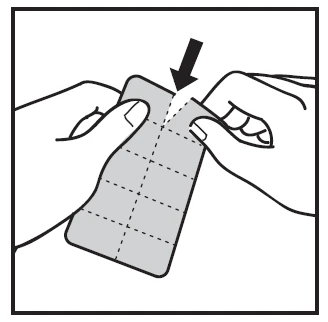
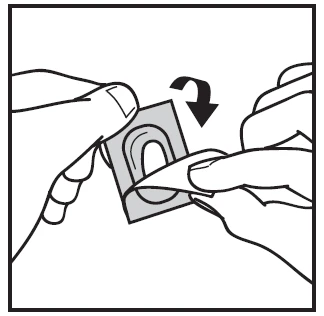
The tablets are packed in special packaging to prevent children from removing them.
- Tear along the perforated line to separate one pocket from the blister.
- Peel back the outer foil and remove the tablet.
If you take more Ambrisentan Accord than recommended
If you take more than the recommended dose, adverse effects such as headache, flushing, dizziness, nausea, or low blood pressure (which may cause dizziness) are more likely to occur.
→ Seek advice from your doctor or pharmacist if you have taken more tablets than recommended.
If you forget to take Ambrisentan Accord
If you miss a dose of Ambrisentan Accord, take it as soon as possible, then continue treatment as before.
→ Do not take a double dose to make up for a missed dose.
Do not stop taking Ambrisentan Accord without consulting your doctor.
Ambrisentan Accord should be taken regularly, as it helps control the patient's pulmonary hypertension.
→ Do not stop taking Ambrisentan Accord without consulting your doctor.
If you have any further questions about the use of this medicine, consult your doctor or pharmacist.
4. Possible side effects
Like all medicines, this medicine can cause side effects, although not everyone will experience them.
Serious side effects
Tell the doctor if the patient experiences any of the following symptoms:
Allergic reactions
These are common side effects, which may occur in up to 1 in 10 patients.
A rash or itching may occur, along with swelling (usually of the face, mouth, tongue or throat), which may lead to difficulty breathing or swallowing.
Swelling, particularly of the ankles, feet and legs
This is a very common side effect, which may occur in more than 1 in 10 patients.
Heart failure
This condition occurs when the heart does not pump enough blood. This is a common side effect, which may occur in up to 1 in 10 patients. Symptoms include:
- shortness of breath,
- severe fatigue, swelling of the ankles, feet and legs.
Reduced number of red blood cells (anaemia)
This is a very common side effect, which may occur in more than 1 in 10 patients. Sometimes it may require blood transfusion. Symptoms include:
- fatigue, weakness,
- shortness of breath,
- feeling unwell.
Low blood pressure
This is a common side effect, which may occur in up to 1 in 10 patients. Symptoms include:
- dizziness.
→ Contact the treating doctor immediately if any of these symptoms occur, or if they appear suddenly after taking Ambrisentan Accord.
It is important to have regular blood tests to detect possible anaemia or liver function abnormalities. You should also read the information provided in section 2, "Necessary regular blood tests" and "The following symptoms indicate liver function abnormalities".
Other side effects:
Very common side effects (may affect more than 1 in 10 patients)
- headache
- dizziness
- palpitations (fast or irregular heartbeat)
- worsening of breathlessness shortly after starting treatment with Ambrisentan Accord
- nasal congestion or stuffy nose, nasal inflammation or sinus pain
- nausea
- diarrhoea
- fatigue.
In combination therapy with tadalafil (another medicine used to treat PAH)
In addition to the above:
- skin flushing (reddening)
- vomiting
- chest pain/discomfort.
Common side effects (may affect up to 1 in 10 patients)
- blurred vision or other vision disturbances
- fainting
- abnormal liver function test results
- nasal congestion
- constipation
- stomach (abdominal) pain
- chest pain/discomfort
- skin flushing (especially of the face)
- vomiting
- weakness
- nosebleeds
- rash.
In combination therapy with tadalafil
In addition to the above, apart from abnormal blood test results related to liver function:
- sensation of ringing in the ears (tinnitus)
Uncommon side effects (may affect up to 1 in 100 patients)
- liver damage
- liver inflammation caused by the body's own immune system (autoimmune hepatitis).
In combination therapy with tadalafil - sudden hearing loss.
Side effects in children and adolescents
Side effects are expected to be similar to those listed above for adults.
Reporting of side effects
If any side effects occur, including any side effects not listed in this leaflet, tell your doctor or pharmacist. Side effects can be reported directly to the Department of Monitoring Adverse Drug Reactions at the Office for Registration of Medicinal Products, Medical Devices and Biocidal Products:
Al. Jerozolimskie 181C, 02-222 Warsaw
Tel.: +48 22 49 21 301, Fax: +48 22 49 21 309
Website: https://smz.ezdrowie.gov.pl
Side effects can also be reported to the marketing authorisation holder.
Reporting side effects helps provide more information on the safety of the medicine.
5. How to store Ambrisentan Accord
Keep out of the sight and reach of children.
Do not use this medicine after the expiry date stated on the packaging and blister after
Expiry date (EXP). The expiry date refers to the last day of the stated month.
This medicine does not require any special storage precautions.
Medicines must not be disposed of via the sewage system or household waste. Ask your
pharmacist how to dispose of medicines no longer required. These measures will help
protect the environment.
6. Contents of the package and other information
What Ambrisentan Accord contains
Ambrisentan Accord 5 mg, film-coated tablets
- The active substance is ambrisentan. Each film-coated tablet contains 5 mg of ambrisentan.
- The other ingredients are: tablet core: microcrystalline cellulose, sodium croscarmellose, monohydrate lactose, magnesium stearate; coating: partially hydrolysed polyvinyl alcohol, titanium dioxide (E 171), talc, macrogol 3350, soya lecithin (E 322), Allura red AC, aluminium lake (E 129).
Ambrisentan Accord 10 mg, film-coated tablets
- The active substance is ambrisentan. Each film-coated tablet contains 10 mg of ambrisentan.
- The other ingredients are: tablet core: microcrystalline cellulose, sodium croscarmellose, monohydrate lactose, magnesium stearate; coating: partially hydrolysed polyvinyl alcohol, titanium dioxide (E 171), talc, macrogol 3350, soya lecithin (E 322), Allura red AC, aluminium lake (E 129).
What Ambrisentan Accord looks like and contents of the pack
Ambrisentan Accord 5 mg, film-coated tablets (tablet) are light pink, round, biconvex tablets with an embossed mark "5" on one side, approximately 7 mm in diameter.
Ambrisentan Accord 10 mg, film-coated tablets (tablet) are dark pink, oval, biconvex tablets with an embossed mark "10" on one side, approximately 9.9 mm x 5 mm in size.
Ambrisentan Accord is supplied as 5 mg and 10 mg film-coated tablets in blister packs divided into single-dose units containing 10x1 or 30x1 tablets.
Not all pack sizes may be marketed.
Marketing Authorisation Holder
Accord Healthcare Polska Sp. z o.o.
Taśmowa 7 Street
02-677 Warsaw
Tel: +48 22 577 28 00
Manufacturer/Importer
Delorbis Pharmaceuticals Ltd.
Athinon 17, Ergates Industrial Area,
2643 Ergates, Nicosia, Cyprus
Laboratori Fundació Dau
C/ C, 12-14 Pol. Ind. Zona Franca
08040 Barcelona, Spain
This medicinal product is authorised in the European Economic Area and the United Kingdom (Northern Ireland) under the following names:
| Country name | Brand name |
| Austria | Ambrisentan Accord 5 mg, 10 mg Filmtabletten |
| Belgium | Ambrisentan Accord 5 mg, 10 mg Filmomhulde tablet |
| Bulgaria | Ambrisentan Accord 5 mg, 10 mg Film-coated tablet |
| Croatia | Ambrisentan Accord 5 mg, 10 mg Filmom obložena tableta |
| Cyprus | Ambrisentan Accord 5 mg, 10 mg Επικαλυμμένο με λεπτό υμένιο δισκίο |
| Czech Republic | Ambrisentan Accord |
| Denmark | Ambrisentan Accord |
| Finland | Ambrisentan Accord 5 mg, 10 mg Tabletti, kalvopäällysteinen |
| France | Ambrisentan Accord 5 mg, 10 mg Comprimé pelliculé |
| Greece | Ambrisentan Accord 5 mg, 10 mg Επικαλυμμένο με λεπτό υμένιο δισκίο |
| Spain | Ambrisentan Accord 5 mg, 10 mg Comprimido recubierto con película |
| Netherlands | Ambrisentan Accord 5 mg, 10 mg Filmomhulde tablet |
| Ireland | Ambrisentan Accord 5 mg, 10 mg Film-coated tablet |
| Germany | Ambrisentan Accord 5 mg, 10 mg Filmtablette |
| Norway | Ambrisentan Accord 5 mg, 10 mg Tablett, filmdrasjert |
| Poland | Ambrisentan Accord |
| Portugal | Ambrisentan Accord |
| Slovenia | Ambrisentan Accord 5 mg, 10 mg Filmsko obložena |
| Sweden | Ambrisentan Accord 5 mg, 10 mg Filmdragerad tablett |
| United Kingdom (Northern Ireland) | Ambrisentan Accord 5 mg, 10 mg Film-coated tablet |
)
| Italy | Ambrisentan Accord |