Alfadiol
Poland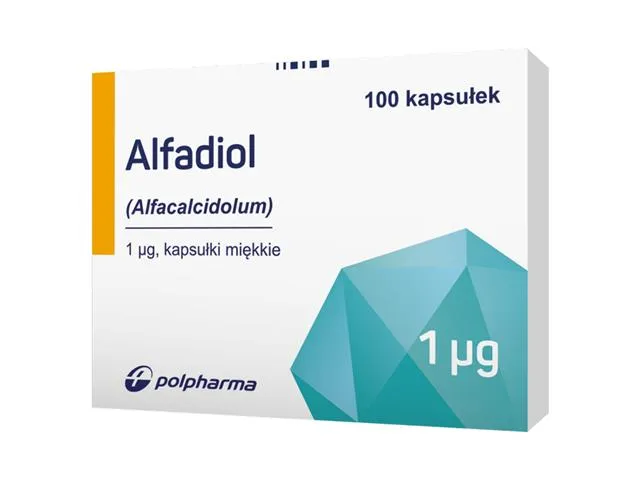
Table of Contents
Package leaflet: Information for the patient
ALFADIOL, 0.25 microgram, soft capsules
ALFADIOL, 1 microgram, soft capsules
Alfacalcidolum
Please read the entire leaflet carefully before using the medicine, as it contains
important information for the patient.
- Keep this leaflet, so that you can read it again if necessary.
- If you have any questions, please consult your doctor or pharmacist.
- This medicine has been prescribed for a specific individual. Do not pass it on to others. The medicine may harm another person, even if their symptoms are the same.
- If you experience any adverse reactions, including any not listed in this leaflet, inform your doctor or pharmacist. See section 4.
Table of contents of the leaflet:
- What Alfadiol is and what it is used for
- Important information before taking Alfadiol
- How to take Alfadiol
- Possible side effects
- How to store Alfadiol
- Contents of the pack and other information
1. What Alfadiol is and what it is used for
Alfadiol contains the active substance alfacalcidol, which is a synthetic derivative of vitamin D.
It facilitates the absorption of calcium from the gastrointestinal tract and its incorporation into bone tissue.
Insufficient dietary intake of vitamin D and inadequate calcium supply may lead to rickets in children and, in adults, to softening of the bones (osteomalacia) or increased susceptibility to fractures.
Deficiencies of vitamin D and calcium occur in postmenopausal women, elderly individuals, and also among patients suffering from certain kidney diseases, leading consequently to the development of osteoporosis.
To achieve full biological activity, vitamin D must undergo chemical transformations in the human body into alfacalcidol in the kidneys, and subsequently into calcitriol in the liver.
In certain kidney diseases, these transformations are impaired or even completely impossible, and therefore patients affected by such conditions suffer from disturbances in calcium-phosphate metabolism.
Alfadiol is intended for use under medical supervision, particularly in this group of patients.
Indications for Alfadiol:
- postmenopausal osteoporosis and senile osteoporosis associated with concomitant deficiency of vitamin D or its active metabolites,
- low blood calcium levels (hypocalcemia), especially in patients with diseases leading to impaired hydroxylation of vitamin D in the kidneys,
- rickets and softening of the bones (osteomalacia) resistant to vitamin D,
- hypoparathyroidism,
- renal osteodystrophy (kidney rickets causing bone disorders),
- disturbances in calcium metabolism in patients with chronic renal failure,
- nephrotic syndromes in children after prolonged treatment with glucocorticosteroids.
2. Important information before using Alfadiol
When not to take Alfadiol
Do not take this medicine if the patient:
- is allergic to alfacalcidol or any of the other ingredients of this medicine (listed in section 6),
- is allergic to peanuts or soya,
- has high calcium levels in the blood (hypercalcaemia), metastatic calcification,
- has high phosphate levels in the blood (hyperphosphataemia) – (except when occurring in hypoparathyroidism),
- has high magnesium levels in the blood (hypermagnesaemia),
- has idiopathic hypercalciuria (excessive excretion of calcium in urine),
- has aluminium-related bone softening (osteomalacia),
- has vitamin D overdose or intoxication,
- has calcium kidney stones (calcium deposition in the urinary tract),
- has severe liver function impairment.
Warnings and precautions
Before starting treatment with Alfadiol, discuss this with your doctor or pharmacist.
- During treatment with this medicine, serum calcium or phosphate levels may become excessively elevated, especially in patients with impaired kidney function. Therefore, your doctor will arrange for monitoring of calcium levels – initially 1 to 2 times per week, and once the dose is stabilised, once a month.
- Exercise caution when administering this medicine to patients with kidney impairment or kidney stones.
- The use of Alfadiol in the treatment of renal osteodystrophy requires regular monitoring of parathyroid hormone (PTH) levels in blood due to the risk of developing adynamic bone disease, which involves disturbances in bone metabolism.
- Patients with high serum calcium levels due to renal osteodystrophy may develop autonomous hyperparathyroidism. These patients may not respond to this medicine.
- Patients with kidney impairment, tertiary hyperparathyroidism, or those undergoing regular haemodialysis (potential reduction in phosphate levels) are particularly susceptible to excessive increases in calcium levels. Early symptoms of elevated calcium levels include: polyuria, increased thirst, weakness, headache, nausea, dry mouth, constipation, muscle pain, bone pain, and metallic taste in the mouth.
- Depending on the patient's condition and risk factors, the doctor may recommend periodic (every 1–3 months) blood tests (measurement of blood urea nitrogen, creatinine, alkaline phosphatase, serum phosphate levels) and urine tests (daily urinary calcium excretion and calcium-to-creatinine ratio).
- In patients on a low-calcium diet, the response to Alfadiol may be reduced or absent.
- Exercise caution in patients treated with cardiac glycosides, e.g. digitalis, because hypercalcaemia may lead to cardiac arrhythmias in these patients.
- In elderly patients, lower doses of Alfadiol may be required.
Alfadiol with other medicines
Tell your doctor or pharmacist about all medicines the patient is currently taking or has recently taken, as well as any medicines the patient plans to take.
Do not take the following medicines at the same time as Alfadiol:
- cardiac glycosides (medicines used to treat heart failure) – due to the risk of overdose,
- thiazide diuretics (medicines that increase urine production, e.g. hydrochlorothiazide),
- calcium-containing medicines taken regularly in daily doses exceeding 1.5 g – due to the risk of increased blood calcium levels,
- medicines that neutralise gastric hydrochloric acid – due to the risk of increased blood calcium levels,
- medicines containing oestrogens, as they may enhance the effect of Alfadiol,
- antacids containing magnesium salts, as they may increase blood magnesium levels,
- antacids containing aluminium salts, as they may reduce blood magnesium levels,
- hydantoin derivatives (e.g. phenytoin), barbiturates, primidone, and other antiepileptic drugs (used in epilepsy treatment), as they may reduce the effectiveness of Alfadiol,
- glucocorticoids (steroids, used e.g. in rheumatic disease treatment), as they reduce the effectiveness of Alfadiol,
- salicylates, as they may reduce the effectiveness of Alfadiol,
- cholestyramine, colestipol (cholesterol-lowering medicines) and liquid paraffin, as they inhibit the absorption of Alfadiol,
- medicines and dietary supplements containing metal ions.
Alfadiol with food and drink
While taking Alfadiol, avoid consuming large amounts of dairy products (milk and dairy products), as they may increase blood calcium levels.
Pregnancy and breastfeeding
If the patient is pregnant or breastfeeding, suspects she may be pregnant, or is planning to become pregnant, she should consult her doctor or pharmacist before using this medicine.
Alfadiol may be used during pregnancy only if, in the opinion of the doctor, the benefit to the mother outweighs any potential risk to the foetus.
Alfadiol should not be used during breastfeeding. A harmful effect on the breastfed infant cannot be excluded.
Driving and operating machinery
There are no data indicating that alfacalcidol adversely affects the ability to drive or operate machinery.
Alfadiol contains peanut oil, carmine red, ethyl parahydroxybenzoate and sodium
- This medicine contains peanut oil (from peanuts). Do not use if hypersensitivity to peanuts or soya has been diagnosed (see section "When not to take Alfadiol").
- This medicine contains carmine red (E124), a colouring agent which may cause allergic reactions.
- This medicine contains ethyl parahydroxybenzoate (E214), which may cause allergic reactions (including delayed-type reactions).
- This medicine contains less than 1 mmol (23 mg) of sodium per capsule, meaning the medicine is considered "sodium-free".
3. How to use Alfadiol
This medicine should always be used according to the doctor's instructions. In case of doubt, consult
your doctor.
The dosage and duration of treatment are determined by the doctor depending on the patient's age and condition.
Children Children Adults
body weight body weight (body weight
below 20 kg from 20 to 40 kg above 40 kg)
Indication for use
Dose of medicine
- postmenopausal osteoporosis 0.5 microgram
-
- up to 1 microgram
- senile osteoporosis once daily
- nephrotic syndromes in children after prolonged treatment with glucocorticosteroids 0.25 microgram 0.25 microgram once daily up to 0.5 microgram once daily
- hypocalcemia 0.25 microgram 0.25 microgram 0.5 microgram once daily
- rickets and osteomalacia up to 1 microgram once daily resistant to vitamin D 0.5 microgram once daily
- hypoparathyroidism
- disorders of calcium metabolism in patients with chronic renal failure and renal osteodystrophy
The doctor may adjust the dosage based on blood test results (calcium levels in blood) or urine tests (calcium excretion in urine), as well as based on daily calcium intake.
Taking more than the recommended dose of Alfadiol
If a dose higher than recommended has been taken, seek immediate medical advice from a doctor
or pharmacist.
Symptoms of vitamin D overdose include:
- elevated calcium levels in blood (hypercalcemia),
- loss of appetite, weakness,
- nausea, vomiting, diarrhea,
- increased urination (polyuria),
- excessive sweating,
- thirst,
- headaches and dizziness.
After a significant overdose bordering on poisoning, bone pain, ectopic calcifications (calcium deposition in atypical locations), presence of protein in urine (proteinuria), hypertension, and cardiac arrhythmias may occur.
Furthermore, persistent vitamin D overdose may lead to generalized calcification of blood vessels and kidneys, as well as rapid deterioration of kidney function.
Missing a dose of Alfadiol
If a dose is missed, take the medicine as soon as possible. If it is almost time for the next dose, skip the missed dose.
Take the next dose according to the doctor's instructions.
Do not take a double dose to make up for a missed dose.
If you have any further doubts regarding the use of this medicine, consult your doctor or pharmacist.
4. Possible adverse reactions
Like all medicines, this medicine can cause adverse reactions, although not everybody gets them.
Adverse reactions occurring with unknown frequency (frequency cannot be estimated from
the available data):
- hypersensitivity reactions (e.g. hypersensitivity in patients with asthma, skin irritation, contact dermatitis, itching, rash, urticaria, eye irritation),
- increased blood calcium levels (hypercalcemia),
- increased blood phosphorus levels – particularly in patients with renal impairment,
- excretion of calcium in urine (hypercalciuria), polyuria,
- kidney calcifications, ectopic calcifications (calcium deposition in atypical locations),
- renal function disorders (as a result of hypercalcemia),
- headache, dizziness, confusion,
- diarrhea, constipation, nausea, vomiting, dryness of the mouth, increased thirst, mucosal irritation including gastric mucosa irritation, metallic taste in the mouth (as a result of hypercalcemia),
- cardiac arrhythmias, muscle pain, bone pain, fatigue (associated with hypercalcemia).
Reporting of adverse reactions
If any adverse reactions occur, including any adverse reactions not listed in this leaflet, inform your doctor or pharmacist. Adverse reactions can be reported directly to the Department of Monitoring Adverse Drug Reactions of the Office for Registration of Medicinal Products, Medical Devices and Biocidal Products:
Al. Jerozolimskie 181C
02-222 Warsaw
Phone: +48 22 49 21 301
Fax: +48 22 49 21 309
Website: https://smz.ezdrowie.gov.pl
Adverse reactions can also be reported to the marketing authorization holder.
Reporting adverse reactions helps to provide more information on the safety of the medicine.
5. How to store the medicine Alfadiol
Keep the medicine out of sight and reach of children.
Store below 25°C.
Do not freeze.
Store in the original packaging to protect from light and moisture.
Do not use this medicine after the expiry date stated on the packaging. The expiry date refers to the last day of the stated month.
The marking on the packaging following the abbreviation EXP indicates the expiry date, and following the abbreviation Lot/LOT indicates the batch number.
Medicines must not be disposed of via wastewater or household waste. Ask your pharmacist how to dispose of medicines no longer in use. This practice helps protect the environment.
6. Contents of the pack and other information
What Alfadiol contains
The active substance is alfacalcidol.
Each soft capsule contains 0.25 micrograms (μg) or 1 microgram (μg) of alfacalcidol.
The other ingredients are: all-rac-α-tocopheryl acetate, butylated hydroxytoluene (E321),
purified arachis oil.
Composition of the capsule shell for Alfadiol 0.25 µg: gelatin, glycerol, ethyl parahydroxybenzoate (E214), carmine red (E124), titanium dioxide (E171), purified water.
Composition of the capsule shell for Alfadiol 1 µg: gelatin, glycerol, ethyl parahydroxybenzoate (E214), carmine red (E124), purified water.
What Alfadiol looks like and contents of the pack
Alfadiol 0.25 μg is in the form of soft, spherical capsules with a red, opaque gelatin shell with a seam, completely filled with an oily solution.
Alfadiol 1 μg is in the form of soft, spherical capsules with a red, transparent gelatin shell with a seam, completely filled with an oily solution.
Pack: 100 soft capsules – 2 blisters made of PVC/PVDC/Aluminium, each containing 50 capsules, in a cardboard box.
Marketing Authorisation Holder and Manufacturer
Marketing Authorisation Holder
Zakłady Farmaceutyczne POLPHARMA S.A.
ul. Pelplińska 19, 83-200 Starogard Gdański
tel. +48 22 364 61 01
Manufacturer
Zakłady Farmaceutyczne POLPHARMA S.A.
Medana Plant in Sieradz
ul. Władysława Łokietka 10
98-200 Sieradz