Aleve
Poland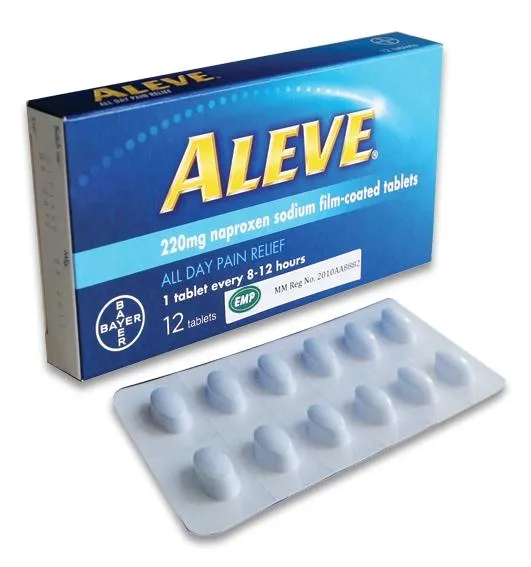
Table of Contents
Package leaflet: Information for the user
Warning! Keep this leaflet! Information on the immediate packaging in a foreign language.
Aleve (ALEVETABS)
220 mg, coated tablets
Naproxenum natricum
Aleve and ALEVETABS are different trade names for the same medicine.
Please read this leaflet carefully before taking the medicine, as it contains important information for the patient.
This medicine must always be used exactly as described in this patient leaflet or as directed by a doctor or pharmacist.
- Keep this leaflet, so that you can read it again if necessary.
- If you need advice or further information, please consult your pharmacist.
- If you experience any adverse effects, including any possible adverse effects not listed in this leaflet, tell your doctor or pharmacist. See section 4.
- If there is no improvement after 10 days of treatment for pain or 3 days for fever, or if you feel worse, you should contact your doctor.
Contents of the leaflet:
- What Aleve is and what it is used for
- Important information before taking Aleve
- How to take Aleve
- Possible side effects
- How to store Aleve
- Contents of the pack and other information
1. What Aleve is and what it is used for
Aleve belongs to a group of medicines called non-steroidal anti-inflammatory drugs (NSAIDs), which exert analgesic, antipyretic, and anti-inflammatory effects by reversibly inhibiting prostaglandin synthesis. Aleve reduces the intensity of pain, lowers fever, and suppresses inflammatory reactions.
Aleve has a rapid and prolonged effect.
Indications
Treatment of mild to moderate pain, such as:
- headache,
- toothache,
- muscle pain,
- joint pain,
- back pain,
- painful menstruation,
- mild pain associated with colds.
Reduction of fever.
2. Important information before using Aleve
When not to use Aleve
- if the patient is allergic to the active substance or to any of the other ingredients of this medicine (listed in section 6),
- if asthma, urticaria or allergic-type reactions occurred after taking acetylsalicylic acid or other nonsteroidal anti-inflammatory drugs (NSAIDs),
- if gastrointestinal bleeding or perforation of the gastrointestinal tract occurred after using nonsteroidal anti-inflammatory drugs,
- if the patient has active peptic ulcer disease,
- if the patient has a bleeding disorder,
- if the patient has severe heart failure,
- if the patient has severe renal or hepatic impairment,
- if the patient has a history of recurrent gastrointestinal ulceration or bleeding,
- during the third trimester of pregnancy.
Warnings and precautions
Before starting treatment with Aleve, consult your doctor or pharmacist.
- in elderly patients, as adverse effects occur more frequently, especially if gastrointestinal bleeding or perforation has occurred in the past due to ulceration,
- in patients with gastrointestinal disorders such as ulcerative colitis or Crohn's disease, as symptoms may worsen,
- if the patient is taking medications that may increase the risk of ulcers or bleeding, e.g. corticosteroids, anticoagulants such as warfarin, certain antidepressants (selective serotonin reuptake inhibitors), acetylsalicylic acid,
- if the patient is taking low-dose acetylsalicylic acid for cardiovascular disease prevention, due to the potential for reduced protective effect of acetylsalicylic acid,
- if, after using Aleve, especially at the beginning of treatment, skin rash, mucosal lesions or other hypersensitivity symptoms appear, discontinue the drug immediately,
- if the patient has a history of angioedema, bronchial asthma, nasal mucosal inflammation, nasal polyps, allergic conditions or chronic respiratory diseases, due to the risk of hypersensitivity reactions,
- if the drug is used in patients with blood coagulation disorders,
- in patients taking steroid medications,
- in patients taking diuretics,
- in patients taking other analgesics,
- if the drug is used in patients with severe renal, hepatic or cardiac dysfunction.
Patients who have previously experienced gastrointestinal adverse effects, particularly if elderly, should report any concerning abdominal symptoms (including gastrointestinal bleeding) to their doctor.
This medicine belongs to a group of drugs (nonsteroidal anti-inflammatory drugs) that may adversely affect fertility in women. This effect is reversible and resolves after discontinuation of therapy.
Aleve, like other NSAIDs, due to its anti-inflammatory and antipyretic effects, may mask symptoms of another illness, making diagnosis more difficult.
Taking drugs such as Aleve may be associated with a small increased risk of heart attack (myocardial infarction) or stroke. This risk increases with long-term use of high doses. Do not use higher doses or longer treatment duration than recommended (maximum 10 days).
If you have heart problems, a history of stroke, or suspect you may be at risk of these conditions (e.g. high blood pressure, diabetes, high cholesterol, smoking), discuss the treatment approach with your doctor or pharmacist.
Avoid concomitant use of naproxen sodium with other NSAIDs, including selective cyclooxygenase-2 inhibitors.
Aleve and other medicines
Inform your doctor or pharmacist about all medicines you are currently taking or have recently taken, as well as any medicines you plan to take. Tell your doctor or pharmacist if you are taking any of the following medicines:
- cyclosporine, as it may increase the risk of kidney damage,
- lithium, as nausea, increased thirst, polyuria, tremor, and disorientation may occur,
- methotrexate at doses of 15 mg/week or higher, as it may increase the risk of toxic effects of this substance,
- other nonsteroidal anti-inflammatory drugs or corticosteroids, as the risk of gastrointestinal ulcers and bleeding increases,
- acetylsalicylic acid used to prevent blood clots,
- anticoagulant drugs such as warfarin, as the risk of bleeding may increase,
- antiplatelet drugs and certain antidepressants (selective serotonin reuptake inhibitors), as the risk of gastrointestinal bleeding increases,
- diuretics and antihypertensive drugs (including angiotensin-converting enzyme inhibitors), as their effectiveness may be reduced.
Effect on laboratory test results
It has been shown that naproxen sodium affects the measurement of 17-ketogenic steroids and 5-hydroxyindoleacetic acid (5-HIAA) in urine.
Inform your doctor about all medicines recently taken, including those available without a prescription.
Taking Aleve with food and drink
Food may slightly delay the absorption of the active substance.
Pregnancy, breastfeeding and effects on fertility
If the patient is pregnant, breastfeeding, suspects she may be pregnant, or is planning to become pregnant, she should consult her doctor or pharmacist before using this medicine.
Do not take Aleve if you are in the last three months of pregnancy, as it may harm the unborn child or cause complications during delivery. It may cause kidney and heart problems in the unborn child. It may increase the tendency to bleeding in both the mother and the child and may delay or prolong labor. During the first 6 months of pregnancy, Aleve should not be used unless absolutely necessary and prescribed by a doctor. If treatment is required during this period or when trying to conceive, the lowest possible dose for the shortest possible time should be used. From the 20th week of pregnancy, Aleve may cause kidney dysfunction in the unborn child if taken for longer than a few days. This may lead to reduced amniotic fluid volume (oligohydramnios) or narrowing of a blood vessel (ductus arteriosus) in the baby's heart. If treatment is required for longer than a few days, your doctor may recommend additional monitoring.
Do not take this medicine during the third trimester of pregnancy.
Avoid using Aleve in breastfeeding women, as naproxen passes into breast milk.
Naproxen may impair fertility. This effect is reversible and resolves after discontinuation of naproxen.
Driving and operating machinery
When using Aleve, adverse effects such as drowsiness, dizziness, and insomnia may occur, which could affect the ability to drive or operate machinery. Therefore, patients taking Aleve should monitor their individual response before driving or operating machinery.
Aleve contains sodium
One tablet contains 20 mg of sodium, equivalent to the salt content in one slice of bread. The recommended daily intake of sodium in a low-sodium diet is limited to ≤1.2 g (50 mmol) per day.
3. How to take Aleve
This medicine should always be taken exactly as described in this patient information leaflet or as directed by your doctor or pharmacist. If in doubt, consult your doctor or pharmacist.
Method of administration
Each dose should be taken with a glass of water. The medicine can be taken regardless of meals. Food may slightly delay absorption of the medicine.
Recommended dose
Use in adults
Single dose of 220 mg every 8 to 12 hours as needed, until symptoms subside. In some individuals, an initial dose of 440 mg followed by 220 mg after 12 hours may enhance analgesic effect.
Do not exceed the daily dose of 660 mg unless otherwise directed by a doctor.
Elderly patients
Elderly individuals may be more susceptible to adverse effects; therefore, lower doses should be considered in these patients.
Aleve must not be used for longer than 10 days for pain or for more than 3 days for fever, unless under medical supervision. If pain or fever persists or worsens, or if any changes in symptoms are observed, consult your doctor.
Use in children
Aleve should not be used in children under 16 years of age unless otherwise directed by a doctor.
Taking more Aleve than recommended
Significant overdose may cause dizziness, drowsiness, epigastric pain, abdominal discomfort, heartburn, indigestion, nausea, and vomiting, transient liver function disturbances, increased tendency to bleeding, kidney function disorders, metabolic acidosis, respiratory depression, or disorientation. Seizures have been reported in a few patients, although it is unclear whether this was related to naproxen administration.
Several cases of acute, reversible renal failure have also been reported.
In case of ingestion of a large amount of sodium naproxen, gastric lavage may be considered and standard supportive measures initiated, such as administration of activated charcoal. There is no specific antidote.
If you forget to take Aleve
Do not take a double dose to make up for a missed dose.
Stopping Aleve
If you have any further questions about the use of this medicine, consult your doctor or pharmacist.
4. Possible adverse effects
Like all medicines, this medicine can cause adverse effects, although not everyone will experience them.
Adverse effects can be minimized by using the lowest effective dose for the shortest duration necessary to relieve symptoms.
Use of non-steroidal anti-inflammatory drugs (NSAIDs) has been associated with fluid retention, hypertension, and heart failure.
Taking medicines such as Aleve may be associated with a small increased risk of heart attack (myocardial infarction) or stroke.
Common adverse effects (may occur in 1 in 10 to 1 in 100 patients):
- dizziness, headache, feeling of emptiness in the head,
- indigestion, nausea, heartburn, abdominal pain.
Uncommon adverse effects (may occur in 1 in 100 to 1 in 1,000 patients):
- drowsiness, insomnia, somnolence,
- dizziness,
- diarrhoea, constipation, vomiting,
- rash, itching, urticaria.
Rare adverse effects (may occur in 1 in 1,000 to 1 in 10,000 patients):
- gastrointestinal ulcers (sometimes with bleeding or perforation of the gastrointestinal tract), gastrointestinal bleeding, vomiting of blood, tarry stools,
- angioedema,
- renal function disorders,
- swelling of hands and feet, particularly in patients with hypertension or renal insufficiency, fever (including chills and febrile illnesses).
Very rare adverse effects (may occur in fewer than 1 in 10,000 patients):
- hypersensitivity reactions, including fatal anaphylactic shock,
- blood disorders: low white blood cell count (leukopenia), thrombocytopenia, deficiency of white blood cells called granulocytes (agranulocytosis), anaemia (aplastic anaemia), increased number of white blood cells called eosinophils (eosinophilia), anaemia (haemolytic anaemia),
- psychiatric disorders, depression, sleep disturbances, difficulty concentrating,
- aseptic meningitis, cognitive dysfunction, seizures,
- visual disturbances, corneal opacity, intraocular optic neuritis, retrobulbar optic neuritis, optic disc edema,
- hearing impairment, tinnitus, hearing disturbances,
- congestive heart failure, hypertension, pulmonary edema, palpitations,
- vasculitis,
- dyspnoea, bronchial asthma, eosinophilic pneumonia,
- pancreatitis, inflammation of a segment of the gastrointestinal tract (colon), aphthae, mucositis, esophagitis, intestinal ulcers,
- hepatitis (including fatal cases), jaundice,
- alopecia (usually reversible), photosensitivity, porphyria, erythema multiforme exudativum, bullous reactions, including Stevens-Johnson syndrome and toxic epidermal necrolysis, nodular erythema, persistent erythema, lichen planus, pustular reactions, skin rashes, systemic lupus erythematosus, photosensitivity reactions, including cutaneous porphyria (pseudoporphyria) or bullous detachment of the epidermis, petechiae, purpura, excessive sweating,
- interstitial nephritis, renal papillary necrosis, nephrotic syndrome, renal failure, kidney diseases, renal haematuria, proteinuria,
- closure of the fetal ductus arteriosus,
- in women: fertility disorders,
- oedema, increased thirst, malaise,
- increased creatinine levels, abnormal liver function tests, increased blood potassium levels (hyperkalaemia).
Reporting of adverse effects
If any adverse effects occur, including any not listed in this leaflet, inform your doctor or pharmacist. Adverse effects can be reported directly to the Department of Monitoring Adverse Drug Reactions of the Office for Registration of Medicinal Products, Medical Devices and Biocidal Products, Al. Jerozolimskie 181C, 02-222 Warsaw, tel.: +48 22 49 21 301, fax: +48 22 49 21 309, website: https://smz.ezdrowie.gov.pl
Reporting adverse effects allows the collection of additional information on the safety of the medicine.
5. How to store Aleve
Keep this medicine out of sight and reach of children.
Store in the original outer packaging to protect from light.
Do not use this medicine after the expiry date stated on the packaging. The expiry date refers to the last day of the month indicated.
Medicines must not be disposed of via wastewater or household waste. Ask your pharmacist how to dispose of medicines no longer required. These measures will help protect the environment.
6. Contents of the packaging and other information
What Aleve contains
The active substance is naproxen sodium. One coated tablet contains 220 mg of naproxen sodium.
The other ingredients are: povidone K 30, microcrystalline cellulose, talc, magnesium stearate.
Coating ingredients: Opadry Blue YS-1-4215: titanium dioxide, hypromellose, polyethylene glycol 8000, indigo carmine (E 132).
What Aleve looks like and contents of the pack
The pack contains 12 or 24 coated tablets.
For more detailed information, please contact the marketing authorisation holder or the parallel importer.
Marketing authorisation holder in France, the country of export:
Bayer HealthCare SAS, 1, rue Claude Bernard, 59000 Lille, France
Manufacturer:
Bayer Bitterfeld GmbH, Salegaster Chaussee 1, 06803 Greppin, Germany
Parallel importer:
InPharm Sp. z o.o., ul. Strumykowa 28/11, 03-138 Warsaw, Poland
Repackaged in:
InPharm Sp. z o.o. Services sp. k., ul. Chełmżyńska 249, 04-458 Warsaw, Poland
Marketing authorisation number in France, the country of export: 3400927428692
274 286-9
Parallel import authorisation number: 192/17