Aknenormin 10 mg
Poland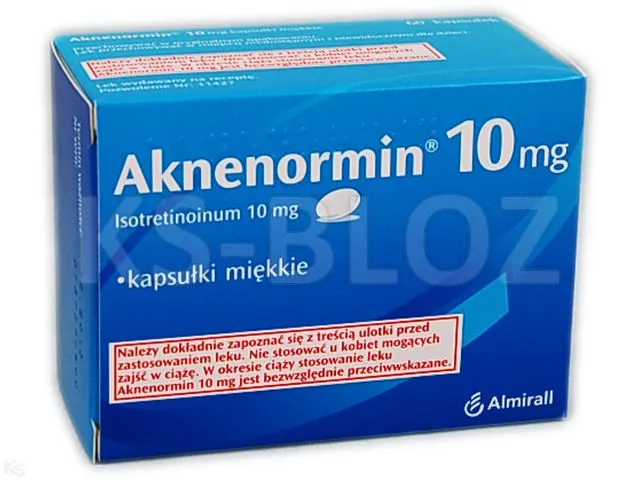
Table of Contents
Aknenormin, 10 mg, soft capsules
Isotretinoinum
WARNING
MAY CAUSE SEVERE HARM TO THE UNBORN CHILD
Women must use effective contraceptive methods.
Do not use during pregnancy or if pregnancy is suspected.
Please read the entire package leaflet carefully before taking this medicine, as it
contains important information for the patient.
- Keep this leaflet, as you may need to read it again.
- If you have any questions, consult your doctor or pharmacist.
- This medicine has been prescribed for a specific individual. Do not pass it on to others. The medicine may harm someone else, even if their symptoms are the same.
- If the patient experiences any adverse reactions, including any not listed in this leaflet, inform your doctor or pharmacist. See section 4.
Leaflet contents:
- What Aknenormin 10 mg is and what it is used for
- Important information before taking Aknenormin 10 mg
- How to take Aknenormin 10 mg
- Possible side effects
- How to store Aknenormin 10 mg
- Contents of the pack and other information
1. WHAT IS AKNENORMIN 10 mg AND WHAT IS IT USED FOR
Aknenormin 10 mg contains the active substance isotretinoin. Isotretinoin reduces sebum production by the sebaceous glands. It helps prevent the formation of pimples and reduces inflammatory nodules and pustules associated with acne.
Aknenormin 10 mg is used in the treatment of severe forms of acne or acne with a risk of permanent scarring. Aknenormin 10 mg is used when other acne treatments, including antibiotics and topical medications, have failed.
2. IMPORTANT INFORMATION BEFORE USING THE MEDICINE
AKNENORMIN 10 mg
Aknenormin 10 mg must not be used by women who are pregnant or who may become pregnant during treatment or within one month after stopping treatment.
Isotretinoin causes severe harm to the unborn child. Due to the risk of congenital malformations, Aknenormin 10 mg may be prescribed to women of childbearing potential only if the patient meets the specific requirements outlined in the section "Special advice for women".
When not to use Aknenormin 10 mg
- if the patient is pregnant or breastfeeding
- if the patient has liver disease
- if the patient has elevated blood lipid levels
- if the patient has increased levels of vitamin A in the blood (hypervitaminosis A)
- if the patient is concurrently being treated with tetracyclines (antibiotics)
- if the patient is allergic (hypersensitive) to isotretinoin, cochineal red (E 124), peanuts or soy, or to any of the other ingredients of Aknenormin 10 mg (listed in section 6).
Warnings and precautions
If there is any risk that a female patient may become pregnant, it is essential to follow the precautions outlined in the Pregnancy Prevention Programme.
Advice for all patients
Before starting Aknenormin 10 mg, discuss the following with your doctor:
- If the patient has ever had mental health problems, including depression, aggressive tendencies, mood swings, or thoughts of self-harm or suicide. This is because Aknenormin 10 mg may affect the patient's mood.
Mental health problems
The patient may not notice certain changes in mood and behaviour, so it is very important to inform friends and family members that the patient is taking this medicine. These people may notice such changes and help the patient quickly identify any problems that need to be discussed with the doctor. - Aknenormin 10 mg may increase blood lipid levels and liver enzyme activity. Your doctor will order blood tests before, during, and after treatment to monitor these levels.
- Inform your doctor if the patient has diabetes, alcoholism, obesity, or other disorders affecting blood lipid levels. More frequent monitoring of blood lipid and glucose levels may be necessary.
- Talk to your doctor if the patient experiences persistent lower back or buttock pain during treatment with Aknenormin 10 mg. These symptoms may indicate sacroiliitis, a type of inflammatory back pain. The doctor may discontinue Aknenormin 10 mg and refer the patient to a specialist for treatment of inflammatory back pain. Further evaluation, including imaging such as magnetic resonance imaging (MRI), may be required.
- Do not donate blood while taking this medicine or for one month after stopping Aknenormin 10 mg. If a pregnant woman receives blood from the patient, she may give birth to a child with congenital malformations.
- Protect the skin from intense sunlight or ultraviolet radiation (tanning lamps or sunbeds).
If necessary, use sunscreen products with a sun protection factor (SPF) of at least 15.
- To prevent dryness and discomfort of the lips and skin, use a moisturizing cream and lip balm from the start of treatment.
- Cosmetic procedures such as chemical peeling or dermabrasion (removal of the outer skin layers), laser treatments, and skin piercing should not be performed during treatment or for 5–6 months after treatment ends.
- Avoid using wax-based hair removal products for at least 6 months after treatment ends, as there is a risk of epidermal tearing.
- Isotretinoin may cause dry eyes, intolerance to contact lenses, and vision problems, including night vision impairment. Cases of persistent dry eye that did not resolve after treatment have been reported. Inform your doctor if any of these symptoms occur. The doctor may recommend using moisturizing eye ointments or artificial tear preparations. If contact lens intolerance occurs, the doctor may recommend wearing glasses during treatment. If vision problems occur, the doctor may refer the patient to a specialist for advice and may consider discontinuing isotretinoin.
- Never pass this medicine on to another person. All unused capsules must be returned to the pharmacist after treatment ends.
Special advice for women
Pregnancy Prevention Programme
Women who are pregnant must not take Aknenormin 10 mg.
This medicine can severely harm the unborn child (it is teratogenic). It may cause serious malformations of the brain, face, ears, eyes, heart, and certain glands (thymus and parathyroid glands). It also increases the risk of miscarriage. These effects may occur even if Aknenormin 10 mg is taken for only a short time during pregnancy.
- Do not take Aknenormin 10 mg if you are pregnant or suspect you may be pregnant.
- Do not take Aknenormin 10 mg during breastfeeding. The medicine is likely to pass into breast milk and may harm the baby.
- Do not take Aknenormin 10 mg if you could become pregnant during treatment.
- You must not become pregnant for one month after stopping treatment, as the medicine may still be present in your body.
Aknenormin 10 mg may be prescribed to women of childbearing potential only if they strictly comply with specific requirements. This is due to the risk of severe birth defects in the unborn child.
The following conditions must be met:
- The doctor must explain to the patient the risk of harm to the unborn child (birth defects); the patient must understand why pregnancy must be avoided and how to prevent it.
- The patient must discuss contraception (birth control methods) with the doctor. The doctor will provide information on effective contraceptive methods. The doctor may refer the patient to a specialist for contraceptive advice.
- Before starting treatment, the doctor will request a pregnancy test. The test must confirm that the patient is not pregnant at the start of Aknenormin 10 mg treatment.
- Patients must use effective contraceptive methods before, during, and after treatment with Aknenormin 10 mg.
- The patient must agree to use at least one highly reliable contraceptive method (e.g., intrauterine device or contraceptive implant), or two effective methods that work in different ways (e.g., oral hormonal contraceptives and condoms). Discuss with your doctor which methods are most suitable.
- The patient must use a contraceptive method for one month before starting Aknenormin 10 mg, during treatment, and for one month after stopping the medicine.
- The patient must use contraception even if she is not menstruating or is not currently sexually active (unless the doctor determines this is unnecessary).
- Patients must agree to undergo pregnancy tests before, during, and after treatment with Aknenormin 10 mg.
- The patient must agree to regular follow-up visits with the doctor, ideally monthly.
- The patient must agree to undergo regular pregnancy tests, ideally monthly during treatment and one month after stopping Aknenormin 10 mg, as the medicine may still be present in the body (unless the doctor decides otherwise for a specific patient).
- The patient must agree to undergo additional pregnancy tests as recommended by the treating doctor.
- The patient must not become pregnant during or within one month after treatment, as the medicine may still be present in the body.
- The treating doctor will discuss all issues with the patient using a checklist and ask the patient (or her parent or legal guardian) to sign it. This form confirms that the patient has been informed of the risks and agrees to comply with the above requirements.
If the patient becomes pregnant while taking Aknenormin 10 mg, she must immediately stop taking the medicine and contact her doctor.
The doctor may refer her to a specialist for advice.
Additionally, a patient who becomes pregnant within one month after stopping Aknenormin 10 mg should contact her doctor. The doctor may refer her to a specialist for advice.
Advice for men
The amount of oral retinoids in the semen of men taking Aknenormin 10 mg is too low to harm the unborn child of their partner. However, this medicine must never be shared with anyone else, especially women.
Aknenormin 10 mg and other medicines
Tell your doctor or pharmacist about all medicines you are currently taking, have recently taken, or plan to take, including those obtained without a prescription.
- Due to the risk of vitamin A overdose, do not take any other products containing vitamin A.
- Do not use tetracycline antibiotics such as oxytetracycline, doxycycline, or minocycline, as they may increase intracranial pressure.
- Avoid using other acne medications applied directly to the skin, as they may cause local skin irritation.
Taking Aknenormin 10 mg with food and drink
Take the capsules with food or a drink.
Pregnancy and breastfeeding
If the patient is pregnant or breastfeeding, suspects she may be pregnant, or plans to have a child, she should consult her doctor before using this medicine.
DO NOT use Aknenormin 10 mg during pregnancy.
If the patient becomes pregnant despite taking precautions during treatment or within one month after stopping treatment, she must contact her doctor immediately.
Congenital abnormalities associated with the use of Aknenormin 10 mg during pregnancy include malformations of, among others, bones, the nervous system, heart, and eyes. There is also an increased risk of spontaneous miscarriage.
Women who are breastfeeding must not use Aknenormin 10 mg, as there is a high risk of adverse effects in both mother and child.
More information on pregnancy and contraception can be found in section 2, "Pregnancy Prevention Programme".
Driving and operating machinery
Generally, Aknenormin 10 mg does not affect the ability to drive or operate machinery.
However, very rare cases of sudden worsening of night vision have been reported.
If vision disturbances occur during treatment, the patient must not drive or operate any machinery.
Important information about some ingredients of Aknenormin 10 mg:
This medicine contains 5.3 mg of sorbitol in each capsule.
The medicine contains less than 1 mmol (23 mg) of sodium per capsule, i.e. it is considered "sodium-free".
3. HOW TO USE THE MEDICINAL PRODUCT AKNENORMIN 10 mg
Aknenormin 10 mg should always be taken as directed by the physician.
In case of doubts, consult your doctor.
The dose will be calculated based on the patient's body weight. Typically,
the initial dose is 0.5 mg per kg of body weight per day (0.5 mg/kg/day). After several
weeks of treatment, the doctor may adjust the dose. For most
patients, the dose ranges from 0.5 to 1.0 mg/kg/day.
If you feel that the effect of Aknenormin 10 mg is too strong or too weak,
consult your doctor.
Capsules should be taken once or twice daily. The medicine should be taken with a full stomach.
Swallow the capsules whole with liquid.
The duration of therapy will be determined by the physician depending on the patient's response to treatment.
The treatment cycle usually lasts from 16 to 24 weeks. Most patients require only
one treatment cycle. Since acne symptoms may continue to improve for up to 8 weeks after treatment ends,
a repeat treatment cycle should generally not be considered before this period has elapsed.
In patients with severe renal function impairment, the initial dose is
usually lower and is then gradually increased to the highest dose tolerated
by the patient.
Use in children:
Aknenormin 10 mg is not indicated for the treatment of acne before puberty or in children under 12 years of age.
Taking more than the recommended dose of Aknenormin 10 mg:
In case of overdose or accidental ingestion by another person, contact a doctor or pharmacist immediately.
Missed dose of Aknenormin 10 mg:
Wait until the next scheduled dose according to the prescribed dosing regimen and take it as usual.
Do not take a double dose to make up for a missed dose.
4. POSSIBLE ADVERSE REACTIONS
Like all medicines, Aknenormin 10 mg may cause adverse reactions, although
not everybody will experience them.
Adverse reactions usually resolve after dose adjustment or discontinuation of treatment,
but some may persist even after therapy has ended.
Adverse reactions are categorized as follows:
| Very common: | More than 1 in 10 patients treated |
| Common: | 1 to 10 in 100 patients treated |
| Uncommon: | 1 to 10 in 1,000 patients treated |
| Rare: | 1 to 10 in 10,000 patients treated |
| Very rare: | Less than 1 in 10,000 patients treated |
| Frequency not known: | Frequency cannot be estimated from the available data |
Blood disorders
Very common adverse reactions
- Change in the number of platelets involved in blood clotting (increased tendency to bleeding or clotting).
- Anaemia (weakness, dizziness, pale skin). Common adverse reactions
- Decrease in the number of white blood cells (increased susceptibility to infections). Very rare adverse reactions
- Lymph nodes may become enlarged.
Hypersensitivity reactions
Rare adverse reactions
- Hypersensitivity reactions causing rash, itching, swelling, and difficulty breathing or swallowing; anaphylactic reactions. In case of a severe reaction, immediate medical help must be obtained. If a hypersensitivity reaction occurs, discontinue use of Aknenormin 10 mg and contact your doctor.
Diabetes
Very rare adverse reactions
- Diabetes: symptoms may include excessive thirst and frequent need to urinate.
Psychiatric disorders
Rare adverse reactions
Depression or related disorders. Symptoms include sadness, mood changes, anxiety,
and emotional discomfort.
- Worsening of existing depression.
- Tendency towards violence or aggression. Very rare adverse reactions Some individuals have experienced thoughts or mental images related to self-harm or suicide (suicidal thoughts), attempted suicide, or died by suicide. These individuals may not have shown symptoms of depression.
- Unusual behaviour.
- Psychotic symptoms: loss of contact with reality, e.g. the patient hears voices or sees things that do not exist in reality. If any of the above psychiatric symptoms occur, contact your doctor immediately. The doctor may recommend discontinuation of Aknenormin 10 mg. Discontinuing the medication may not be sufficient for these effects to resolve; additional help may be needed, which the doctor can provide.
Nervous system disorders
Common adverse reactions
- Headache. Very rare adverse reactions
- Increased intracranial pressure: symptoms include prolonged headache, nausea, vomiting, and visual disturbances, including blurred vision.
Immediately discontinue use of Aknenormin 10 mg and contact your doctor.
- Seizures, drowsiness, dizziness.
Eye disorders
Very common adverse reactions
- Redness, pain, and dryness of the eyes. Consult your pharmacist for suitable eye drops. If dry eyes occur in patients wearing contact lenses, it may be necessary to replace contact lenses with glasses. Very rare adverse reactions
- Night blindness and colour blindness.
- Inflammation of the front part of the eye (keratitis).
- Light sensitivity may increase; wearing sunglasses may be necessary to protect the eyes from bright sunlight.
- Other visual disturbances include blurred vision, distorted vision, and "clouding" of the eye surface (corneal opacity, cataract). In case of blurred vision, immediately discontinue use of Aknenormin 10 mg and contact your doctor. If other visual disturbances occur, inform your doctor as soon as possible.
Ear, nose and throat disorders
Common adverse reactions
- Nosebleeds, inflammation, and dryness of the nose and throat. Very rare adverse reactions
- Shortness of breath (bronchospasm, especially in patients with asthma), hoarseness.
- Hearing loss.
Gastrointestinal disorders
Very rare adverse reactions
- Severe abdominal pain, bloody diarrhoea, nausea, and vomiting. These may be symptoms of a serious intestinal disorder (enteritis or pancreatitis). Immediately discontinue use of Aknenormin 10 mg and contact your doctor.
Hepatic and renal disorders
Very common adverse reactions
- Increased liver enzyme activity observed in blood tests. Very rare adverse reactions
- Hepatitis, symptoms may include yellowing of the skin or eyes and feeling tired. Immediately discontinue use of Aknenormin 10 mg and contact your doctor.
- Nephritis, symptoms may include difficulty urinating, eyelid swelling, and excessive fatigue. Immediately discontinue use of Aknenormin 10 mg and contact your doctor. Frequency not known
- Urethritis.
Skin and hair disorders
Very common adverse reactions
- Dry, painful lips, and redness, rash, mild itching, or peeling of the skin. Rare adverse reactions
- Hair loss (usually temporary). Very rare adverse reactions
- Acne may worsen during the first few weeks, but symptoms should gradually improve over time.
- Persistent worsening of acne without improvement over time, and symptoms such as fever, joint pain (fulminant acne).
- Skin inflammation, swelling, and darker-than-usual skin pigmentation, especially on the face.
- Excessive sweating.
- Changes in hair, excessive body or facial hair growth.
- Increased light sensitivity.
- Bacterial infections of the nail fold, nail changes.
- Bacterial infections of the skin and mucous membranes.
- Swelling, pus formation.
- Thickened scars after injuries or surgical procedures.
Frequency not known
- Severe skin reactions (erythema multiforme, Stevens-Johnson syndrome, and toxic epidermal necrolysis), which may be life-threatening and require immediate medical attention. Early symptoms include round spots, often with centrally located blisters, usually appearing on the hands and palms or feet and soles. In more severe cases, blisters may appear on the chest and back. Other symptoms may also occur, such as eye infection (conjunctivitis) or ulcers in the mouth, throat, or nose. Severe forms of skin lesions may progress to widespread skin peeling, which may be life-threatening. Severe skin reactions are often preceded by headache, fever, and body aches (flu-like symptoms).
If a rash or any of the above skin changes occur, discontinue use of Aknenormin 10 mg
and contact your doctor immediately.
Bone and muscle disorders
Very common adverse reactions
- Back pain, muscle pain, joint pain (especially in adolescents). Very rare adverse reactions
- Arthritis, tendon pain, reduced bone density (diagnosed with special tests).
- Bone disorders (changes in bone growth, especially in young individuals), calcium deposits in soft tissues leading to formation of hard nodules under the skin.
- Increased blood levels of muscle damage markers during intense exercise (detected in blood tests), causing muscle pain. To avoid worsening of bone and muscle problems, reduce intense physical activity while taking Aknenormin 10 mg. Frequency not known
- Rapid increase in blood levels of muscle breakdown products, which may lead to kidney damage. Intense physical exertion, certain medications (such as some antibiotics or cholesterol-lowering drugs), and alcohol abuse may contribute to such reactions and should be avoided. If symptoms such as muscle pain, dark urine, and weakness occur, discontinue use of Aknenormin 10 mg immediately and contact your doctor without delay.
- Sacroiliitis, a type of inflammatory back pain causing lower back or buttock pain.
Other types of reactions
Very common adverse reactions
- Changes in blood lipid levels. Common adverse reactions
- Increased blood cholesterol levels.
- Protein or blood in urine. Very rare adverse reactions
- General malaise.
- Increased blood uric acid levels.
- Vasculitis (sometimes with bruising, redness). Frequency not known
- Dark or light brown urine.
- Difficulty achieving or maintaining erection.
- Reduced libido.
- Breast swelling with or without tenderness in men.
- Vaginal dryness.
Carmoisine (E124) may cause allergic reactions.
Soybean oil may, very rarely, cause allergic reactions.
Reporting of adverse reactions
If any adverse reactions occur, including any not listed in this leaflet, inform your doctor or pharmacist.
Adverse reactions can be reported directly to the Department of Monitoring Adverse Drug Reactions at the Office for Registration of Medicinal Products, Medical Devices and Biocidal Products:
Al. Jerozolimskie 181C
02-222 Warsaw
Tel.: +48 22 49 21 301
Fax: +48 22 49 21 309
Website: https://smz.ezdrowie.gov.pl
Adverse reactions can also be reported to the marketing authorisation holder.
Reporting adverse reactions helps provide more information on the safety of the medicine.
5. HOW TO STORE AKNENORMIN 10 mg
Keep in the original packaging. Store the container tightly closed
to protect from light.
Keep out of the sight and reach of children.
Do not use Aknenormin 10 mg after the expiry date stated on the
blister and carton. The expiry date refers to the last day of the stated month.
Medicines should not be disposed of via wastewater or household waste.
Ask your pharmacist what to do with medicines no longer required.
This will help protect the environment.
6. CONTENTS OF THE PACKAGE AND OTHER INFORMATION
What Aknenormin 10 mg contains
The active substance is isotretinoin.
Each capsule of Aknenormin 10 mg contains 10 mg of isotretinoin.
The other components are:
Capsule core: refined soybean oil, all-rac-α-tocopherol, disodium edetate,
butylhydroxyanisole, hydrogenated vegetable oil, partially hydrogenated soybean oil,
yellow wax.
Capsule shell: gelatin, glycerol (98-101%), non-crystallizing liquid sorbitol, purified water, carmine red (E 124), black iron oxide (E 172), and titanium dioxide (E 171).
What Aknenormin 10 mg looks like and contents of the pack
Aknenormin 10 mg is light violet, elongated soft capsules containing a yellow-orange, opaque, sticky liquid.
Aknenormin 10 mg is available in packages containing 30, 60, 90, or 100 soft capsules.
Not all pack sizes may be marketed.
Marketing Authorisation Holder and Manufacturer
Almirall Hermal GmbH
Scholtzstrasse 3
D-21465 Reinbek
Germany
For further information, please contact the representative of the Marketing Authorisation Holder:
Almirall Sp. z o.o.
Tel.: 22 330 02 57
This medicinal product is authorised in the European Economic Area under the following names
| Member State | Medicinal Product Name |
| Czech Republic | Aknenormin 10 mg Soft Capsules |
| Germany | Aknenormin 10 mg Soft Capsules |
| Poland | Aknenormin 10 mg |
| Slovakia | Aknenormin 10 mg Soft Capsules |
Detailed and up-to-date information about this medicinal product is available by scanning the QR code
on the Package Leaflet using a smartphone. The same information is also available on the website:
www.almirall.com/en/aknenormin
‘Insert QR code’ + www.almirall.com/en/aknenormin