Aglan 15
Poland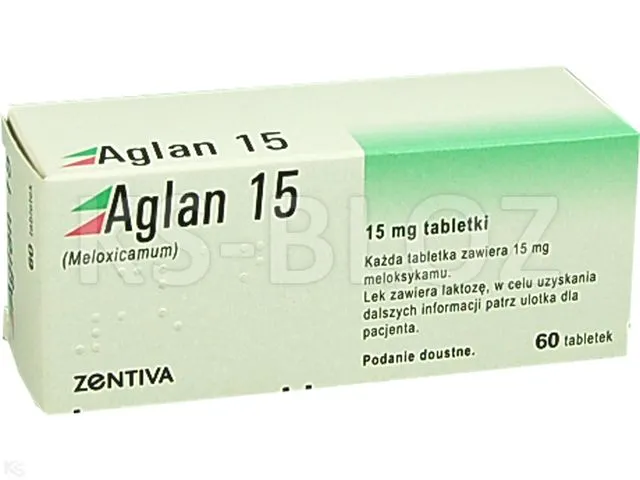
Table of Contents
AGLAN 15; 15 mg, tablets
Meloxicam
Please read this leaflet carefully before taking the medicine, as it contains
important information for the patient.
- Keep this leaflet, as you may need to read it again.
- If you have any questions, please consult your doctor or pharmacist.
- This medicine has been prescribed for a specific individual. Do not pass it on to others. The medicine may harm someone else, even if their symptoms are the same.
- If the patient experiences any adverse effects, including any not listed in this leaflet, they should inform their doctor or pharmacist. See section 4.
Leaflet contents
- What Aglan 15 is and what it is used for
- Important information before taking Aglan 15
- How to take Aglan 15
- Possible side effects
- How to store Aglan 15
- Contents of the pack and other information
1. What Aglan 15 is and what it is used for
Aglan 15 contains meloxicam as the active substance. Meloxicam belongs to a group of medicines called non-steroidal anti-inflammatory drugs (NSAIDs), which are used to reduce inflammation and pain in joints and muscles.
Aglan 15 is intended for adults and adolescents aged 16 years and older.
Aglan 15 is indicated for:
- Short-term treatment of flare-ups in osteoarthritis
- Long-term treatment of rheumatoid arthritis
- Long-term treatment of ankylosing spondylitis
2. Important information before using Aglan 15
When not to use Aglan 15
- if the patient is allergic to meloxicam or any of the other ingredients of this medicine (listed in section 6),
- if the patient is allergic to acetylsalicylic acid or other medicines from the group of non-steroidal anti-inflammatory drugs (NSAIDs),
- if the patient has ever experienced wheezing, tightness in the chest, asthma (difficulty breathing), nasal polyps (blocked nose due to swelling of the nasal mucosa) with catarrh, sudden swelling of the skin or mucous membranes, such as swelling around the eyes, face, lips, mouth or throat, which may make breathing difficult (angioedema), urticaria while taking acetylsalicylic acid or other anti-inflammatory medicines,
- if the patient currently has or has had in the past more than two episodes of gastrointestinal ulceration (stomach or duodenal ulcer) or gastrointestinal bleeding or bloody stools (this may result in, for example, black stools),
- if the patient has ever experienced gastrointestinal bleeding or gastrointestinal perforation related to previous treatment with NSAIDs,
- if the patient has experienced cerebrovascular bleeding (bleeding from blood vessels in the brain) or bleeding from other causes,
- if the patient has severe liver disease,
- if the patient has severe kidney disease and is not undergoing dialysis,
- if the patient has severe heart failure,
- if the woman is in the last 3 months of pregnancy.
Do not use Aglan 15 in children and adolescents under 16 years of age.
Warnings and precautions
Consult a doctor or pharmacist before starting treatment with Aglan 15.
Warnings
Use of medicines such as Aglan 15 may be associated with a small increased risk of heart attack (myocardial infarction) or stroke. This risk increases with long-term use of high doses. Do not use higher doses or longer treatment duration than recommended (see section 3).
Discontinue use of Aglan 15 immediately upon noticing bleeding (causing tarry stools) or gastrointestinal ulceration (causing abdominal pain).
If the patient has heart disease, a history of stroke, or suspected risk of these conditions, discuss treatment options with a doctor or pharmacist.
For example, when:
- the patient has high blood pressure (hypertension),
- the patient has high blood sugar levels (diabetes),
- the patient has high cholesterol levels in the blood (hypercholesterolemia),
- the patient smokes tobacco.
Potentially life-threatening skin rashes (Stevens-Johnson syndrome, toxic epidermal necrolysis) have been reported with the use of meloxicam. These initially appear as red spots or round patches on the trunk, often with central blisters.
Additional symptoms may include ulcers in the mouth, throat, nose, genital organs, and conjunctivitis (red and swollen eyes).
These potentially life-threatening skin rashes are often accompanied by flu-like symptoms.
The rash may progress to generalized blisters or detachment of the epidermis.
The highest risk of severe skin reactions occurs during the first weeks of treatment.
Meloxicam must never be restarted in patients who have experienced Stevens-Johnson syndrome or toxic epidermal necrolysis during previous meloxicam treatment.
If a rash or any of the above symptoms occur, discontinue meloxicam and seek immediate medical advice, informing the doctor about taking this medicine.
Before starting treatment with Aglan 15, discuss with a doctor or pharmacist if the patient has ever experienced, after taking meloxicam or other oxicams (e.g. piroxicam), persistent erythema (drug eruption) [round or oval red and swollen patches on the skin, usually recurring in the same location(s), blisters, urticaria, and itching].
Aglan 15 is not suitable for treating acute pain attacks.
Aglan 15 may mask signs of infection (e.g. fever). If the patient suspects an infection, they should contact a doctor.
Precautions for use
Due to the need for treatment adjustment, consult a doctor before starting Aglan 15 in the following cases:
- if the patient has previously had esophagitis, gastritis, or any other gastrointestinal disease, such as ulcerative colitis or Crohn's disease;
- high blood pressure (hypertension);
- use in elderly patients;
- reduced circulating blood volume (hypovolemia), which may occur due to significant blood loss or severe burns, after surgical procedures, or due to low fluid intake;
- heart, liver, or kidney diseases;
- high blood sugar levels (diabetes);
- previously diagnosed high potassium levels in the blood;
In the above cases, the doctor will monitor the treatment outcomes.
Aglan 15 and other medicines
Inform the doctor or pharmacist about all medicines currently taken or recently used, as well as any medicines planned for future use, such as:
- other anti-inflammatory medicines, including acetylsalicylic acid;
- corticosteroids (e.g. used for anti-inflammatory purposes or treating allergic reactions);
- anticoagulants, e.g. warfarin, or clot-dissolving medicines (so-called thrombolytics);
- potassium salts – used to treat low potassium levels in the blood;
- trimethoprim – used to treat urinary tract infections;
- selective serotonin reuptake inhibitors (SSRIs) – medicines used to treat depression and other psychiatric disorders;
- medicines used to treat high blood pressure (e.g. beta-blockers) and diuretics. The doctor may monitor kidney function if the patient is taking diuretics;
- calcineurin inhibitors (e.g. cyclosporine, tacrolimus) – medicines often used after organ transplantation or in severe skin diseases, rheumatoid arthritis, or nephrotic syndrome;
- deferasirox – a medicine used to remove excess iron from the body;
- lithium – a medicine used to treat mood disorders;
- methotrexate – a medicine mainly used to treat cancer or severe skin diseases and active rheumatoid arthritis;
- pemetrexed – a medicine used to treat cancer;
- cholestyramine – mainly used to lower cholesterol levels;
- oral antidiabetic medicines (sulfonylurea derivatives, nateglinide) – used to treat diabetes. The doctor should ensure regular monitoring of blood glucose levels to detect hypoglycemia.
Pregnancy, breastfeeding, and fertility
If the patient is pregnant or breastfeeding, suspects she may be pregnant, or is planning to have a child, she should consult a doctor or pharmacist before using this medicine.
Pregnancy
The doctor will prescribe this medicine during the first and second trimesters of pregnancy only if absolutely necessary, as there is a potential risk of miscarriage or developmental abnormalities. In such cases, the patient should receive the lowest possible dose for the shortest possible duration.
Do not take Aglan 15 if the patient is in the last 3 months of pregnancy, as it may harm the unborn child or cause problems during delivery. It may cause kidney and heart problems in the unborn child. It may increase the tendency to bleed in both the mother and the child and may delay or prolong labor. Aglan 15 should not be used during the first 6 months of pregnancy unless the doctor considers its use absolutely necessary.
If treatment is required during this period or when trying to conceive, the lowest possible dose should be used for the shortest possible time. From week 20 of pregnancy, Aglan 15 may lead to impaired kidney function in the unborn child, which may result in low amniotic fluid levels (oligohydramnios) or narrowing of a blood vessel (ductus arteriosus) in the child's heart. If treatment is required for longer than a few days, the doctor may recommend additional monitoring.
If the patient has taken this medicine during pregnancy, she should immediately inform her doctor/midwife so that close monitoring can be arranged if necessary.
Breastfeeding
This medicine is not recommended for use in breastfeeding women.
Fertility
Aglan 15 may impair fertility.
Driving and operating machinery
Visual disturbances, including blurred vision, dizziness, drowsiness, vertigo (vestibular origin), or other central nervous system disorders may occur after using this medicine. If these symptoms occur, do not drive or operate machinery.
Aglan 15 contains monohydrate lactose and sodium
If the patient has previously been diagnosed with intolerance to certain sugars, they should consult a doctor before taking this medicine.
This medicine contains less than 1 mmol sodium (23 mg) per tablet, meaning the medicine is considered "sodium-free".
3. How to use Aglan 15
This medicine should always be used according to the instructions given by the doctor or pharmacist. In case of any doubts,
consult a doctor or pharmacist.
To take a dose of 7.5 mg, take half a tablet of Aglan 15. The 15 mg tablet of Aglan 15
can be divided into equal doses.
Recommended doses for adults and adolescents aged over 16 years are as follows:
Osteoarthritis flare-ups:
7.5 mg per day; if necessary, the dose may be increased to 15 mg per day.
Rheumatoid arthritis:
15 mg per day; however, the dose may be reduced to 7.5 mg per day, if necessary.
Ankylosing spondylitis:
15 mg per day; however, the dose may be reduced to 7.5 mg per day, if necessary.
Special patient groups
In elderly patients, patients with impaired liver or kidney function, or patients at increased risk of adverse reactions (this applies to all conditions listed under the heading “Warnings and precautions”), the doctor may reduce the dose to 7.5 mg once daily.
Use in children and adolescents
Aglan 15 must not be used in children and adolescents under 16 years of age.
DO NOT EXCEED THE MAXIMUM DAILY DOSE OF 15 MG.
The entire daily dose should be taken as a single dose once daily.
The tablet should be taken during a meal, swallowed with water or another liquid.
If the patient feels that the effect of Aglan 15 is too strong or too weak, or if no improvement is felt after a few days, the patient should contact the doctor or pharmacist.
Use of a higher than recommended dose of Aglan 15
In case of using a higher than recommended dose of Aglan 15, contact a doctor immediately.
Symptoms of overdose include: lack of energy (lethargy), drowsiness, nausea, vomiting, stomach pain (epigastric pain).
These symptoms usually resolve after discontinuation of Aglan 15. Gastrointestinal bleeding (bleeding from the gastrointestinal tract) may occur in the patient.
Severe poisoning may lead to elevated blood pressure (arterial hypertension), acute kidney failure, liver function disorders, respiratory depression, loss of consciousness (coma), convulsions (seizures), circulatory collapse (cardiovascular collapse), cardiac arrest, immediate allergic reactions (hypersensitivity), including fainting, shortness of breath, and skin reactions.
Missed dose of Aglan 15
There is no need to worry if a dose of Aglan 15 is missed. Skip the missed dose and take the next dose at the appropriate time according to the dosing schedule. Do not take a double dose to make up for the missed dose.
Stopping treatment with Aglan 15
Premature discontinuation of treatment may lead to recurrence or worsening of the disease and (or) its symptoms, which were the reason for starting treatment.
If there are any further doubts regarding the use of this medicine, consult a doctor or pharmacist.
4. Possible adverse effects
Like all medicines, this medicine can cause adverse effects, although not everyone will experience them.
Seek immediate medical help and stop taking Aglan 15 if any of the following occur:
Any allergic (hypersensitivity) reactions, which may include:
- Skin reactions such as itching (pruritus), blistering and peeling of the skin, which may potentially be life-threatening (Stevens-Johnson syndrome, toxic epidermal necrolysis), damage to soft tissues (lesions on mucous membranes), or erythema multiforme (see section 2). Erythema multiforme is a severe allergic skin reaction causing spots, red or purple patches or blisters on the skin. It may also affect the lips, eyes and other moist areas of the body.
- Swelling of the skin or mucous membranes, such as swelling around the eyes, face and lips, mouth or throat, possibly causing breathing difficulties, swelling of the ankles and legs (peripheral oedema).
- Shortness of breath or asthma attack.
- Hepatitis. This may cause symptoms such as:
- Yellowing of the skin and whites of the eyes (jaundice),
- Abdominal pain,
- Loss of appetite.
Any adverse gastrointestinal symptoms, and in particular:
- Bleeding (causing tarry stools).
- Gastrointestinal ulceration (causing abdominal pain).
Gastrointestinal bleeding, ulceration or perforation of the gastrointestinal tract may occasionally be severe and potentially fatal, especially in elderly patients.
If a patient has previously experienced any gastrointestinal disorders due to long-term use of NSAIDs, the patient should seek immediate medical advice, especially if elderly. The doctor may monitor the progress of treatment.
General adverse effects associated with non-steroidal anti-inflammatory drugs (NSAIDs)
The use of some non-steroidal anti-inflammatory drugs (NSAIDs) may be associated with a small increased risk of arterial thrombotic events (e.g. heart attack or stroke), particularly when used at high doses and for long-term treatment.
Fluid retention (oedema), high blood pressure (hypertension) and heart failure have been reported during NSAID therapy.
The most commonly observed adverse effects are gastrointestinal (stomach and intestinal disturbances):
- Gastric and duodenal ulcers (ulceration of the stomach and/or duodenum),
- Intestinal wall perforation or gastrointestinal bleeding (sometimes fatal, especially in elderly patients).
The following adverse effects have been reported with NSAIDs:
- Nausea and vomiting,
- Loose stools (diarrhoea),
- Bloating,
- Constipation,
- Indigestion (dyspepsia),
- Abdominal pain,
- Tarry stools due to gastrointestinal bleeding,
- Vomiting blood,
- Inflammation of the oral mucosa with blister formation (oral ulcerative stomatitis),
- Exacerbation of gastrointestinal inflammation (e.g. flare-up of inflammatory bowel disease or Crohn’s disease). Gastritis has been observed less frequently.
Adverse effects of meloxicam – the active substance in Aglan 15:
Very common: may affect more than 1 in 10 patients
- Gastrointestinal disturbances such as indigestion (dyspepsia), nausea and vomiting, abdominal pain, constipation, bloating, loose stools (diarrhoea).
Common: may affect 1 in 10 patients
- Headache.
Uncommon: may affect 1 in 100 patients
- Dizziness (feeling of emptiness in the head),
- Dizziness or vertigo (vestibular origin),
- Somnolence (drowsiness),
- Anaemia (reduced concentration of the red blood pigment haemoglobin),
- Increased blood pressure (hypertension),
- Facial flushing (transient redness of the face and neck),
- Sodium and fluid retention,
- Increased potassium levels (hyperkalaemia). This may lead to symptoms such as:
- Irregular heartbeat (arrhythmia),
- Palpitations (when the patient feels heartbeat more than usual),
- Muscle weakness,
- Belching,
- Gastritis,
- Gastrointestinal bleeding,
- Inflammation of the oral mucosa,
- Immediate allergic reactions (hypersensitivity),
- Itching,
- Skin rash,
- Oedema due to fluid retention, including swelling of the ankles or legs (peripheral oedema),
- Sudden swelling of the skin or mucous membranes, such as swelling around the eyes, face, lips, mouth or throat, possibly causing breathing difficulties (angioedema),
- Transient abnormalities in liver function tests (e.g. increased activity of liver enzymes such as aminotransferases or increased levels of the bile pigment bilirubin). The doctor may detect these changes through blood tests,
- Renal function disorders confirmed by laboratory results (e.g. increased creatinine or urea levels).
Rare: may affect 1 in 1,000 patients
- Mood disturbances,
- Nightmares,
- Blood morphology disorders, including:
- Abnormal blood smear results,
- Decreased white blood cell count (leukopenia),
- Decreased platelet count (thrombocytopenia). These adverse effects may lead to an increased risk of infection and symptoms such as bruising or nosebleeds.
- Tinnitus (ringing in the ears),
- Palpitations,
- Peptic ulcer disease of the stomach or upper part of the small intestine (ulceration of the stomach and/or duodenum),
- Oesophagitis,
- Asthma attacks (in patients hypersensitive to aspirin or other NSAIDs),
- Skin blistering or peeling of the skin (Stevens-Johnson syndrome and toxic epidermal necrolysis),
- Urticaria,
- Visual disturbances, including:
- Blurred vision,
- Conjunctivitis (inflammation of the eyeball or eyelids),
- Colitis.
Very rare: may affect 1 in 10,000 patients
- Skin blistering reactions and erythema multiforme. Erythema multiforme is a severe allergic skin reaction causing spots, red or purple patches or blisters on the skin. It may also affect the lips, eyes and other moist areas of the body.
- Hepatitis. This may cause symptoms such as:
- Yellowing of the skin and whites of the eyes (jaundice),
- Abdominal pain,
- Loss of appetite,
- Acute renal failure (kidney failure), particularly in patients with risk factors such as heart disease, diabetes or kidney disease,
- Intestinal wall perforation.
Frequency not known: cannot be estimated from the available data
- Confusion,
- Disorientation,
- Shortness of breath and skin reactions (anaphylactic and/or anaphylactoid reactions), skin rashes caused by exposure to sunlight (photosensitivity reactions),
- Heart failure reported in association with NSAID therapy,
- Complete loss of certain types of white blood cells (agranulocytosis), especially in patients taking Aglan 15 together with other medicines that potentially have bone marrow suppressive or destructive effects (myelotoxic drugs). This may cause:
- Sudden fever,
- Sore throat,
- Infections,
- Pancreatitis.
- Infertility in women, delayed ovulation
- A characteristic allergic skin reaction known as fixed drug eruption, usually recurring in the same location(s) upon re-exposure to the drug and may appear as itchy, round or oval, red and swollen skin patches or blisters (urticaria).
Adverse effects caused by non-steroidal anti-inflammatory drugs (NSAIDs) but not yet reported with Aglan 15:
Acute renal failure due to structural changes in the kidneys:
- Very rare cases of kidney inflammation (interstitial nephritis),
- Death of certain kidney cells (acute necrosis of glomeruli or renal papillae),
- Presence of protein in the urine (nephrotic syndrome with proteinuria).
Reporting of adverse effects
If any adverse effects occur, including any not listed in this leaflet, inform your doctor, pharmacist or nurse. Adverse effects can be reported directly to the Department of Monitoring Adverse Drug Reactions of the Office for Registration of Medicinal Products, Medical Devices and Biocidal Products.
Al. Jerozolimskie 181 C, 02-222 Warsaw
Tel.: +48 22 49 21 301, fax: +48 22 49 21 309, website: https://smz.ezdrowie.gov.pl.
Reporting adverse effects helps to provide more information on the safety of the medicine.
Adverse effects can also be reported to the marketing authorisation holder.
5. How to store Aglan 15
Keep this medicine out of sight and reach of children.
Do not use this medicine after the expiry date stated on the packaging. The expiry date refers to the last day of the stated month.
No special storage conditions are required for this medicine.
Medicines must not be disposed of via wastewater or household waste. Ask your pharmacist how to properly dispose of medicines no longer in use. This will help protect the environment.
6. Contents of the package and other information
What Aglan 15 contains
The active substance is meloxicam, 15 mg per tablet.
Other ingredients include: monohydrate lactose, microcrystalline cellulose, colloidal anhydrous silica,
magnesium stearate, disodium hydrogen citrate dihydrate, crospovidone (type A).
What Aglan 15 looks like and contents of the pack
Aglan 15: light yellow, round, biconvex tablets with bevelled edges, marked with an impression "B" and "19" on either side of the breakline on one side, smooth on the other.
The tablet can be divided into equal doses.
Aglan 15, 15 mg, tablets are available in blisters containing 10 tablets.
Pack sizes:
Aglan 15: 10, 20, 30, 60 or 100 tablets.
Not all pack sizes may be marketed.
Marketing Authorisation Holder:
Zentiva k.s., U kabelovny 130, Dolní Měcholupy, 102 37 Prague 10, Czech Republic.
Manufacturer:
Zentiva k.s., U kabelovny 130, Dolní Měcholupy, 102 37 Prague 10, Czech Republic
This medicinal product is authorised for marketing in the European Economic Area under the following names:
Czech Republic: RECOXA 15
Poland: AGLAN 15
Estonia: Recoxa
Latvia: Recoxa 15 mg tabletes
Lithuania: Recoxa 15 mg tabletės
For further information about this medicinal product, please contact:
Zentiva Polska Sp. z o.o.
ul. Bonifraterska 17
00-203 Warsaw
tel.: +48 22 375 92 00