Afobam
Poland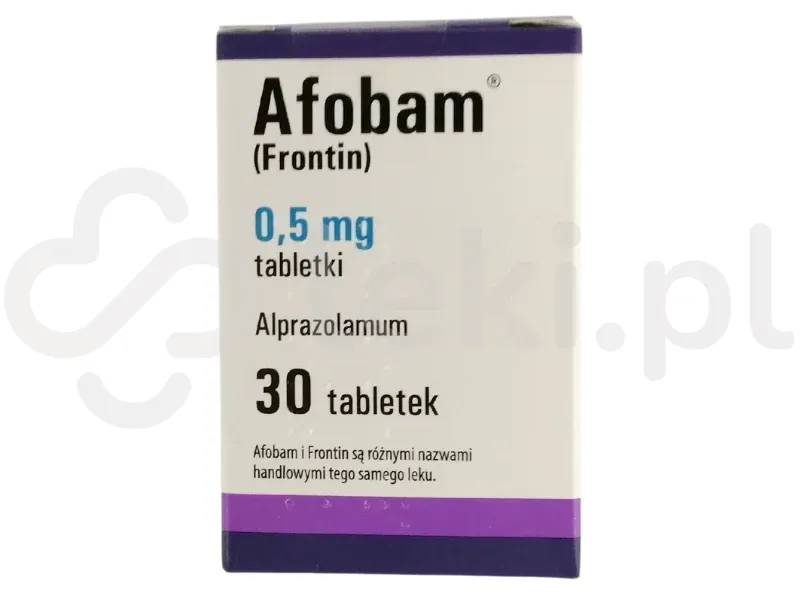
Table of Contents
Patient Information Leaflet
Warning! Please keep this leaflet. The information on the immediate packaging is in a foreign language.
Afobam (Frontin)
1 mg, tablets
Alprazolamum
Afobam and Frontin are different trade names for the same medicine.
Please read this leaflet carefully before using the medicine, as it contains
important information for the patient.
- Keep this leaflet, as you may need to read it again.
- If you have any questions, please consult your doctor or pharmacist.
- This medicine has been prescribed for a specific individual. Do not share it with others. This medicine may harm another person, even if their symptoms are the same.
- If you experience any adverse effects, including any not listed in this leaflet, inform your doctor, pharmacist, or nurse. See section 4.
Leaflet Contents:
- What Afobam is and what it is used for
- Important information before taking Afobam
- How to take Afobam
- Possible side effects
- How to store Afobam
- Contents of the pack and other information
1. What Afobam is and what it is used for
The active substance in this medicine, alprazolam, belongs to a group of medicines called benzodiazepine derivatives (medicines with anxiolytic action).
Afobam is indicated for the treatment of symptoms of anxiety disorders in adults, but only in situations where symptoms are severe, impair normal functioning, or cause significant distress to the patient. This medicine is intended for short-term use only.
2. Important information before using Afobam
When not to use Afobam:
- if the patient is allergic to alprazolam, other benzodiazepines, or any of the other ingredients of this medicine (listed in section 6);
- if the patient suffers from muscle weakness ( myasthenia gravis ) (a disease characterized by excessive fatigue and muscle weakness);
- if the patient has severe respiratory insufficiency;
- if the patient has sleep apnoea syndrome;
- if the patient has severe liver insufficiency.
Afobam must not be used in children and adolescents under 18 years of age.
Warnings and precautions
Before starting treatment with Afobam, discuss it with your doctor or pharmacist.
- if the medicine is used long-term, because dependence may occur, especially in patients prone to drug or alcohol abuse. The doctor should periodically assess the need for continued treatment;
- if the dose of the medicine is being reduced or the medicine is suddenly discontinued (withdrawal symptoms may occur – see sections 3 and 4);
- if the medicine is used in patients with depression and suicidal thoughts or tendencies;
- if the patient is using other benzodiazepines (increased risk of dependence);
- if the patient is simultaneously using opioids, sleeping pills, sedatives, or consuming alcohol (the effects of these medicines or alcohol may be intensified);
- if restlessness, psychomotor agitation, irritability, aggression, delusions, anger, nightmares, hallucinations, psychosis, or unusual behaviour occur. If any of these symptoms appear, treatment with the medicine should be discontinued and the patient should consult a doctor;
- if the patient has glaucoma;
- if the patient has breathing disorders;
- if the patient has kidney or liver function disorders;
- if the patient is elderly or debilitated, Afobam should be used with caution due to the risk of sedation (excessive calming) and/or skeletal muscle weakness, which may increase the likelihood of falls and their serious consequences in elderly patients. The treating physician will select the lowest effective dose.
Like other benzodiazepines, Afobam may cause anterograde amnesia, which
occurs several hours after taking the medicine. In such cases, the patient should be ensured
the possibility of uninterrupted sleep for 7–8 hours.
Episodes of mania and hypomania associated with alprazolam use have been reported in patients with depression.
Before a planned surgical procedure, inform the doctor about taking Afobam.
Children and adolescents
Afobam must not be used in children and adolescents under 18 years of age.
Afobam with other medicines
Tell your doctor or pharmacist about all medicines you are currently taking or have recently taken, as
well as any medicines you plan to take.
-
Afobam may enhance the effects of antipsychotics, sleeping pills, anxiolytics, sedatives, antidepressants, opioid analgesics, anticonvulsants, anaesthetics, and antihistamines.
-
With opioid analgesics, euphoria may also increase, leading to enhanced psychological dependence.
-
Alcohol must not be consumed during treatment with Afobam.
-
Concomitant use of Afobam with certain oral antifungal medicines (e.g. ketoconazole, itraconazole, posaconazole, voriconazole) is not recommended.
-
Exercise particular caution and consider dose reduction when using Afobam concomitantly with nefazodone, fluvoxamine, and cimetidine.
-
Exercise particular caution when using alprazolam together with fluoxetine, propoxyphene, oral contraceptives, sertraline, diltiazem, and macrolide antibiotics (e.g. erythromycin, clarithromycin, or troleandomycin).
-
Concomitant use of Afobam and opioids (strong painkillers, medicines used in substitution therapy for addiction, and some cough medicines) increases the risk of drowsiness, breathing problems (respiratory depression), and coma, and may lead to life-threatening effects. Therefore, concomitant use of these medicines should only be considered if no other treatment options are available. If your doctor prescribes Afobam together with opioids, the dose and duration of concurrent treatment should be limited.
-
Inform your doctor about all opioid medicines you are taking and strictly follow medical advice. It may be helpful to inform family members or friends about
the possibility of the above-mentioned symptoms. If they occur, contact
your doctor. -
Concomitant use of Afobam and human immunodeficiency virus (HIV) protease inhibitors (e.g. ritonavir) requires dose adjustment or discontinuation of alprazolam.
-
Patients taking alprazolam and digoxin simultaneously should be closely monitored for signs of digoxin toxicity.
-
Theophylline may reduce the effect of benzodiazepines.
Afobam and alcohol
Alcohol must not be consumed during treatment with Afobam.
Pregnancy and breastfeeding
If the patient is pregnant or breastfeeding, suspects she may be pregnant, or is planning to have a
child, she should consult her doctor or pharmacist before using this medicine.
This medicine should not be used during pregnancy.
If the medicine is used during pregnancy or if the patient becomes pregnant while taking
alprazolam, she should be evaluated for potential fetal risk.
If administration of the medicine is necessary in late pregnancy, high doses should be avoided and the newborn should be monitored.
Benzodiazepines pass into human milk in small concentrations. Afobam should not be used
during breastfeeding.
Driving and operating machinery
Afobam may impair psychomotor abilities. Before using Afobam, patients should
familiarize themselves with current local traffic regulations. Patients should not drive vehicles or operate machinery while taking Afobam.
Afobam contains lactose monohydrate and sodium
If the patient has previously been diagnosed with intolerance to certain sugars, the patient should
consult a doctor before taking this medicine.
This medicine contains less than 1 mmol of sodium (23 mg) per tablet, meaning the medicine is considered "sodium-free".
3. How to use Afobam
This medicine should always be taken according to the instructions given by your doctor or pharmacist. If in doubt,
consult your doctor or pharmacist.
Afobam is available in the following strengths: 0.25 mg, 0.5 mg, 1 mg.
Treatment should last as short as possible. Your doctor should regularly assess your condition and the need
for continuing treatment, especially if the symptoms have lessened and may no longer require pharmacological
treatment. The total duration of treatment should not exceed 2–4 weeks. Long-term treatment is not recommended.
At the beginning of treatment, your doctor will inform you about the limited duration of therapy, the need for
gradual dose reduction when discontinuing the medicine, and the possibility of withdrawal reactions.
During treatment with benzodiazepines, including Afobam, dependence and emotional or physical dependence may develop.
This risk may increase with higher doses and longer duration of treatment. Therefore, the lowest effective dose should be used
for the shortest possible time, and the need for continuing treatment should be regularly evaluated with your doctor.
Recommended dose
The dose is determined by the doctor based on the severity of symptoms and the individual patient's response to treatment.
If severe adverse reactions occur after the initial dose, the doctor may decide to reduce the dose.
Treatment of anxiety symptoms
The recommended initial dose is 0.25 mg or 0.5 mg, taken three times daily. Depending on the patient's response to treatment,
the doctor may increase the dose up to a maximum daily dose of 4 mg, administered in smaller divided doses throughout the day.
Use in children and adolescents under 18 years of age
Afobam must not be used in children and adolescents under 18 years of age.
Use in patients with liver function disorders
Use in patients with severe liver impairment is contraindicated.
Use in elderly patients
The recommended initial dose is 0.25 mg two or three times daily. Depending on treatment tolerance, the doctor may
gradually increase the dose if necessary. If adverse reactions occur, the doctor may decide to reduce the initial dose.
The tablet may be divided into equal doses.
Taking more than the recommended dose of Afobam
If more tablets than recommended are taken, symptoms such as ataxia (lack of coordination), drowsiness, speech disturbances,
coma, and respiratory depression may occur. If any disturbing symptoms are noticed, contact your doctor immediately.
Missed dose of Afobam
Do not take a double dose to make up for a missed dose.
Stopping treatment with Afobam
Do not stop taking this medicine without consulting your doctor.
Since treatment is purely symptomatic, symptoms may return after discontinuation.
Your doctor will decide on a gradual reduction of the dose.
If you have any further questions about the use of this medicine, consult your doctor or pharmacist.
4. Possible adverse effects
Like all medicines, this medicine can cause adverse effects, although not everyone will experience them.
If any of the following adverse effects persist or become troublesome, consult your doctor. The occurrence of certain adverse effects depends on the individual sensitivity of the patient and the dose administered. Usually, adverse effects are observed at the beginning of treatment. They subside with continued treatment or after dose reduction.
The following frequencies of adverse effects have been reported in clinical trials and post-marketing surveillance:
Very common (may affect more than 1 in 10 patients)
- depression,
- sedation,
- somnolence,
- ataxia (lack of voluntary coordination of muscle movements),
- memory impairment,
- speech disorders,
- dizziness,
- headache,
- constipation,
- dry mouth,
- fatigue,
- irritability.
Common (may affect up to 1 in 10 patients)
- decreased appetite,
- confusion,
- disorientation,
- decreased libido,
- increased libido,
- anxiety,
- insomnia,
- restlessness,
- balance problems,
- movement coordination disorders,
- concentration difficulties,
- increased drowsiness,
- lethargy,
- tremor,
- blurred vision,
- nausea,
- skin inflammation,
- sexual dysfunction,
- weight loss,
- weight gain.
Uncommon (may affect up to 1 in 100 patients)
- mania,
- hallucinations,
- anger,
- agitation,
- dependence,
- amnesia,
- muscle weakness,
- urinary incontinence,
- irregular menstruation,
- drug withdrawal syndrome.
Frequency not known (cannot be estimated from the available data)
- hyperprolactinaemia (increased blood prolactin levels),
- hypomania,
- aggressive behaviour,
- hostile behaviour,
- disordered thinking,
- increased psychomotor activity,
- drug abuse,
- autonomic nervous system imbalance (affecting the function of internal organs, smooth muscles, and glands),
- dystonia (abnormal muscle tone),
- gastrointestinal disorders,
- hepatitis,
- liver function abnormalities,
- jaundice,
- angioedema,
- photosensitivity reactions,
- urinary retention,
- peripheral oedema (swelling of ankles, feet or fingers),
- increased intraocular pressure.
Additionally, particularly in patients taking other psychotropic medicines, those with psychiatric disorders or alcohol abusers, paradoxical reactions such as anxiety may occur.
Other adverse effects observed rarely or very rarely include: movement disorders, seizures, psychotic symptoms, disturbances in self-perception, agranulocyt游戏副本
5. How to store Afobam
Do not store above 30°C.
Keep the medicine in a place out of sight and reach of children.
Do not use this medicine after the expiry date stated on the packaging. The expiry date refers to the last day of the stated month.
Medicines must not be disposed of via sewage systems or household waste. Ask your pharmacist how to dispose of medicines no longer in use. This will help protect the environment.
6. Contents of the packaging and other information
What Afobam contains
The active substance is 1 mg of alprazolam per tablet.
Other ingredients: monohydrate lactose (96 mg), microcrystalline cellulose, corn starch,
magnesium stearate, sodium lauryl sulfate, colloidal anhydrous silica, iron oxide red (E 172).
What Afobam looks like and contents of the pack
Appearance:
Light pink, elongated, biconvex tablets with a score line on one side and the imprint “E” and “313” on the other side.
The tablets can be divided into equal doses.
Packaging:
Brown glass bottle in a cardboard box containing 30 or 100 tablets.
For more detailed information, please contact the marketing authorisation holder or the parallel importer.
Marketing Authorisation Holder in Hungary, the country of export:
Egis Gyógyszergyár Zrt., Keresztúri út 30-38., H-1106 Budapest, Hungary
Manufacturer:
Egis Gyógyszergyár Zrt., Mátyás Király u. 65., H-9900 Körmend, Hungary
Parallel importer:
Delfarma Sp. z o.o.
ul. Św. Teresy od Dzieciątka Jezus 111
91-222 Łódź, Poland
Repackaged in:
Delfarma Sp. z o.o.
ul. Św. Teresy od Dzieciątka Jezus 111
91-222 Łódź, Poland
Hungarian Marketing Authorisation Numbers (country of export): OGYI-T-5967/05
OGYI-T-5967/06
Parallel Import Authorisation Number: 336/17