Advantan
Poland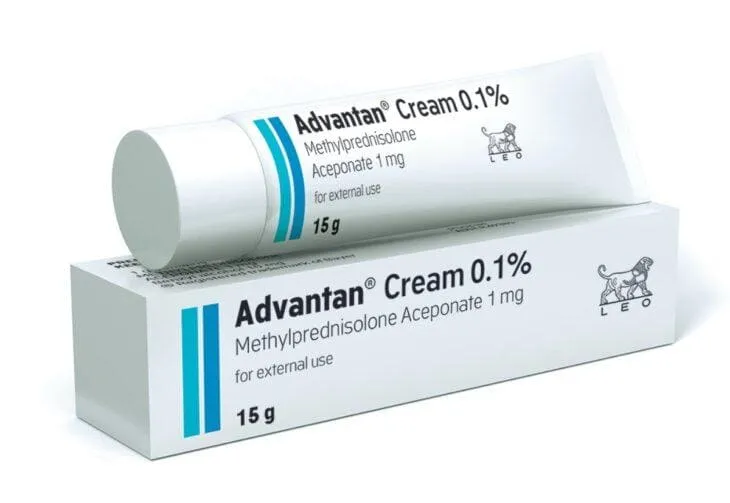
Table of Contents
Caution! Keep the leaflet! Information on the immediate packaging in a foreign language.
Advantan (Lexxema)
1 mg/g, cream
Methylprednisolone aceponate
Advantan and Lexxema are different trade names for the same medicinal product.
Please read the entire leaflet carefully before using the medicine, as it contains
important information for the patient.
- Keep this leaflet for future reference.
- If you have any questions, consult your doctor or pharmacist.
- This medicine has been prescribed for a specific individual. Do not pass it on to others. The medicine may harm someone else, even if their symptoms are similar.
- If the patient experiences any adverse reactions, including any adverse reactions not listed in this leaflet, inform your doctor, pharmacist, or nurse. See section 4.
Table of contents of the leaflet
- What Advantan cream is and what it is used for
- Important information before using Advantan cream
- How to use Advantan cream
- Possible side effects
- How to store Advantan cream
- Contents of the pack and other information
1. What Advantan cream is and what it is used for
Advantan cream contains the active substance methylprednisolone aceponate, which is a potent glucocorticoid for topical use. When applied locally to the skin, methylprednisolone aceponate exerts anti-inflammatory, antipruritic, and vasoconstrictive effects, leading to the relief of symptoms such as erythema, edema, exudation, pruritus, burning, and pain.
Indications
Eczema (atopic dermatitis, neurodermatitis), contact dermatitis, miliaria (sweat rash), non-allergic eczema, eczema in children.
2. Important information before using Advantan cream
When not to use Advantan cream:
- if the patient has shown hypersensitivity (allergy) to the active substance or to any of the other ingredients of Advantan cream
- when the areas being treated have:
- skin infections caused by bacteria (e.g. tuberculous or syphilitic lesions) or fungi
- lesions associated with viral diseases (e.g. shingles, chickenpox, etc.)
- rosacea
- acne
- perioral dermatitis
- skin ulcers
- local reactions following vaccination
- atrophic skin disorders (atrophy).
Do not use in children under 2 years of age.
Warnings and precautions
The medicine, especially in children, should be used in the smallest possible dose and for the shortest possible duration.
If the physician determines that a bacterial or fungal skin infection is present, additional antibacterial or antifungal treatment should be applied.
Local application of the medicine may worsen local skin infections.
Avoid contact of the medicine with eyes, open wounds, and mucous membranes.
If excessive skin dryness occurs during treatment with Advantan cream, it is advisable to use a preparation with a higher fat content (e.g. Advantan emulsion or Advantan ointment).
When applying the medicine to the facial skin, caution should be exercised and occlusive dressings should not be used. Application to the face may more frequently than elsewhere lead to skin atrophy.
If blurred vision or other visual disturbances occur, consult a physician.
If the patient has a history of glaucoma, inform the physician before using Advantan cream. As with systemic corticosteroids, there is a risk of developing glaucoma during treatment with Advantan cream (e.g. when high doses are used, when large skin areas are treated, with prolonged use, or when the medicine is applied under occlusive dressing or near the eyes).
Treatment of large skin areas should be as short as possible.
Application to damaged skin, skin folds, large skin areas, prolonged use, or use under occlusive dressing significantly increases the risk of systemic adverse effects typical of corticosteroids.
Avoid using occlusive dressings (sealed dressings). In children, diapers may act as occlusive dressings. Conditions similar to those under occlusive dressings also occur in intertriginous areas of the body (armpits, groin, skin folds, skin between fingers).
Children and adolescents
Do not use in children under 2 years of age.
In children over 2 years of age, the medicine should be used cautiously – in the smallest possible doses and for the shortest possible duration. Occlusive dressings (sealed dressings, e.g. diapers) should not be used.
Advantan cream with other medicines
There are no reports of interactions between Advantan cream and other medicines.
Tell your doctor or pharmacist about all medicines the patient is currently taking or has recently taken, as well as any medicines the patient plans to use.
Pregnancy and breastfeeding
If the patient is pregnant or breastfeeding, suspects she may be pregnant, or plans to become pregnant, she should consult a doctor or pharmacist before using this medicine.
Do not use the medicine during the first trimester of pregnancy.
A physician may recommend using the medicine in pregnant or breastfeeding women only after careful assessment of the benefit-risk ratio.
Breastfeeding women should not apply Advantan cream to the skin of the breasts.
Avoid using the medicine on large skin areas, for prolonged periods, or under occlusive dressings.
Driving and operating machinery
Advantan cream has no effect on the ability to drive vehicles or operate machinery.
Important information about some ingredients of Advantan cream:
Excipients of Advantan cream: cetostearyl alcohol and butylated hydroxytoluene may cause skin reactions (e.g. contact dermatitis); butylated hydroxytoluene may additionally cause eye and mucous membrane irritation.
3. How to use Advantan cream
This medicine should always be used exactly as directed by your doctor. If you have any doubts, consult your doctor or pharmacist. Advantan cream is intended for topical use on the skin only.
Typically, a thin layer of the medicine should be applied once daily to the affected area of skin.
Advantan cream should not be used in adults for longer than 12 weeks.
Use in children
Do not use in children under 2 years of age.
In children over 2 years of age, do not use for longer than 4 weeks.
If you feel that the effect of Advantan cream is too strong or too weak, consult your doctor.
Use of more Advantan cream than recommended
There is no risk of acute poisoning following a single overdose applied to the skin (application over a large skin surface under conditions of enhanced absorption) or after accidental ingestion of the medicine.
Missed dose of Advantan cream
If you miss a dose at the scheduled time, apply the medicine as soon as possible.
Do not apply a double dose to make up for the missed dose.
Stopping Advantan cream
If the original symptoms return after completion of treatment, consult your doctor.
If you have any further doubts concerning the use of this medicine, consult your doctor or pharmacist.
4. Possible adverse effects
Like all medicines, Advantan cream may cause adverse effects, although not everyone will experience them.
If any of the adverse symptoms worsen or if any adverse effects not listed in this leaflet occur, inform your doctor or pharmacist.
The most commonly observed adverse effects reported during clinical trials were:
burning sensation and itching at the application site.
The following adverse effects may occur during treatment with Advantan cream:
Common (occurs in 1 to 10 people out of 100): burning at the application site, itching at the application site.
Uncommon (occurs in 1 to 10 people out of 1,000): dryness of the skin at the application site, redness (erythema) at the application site, vesicles at the application site, folliculitis at the application site, rash at the application site, tingling and numbness at the application site (paresthesia), hypersensitivity to the medicine.
Rare (occurs in 1 to 10 people out of 10,000): fungal skin infection, cellulitis at the application site, swelling at the application site, irritation at the application site, pustular rash, skin fissures, dilation of superficial blood vessels (telangiectasia), skin thinning (atrophy), acne.
Frequency unknown (frequency cannot be estimated from available data): stretch marks (striae), perioral dermatitis, skin discoloration, skin hypersensitivity reactions, excessive hair growth (hypertrichosis), blurred vision.
When corticosteroid-containing products are applied locally, systemic adverse effects may occur as a result of absorption through the skin.
Reporting of adverse effects
If any adverse effects occur, including those not listed in this leaflet, please inform your doctor, pharmacist, or nurse.
Adverse effects can be reported directly to the Department of Monitoring of Adverse Drug Reactions at the Office for Registration of Medicinal Products, Medical Devices and Biocidal Products: Al. Jerozolimskie 181C, 02-222 Warsaw, phone: +48 22 4921301, fax: +48 22 4921309, website: https://smz.ezdrowie.gov.pl
Reporting adverse effects helps to provide more information on the safety of the medicine.
5. How to store Advantan cream
Do not store above 25°C.
Keep out of sight and reach of children.
Do not use this medicine after the expiry date stated on the packaging.
The expiry date refers to the last day of the stated month.
Medicines should not be disposed of via wastewater or household waste.
Ask your pharmacist what to do with medicines no longer required.
This will help protect the environment.
6. Contents of the packaging and other information
What Advantan cream contains
- The active substance is methylprednisolone aceponate. 1 g of cream contains 1 mg of methylprednisolone aceponate.
- Other ingredients: decyl oleate, glycerol monostearate, cetostearyl alcohol, solid fat, mixed triglycerides of fatty acids (Softisan 378), macrogol stearate, glycerol 85% (E 422), disodium edetate, benzyl alcohol, butylhydroxytoluene (E 321), purified water.
What Advantan cream looks like and contents of the pack
A white, opaque cream.
Pack: An aluminium tube containing 30 g of cream, placed in a cardboard box.
For more detailed information, please contact the responsible entity or the parallel importer.
Marketing Authorisation Holder in Spain, the country of export:
Italfarmaco S.A.
San Rafael, 3
28108 Alcobendas (Madrid)
Spain
Manufacturer:
LEO Pharma Manufacturing Italy S.r.l.
Via E. Schering, 21
20054 Segrate (Milan)
Italy
Parallel importer:
Medezin Sp. z o.o.
ul. Zbąszyńska 3
91-342 Łódź
Repackaged in:
Medezin Sp. z o.o.
ul. Zbąszyńska 3
91-342 Łódź
Marketing Authorisation Number in Spain, the country of export: 887976.2
Parallel Import Licence Number: 273/25