Adin
PolandTable of Contents
Package leaflet: Information for the patient
ADIN, 60 micrograms, oral lyophilisate
ADIN, 120 micrograms, oral lyophilisate
ADIN, 240 micrograms, oral lyophilisate
Desmopressinum
Please read all of this leaflet carefully before taking this medicine, because it contains
important information for the patient.
- Keep this leaflet, as you may need to read it again.
- If you have any further questions, please ask your doctor.
- This medicine has been prescribed for a specific individual. Do not pass it on to others. This medicine may harm others, even if their symptoms are the same.
- If you experience any adverse reactions, including any not listed in this leaflet, inform your doctor. See section 4.
Table of contents:
- What Adin is and what it is used for
- Important information before taking Adin
- How to take Adin
- Possible side effects
- How to store Adin
- Contents of the pack and other information
1. What Adin is and what it is used for
Adin contains desmopressin, which acts similarly to the natural pituitary hormone
arginine vasopressin. Desmopressin has a significantly prolonged antidiuretic effect (reducing urine production) and completely lacks vasoconstrictive activity at therapeutically used doses.
Adin is used in the treatment of:
- central diabetes insipidus;
- primary nocturnal enuresis in children over 6 years of age with normal urine concentrating ability;
- nocturia in adults associated with nocturnal polyuria (the volume of urine produced at night exceeds bladder capacity).
2. Important information before using Adin
When not to use Adin
- if the patient is allergic to desmopressin acetate or any of the other ingredients of this medicine (listed in section 6);
- if the patient has been diagnosed with psychogenic or habitual polydipsia (excessive thirst);
- if the patient has cardiovascular insufficiency or other conditions requiring treatment with diuretics;
- if the patient has moderate or severe renal impairment with creatinine clearance below 50 ml/min;
- if the patient has hyponatremia (low sodium levels in the blood);
- if the patient has been diagnosed with syndrome of inappropriate antidiuretic hormone secretion (SIADH).
Warnings and precautions
Before starting treatment with Adin, discuss it with your doctor.
Your doctor should exercise caution in the following cases:
- if Adin is used concomitantly with other medicines; see section "Use with other medicines";
- if the patient is over 65 years of age;
- if the patient has low serum sodium levels;
- if increased intracranial pressure may occur;
- if the patient has a water and/or electrolyte imbalance.
Before initiating treatment, severe bladder dysfunction and infravesical obstruction should be ruled out.
Particular caution should be exercised in patients with renal impairment and cardiovascular diseases.
If acute illnesses with water and electrolyte disturbances occur, such as systemic infection, fever-related conditions, or gastroenteritis, treatment with Adin should be discontinued and medical advice sought.
Children
Adin is used for the treatment of central diabetes insipidus and primary nocturnal enuresis in children over 6 years of age who have normal urine concentrating ability.
Adin and other medicines
Inform your doctor about all medicines the patient is currently taking or has recently taken, as well as any medicines the patient plans to take. Specifically, inform the doctor if the patient is taking:
- tricyclic antidepressants;
- selective serotonin reuptake inhibitors (SSRIs);
- chlorpromazine;
- carbamazepine;
- antidiabetic sulfonylureas, e.g. chlorpropamide;
- nonsteroidal anti-inflammatory drugs (NSAIDs);
- loperamide.
The above medicines may lead to excessive water retention in the body or decreased sodium levels in the blood.
Adin with food and drink
During treatment of primary nocturnal enuresis in children and nocturia in adults, fluid intake should be minimized from 1 hour before taking Adin until 8 hours after administration. Using Adin without simultaneously restricting fluid intake may lead to excessive water retention or decreased sodium levels in the blood, which may, but does not necessarily, manifest as headache, nausea, vomiting, weight gain, or in severe cases, seizures.
The above warning does not apply to patients using Adin for the treatment of central diabetes insipidus.
Taking the medicine with food may reduce the strength and duration of its effect.
Adin in patients with impaired kidney and/or liver function
Consult a doctor before using this medicine.
Adin in elderly patients
Initiating treatment for nocturia is not recommended in patients over 65 years of age.
Pregnancy, breastfeeding and fertility
If the patient is pregnant, breastfeeding, suspects she may be pregnant, or is planning to have a child, she should consult her doctor before using this medicine.
Driving and operating machinery
Adin has no effect or negligible effect on the ability to drive and operate machinery.
3. How to use Adin
This medicine should always be used exactly as prescribed by the doctor. If in doubt, consult your
doctor.
Adin should be placed under the tongue, where it dissolves without the need to take water.
Use of Adin in the treatment of central diabetes insipidus
The doctor determines the dosage individually for each patient, but the total daily dose usually ranges
between 120 and 720 micrograms administered sublingually.
Treatment in children and adults is usually initiated with a sublingual dose of 60 micrograms of desmopressin three times daily. The doctor will adjust subsequent doses depending on the patient's response. In most patients, the maintenance dose is 60 to 120 micrograms of desmopressin administered sublingually three times daily.
Use of Adin in the treatment of primary nocturnal enuresis in children
Treatment usually starts with a dose of 120 micrograms. The medicine is administered sublingually once daily before bedtime. If this dose is insufficient, the doctor may instruct increasing the dose to 240 micrograms.
Fluid intake should be minimized from 1 hour before taking the medicine until 8 hours after taking it.
After three months of treatment, the doctor should instruct a break from the medicine for at least one week and assess whether further treatment is necessary.
Use of Adin in the treatment of nocturia in adults
Treatment usually starts with a dose of 60 micrograms. The medicine is administered sublingually once daily before bedtime. If this dose is not sufficiently effective after one week of use, the doctor may recommend increasing the dose to 120 micrograms and then to 240 micrograms, with weekly intervals between dose increases.
Fluid intake should be minimized from 1 hour before taking the medicine until 8 hours after taking it.
Use of a higher than recommended dose of Adin
Using a higher than recommended dose of Adin increases the risk of excessive water retention in the body or decreased sodium concentration in the blood, which may (but does not necessarily) manifest as headache, nausea, vomiting, weight gain, or in severe cases, seizures.
If a higher than recommended dose is used, seek medical advice immediately.
Missed dose of Adin
Do not use a double dose to make up for a missed dose.
4. Possible adverse reactions
Like all medicines, this medicine can cause adverse reactions, although not everybody gets them.
In adults:
The following very common adverse reactions affect more than 1 in 10 treated patients:
- headache.
The following common adverse reactions affect from 1 to 10 in 100 treated patients:
- hyponatremia (low sodium concentration in blood serum);
- dizziness;
- hypertension;
- nausea;
- abdominal pain;
- diarrhoea;
- constipation;
- vomiting;
- urinary bladder and urinary tract symptoms;
- oedema;
- feeling of fatigue.
The following uncommon adverse reactions affect from 1 to 10 in 1,000 treated patients:
- insomnia;
- somnolence;
- paraesthesia (tingling, prickling, or numbness);
- impaired vision;
- balance disorders;
- palpitations;
- orthostatic hypotension (reduction in blood pressure upon changing from lying to standing position);
- dyspnoea;
- dyspepsia;
- flatulence;
- abdominal distension;
- sweating;
- skin itching;
- rash;
- urticaria;
- muscle cramps;
- muscle pain;
- malaise;
- chest pain;
- influenza-like symptoms;
- increased body weight;
- increased liver enzyme levels;
- hypokalaemia (low potassium concentration in blood serum).
The following rare adverse reactions affect from 1 to 10 in 10,000 treated patients:
- confusion;
- allergic dermatitis.
Frequency not known (cannot be estimated from the available data):
- anaphylactic reactions;
- dehydration;
- hypernatremia (high sodium concentration in blood serum);
- seizures;
- weakness;
- coma.
In children and adolescents:
The following common adverse reactions affect from 1 to 10 in 100 treated patients:
- headache.
The following uncommon adverse reactions affect from 1 to 10 in 1,000 treated patients:
- emotional lability;
- aggression;
- abdominal pain;
- nausea;
- vomiting;
- diarrhoea;
- urinary bladder and urinary tract symptoms;
- peripheral oedema;
- feeling of fatigue.
The following rare adverse reactions affect from 1 to 10 in 10,000 treated patients:
- anxiety;
- nightmares;
- mood swings;
- somnolence;
- hypertension;
- irritability.
Frequency not known (cannot be estimated from the available data):
- anaphylactic reactions;
- hyponatremia;
- abnormal behaviour;
- emotional disorders;
- depression;
- hallucinations;
- insomnia;
- attention disorders;
- psychomotor hyperactivity;
- seizures;
- nosebleeds;
- allergic dermatitis;
- rash;
- sweating;
- urticaria.
Reporting of adverse reactions
If any adverse reactions occur, including any adverse reactions not listed in this leaflet, tell your doctor. Adverse reactions can also be reported directly to the Department for Monitoring Adverse Drug Reactions of the Office for Registration of Medicinal Products, Medical Devices and Biocidal Products:
Aleje Jerozolimskie 181C, 02-222 Warsaw,
Phone: +48 22 49 21 301,
Fax: +48 22 49 21 309,
Website: https://smz.ezdrowie.gov.pl
Reporting adverse reactions helps provide more information on the safety of this medicine.
5. How to store Adin
Keep this medicine out of sight and reach of children.
Store in the original packaging to protect from moisture and light.
Do not use this medicine after the expiry date stated on the packaging after the word EXP.
The expiry date refers to the last day of the stated month.
Medicines must not be disposed of via wastewater or household waste. Ask your pharmacist how to properly dispose of medicines no longer in use. This helps protect the environment.
6. Contents of the package and other information
What Adin contains
- The active substance is desmopressin in a quantity of 60, 120 or 240 micrograms.
- The other ingredients are: gelatin, mannitol, anhydrous citric acid.
What Adin looks like and contents of the pack
Adin 60 micrograms is a white tablet with a single droplet-shaped mark on one side.
Adin 120 micrograms is a white tablet with a double droplet-shaped mark on one side.
Adin 240 micrograms is a white tablet with a triple droplet-shaped mark on one side.
One pack of Adin contains 30 or 100 oral lyophilisates.
Marketing Authorisation Holder and Manufacturer
Marketing Authorisation Holder:
Ferring-Léčiva, a.s.
K Rybníku 475
252-42 Jesenice u Prahy
Czech Republic
Manufacturer:
Ferring GmbH
Wittland 11
D-24109 Kiel
Germany
For further information, please contact the representative of the Marketing Authorisation Holder.
Ferring Pharmaceuticals Poland Sp. z o.o.
ul. Szamocka 8
01-748 Warsaw
Tel.: +48 22 246 06 80, Fax: +48 22 246 06 81
Instructions for removing lyophilisates from the blister
The lyophilisates are fragile. Do not push them through the blister foil, as they may break.
The lyophilisates should be removed from the blister after first removing the aluminium foil, as shown in the figures below:
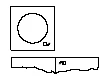
- Completely peel off the end strip of the blister, starting from the corner with the printed hand symbol.
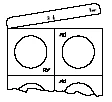
- Tear off the blister unit along the perforation.
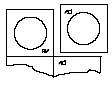
- Peel back the foil starting from the corner with the printed arrow and gently remove the lyophilisate.

- Repeat steps 2 and 3 to access the next lyophilisate.