Adeksa
Poland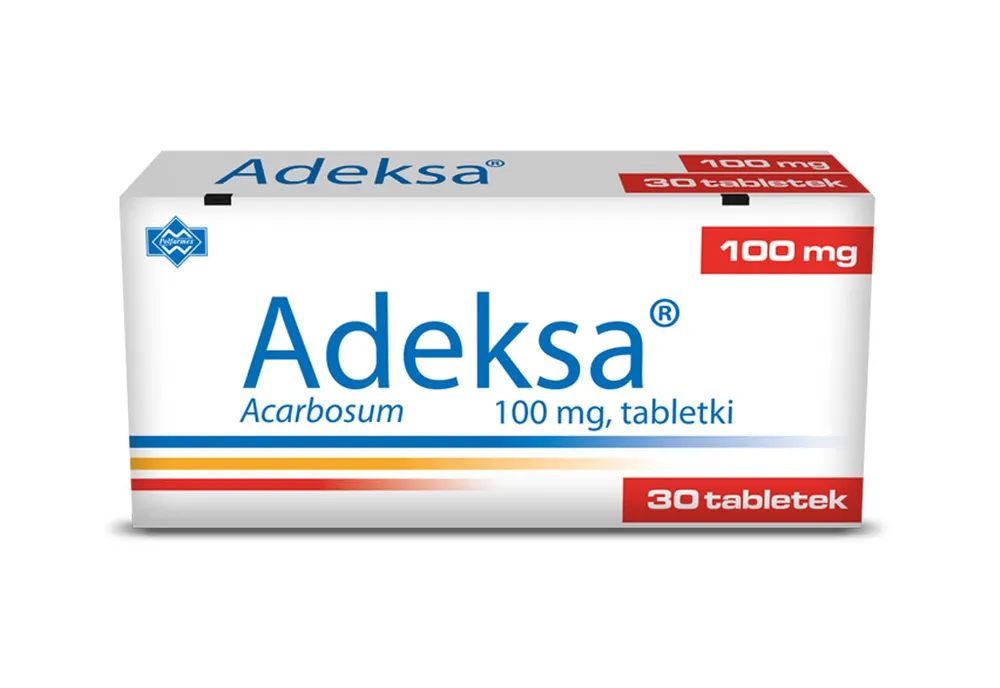
Table of Contents
Package leaflet: information for the user
ADEKSA, 50 mg, tablets
ADEKSA, 100 mg, tablets
Acarbosum
Please read all of this leaflet carefully before taking this medicine because it contains
important information for you.
- Keep this leaflet as you may need to read it again.
- If you have any further questions, please ask your doctor or pharmacist.
- This medicine has been prescribed for a specific individual. Do not pass it on to others. It may harm someone else, even if their symptoms are the same.
- If you experience any adverse effects, including any not listed in this leaflet, tell your doctor or pharmacist. See section 4.
Leaflet contents:
- What Adeksa is and what it is used for
- Important information before taking Adeksa
- How to take Adeksa
- Possible side effects
- How to store Adeksa
- Contents of the pack and other information
1. What Adeksa is and what it is used for
Adeksa contains the active substance acarbose. Its action consists in delaying the digestion of carbohydrates in the intestines. The slowly released glucose is absorbed more slowly, resulting in reduced blood glucose levels after meals and consequently reduced fluctuations in glucose concentration and lower average glucose levels (glycaemia). During treatment with acarbose, a significant reduction in fasting glucose concentration and a decrease in glycated haemoglobin (HbA1c) occur. Adeksa is practically not absorbed and its action is confined to the gastrointestinal tract.
Acarbose administration does not cause weight gain.
Therapeutic indications:
- Treatment of type 2 diabetes (non-insulin-dependent diabetes), particularly in obese patients, in whom diet and physical exercise alone have proven ineffective.
2. Important information before using Adeksa
When not to use Adeksa
- If the patient is allergic to the active substance or to any of the other ingredients of this medicine (listed in section 6);
- If the patient is under 18 years of age, as data on the safety of acarbose in children and adolescents are insufficient;
- If the patient has chronic intestinal diseases with digestive and absorption disorders;
- If the patient has medical conditions that may worsen due to increased accumulation of gas in the intestines (e.g. Roemheld syndrome, large hernias, intestinal obstruction, intestinal ulceration);
- If the patient has severe renal impairment (creatinine clearance below 25 ml/min);
- If the patient is pregnant or breastfeeding.
Warnings and precautions
- During treatment with Adeksa, it is essential to strictly follow a diabetic diet;
- Do not discontinue regular use of Adeksa without consulting a doctor, as this may lead to increased blood glucose levels;
- In isolated cases—particularly after administration of high doses of acarbose—there may be an asymptomatic increase in liver enzyme activity. Therefore, during the first 6 to 12 months of treatment with Adeksa, the doctor may recommend regular monitoring of these enzyme levels. These changes usually resolve after discontinuation of the drug;
- Adeksa used as monotherapy (used as the only medication) does not cause hypoglycaemia. However, when taken concomitantly with other glucose-lowering medicines, it may cause hypoglycaemia (see section: Use with other medicines);
- Information about the use of Adeksa should be recorded in the patient's diabetes record book.
Adeksa and other medicines
Inform your doctor or pharmacist about all medicines currently or recently taken, as well as any medicines the patient plans to take.
Exercise caution if:
- the patient is simultaneously using other glucose-lowering medicines (e.g. sulfonylurea derivatives, metformin or insulin), as this may lead to a sudden decrease in blood glucose levels (acute hypoglycaemia). Therefore, to prevent this, these medicines should be used under medical supervision, with the doctor determining the appropriate dosage. In case of sudden hypoglycaemia, the patient should take glucose (to raise blood glucose levels). It is important that the patient does not take other sugars (such as sucrose);
- the patient is taking digoxin (a medicine used for heart conditions), the patient should consult the doctor, who may recommend adjusting the digoxin dosage;
- the patient is using other medicines containing sucrose, as sucrose intake often causes gastrointestinal discomfort and even diarrhoea due to increased fermentation of carbohydrates in the large intestine;
- the patient is taking colestyramine (a cholesterol-lowering medicine) or adsorbent agents, which may reduce the effectiveness of Adeksa; therefore, concomitant use should be avoided;
- the patient is taking oral neomycin (an antibiotic), as this may lead to a significant reduction in postprandial blood glucose levels and more frequent and severe abdominal symptoms. If acute symptoms occur, the patient should contact the doctor, who may consider temporarily reducing the dose of Adeksa. Concomitant use of antacids and anti-flatulence medicines (containing the active substances dimethicone or simethicone) does not affect treatment with Adeksa.
Adeksa with food and drink
During treatment with Adeksa, it is essential to strictly follow a diabetic diet. Do not consume food products containing sucrose due to the risk of gastrointestinal symptoms (including diarrhoea).
Adeksa should be taken before a meal or with the first bites of food.
Pregnancy and breastfeeding
If the patient is pregnant or breastfeeding, suspects she may be pregnant, or plans to become pregnant, she should consult a doctor or pharmacist before using this medicine.
Adeksa must not be used during pregnancy and breastfeeding.
Driving and operating machinery
Adeksa has no effect on the ability to drive or operate machinery.
Adeksa contains sodium
This medicine contains less than 1 mmol (23 mg) of sodium per tablet, meaning that the medicine is considered "sodium-free".
3. How to use Adeksa
This medicine should always be used according to the doctor's instructions. In case of doubt, consult
your doctor or pharmacist.
The recommended dosage for the treatment of type 2 diabetes should be combined with diet and physical
activity.
Using Adeksa according to the following schedule can help reduce the risk of adverse effects, especially flatulence:
Breakfast Lunch Dinner Number of days
-
- 1 time Adeksa 50 mg 3 days
- 1 time Adeksa 50 mg 1 time Adeksa 50 mg 3 days 1 time Adeksa 50 mg 1 time Adeksa 50 mg 1 time Adeksa 50 mg 7 days 1 time Adeksa 50 mg 1 time Adeksa 50 mg 2 times Adeksa 50 mg 3 days 1 time Adeksa 50 mg 2 times Adeksa 50 mg 2 times Adeksa 50 mg 3 days 1 time Adeksa 100 mg 1 time Adeksa 100 mg 1 time Adeksa 100 mg from week 4 to 8
The tablets should be swallowed whole. Do not chew them. The tablets are effective only when
swallowed whole.
Adeksa should be taken immediately before a meal or with the first bites of food.
Adeksa is not indicated for use in patients under 18 years of age, as the efficacy and safety of acarbose
have not been studied in this age group.
Taking more Adeksa than recommended
If a patient has taken more medicine than recommended, they should not consume liquids or meals
containing carbohydrates for the next 4 to 6 hours. This approach usually helps avoid gastrointestinal
symptoms.
If a patient has taken more than the recommended dose of Adeksa together with drinks and/or meals
containing carbohydrates, bloating, flatulence, and diarrhea may occur.
Missing a dose of Adeksa
Do not take a double dose to make up for a missed dose.
Stopping Adeksa treatment
Do not stop taking the medicine regularly without consulting your doctor, due to the risk of increased
glucose levels.
If you have any further questions about the use of this medicine, consult your doctor or pharmacist.
4. Possible adverse effects
Like all medicines, this medicine can cause adverse effects, although not everyone will experience them.
Very common adverse effects (may affect more than 1 in 10 people):
- bloating.
Common adverse effects (may affect less than 1 in 10 people but more than 1 in 100 people):
- diarrhoea;
- gastrointestinal pain;
- abdominal pain.
Uncommon adverse effects (may affect between 1 in 100 and 1 in 1000 people):
- nausea;
- vomiting;
- dyspepsia (stomach discomfort, bloating, belching, heartburn, and constipation);
- transient increase in liver enzyme activity (detected in laboratory tests).
Rare adverse effects (may affect less than 1 in 1000 people):
- oedema;
- jaundice (yellowing of the skin and whites of the eyes).
Adverse effects of unknown frequency (may affect less than 1 in 10,000 people):
- allergic reactions (skin redness and itching, such as rash, erythema, exanthema, urticaria);
- intestinal obstruction (severe cramping abdominal pain, vomiting, bloating, failure to pass gas or stool);
- subintestinal obstruction (severe abdominal pain, bloating, constipation or complete absence of stool, loss of appetite, weight loss);
- intestinal pneumatosis (usually asymptomatic, gas-filled cysts located in the intestinal wall);
- hepatitis (early symptoms include: pain under the right rib cage, flu-like symptoms, nausea, vomiting, aversion to meat dishes, constipation, diarrhoea, and bloating. Later, yellowing of the skin and whites of the eyes may occur);
- thrombocytopenia (reduced platelet count, leading to increased risk of bleeding and bruising).
Additionally, the following events have been reported: liver disorders, abnormal liver function, and liver damage.
Reporting of adverse effects
If any adverse effects occur, including those not listed in this leaflet, inform your doctor, pharmacist, or nurse. Adverse effects can also be reported directly to the Department of Monitoring Adverse Drug Reactions, Office for Registration of Medicinal Products, Medical Devices and Biocidal Products:
Al. Jerozolimskie 181C
02-222 Warszawa
Tel.: 22 49-21-301
Fax: 22 49-21-309
Website: https://smz.ezdrowie.gov.pl
Adverse effects can also be reported to the marketing authorisation holder.
Reporting adverse effects helps to provide more information on the safety of the medicine.
5. How to store Adeksa
Keep this medicine out of sight and reach of children.
Store below 25 °C.
Keep in the original packaging to protect from moisture.
Do not use this medicine after the expiry date stated on the carton and blister after: "EXP". The expiry date refers to the last day of the stated month.
Medicines must not be disposed of via wastewater or household waste. Ask your pharmacist how to dispose of medicines no longer required. Such measures will help protect the environment.
6. Contents of the pack and other information
What the medicine Adeksa contains
- The active substance is acarbose.
One tablet of Adeksa 50 mg contains 50 mg of acarbose.
- Other ingredients: microcrystalline cellulose, sodium carboxymethyl starch (type A), colloidal anhydrous silica, magnesium stearate.
One tablet of Adeksa 100 mg contains 100 mg of acarbose.
- Other ingredients: microcrystalline cellulose, sodium carboxymethyl starch (type A), colloidal anhydrous silica, magnesium stearate.
What Adeksa looks like and contents of the pack
Adeksa 50 mg are uncoated tablets, white or almost white, round, biconvex.
Adeksa 100 mg are uncoated tablets, white or almost white, round, biconvex with a breakline on one side.
The breakline on the tablet is only intended to facilitate crushing for easier swallowing and does not allow division into equal doses.
Pack contents: 30, 60 or 90 tablets of 50 mg or 100 mg.
Marketing Authorisation Holder and Manufacturer
Polfarmex S.A.
ul. Józefów 9
99-300 Kutno
Poland
Tel.: (24) 357 44 44
Fax: (24) 357 45 45
e-mail: [email protected]