Actelsar
Poland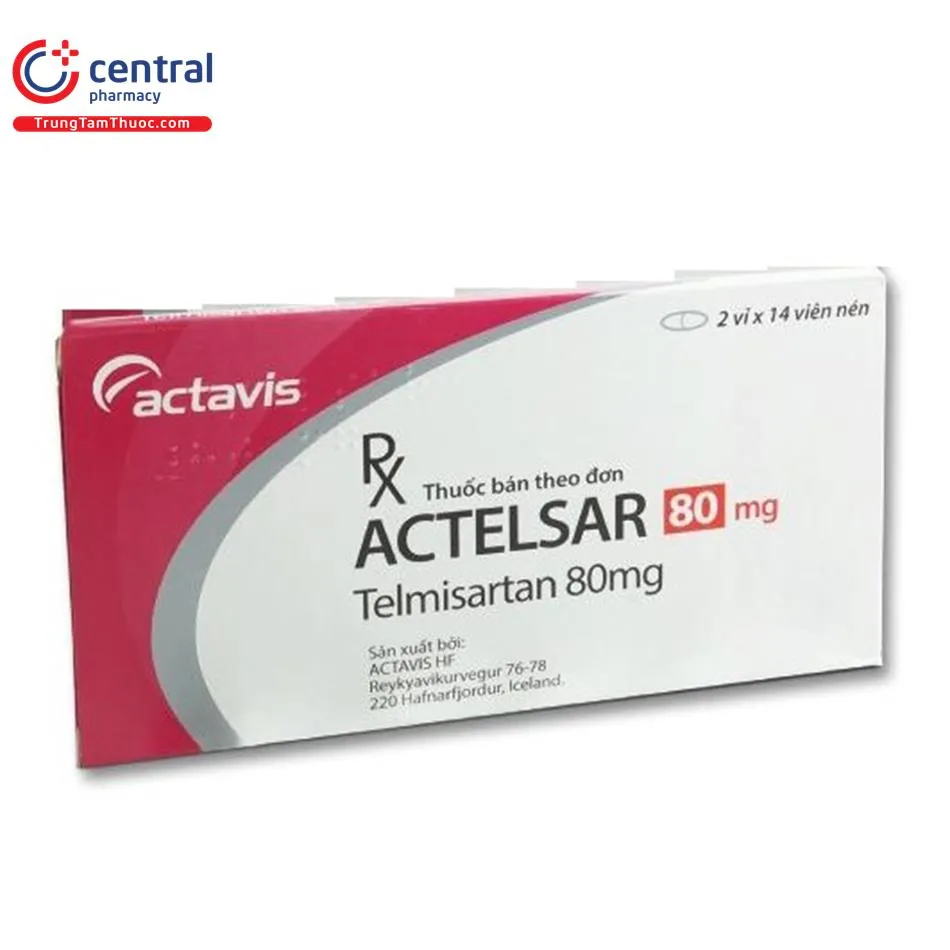
Table of Contents
Package leaflet: Information for the patient
Actelsar, 40 mg, tablets
Actelsar, 80 mg, tablets
telmisartanum
Please read this leaflet carefully before taking the medicine, as it contains important information for the patient.
- Keep this leaflet, as you may need to read it again.
- If you have any further questions, please consult your doctor or pharmacist.
- This medicine has been prescribed for a specific individual. Do not pass it on to others. The medicine may harm other people, even if their symptoms are the same.
- If you experience any adverse reactions, including any not listed in this leaflet, tell your doctor or pharmacist. See section 4.
Table of contents
- What Actelsar is and what it is used for
- Important information before taking Actelsar
- How to take Actelsar
- Possible side effects
- How to store Actelsar
- Contents of the pack and other information
1. What Actelsar is and what it is used for
Actelsar belongs to a group of medicines known as angiotensin II receptor antagonists.
Angiotensin II is a substance produced by the body that causes blood vessels to narrow, leading to
increased blood pressure. Actelsar blocks the action of angiotensin II, allowing blood vessels to relax
and blood pressure to decrease.
Actelsar is used to treat essential hypertension (high blood pressure). The term "essential" means
that high blood pressure is not caused by another disease.
Untreated high blood pressure may damage blood vessels in various organs and, in some cases, may
lead to heart attack, heart or kidney failure, stroke, or loss of vision. Often, there are no symptoms of
high blood pressure before such complications occur. For this reason, it is important to measure
blood pressure regularly to ensure it remains within normal limits.
Actelsar is also used to reduce the frequency of cardiovascular events (such as heart attack or
stroke) in adults at high risk, i.e. those who have reduced blood flow to the heart or legs, who have
had a stroke, or who have diabetes. Your doctor will inform you whether you belong to this risk group.
2. Important information before taking Actelsar
When not to take Actelsar
- if you are allergic to telmisartan or any of the other ingredients of this medicine (listed in section 6)
- during the third month of pregnancy (Actelsar should also be avoided in early pregnancy – see section "Pregnancy")
- if you have severe liver problems, such as cholestasis or biliary obstruction (problems with bile flow from the liver and gallbladder), or any other severe liver disease
- if you have diabetes or kidney problems and are being treated with a blood pressure-lowering medicine containing aliskiren.
If any of the above apply to you, inform your doctor or pharmacist before taking Actelsar.
Warnings and precautions
Before starting Actelsar, consult your doctor if you have or have had any of the following conditions:
- kidney disease or status post kidney transplant
- renal artery stenosis (narrowing of the blood vessels supplying one or both kidneys)
- liver disease
- heart problems
- increased aldosterone levels (water and salt retention in the body, accompanied by disturbances in mineral balance)
- low blood pressure (hypotension), particularly if you are dehydrated (excessive loss of body water) or have salt deficiency due to diuretics, low-salt diet, diarrhoea, or vomiting
- increased blood potassium levels
- diabetes.
Before starting Actelsar, discuss with your doctor if you are taking:
- digoxin
- any of the following medicines used to treat high blood pressure:
- angiotensin-converting enzyme (ACE) inhibitors (e.g. enalapril, lisinopril, ramipril), especially if you have kidney problems related to diabetes
- aliskiren.
Your doctor may monitor kidney function, blood pressure, and blood electrolyte levels (e.g. potassium) at regular intervals.
See also information under the heading "When not to take Actelsar".
If you experience abdominal pain, nausea, vomiting, or diarrhoea after taking Actelsar, discuss this with your doctor. Your doctor will decide on further treatment. Do not stop taking Actelsar on your own.
Inform your doctor if you suspect or are planning pregnancy. Actelsar is not recommended during early pregnancy and must not be used after the third month of pregnancy, as it may seriously harm the unborn child (see section "Pregnancy").
If you are scheduled for surgery or anaesthesia, inform your doctor that you are taking Actelsar.
Actelsar may be less effective in lowering blood pressure in people of black race.
Children and adolescents
Actelsar is not recommended for use in children and adolescents under 18 years of age.
Other medicines and Actelsar
Tell your doctor or pharmacist about all medicines you are currently taking, have recently taken, or plan to take. Your doctor may need to adjust the dose and/or take additional precautions. In some cases, one of the medicines may need to be discontinued. This particularly applies to concomitant use of Actelsar with the following medicines:
- lithium preparations, used to treat certain types of depression
- medicines that may increase blood potassium levels, such as potassium-containing salt substitutes, potassium-sparing diuretics (certain diuretics), ACE inhibitors, angiotensin II receptor antagonists, NSAIDs (non-steroidal anti-inflammatory drugs, e.g. acetylsalicylic acid or ibuprofen), heparin, immunosuppressants (e.g. cyclosporine or tacrolimus), and the antibiotic trimethoprim
- diuretics (water tablets), especially when taken in high doses together with Actelsar, as they may lead to significant fluid loss and low blood pressure (hypotension)
- if you are taking an ACE inhibitor or aliskiren (see also information under "When not to take Actelsar" and "Warnings and precautions")
- digoxin.
The effect of Actelsar may be reduced when taken with NSAIDs (non-steroidal anti-inflammatory drugs, e.g. acetylsalicylic acid or ibuprofen) or corticosteroids.
Actelsar may enhance the blood pressure-lowering effect of other medicines used to treat hypertension or medicines that may cause low blood pressure (e.g. baclofen, amifostine).
Additionally, low blood pressure may be further reduced by alcohol, barbiturates, narcotics, and antidepressants. Dizziness upon standing may occur. If dose adjustment of any other medicine taken during Actelsar treatment is needed, consult your doctor.
Pregnancy and breastfeeding
Pregnancy
Inform your doctor if you suspect or are planning pregnancy. Your doctor will usually recommend stopping Actelsar before planned pregnancy or immediately after pregnancy is confirmed and will prescribe an alternative medicine. Actelsar is not recommended during early pregnancy and must not be used after the third month of pregnancy, as it may seriously harm the unborn child.
Breastfeeding
Inform your doctor if you are breastfeeding or planning to breastfeed. Actelsar is not recommended during breastfeeding. Your doctor may choose an alternative treatment during breastfeeding, especially when feeding newborns or premature infants.
Driving and operating machinery
Some patients taking Actelsar may experience dizziness or fatigue. If you experience dizziness or fatigue, consult your doctor before driving or operating machinery.
Actelsar contains sodium
This medicine contains less than 1 mmol (23 mg) of sodium per tablet, i.e. it is considered "sodium-free".
3. How to take Actelsar
This medicine should always be taken as directed by your doctor. If you have any doubts, consult your
doctor or pharmacist.
The recommended dose of Actelsar is one tablet daily. You should try to take the tablet at the same
time each day. Actelsar may be taken during or between meals. Swallow the tablets with water or
another non-alcoholic drink.
It is important to take Actelsar every day, unless otherwise advised by your doctor. If you feel that the
effect of Actelsar is too strong or too weak, consult your doctor or pharmacist.
In the treatment of arterial hypertension, the usual dose of Actelsar is one 40 mg tablet once daily
for most patients, which provides blood pressure control for over 24 hours. However, your doctor may
prescribe a lower dose of one 20 mg tablet daily or a higher dose of 80 mg. Actelsar may also be
administered in combination with a diuretic (water pill), such as hydrochlorothiazide, which enhances
the blood pressure-lowering effect of Actelsar.
To reduce the frequency of cardiovascular events, the usual dose of Actelsar is one 80 mg tablet once
daily. At the beginning of treatment with the 80 mg dose of Actelsar, blood pressure should be
monitored frequently.
In patients with impaired liver function, the usual dose must not exceed 40 mg once daily.
Taking more Actelsar than prescribed
If you accidentally take too many tablets, contact your doctor or pharmacist immediately or go to the
nearest hospital emergency department.
Missing a dose of Actelsar
If you miss a dose, take it as soon as you remember, then continue taking the medicine as before. If
you do not remember to take the tablet during the day, take your usual dose the next day. Do not
take a double dose to make up for a missed dose.
If you have any further questions about the use of this medicine, consult your doctor or pharmacist.
4. Possible adverse reactions
Like any medicine, this medicine can cause adverse reactions, although not everyone will experience them.
Some adverse reactions may be serious and require immediate medical attention:
If any of the following symptoms occur, contact your doctor immediately:
Sepsis* (commonly known as blood poisoning, a severe infection causing systemic inflammatory response), sudden swelling of the skin and mucous membranes (angioedema). These adverse reactions are rare (may occur in no more than 1 in 1,000 patients), but are extremely serious. In such cases, the medicine must be discontinued immediately and medical help sought without delay. If left untreated, these symptoms may result in death.
Possible adverse reactions of Actelsar:
Common adverse reactions (may occur in no more than 1 in 10 patients):
Low blood pressure (hypotension) in patients treated to reduce the frequency of cardiovascular events.
Uncommon adverse reactions (may occur in no more than 1 in 100 patients):
Urinary tract infections, upper respiratory tract infections (e.g. sore throat, sinusitis, common cold), reduced number of red blood cells (anaemia), high potassium levels in plasma, difficulty sleeping, low mood (depression), fainting, sensation of spinning (peripheral vertigo), slow heart rate (bradycardia), low blood pressure (hypotension) in patients treated for hypertension, dizziness upon standing (orthostatic hypotension), shortness of breath, cough, abdominal pain, diarrhoea, abdominal discomfort, bloating, vomiting, skin itching, excessive sweating, drug rash, back pain, muscle cramps, muscle pain, kidney function disorders, including acute kidney failure, chest pain, feeling of weakness, and increased blood creatinine levels.
Rare adverse reactions (may occur in no more than 1 in 1,000 patients):
Sepsis* (commonly known as blood poisoning, a severe infection causing systemic inflammatory response, which may lead to death), increased number of certain white blood cells (eosinophilia), low platelet count (thrombocytopenia), severe allergic reaction (anaphylactic reaction), allergic reactions (e.g. rash, itching, breathing difficulties, wheezing, facial swelling, or low blood pressure), low blood sugar levels (in patients with diabetes), feeling of restlessness, drowsiness, visual disturbances, rapid heart rate (tachycardia), dryness of the oral mucosa, gastritis, taste disturbances, liver function disorders (more frequent in patients of Japanese origin), sudden swelling of the skin and mucous membranes which may also lead to death (angioedema resulting in death), skin eruptions (skin disease), redness of the skin, severe drug rash, joint pain, limb pain, tendon pain, influenza-like symptoms, decreased haemoglobin concentration (a blood protein), increased uric acid levels, increased activity of liver enzymes or creatine phosphokinase in blood.
Very rare adverse reactions (may occur in no more than 1 in 10,000 patients):
Progressive fibrosis of pulmonary alveoli (interstitial lung disease)**
Frequency not known (frequency cannot be determined from available data):
Angioedema of the intestine – following administration of similar products, intestinal swelling has occurred with symptoms such as abdominal pain, nausea, vomiting and diarrhoea.
* The event may be coincidental or related to a currently unknown mechanism.
** Cases of interstitial lung disease temporally associated with telmisartan use have been reported. However, a causal relationship has not been established.
Reporting of adverse reactions
If any adverse reactions occur, including any not listed in this leaflet, inform your doctor or pharmacist. Adverse reactions can be reported directly to the Department of Monitoring Adverse Drug Reactions of the Office for Registration of Medicinal Products, Medical Devices and Biocidal Products, Al. Jerozolimskie 181C, 02-222 Warsaw, tel.: +48 22 49 21 301, fax: +48 22 49 21 309, website: https://smz.ezdrowie.gov.pl.
Reporting adverse reactions helps to provide more information on the safety of this medicine. Adverse reactions may also be reported to the responsible entity.
5. How to store Actelsar
Keep the medicine out of sight and reach of children.
Do not use this medicine after the expiry date stated on the carton or blister pack following EXP. The expiry date refers to the last day of the specified month.
Store in the original packaging to protect the tablets from light.
Medicines should not be disposed of via the sewage system or household waste. Ask your pharmacist how to dispose of medicines no longer required. These measures will help protect the environment.
6. Contents of the pack and other information
What Actelsar contains
- The active substance is telmisartan. Each tablet contains 40 mg or 80 mg of telmisartan.
- The other ingredients are: magnesium stearate, sodium croscarmellose, mannitol (E 421), povidone (K-29/32), potassium hydroxide.
What Actelsar looks like and contents of the pack
Actelsar 40 mg: white, oval, biconvex tablets with a division line and the logo T on one side.
The tablet can be divided into halves.
Actelsar 80 mg: white, oval, biconvex tablets with the logo T1 on one side.
Actelsar is available in aluminium/aluminium blister packs containing:
28, 30 or 56 tablets (Actelsar 40 mg) and 28, 30, 56 or 84 tablets (Actelsar 80 mg).
Marketing Authorisation Holder
Actavis Group PTC ehf.
Dalshraun 1
220 Hafnarfjörður
Iceland
Manufacturer
Actavis Ltd.
BLB015-016 Bulebel Industrial Estate
Zejtun ZTN 3000
Malta
For more detailed information about the medicine and its names in the countries of the European Economic Area, please contact the representative of the Marketing Authorisation Holder:
Teva Pharmaceuticals Polska Sp. z o.o., ul. Emilii Plater 53, 00-113 Warsaw, Poland, tel. (22) 345 93 00.