Acnatac
Poland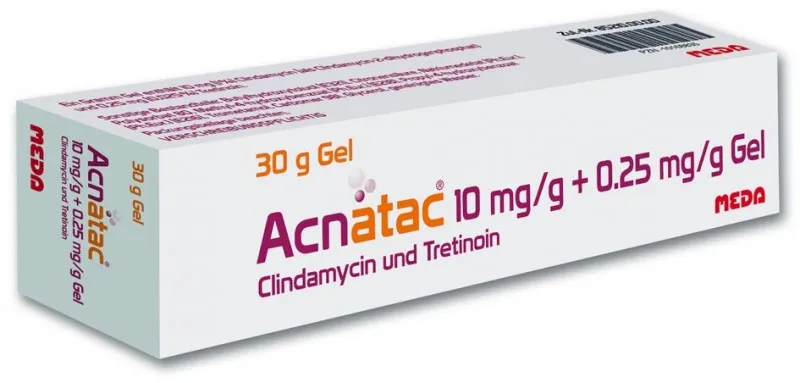
Table of Contents
Package leaflet: Information for the user
Warning! Keep this leaflet! Information on the outer packaging in a foreign language.
Acnatac
10 mg/g + 0,25 mg/g, gel
clindamycin + tretinoin
Please read the entire leaflet carefully before using the medicine, as it contains
important information for the patient.
- Keep this leaflet, so that you can read it again if necessary.
- If you have any doubts, please consult your doctor or pharmacist.
- This medicine has been prescribed for a specific individual. Do not pass it on to others. The medicine may harm someone else, even if their symptoms are the same.
- If any adverse reactions occur, including any possible adverse reactions not listed in this leaflet, inform your doctor or pharmacist. See section 4.
Table of contents of the leaflet:
- What Acnatac is and what it is used for
- Important information before using Acnatac
- How to use Acnatac
- Possible side effects
- How to store Acnatac
- Contents of the pack and other information
1. What Acnatac is and what it is used for
Acnatac contains the active substances clindamycin and tretinoin.
Clindamycin is an antibiotic. It inhibits the growth of bacteria associated with acne and reduces the inflammatory response caused by these bacteria.
Tretinoin normalizes the growth of cells in the outer layer of the skin and promotes proper desquamation of cells blocking the hair follicle openings in acne-affected areas. This prevents the accumulation of sebum and the formation of early acne lesions (closed comedones and open comedones).
The aforementioned active substances are more effective when used in combination than when used separately.
Acnatac is applied to the skin in the treatment of acne in patients aged 12 years and older.
2. Important information before using Acnatac
When NOT TO USE Acnatac:
- if the patient is pregnant;
- if the patient is planning pregnancy;
- if the patient is allergic to clindamycin, tretinoin or any of the other ingredients of this medicine (listed in section 6);
- if the patient is allergic to lincomycin;
- if the patient has chronic inflammatory bowel disease (e.g. ulcerative colitis or Crohn's disease);
- if the patient has previously experienced antibiotic-associated colitis characterized by prolonged or significant diarrhoea or abdominal cramps;
- if the patient or a family member has ever been diagnosed with skin cancer;
- if the patient has acute acne characterized by inflammatory, red, dry and scaly skin lesions;
- if the patient has rosacea, a skin condition of the face characterized by redness, scaling and presence of pimples;
- if the patient has other acute inflammatory skin conditions (e.g. folliculitis), especially around the mouth (perioral dermatitis);
- if the patient has been diagnosed with specific forms of acne vulgaris characterized by nodular-cystic lesions (conglobate acne and fulminant acne).
If any of the above situations apply to the patient, use of the medicine should be discontinued and
the patient should consult a doctor.
Warnings and precautions
- Avoid contact of the medicine with the mouth, eyes, mucous membranes, damaged skin or skin affected by acne. Exercise caution when applying to sensitive areas. If the product accidentally gets into the eye, rinse thoroughly with plenty of lukewarm water.
- If prolonged or significant diarrhoea or abdominal cramps occur, discontinue use of this medicine immediately and consult a doctor.
- If the patient has atopic dermatitis (chronic inflammatory skin condition with itching), consult a doctor before using the medicine.
- Avoid exposure to natural or artificial light (e.g. sunbeds), as this medicine may increase susceptibility to sunburn and other adverse effects of sunlight. When outdoors, always use effective sun protection products with a sun protection factor (SPF) of at least 30, and wear protective clothing (e.g. a hat). If sunburn does occur despite these measures, discontinue use of the medicine until the skin has healed.
- If an acute inflammatory skin reaction occurs during treatment with this medicine, consult a doctor.
- Acnatac should not be used at the same time as other topical products, including cosmetics (see also the section titled "Acnatac and other medicines").
Acnatac and other medicines
Inform your doctor or pharmacist about all medicines currently used or recently used, as well as any medicines you plan to take. This includes medicines available without prescription and herbal preparations. Acnatac may affect the way some other medicines work. Likewise, some other medicines may affect the action of Acnatac.
If the patient has used any products containing sulfur, salicylic acid, benzoyl peroxide or resorcinol, or caustic chemical substances, wait until their effects have subsided before starting treatment with this medicine. Your doctor will advise when you may begin using Acnatac.
While using Acnatac, avoid medicated soaps, skin-cleansing preparations or peeling solutions with strong drying effects. Exercise caution when using the following drying products: abrasive soaps, soap and cosmetics, and products containing high concentrations of alcohol, astringents, spices or lemon juice.
Consult your doctor before using this medicine simultaneously with other medicinal products containing erythromycin or metronidazole, aminoglycosides, other antibiotics or corticosteroids, or when taking neuromuscular blocking agents (e.g. muscle relaxants used during general anaesthesia).
Warfarin or similar medicines used to reduce blood clotting: there may be an increased risk of bleeding. Your doctor may recommend regular blood tests to monitor blood clotting.
Pregnancy, breastfeeding and fertility
DO NOT use Acnatac during pregnancy or if planning pregnancy. Your doctor can provide further information.
Breastfeeding women should not use this medicine. It is not known whether Acnatac passes into breast milk and could harm the infant.
Driving and operating machinery
Acnatac is unlikely to affect the ability to drive or operate machinery.
Acnatac contains methyl parahydroxybenzoate (E 218), propyl parahydroxybenzoate (E 216) and butylated hydroxytoluene (E 321).
Methyl parahydroxybenzoate (E 218) and propyl parahydroxybenzoate (E 216) may cause allergic reactions (possibly delayed-type).
Butylated hydroxytoluene (E 321) may cause local skin reactions (e.g. contact dermatitis) or irritation of the eyes and mucous membranes.
3. How to use Acnatac
This medicine should always be used as directed by the physician. If in doubt, consult your doctor or pharmacist.
Recommended dose:
Apply a pea-sized amount of Acnatac to the skin once daily before bedtime.
Method of administration:
Gently wash the face with mild soap and warm water, then pat the skin dry with a towel.
Squeeze a pea-sized amount of the gel onto the fingertip, apply the gel spot-wise to the forehead, chin, nose, and cheeks, and gently and evenly spread it over the entire facial skin.
Do not use more medicine than prescribed by the doctor or more often than recommended. Excessive amounts of the medicine may cause skin irritation and will not provide better results or make them appear faster.
Duration of treatment:
To achieve the best treatment results, use Acnatac correctly and do not stop treatment immediately after noticing improvement of acne lesions. Optimal treatment effects usually become visible only after several days, and in some cases it may take up to 12 weeks. If symptoms persist beyond 12 weeks, consult your doctor, as a reassessment of the treatment may be necessary.
Use of more than the recommended dose of Acnatac:
Using Acnatac in larger amounts than recommended will not produce better results or faster improvement. Excessive application may cause severe redness, skin peeling, or discomfort. In such cases, gently wash the face with mild soap and lukewarm water. Discontinue use of the medicine until all symptoms have subsided.
Overdose may result in adverse effects such as gastrointestinal disturbances, including stomach pain, nausea, vomiting, and diarrhea. In such cases, discontinue use of this medicine and consult a doctor.
Acnatac is intended for topical use only. In case of accidental ingestion, seek immediate medical attention from a doctor or the nearest hospital emergency department.
Missed dose of Acnatac:
If a dose of Acnatac is missed before bedtime, apply the next dose at the previously scheduled time. Do not apply a double dose to make up for the missed dose.
If you have any further doubts regarding the use of this medicine, consult your doctor or pharmacist.
4. Possible adverse reactions
Like all medicines, this medicine can cause adverse reactions, although not everyone will experience them.
Not common: may affect up to 1 in 100 people
- Acne, dry skin, skin redness, increased sebum secretion, photosensitivity, itching, rash, scaly rash, skin peeling, sunburn
- Reactions at the site of application to the skin, such as burning sensation, inflammation, dry skin, skin redness.
Rare: may affect up to 1 in 1000 people
- Hypersensitivity
- Hypothyroidism (symptoms include feeling tired, weakness, weight gain, dry hair, coarse and pale skin, hair loss, increased sensitivity to cold)
- Headache
- Eye irritation
- Gastroenteritis (inflammation of any part of the gastrointestinal tract), nausea
- Dermatitis, herpes virus (cold sore), maculopapular rash (presence of small, flat, red spots), skin bleeding, burning sensation in the skin, loss of skin pigment, skin irritation
- Symptoms at the site of application to the skin, such as irritation, swelling, superficial skin damage, change in skin pigmentation, itching, skin peeling
- Feeling of warmth, pain.
Reporting of adverse reactions
If any adverse reactions occur, including any adverse reactions not listed in this leaflet, inform your doctor or pharmacist. Adverse reactions can be reported directly to the Department of Monitoring of Adverse Drug Reactions of the Office for Registration of Medicinal Products, Medical Devices and Biocidal Products, Al. Jerozolimskie 181C, 02-222 Warsaw, Tel: +48 22 49 21 301, Fax: +48 22 49 21 309, website: https://smz.ezdrowie.gov.pl.
Reporting adverse reactions enables further information on the safety of this medicine to be collected.
5. How to store Acnatac
Keep this medicine out of sight and reach of children.
Do not store above 25°C. Do not freeze.
Keep the tube tightly closed.
Do not use this medicine after the expiry date stated on the packaging. The expiry date refers to the last day of the stated month.
Shelf life after first opening the tube: 3 months.
Medicines must not be disposed of via wastewater or household waste. Ask your pharmacist how to dispose of medicines no longer required. This will help protect the environment.
6. Contents of the package and other information
What Acnatac contains
- The active substances are clindamycin and tretinoin. One gram of gel contains 10 mg (1%) of clindamycin (as clindamycin phosphate) and 0.25 mg (0.025%) of tretinoin.
- Other ingredients: purified water, glycerol, carbomers, methyl parahydroxybenzoate (E 218), polysorbate 80, disodium edetate, citric acid, propyl parahydroxybenzoate (E 216), butylhydroxytoluene (E 321), tromethamine.
What Acnatac looks like and contents of the pack
Acnatac is a yellow, semi-transparent gel.
The medicine is available in an aluminium tube containing 30 g of gel.
For more detailed information, please contact the responsible party or the parallel importer.
Marketing Authorisation Holder in Greece, the country of export:
Viatris Healthcare Limited
Damastown Industrial Park
Mulhuddart
Dublin 15
Dublin
Ireland
Manufacturer:
Meda Pharma GmbH & Co. KG
Benzstrasse 1
61352 Bad Homburg, Germany
Madaus GmbH
51101 Cologne, Germany
Parallel importer:
InPharm Sp. z o.o.
ul. Strumykowa 28/11
03-138 Warsaw
Repackaged in:
InPharm Sp. z o.o. Services sp. k.
ul. Chełmżyńska 249
04-458 Warsaw
Marketing Authorisation Number in Greece, the country of export: 41202/17/13-08-2019
Parallel Import Licence Number: 311/23
This medicinal product is authorised for marketing in the European Economic Area and the United Kingdom (Northern Ireland) under the following names:
Austria, Bulgaria, Cyprus, Czech Republic, Germany, Denmark, Greece, Finland, Iceland, Italy, Poland, Portugal, Romania, Sweden, Slovakia: Acnatac
Malta: Treclin
Estonia, Spain, United Kingdom (Northern Ireland), Latvia, Lithuania, Netherlands: Treclinac
Belgium, Luxembourg: Treclinax
Norway, Slovenia: Zalna
France: Zanea